


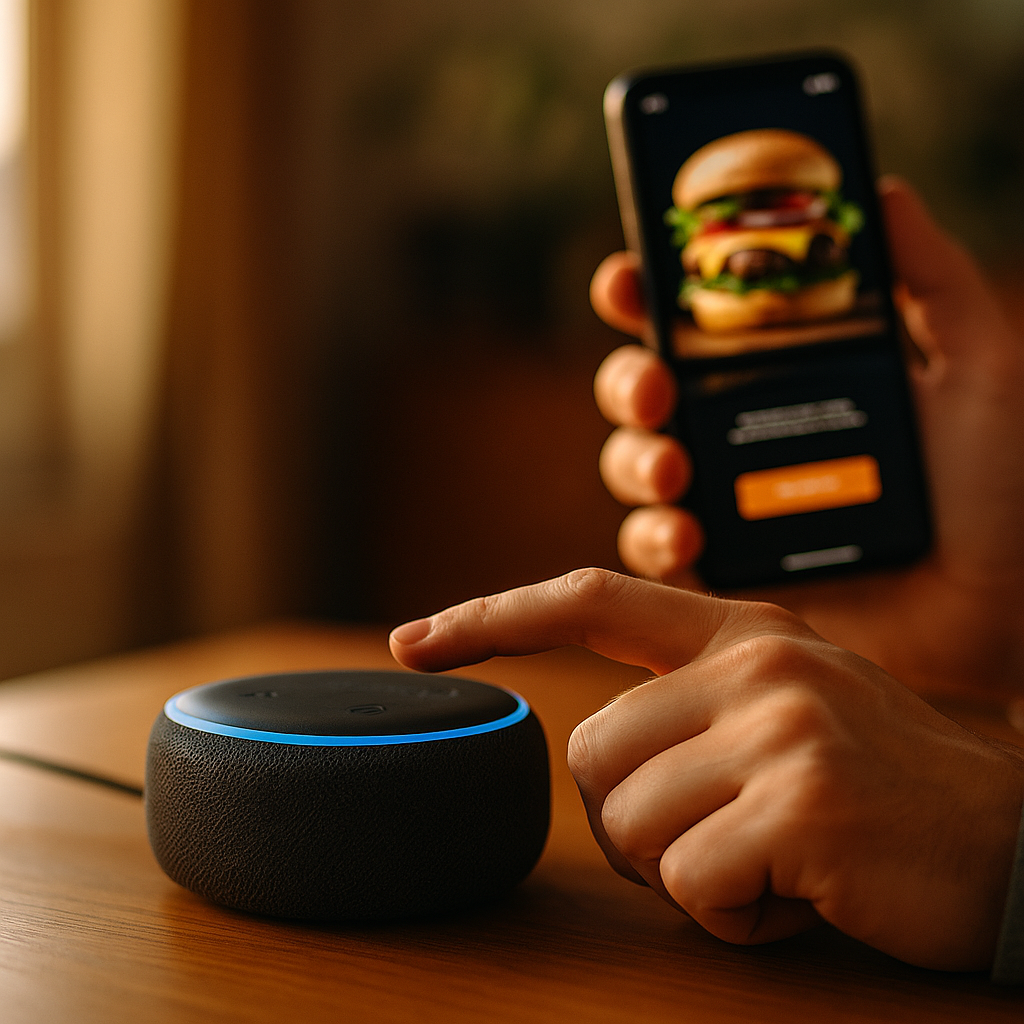
By 2027, most consumer chat interactions won’t touch a search results page at all. Ads in AI assistants are already testing in Perplexity, ChatGPT, and Gemini, and the brands treating this as a future problem are going to get outbid by the ones building for it now. This isn’t a hypothetical channel. It’s the next real estate grab in marketing, and the land rush has already started.
Why the Chat Window Is Becoming an Ad Unit
Search engines took two decades to fully monetize. AI assistants are compressing that timeline into quarters, not years. OpenAI has confirmed it’s testing commerce and sponsored placements inside ChatGPT. Perplexity has run sponsored answer slots since last year. Google is folding commercial links directly into AI Overviews and AI Mode responses. Meta AI, Microsoft Copilot, and Amazon’s Rufus are all circling the same opportunity: a conversational surface where the user asks a question and gets a single, trusted-feeling answer with a product recommendation baked in.
The appeal for platforms is obvious. Subscription revenue alone doesn’t cover the compute costs of serving hundreds of millions of daily conversations. Advertising is the only model that scales fast enough. eMarketer and Statista have both flagged conversational AI as one of the fastest-growing ad inventory categories to watch, even though standardized measurement still doesn’t exist. That gap between platform urgency and marketer readiness is exactly where risk lives.
The brands winning early placement in AI assistant answers won’t be the ones with the biggest media budgets. They’ll be the ones with the cleanest, most machine-readable product data.
What Does an Ad Actually Look Like Inside an AI Assistant?
Forget banner logic. There’s no fixed slot, no 300×250 unit, no guaranteed impression count. Instead, the emerging formats look more like:
- Sponsored citations: a brand’s product or article gets pulled into the assistant’s synthesized answer, tagged as sponsored, with a link back to the source.
- Conversational product cards: when a user asks for a recommendation, a paid listing appears alongside (or instead of) the organic answer.
- Agent-initiated upsells: shopping agents complete a task (book a flight, buy running shoes) and surface a sponsored add-on mid-transaction.
- Answer sponsorship: a brand pays to have its data source prioritized in retrieval, similar to how sponsored search results once worked, but wrapped inside natural language.
None of these behave like a traditional impression. There’s no scroll depth, no click-through in the classic sense, sometimes no click at all. That’s why attribution has to be rebuilt from scratch, not bolted onto existing dashboards. We’ve covered this shift in detail in our piece on AI citation attribution, which is worth reading before you commit budget to this surface.
The Compliance Problem Nobody’s Solved Yet
Here’s the uncomfortable part. Sponsored content inside a conversational answer blurs the line between editorial trust and paid placement in a way banner ads never did. When ChatGPT tells a user “the best option for you is X,” and X is a paid placement, does the user know that? The FTC’s endorsement guidelines already require clear and conspicuous disclosure for sponsored content, and there’s no reason that standard stops at the chat window. Regulators in the UK have signaled similar concerns through the ICO’s guidance on AI transparency.
Brands that treat this as a gray area now are setting themselves up for exactly the kind of enforcement action that hit influencer marketing a few years back, except this time the “influencer” is a language model, and the disclosure mechanism doesn’t exist yet in most interfaces.
Practically, this means legal and compliance teams need a seat at the table before media buying even starts. If your organization already has a framework for AI governance, extend it. If not, start with something like the checklist in AI access controls checklist, which was built for marketing AI generally but applies directly to who can approve sponsored placements inside assistant answers.
Budget Reallocation Is Coming Whether You Plan for It or Not
Search budgets have been the biggest, most predictable line item in performance marketing for twenty years. That predictability is ending. As more queries get resolved entirely inside an AI assistant, without a visit to a traditional search results page, the click-based model that search budgets were built on starts to erode. HubSpot and Statista have both published research showing consumer trust in AI-generated recommendations climbing steadily, especially among users under 35, which only accelerates the shift.
What should brands actually do with budget right now? A few practical moves:
- Set aside a small test budget (5 to 8 percent of digital media spend is a reasonable starting range) specifically for conversational AI placements, separate from search and social.
- Audit your product feed and structured data now. Assistants pull from retrieval systems, and if your data isn’t clean, you’re invisible regardless of budget. Our breakdown of AI answer engine citations covers the technical baseline.
- Don’t cut search budgets prematurely. Assistants are additive to the funnel right now, not a full replacement. Cutting too fast leaves a visibility gap.
The mistake most teams will make is waiting for standardized measurement before testing. That’s backwards. The platforms will build measurement standards around whoever’s already spending, not the other way around.
Governance: Who Approves an AI-Native Ad Buy?
Traditional media buying has clear checkpoints: creative review, legal sign-off, brand safety scans, placement approval. Agentic buying inside AI assistants often skips several of those checkpoints by design, because the whole appeal is speed. That’s a real tension. If your media buying agent (human or AI-driven) can push a sponsored placement live without a compliance check, you’re one bad prompt away from a disclosure violation or a brand-unsafe adjacency.
This is exactly the scenario covered in media buying governance checklist, and it applies directly here. Build the approval chain before the ad unit exists, not after the first complaint lands. Rollback capability matters too. If an AI assistant surfaces a claim your brand didn’t approve, or misattributes a product feature, you need a documented way to pull that placement fast, not a week-long ticket process.
If your team can’t answer “who approved this placement and how do we pull it” in under an hour, you’re not ready to buy ads inside an AI assistant yet.
Measurement Will Look Nothing Like Last-Click
Attribution inside conversational surfaces is genuinely unsolved at scale. There’s no universal pixel, no consistent way to track a “citation” the way you’d track a click. What forward-leaning teams are doing instead is treating AI assistant visibility as a top-of-funnel signal, similar to how brand search lift or share-of-voice worked before performance marketing ate the budget conversation. Pair that with first-party data capture wherever the assistant does drive a session, and you start building a usable model over time. Our piece on search strategy for AI agents goes deeper into rebuilding funnel logic for a zero-click reality, and it’s a useful companion to whatever measurement framework you build for paid placements specifically.
Don’t expect the platforms to hand you clean data quickly. OpenAI, Perplexity, and Google are all still early in exposing advertiser-facing analytics for these formats. Ask vendors directly what reporting they commit to before signing anything, and get it in writing.
A Short Readiness Checklist
- Structured product data audited and machine-readable within the next quarter.
- Legal review of disclosure language for AI-surfaced sponsored content.
- A named approver for any AI-native ad placement, with rollback authority.
- A test budget ring-fenced separately from search and social, sized to learn without overcommitting.
- A measurement framework that treats assistant visibility as a leading indicator, not a last-click conversion.
Platforms like Meta’s advertising resources and Google’s ad platform documentation are starting to publish early guidance on AI-integrated placements. Check them quarterly. This category is moving fast enough that guidance issued six months ago may already be outdated.
Frequently Asked Questions
What are ads in AI assistants exactly?
They’re sponsored placements that appear inside conversational AI tools like ChatGPT, Perplexity, or Gemini, showing up as recommended products, sponsored citations, or paid answer prioritization rather than traditional banner or search ads.
Are ads inside AI assistants regulated yet?
Not with dedicated rules specific to this format, but existing disclosure requirements from bodies like the FTC still apply. Sponsored content inside an AI answer likely needs clear disclosure, even though enforcement mechanisms are still catching up to the technology.
How should brands budget for this new ad surface?
Start with a small, ring-fenced test budget separate from existing search and social spend. Prioritize structured data readiness first, since visibility inside an assistant depends more on clean product data than raw ad spend.
Will ads in AI assistants replace search advertising?
Not immediately. Right now the two are additive, with assistants handling a growing share of query volume that used to go to search engines. Cutting search budgets too early leaves a visibility gap most brands can’t afford yet.
What’s the biggest risk brands face with this ad surface?
Disclosure and brand safety. Sponsored content blended into a trusted-feeling conversational answer creates compliance exposure if it’s not clearly labeled, and agentic buying systems can push placements live faster than compliance teams can review them.
The teams that treat ads in AI assistants as a data and governance problem first, and a media buying problem second, will own this surface before the CPMs catch up. Start the structured data audit this week. The budget conversation can wait a quarter. The data readiness gap can’t.
Top Influencer Marketing Agencies
The leading agencies shaping influencer marketing in 2026
Agencies ranked by campaign performance, client diversity, platform expertise, proven ROI, industry recognition, and client satisfaction. Assessed through verified case studies, reviews, and industry consultations.
Moburst

-
2

The Shelf
Boutique Beauty & Lifestyle Influencer AgencyA data-driven boutique agency specializing exclusively in beauty, wellness, and lifestyle influencer campaigns on Instagram and TikTok. Best for brands already focused on the beauty/personal care space that need curated, aesthetic-driven content.Clients: Pepsi, The Honest Company, Hims, Elf Cosmetics, Pure LeafVisit The Shelf → -
3

Audiencly
Niche Gaming & Esports Influencer AgencyA specialized agency focused exclusively on gaming and esports creators on YouTube, Twitch, and TikTok. Ideal if your campaign is 100% gaming-focused — from game launches to hardware and esports events.Clients: Epic Games, NordVPN, Ubisoft, Wargaming, Tencent GamesVisit Audiencly → -
4

Viral Nation
Global Influencer Marketing & Talent AgencyA dual talent management and marketing agency with proprietary brand safety tools and a global creator network spanning nano-influencers to celebrities across all major platforms.Clients: Meta, Activision Blizzard, Energizer, Aston Martin, WalmartVisit Viral Nation → -
5

The Influencer Marketing Factory
TikTok, Instagram & YouTube CampaignsA full-service agency with strong TikTok expertise, offering end-to-end campaign management from influencer discovery through performance reporting with a focus on platform-native content.Clients: Google, Snapchat, Universal Music, Bumble, YelpVisit TIMF → -
6

NeoReach
Enterprise Analytics & Influencer CampaignsAn enterprise-focused agency combining managed campaigns with a powerful self-service data platform for influencer search, audience analytics, and attribution modeling.Clients: Amazon, Airbnb, Netflix, Honda, The New York TimesVisit NeoReach → -
7

Ubiquitous
Creator-First Marketing PlatformA tech-driven platform combining self-service tools with managed campaign options, emphasizing speed and scalability for brands managing multiple influencer relationships.Clients: Lyft, Disney, Target, American Eagle, NetflixVisit Ubiquitous → -
8

Obviously
Scalable Enterprise Influencer CampaignsA tech-enabled agency built for high-volume campaigns, coordinating hundreds of creators simultaneously with end-to-end logistics, content rights management, and product seeding.Clients: Google, Ulta Beauty, Converse, AmazonVisit Obviously →