


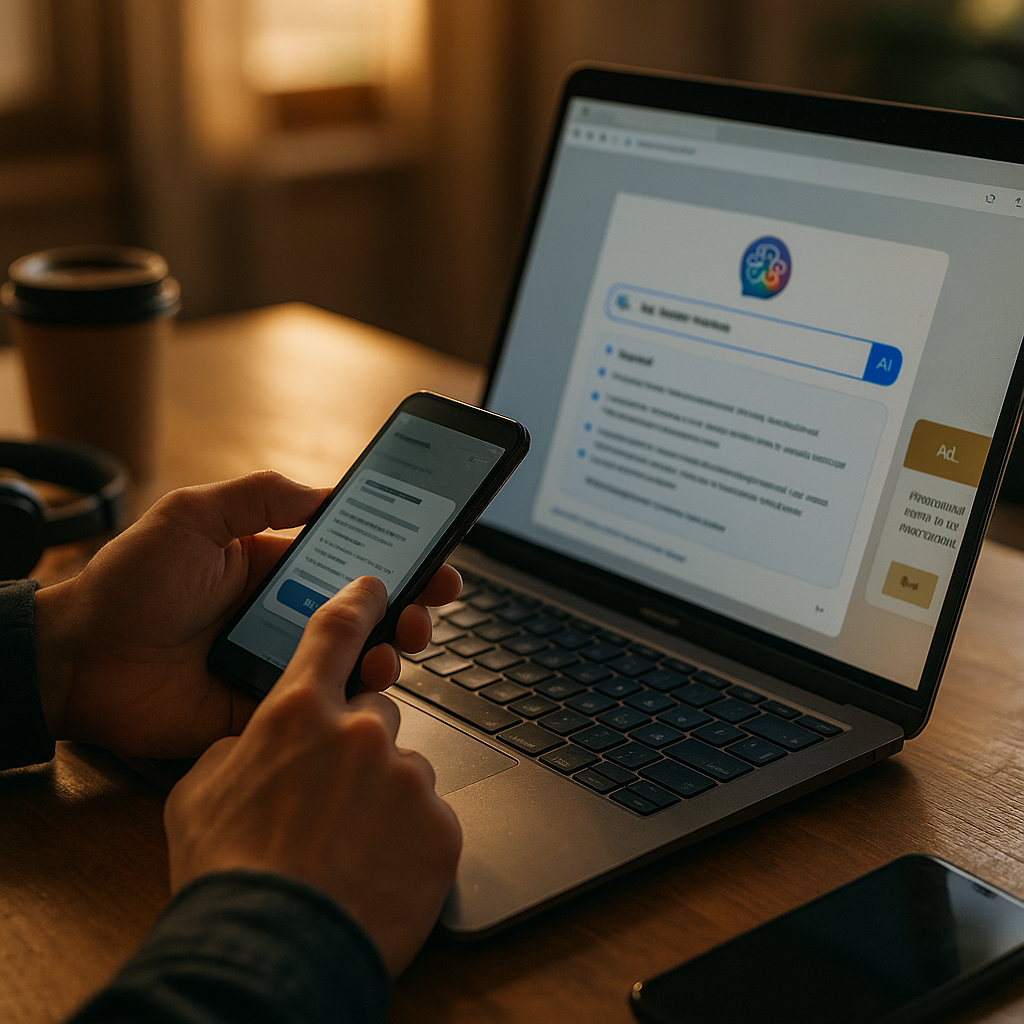
Perplexity now serves ads inside its answers. Google’s AI Overviews carry sponsored placements in testing. OpenAI has confirmed commerce and advertising features are coming to ChatGPT. If you’re still treating AI answer engines as an SEO side quest, you’re already behind. This is a paid distribution channel forming in real time, and the brands buying in early will own the citations that everyone else fights over later.
The Free Ride Is Ending
For the past two years, brands got mentioned in AI-generated answers essentially for free. Good content, strong backlinks, clean structured data, and you had a shot at being cited by ChatGPT, Gemini, or Perplexity. That era is closing fast.
Answer engines are expensive to run. Every query costs compute. Every citation requires retrieval, ranking, and generation. Unlike a traditional search results page loaded with ten blue links and a sidebar of ads, an AI answer often gives the user exactly one response, maybe two. There’s no inventory to sell in the old sense. So the platforms are inventing new inventory: sponsored citations, branded product cards inside chat responses, and paid placement within retrieval-augmented answers.
Perplexity’s advertising model already places “sponsored” tags on certain answers. Microsoft has talked openly about advertising inside Copilot. Google is testing ads within AI Overviews after months of publisher pressure over zero click search traffic loss. None of this is speculative anymore. It’s rolling out.
Answer engines aren’t search results with better writing. They’re a new media environment where citation is inventory, and inventory gets monetized.
Why Brands Should Care Right Now
Think about how your customers actually research purchases now. A growing share never touch a traditional search engine results page. They ask ChatGPT to compare skincare brands. They ask Gemini which running shoe fits their gait. They ask Perplexity to summarize reviews of a SaaS tool before a demo call. This isn’t a niche behavior anymore, it’s mainstream discovery, and it happens with zero clicks to your website.
That shift already forced a rethink of attribution and ROI measurement, something covered in depth around how zero click search changes influencer ROI math. Now add paid placement into the mix. If competitors are buying their way into the citation set and you’re relying purely on organic mentions, you’re conceding the exact moment a buyer is deciding what to consider.
Here’s the uncomfortable part: organic citation in AI answers is getting harder, not easier, as more brands optimize for it. Machine readability compliance work, the technical lift required to make your content parseable by AI crawlers, has become its own ops burden. Paid placement offers a shortcut, and platforms know it.
What “Paid” Actually Looks Like Here
This isn’t banner ads bolted onto a chat window. Early formats include:
- Sponsored product cards embedded directly in conversational answers, similar to shopping ads but rendered as part of the AI’s response.
- Paid boosts to citation ranking, where a brand’s content gets weighted higher in the retrieval step that feeds the answer engine.
- Brand partnership placements, where creators or publishers are paid to produce content specifically structured for AI ingestion and citation.
- Affiliate-style commerce links surfaced when an answer engine recommends a specific product or service.
Some of this mirrors what already happened in retail media networks, where platforms turned browsing behavior into an ad auction. Answer engines are running the same playbook on conversational search.
Where the Creator Economy Fits In
This matters enormously for anyone running influencer programs. AI answer engines pull from a mix of sources: brand sites, review platforms, forums, and increasingly, creator content that’s been indexed and cited as a trusted third-party voice. A well-optimized creator post can become the exact chunk of text an AI answer quotes when someone asks “is this product worth it.”
That’s a distribution opportunity most brands haven’t priced in yet. If you’re paying creators purely for feed reach or view-through metrics, tracked the way view-through rate overtakes CTR as a KPI, you’re missing the fact that the same content might also be earning (or could be paid to earn) citation inside an AI answer months after it was published. That’s a second, durable distribution surface with a completely different lifecycle than a 24-hour Reels spike.
Brands are already restructuring creator contracts around long-term value rather than one-off reach, a shift documented in how LTV metrics replace reach in influencer pay structures. Add “AI citation potential” as a line item and you’re looking at the next negotiation point in creator deals.
A creator post that gets cited by an AI answer engine six months after publishing is functioning like evergreen paid media, without the recurring media spend, until platforms start charging for that placement too.
The Risk Nobody’s Pricing In
Paid placement inside AI answers raises compliance questions that the FTC hasn’t fully addressed yet. Sponsored content disclosure rules were built for social posts and blog reviews, not for a paragraph generated on the fly by a language model that blends paid and organic sources into one seamless-sounding answer. Who’s responsible for disclosure when the AI itself decides how to phrase the recommendation? The brand? The platform? Neither has a clean answer right now.
Marketers should watch FTC guidance closely as this evolves, because enforcement will eventually catch up to the format. In the meantime, brands buying into AI answer placement should document everything: what was paid for, how it was labeled, and what disclosure language, if any, the platform commits to displaying.
There’s also a measurement risk. Traditional platforms report impressions, clicks, and conversions. Answer engines, by design, often don’t tell you when or how often your brand was cited. That’s an attribution black hole that echoes the challenges already flagged in discovery fragmentation across five channels. Budget owners need to demand better reporting before committing serious spend, not after.
How to Actually Prepare a Budget Line for This
You don’t need to overhaul your media plan tomorrow. But you should start treating AI answer engines as a distinct line item with its own strategy, the same way retail media and connected TV earned dedicated budgets a few years ago.
- Audit your current citation footprint. Ask ChatGPT, Perplexity, and Gemini the questions your buyers ask. See if and how you show up.
- Structure content for retrieval, not just ranking. Clear headers, direct answers, and data-backed claims get cited more often than narrative fluff.
- Pilot paid placements where available. Perplexity’s advertising program is the most mature entry point right now. Test small, measure citation frequency, iterate.
- Fold creator content into the strategy. Brief creators to produce content that answers specific, high-intent questions, since that’s the format AI engines prefer to cite.
- Track share of AI voice as a KPI. Borrow from how brands already track AI brand monitoring, and extend it to citation frequency across major answer engines.
Tools from HubSpot and monitoring platforms like Sprout Social are beginning to add AI visibility tracking features. Expect this category to expand quickly as demand grows. Analysts at eMarketer have also flagged AI-driven discovery as one of the fastest-growing shifts in how consumers research purchases, which only strengthens the case for treating it as a budgeted channel rather than an SEO afterthought.
The brands winning this next phase won’t be the ones who write the best blog posts. They’ll be the ones who understand that citation is inventory, inventory gets priced, and pricing always eventually favors whoever shows up first with a checkbook and a clear measurement plan.
Frequently Asked Questions
What are AI answer engines?
AI answer engines are tools like ChatGPT, Perplexity, and Google’s AI Overviews that generate direct answers to user queries by retrieving and synthesizing information from multiple sources, rather than returning a list of links.
How are AI answer engines becoming a paid channel?
Platforms are introducing sponsored citations, paid product cards, and boosted retrieval ranking, turning what used to be organic-only visibility into an auction-based advertising system similar to search ads or retail media.
Can brands buy placement inside ChatGPT or Perplexity answers today?
Perplexity has an active advertising program with sponsored placements. OpenAI and Google are testing commerce and ad features but have not rolled out full self-serve advertising for all brands yet.
How does this affect influencer marketing budgets?
Creator content that gets cited by AI answer engines functions as long-term distribution, separate from social reach metrics, which means contracts and KPIs need to account for citation potential alongside views and engagement.
What compliance risks come with paid AI answer placement?
Disclosure rules built for social media sponsorships haven’t been fully adapted for AI-generated answers that blend paid and organic content, creating uncertainty around who is responsible for labeling sponsored recommendations.
Top Influencer Marketing Agencies
The leading agencies shaping influencer marketing in 2026
Agencies ranked by campaign performance, client diversity, platform expertise, proven ROI, industry recognition, and client satisfaction. Assessed through verified case studies, reviews, and industry consultations.
Moburst

-
2

The Shelf
Boutique Beauty & Lifestyle Influencer AgencyA data-driven boutique agency specializing exclusively in beauty, wellness, and lifestyle influencer campaigns on Instagram and TikTok. Best for brands already focused on the beauty/personal care space that need curated, aesthetic-driven content.Clients: Pepsi, The Honest Company, Hims, Elf Cosmetics, Pure LeafVisit The Shelf → -
3

Audiencly
Niche Gaming & Esports Influencer AgencyA specialized agency focused exclusively on gaming and esports creators on YouTube, Twitch, and TikTok. Ideal if your campaign is 100% gaming-focused — from game launches to hardware and esports events.Clients: Epic Games, NordVPN, Ubisoft, Wargaming, Tencent GamesVisit Audiencly → -
4

Viral Nation
Global Influencer Marketing & Talent AgencyA dual talent management and marketing agency with proprietary brand safety tools and a global creator network spanning nano-influencers to celebrities across all major platforms.Clients: Meta, Activision Blizzard, Energizer, Aston Martin, WalmartVisit Viral Nation → -
5

The Influencer Marketing Factory
TikTok, Instagram & YouTube CampaignsA full-service agency with strong TikTok expertise, offering end-to-end campaign management from influencer discovery through performance reporting with a focus on platform-native content.Clients: Google, Snapchat, Universal Music, Bumble, YelpVisit TIMF → -
6

NeoReach
Enterprise Analytics & Influencer CampaignsAn enterprise-focused agency combining managed campaigns with a powerful self-service data platform for influencer search, audience analytics, and attribution modeling.Clients: Amazon, Airbnb, Netflix, Honda, The New York TimesVisit NeoReach → -
7

Ubiquitous
Creator-First Marketing PlatformA tech-driven platform combining self-service tools with managed campaign options, emphasizing speed and scalability for brands managing multiple influencer relationships.Clients: Lyft, Disney, Target, American Eagle, NetflixVisit Ubiquitous → -
8

Obviously
Scalable Enterprise Influencer CampaignsA tech-enabled agency built for high-volume campaigns, coordinating hundreds of creators simultaneously with end-to-end logistics, content rights management, and product seeding.Clients: Google, Ulta Beauty, Converse, AmazonVisit Obviously →