


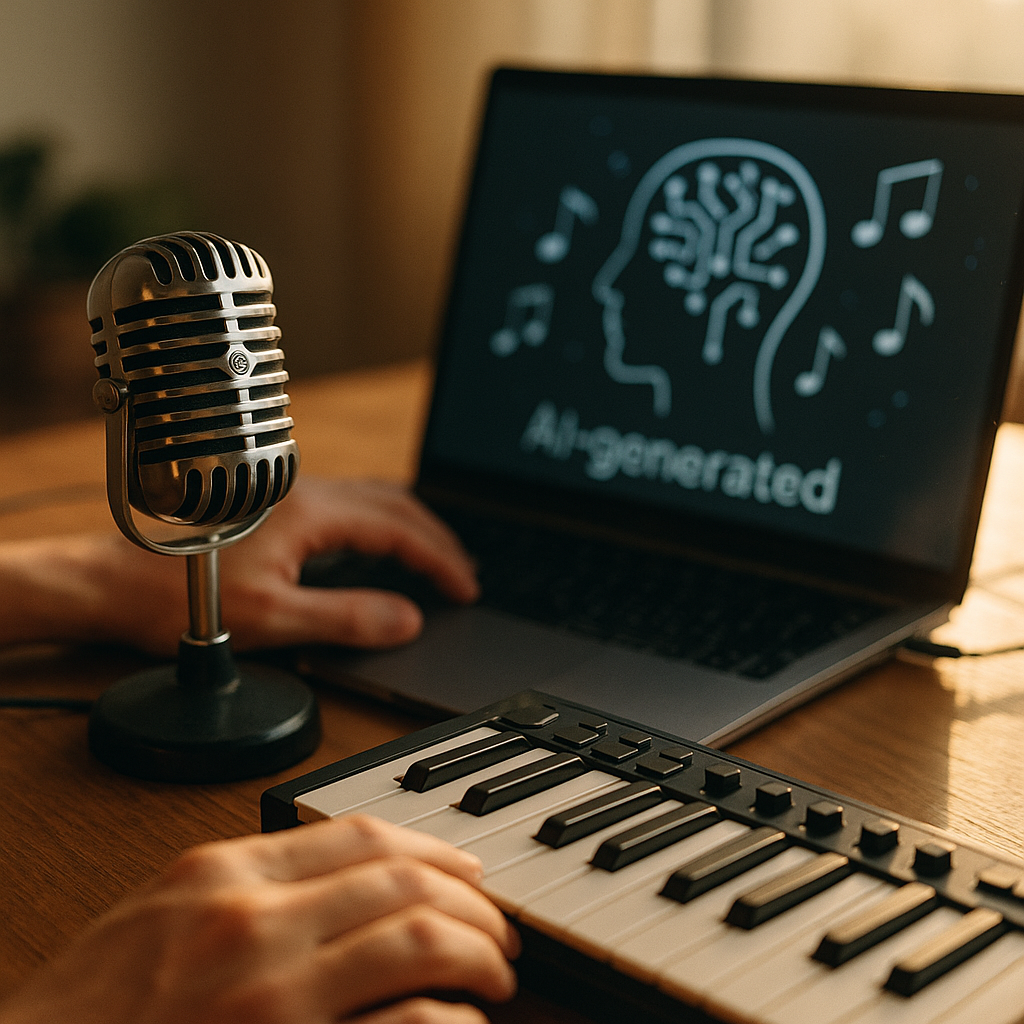
Six seconds. That’s roughly how long a listener needs to identify a brand by sound alone, according to research cited by HubSpot on audio branding recall. Yet most creator content still ships silent on the audio front, borrowing trending sounds that belong to nobody and mean even less. AI-generated sonic branding is changing that math, letting brands generate custom jingles, stingers, and audio logos for creator content at a speed and price point that was unthinkable three years ago.
This isn’t about slapping a corporate jingle onto a TikTok. It’s about building a flexible sound identity that AI tools can remix per creator, per platform, per campaign moment, without a studio session every time.
Why Sound Got Left Behind in Creator Strategy
Brands obsess over visual identity. Logo guidelines run forty pages. Color palettes get locked down to hex codes. Then audio? An afterthought, usually solved by whatever trending sound the creator picked that week. That’s a missed opportunity, and a costly one.
Sonic branding has quietly been one of marketing’s highest-ROI, lowest-investment channels for decades. Think of the Netflix “ta-dum” or the Intel five-note chime. Those assets cost a fraction of a Super Bowl spot but generate recognition that outlives most ad campaigns. The problem was always scale: composing, licensing, and distributing custom audio across hundreds of creator videos required a production pipeline most brands didn’t have.
AI removes that bottleneck. Tools like AIVA, Soundraw, and Meta’s own music generation research now let brand teams generate dozens of on-brand variations of a core melody in minutes, each tuned to a different content mood, whether that’s a calm ASMR unboxing or a high-energy comparison video.
A distinct four-note audio signature, repeated across even a fraction of creator content, builds recall faster than another visual logo placement ever will.
What AI-Generated Sonic Branding Actually Looks Like in Practice
Strip away the buzzwords and the workflow is fairly simple. A brand defines a core sonic identity (tempo range, instrumentation, emotional tone) once. Then an AI model generates variations of that identity matched to specific content formats: a punchy 2-second stinger for a hook, a longer ambient loop for background, a resolving chime for a call-to-action moment.
- Signature stingers: Short, 1 to 3 second audio marks that bookend creator videos, similar to how podcast networks use intro tones.
- Adaptive background scores: AI-generated instrumental beds that match a brand’s mood without licensing risk, useful for ASMR product demos where music has to sit quietly under sound design.
- Voice-matched jingles: Short vocal hooks generated in a creator’s own vocal tone or a brand mascot voice, useful for multi-language rollouts.
- Dynamic CTAs: Audio cues timed to on-screen text or product reveals, similar in spirit to the pacing tricks used in a price tag flip reveal.
The output isn’t a single jingle. It’s a sonic system: a family of related audio assets that creators (or their editors) can drop into content without needing music theory or a composer on retainer.
The ROI Case: Why Marketing Leaders Should Care
Let’s talk numbers, because that’s what gets budget approved. Custom composition for a single branded jingle traditionally runs anywhere from $5,000 to $50,000 depending on usage rights and talent involved, per industry estimates tracked by Statista on music licensing costs. Scale that across even twenty creators producing weekly content, and traditional composition is a non-starter financially.
AI generation collapses that cost structure. Platforms charging monthly subscription fees in the low hundreds of dollars can output unlimited variations, meaning the marginal cost of a new jingle version approaches zero. That reallocates budget toward what actually moves performance: creator fees, paid amplification, and testing.
There’s a risk mitigation angle too. Trending sounds carry copyright ambiguity and platform-specific licensing quirks that shift constantly. Brands that lean entirely on trending audio are building campaigns on borrowed, unstable ground. Custom AI-generated audio, cleared for commercial use at the point of generation, sidesteps that entirely. That’s a meaningful compliance win for legal and brand safety teams who’ve grown wary of takedown notices and monetization disputes.
Every campaign built on a trending sound is a campaign one platform algorithm shift away from losing its soundtrack entirely.
Matching Sonic Assets to Content Format
Not every content style needs the same sonic treatment, and forcing a heavy jingle onto the wrong format kills authenticity fast. This is where brief writers need to think format-first.
Silent and low-audio formats. Content like silent vlogs or silent store walkthroughs intentionally strip dialogue to build intimacy. A loud jingle would wreck that mood. Here, the sonic brand shows up as a barely-there ambient tone or a single closing note, present but not intrusive.
Caption-driven content. Formats built around caption heavy TikToks rely on text pacing rather than voiceover. AI-generated audio here works best as rhythmic punctuation, small sonic beats that sync to caption reveals rather than melody that competes for attention.
High-energy comparison and reveal content. Formats like comparison and versus videos or bag reveal videos benefit from a fuller sonic signature, since the format already invites bold pacing and clear winners or losers.
Episodic and serialized formats. An episodic creator series is arguably the strongest use case for sonic branding, since a recurring audio motif builds anticipation the same way a TV theme does, training audiences to associate the sound with “new episode is live.”
Building the Brief: What Marketing Teams Need to Specify
Handing a creator an AI-generated jingle without context is almost as bad as no jingle at all. The brief needs guardrails, not just a file.
- Define the emotional register. Playful, premium, urgent, calm. AI tools generate wildly different output depending on the emotional prompt, so specificity matters more than genre.
- Set placement rules. Intro-only, outro-only, or woven throughout. This mirrors the pacing discipline used in structuring 15-second creator drops for retention, where every second is accounted for.
- Specify volume and mix guidance. Creators need to know the jingle sits under dialogue, not over it, unless it’s a dedicated stinger moment.
- Clarify usage rights upfront. Confirm the AI platform’s licensing terms cover commercial use across all platforms the content will run on, not just the platform it was generated for.
- Provide reference examples. A short library of two or three approved variations gives creators room to choose the best fit rather than forcing a rigid, one-size match, similar to the flexibility built into brand safety without rigid rules frameworks.
Skip the brief and you’ll get inconsistent audio application, which defeats the entire purpose of building a recognizable sonic identity in the first place.
Where This Fits Alongside Other AI Production Tools
Sonic branding doesn’t operate in isolation. It’s part of a broader shift toward AI-assisted creator production that’s already reshaping visual and language workflows. Brands using AI-generated B-roll to cut reshoot costs are applying the same logic to audio: generate variations fast, test what resonates, deploy without a full production cycle. Similarly, teams running AI dubbed creator content across ten languages now have a parallel opportunity to localize sonic branding, adjusting instrumentation or tonal choices to match regional listening preferences rather than exporting one Western-centric jingle globally.
The common thread across all of these tools is operational efficiency without sacrificing brand control. That’s the pitch marketing leaders should be making internally: not “AI replaces creative judgment” but “AI removes the production bottleneck that was preventing creative judgment from scaling.”
Risks and Compliance Notes Worth Flagging
A few things brand and legal teams should watch before rolling this out broadly.
First, disclosure obligations don’t disappear because audio is synthetic. If a jingle is core to a sponsored post’s brand identity, standard FTC disclosure guidance for paid partnerships still applies to the overall content, regardless of what generated the soundtrack.
Second, platform-specific music licensing rules still matter. Even AI-generated audio can trigger content ID matches if it too closely resembles existing copyrighted work, so brands should vet outputs through the AI platform’s own clearance process before wide distribution. Check each platform’s content policies, including TikTok’s advertising guidelines and Meta’s business tools, for any audio-specific restrictions tied to commercial use.
Third, don’t over-rotate. A sonic identity used identically in every single piece of content starts to feel like an ad read, undermining the authentic tone that made creator marketing effective to begin with. Build variation into the system from day one.
FAQs
What is AI-generated sonic branding?
It’s the use of AI tools to compose custom audio assets, such as jingles, stingers, and background scores, that reflect a brand’s identity and can be generated in multiple variations at low cost, rather than commissioning a single fixed piece of music.
How much does AI-generated sonic branding cost compared to traditional composition?
Traditional custom jingles can cost thousands of dollars per track depending on rights and talent, while AI platforms typically operate on subscription models costing a few hundred dollars per month for unlimited generation, making per-asset cost dramatically lower.
Can creators use AI-generated jingles without licensing issues?
Most reputable AI music generation platforms include commercial usage rights as part of their licensing terms, but brands should always confirm the specific platform’s terms cover the exact distribution channels and monetization models being used.
Does sonic branding work for silent or low-dialogue creator content?
Yes, though the application needs to be subtle. Formats like silent vlogs or ASMR content benefit from minimal, ambient sonic branding rather than a full jingle, preserving the intimate tone that makes those formats effective.
How do brands measure the ROI of sonic branding in creator content?
Brands typically track unaided brand recall through surveys, monitor watch-through rates on content using branded audio versus generic trending sounds, and compare production cost savings against traditional composition budgets.
FAQs
What is AI-generated sonic branding?
It’s the use of AI tools to compose custom audio assets, such as jingles, stingers, and background scores, that reflect a brand’s identity and can be generated in multiple variations at low cost, rather than commissioning a single fixed piece of music.
How much does AI-generated sonic branding cost compared to traditional composition?
Traditional custom jingles can cost thousands of dollars per track depending on rights and talent, while AI platforms typically operate on subscription models costing a few hundred dollars per month for unlimited generation, making per-asset cost dramatically lower.
Can creators use AI-generated jingles without licensing issues?
Most reputable AI music generation platforms include commercial usage rights as part of their licensing terms, but brands should always confirm the specific platform’s terms cover the exact distribution channels and monetization models being used.
Does sonic branding work for silent or low-dialogue creator content?
Yes, though the application needs to be subtle. Formats like silent vlogs or ASMR content benefit from minimal, ambient sonic branding rather than a full jingle, preserving the intimate tone that makes those formats effective.
How do brands measure the ROI of sonic branding in creator content?
Brands typically track unaided brand recall through surveys, monitor watch-through rates on content using branded audio versus generic trending sounds, and compare production cost savings against traditional composition budgets.
Start small: build one four-note sonic signature, brief three creators to use it in different formats, and track recall against a control group running trending sounds. The data will make the budget case for you.
Top Influencer Marketing Agencies
The leading agencies shaping influencer marketing in 2026
Agencies ranked by campaign performance, client diversity, platform expertise, proven ROI, industry recognition, and client satisfaction. Assessed through verified case studies, reviews, and industry consultations.
Moburst

-
2

The Shelf
Boutique Beauty & Lifestyle Influencer AgencyA data-driven boutique agency specializing exclusively in beauty, wellness, and lifestyle influencer campaigns on Instagram and TikTok. Best for brands already focused on the beauty/personal care space that need curated, aesthetic-driven content.Clients: Pepsi, The Honest Company, Hims, Elf Cosmetics, Pure LeafVisit The Shelf → -
3

Audiencly
Niche Gaming & Esports Influencer AgencyA specialized agency focused exclusively on gaming and esports creators on YouTube, Twitch, and TikTok. Ideal if your campaign is 100% gaming-focused — from game launches to hardware and esports events.Clients: Epic Games, NordVPN, Ubisoft, Wargaming, Tencent GamesVisit Audiencly → -
4

Viral Nation
Global Influencer Marketing & Talent AgencyA dual talent management and marketing agency with proprietary brand safety tools and a global creator network spanning nano-influencers to celebrities across all major platforms.Clients: Meta, Activision Blizzard, Energizer, Aston Martin, WalmartVisit Viral Nation → -
5

The Influencer Marketing Factory
TikTok, Instagram & YouTube CampaignsA full-service agency with strong TikTok expertise, offering end-to-end campaign management from influencer discovery through performance reporting with a focus on platform-native content.Clients: Google, Snapchat, Universal Music, Bumble, YelpVisit TIMF → -
6

NeoReach
Enterprise Analytics & Influencer CampaignsAn enterprise-focused agency combining managed campaigns with a powerful self-service data platform for influencer search, audience analytics, and attribution modeling.Clients: Amazon, Airbnb, Netflix, Honda, The New York TimesVisit NeoReach → -
7

Ubiquitous
Creator-First Marketing PlatformA tech-driven platform combining self-service tools with managed campaign options, emphasizing speed and scalability for brands managing multiple influencer relationships.Clients: Lyft, Disney, Target, American Eagle, NetflixVisit Ubiquitous → -
8

Obviously
Scalable Enterprise Influencer CampaignsA tech-enabled agency built for high-volume campaigns, coordinating hundreds of creators simultaneously with end-to-end logistics, content rights management, and product seeding.Clients: Google, Ulta Beauty, Converse, AmazonVisit Obviously →