


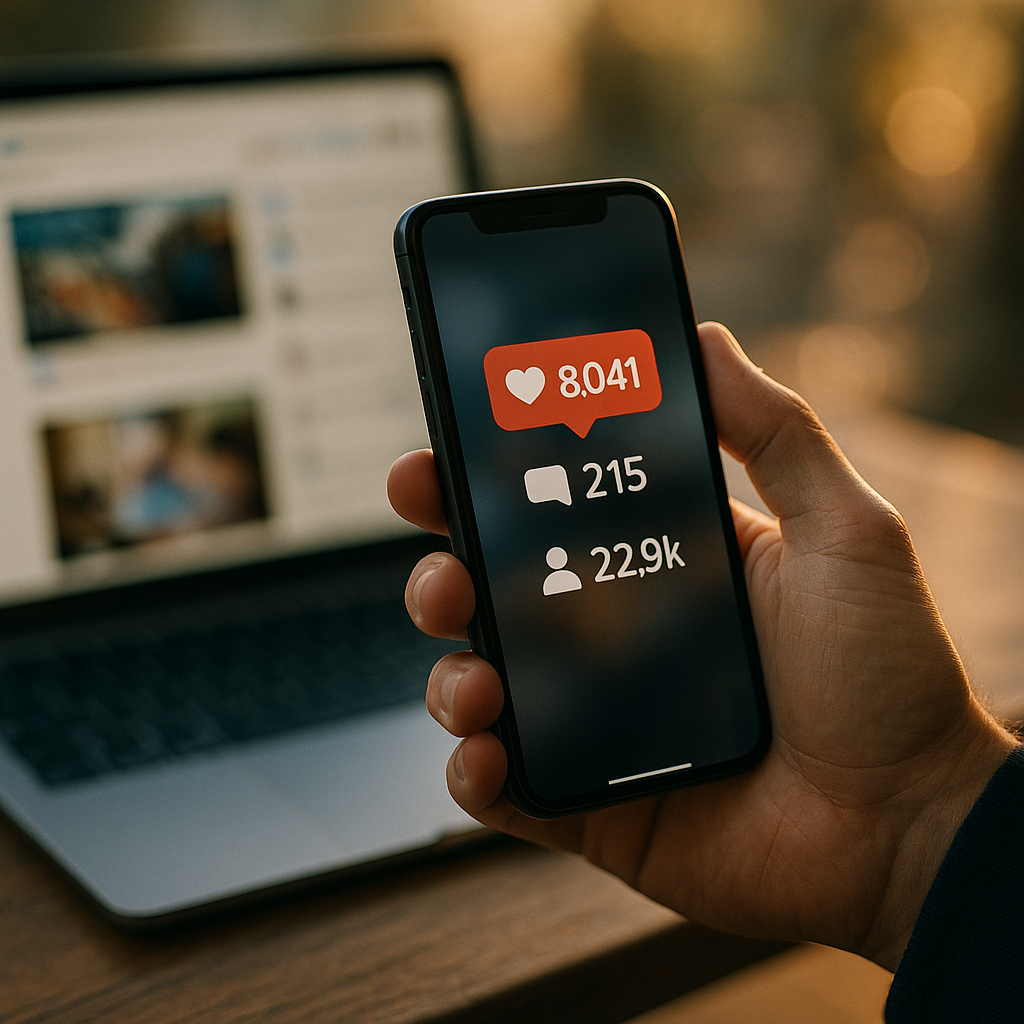
A creator with 40,000 followers and a 9% comment rate is now outperforming a 500,000-follower account with a 0.4% engagement rate, on the same platform, with the same budget. That’s not an anomaly anymore. It’s the new default. Algorithmic curation has quietly shifted its scoring logic toward engagement density, and most brand media plans haven’t caught up.
If your influencer strategy still leads with follower count as the primary filter, you’re optimizing for a metric the platforms themselves have deprioritized. This piece breaks down what changed, why it changed, and what it means for how you brief, budget, and measure creator campaigns.
What “Engagement Density” Actually Means
Engagement density isn’t just engagement rate. It’s a compressed signal: how much interaction happens per unit of reach, weighted by speed and depth. Platforms like TikTok, Instagram, and YouTube now factor in how quickly a post accumulates saves, shares, and replies relative to its initial impression pool, not just the raw total over 24 or 48 hours.
A post that gets 2,000 comments in the first 20 minutes signals something different than one that gets 2,000 comments over three days. The former reads as “this content is compelling right now.” The latter reads as “this content has an audience, eventually.” Algorithms increasingly favor the first pattern because it correlates with session retention, the metric platforms actually monetize.
Reach tells a platform how many people saw something. Engagement density tells it how many people cared enough to act within a narrow window, and that’s the signal advertisers should be chasing too.
Why Platforms Made This Shift
This isn’t altruism. It’s retention economics. Meta, TikTok’s parent ByteDance, and YouTube all compete on time-on-app, and time-on-app is driven by content that keeps people scrolling, replying, and coming back, not content that simply reaches a lot of eyeballs once. A high-reach, low-engagement post is a dead end for the algorithm. It doesn’t generate the downstream behavior (comments, shares, re-visits) that keeps a session alive.
Industry data backs this up. Reports from eMarketer have repeatedly flagged declining organic reach alongside rising engagement-weighted ranking factors across major platforms. Meanwhile, Sprout Social’s engagement benchmarking research shows a widening gap between accounts with high follower counts and low interaction, versus smaller accounts with tight, responsive communities. The platforms are rewarding the latter with more distribution, not less.
For brands, this means the follower-count-first sourcing model that dominated the last decade is now actively working against campaign performance. You’re not just leaving efficiency on the table. You’re paying premium rates for creators whose content the algorithm is structurally less likely to amplify.
The Micro and Mid-Tier Advantage Isn’t New, But It’s Sharper Now
Marketers have talked about micro-influencer efficiency for years. What’s different now is the mechanism. It used to be a cost argument: smaller creators charge less per post, so your CPM looks better. Now it’s a distribution argument: smaller creators with dense, fast engagement get pushed harder by the algorithm itself, independent of what you’re paying them.
That changes how you build a roster. A brand that used to allocate 70% of influencer budget to a handful of macro names is often better served spreading that same spend across a wider bench of creators with proven engagement density, even if their follower counts look modest on paper. This is the exact logic behind the approach outlined in micro-influencer onboarding at scale, where volume and vetting replace single-creator bets.
How to Actually Measure Engagement Density (Not Just Rate)
Engagement rate divided by followers is a blunt instrument. It doesn’t capture timing, and timing is where the algorithm’s real signal lives. Here’s what a tighter measurement framework looks like:
- Velocity window: Track engagement accumulated in the first 1, 6, and 24 hours post-publish, not just the lifetime total.
- Interaction depth: Weight comments and shares higher than likes. A save or a share signals stronger intent than a passive tap.
- Reply-to-comment ratio: Creators who respond to their own comment sections tend to sustain engagement density longer, which platforms notice.
- Cross-post consistency: A creator who shows density across five consecutive posts is a safer bet than one with a single viral outlier.
Most brand-side analytics dashboards, including tools built on Meta Business Suite data, now expose enough granularity to build these views manually, even without a dedicated influencer platform. If you’re still pulling total follower count as your primary vetting metric, you’re using a spreadsheet from a different era.
Where This Shows Up Platform by Platform
The engagement-density weighting isn’t uniform. It behaves differently depending on the platform’s monetization model and content format.
Short-form video (TikTok, Reels): Density matters within the first hour more than anywhere else. A slow build kills distribution before it starts. This is why creator briefs increasingly emphasize hook strength and comment-bait framing over polish. The same logic underpins the shift covered in YouTube’s first-frame view rule, where early-moment retention now dictates downstream reach far more than total watch time ever did.
Long-form and community features: Platforms are also rewarding sustained, lower-volume interaction. The YouTube Community Tab is a good example: it’s a low-reach surface, but the engagement that happens there feeds retention signals brands routinely ignore because the numbers look small next to a video’s view count.
Search-adjacent formats: On platforms layering in search behavior, like TikTok’s search ad inventory, engagement density interacts with query intent, meaning a creator’s density score can directly affect how often their content surfaces against branded search terms.
If your media plan still ranks creators by follower count first and engagement rate second, you’re sequencing your vetting process backward relative to how the platforms actually distribute content today.
What This Means for Budget Allocation
Reallocating budget around engagement density doesn’t mean abandoning larger creators entirely. Big names still have value for top-of-funnel awareness campaigns where broad reach is genuinely the goal, like a product launch that needs mass visibility on day one. But for anything tied to conversion, consideration, or community-building, density-weighted creator selection consistently outperforms reach-weighted selection on cost per engagement and cost per action.
A practical split many brand teams are landing on: 20-30% of spend on high-reach creators for awareness spikes, and 70-80% on density-proven mid-tier and micro creators for the sustained engagement that actually drives algorithmic amplification. This mirrors patterns seen in cross-platform testing, including the format-agnostic approach detailed in the niche video ROI playbook, which treats reach as a secondary output of strong engagement rather than a primary goal.
There’s also a compliance angle worth flagging. As engagement-driven creator content increasingly overlaps with paid distribution and AI-assisted ad placements, disclosure requirements from the FTC still apply regardless of how a post got amplified. Don’t let a density-chasing strategy quietly erode disclosure discipline in pursuit of faster engagement windows.
A Quick Gut Check for Your Next Campaign Brief
Before your next round of creator sourcing, run the roster through three questions: Does this creator generate comments within the first hour, not just by the end of the week? Does their engagement come from replies and saves, or mostly passive likes? And would you still book them if their follower count were cut in half tomorrow? If the answer to that last one is no, you’re still buying reach, not density, and the algorithm has already priced that choice against you.
Frequently Asked Questions
What is engagement density in influencer marketing?
Engagement density measures how quickly and deeply an audience interacts with content relative to its reach, factoring in comments, shares, and saves within a compressed time window, rather than total engagement accumulated over days.
Why do platforms favor engagement density over follower reach now?
Platforms monetize time-on-app and session retention. Content that generates fast, deep interaction keeps users active longer, which is more valuable to the platform than raw reach from passive impressions.
Does this mean follower count no longer matters for creator selection?
Follower count still matters for top-of-funnel awareness goals, but it should no longer be the primary vetting metric. Engagement density is a stronger predictor of algorithmic amplification and campaign performance for most conversion-focused objectives.
How can brands measure engagement density before booking a creator?
Track engagement accumulated in the first 1, 6, and 24 hours post-publish, weight comments and shares above likes, and check for consistency across multiple recent posts rather than relying on a single viral outlier.
Does engagement density weighting differ across platforms?
Yes. Short-form video platforms weight the first hour heavily, community-based features reward sustained low-volume interaction over time, and search-adjacent formats tie density scores to query intent and discoverability.
Frequently Asked Questions
What is engagement density in influencer marketing? Engagement density measures how quickly and deeply an audience interacts with content relative to its reach, factoring in comments, shares, and saves within a compressed time window, rather than total engagement accumulated over days.
Why do platforms favor engagement density over follower reach now? Platforms monetize time-on-app and session retention. Content that generates fast, deep interaction keeps users active longer, which is more valuable to the platform than raw reach from passive impressions.
Does this mean follower count no longer matters for creator selection? Follower count still matters for top-of-funnel awareness goals, but it should no longer be the primary vetting metric. Engagement density is a stronger predictor of algorithmic amplification and campaign performance for most conversion-focused objectives.
How can brands measure engagement density before booking a creator? Track engagement accumulated in the first 1, 6, and 24 hours post-publish, weight comments and shares above likes, and check for consistency across multiple recent posts rather than relying on a single viral outlier.
Does engagement density weighting differ across platforms? Yes. Short-form video platforms weight the first hour heavily, community-based features reward sustained low-volume interaction over time, and search-adjacent formats tie density scores to query intent and discoverability.
Top Influencer Marketing Agencies
The leading agencies shaping influencer marketing in 2026
Agencies ranked by campaign performance, client diversity, platform expertise, proven ROI, industry recognition, and client satisfaction. Assessed through verified case studies, reviews, and industry consultations.
Moburst

-
2

The Shelf
Boutique Beauty & Lifestyle Influencer AgencyA data-driven boutique agency specializing exclusively in beauty, wellness, and lifestyle influencer campaigns on Instagram and TikTok. Best for brands already focused on the beauty/personal care space that need curated, aesthetic-driven content.Clients: Pepsi, The Honest Company, Hims, Elf Cosmetics, Pure LeafVisit The Shelf → -
3

Audiencly
Niche Gaming & Esports Influencer AgencyA specialized agency focused exclusively on gaming and esports creators on YouTube, Twitch, and TikTok. Ideal if your campaign is 100% gaming-focused — from game launches to hardware and esports events.Clients: Epic Games, NordVPN, Ubisoft, Wargaming, Tencent GamesVisit Audiencly → -
4

Viral Nation
Global Influencer Marketing & Talent AgencyA dual talent management and marketing agency with proprietary brand safety tools and a global creator network spanning nano-influencers to celebrities across all major platforms.Clients: Meta, Activision Blizzard, Energizer, Aston Martin, WalmartVisit Viral Nation → -
5

The Influencer Marketing Factory
TikTok, Instagram & YouTube CampaignsA full-service agency with strong TikTok expertise, offering end-to-end campaign management from influencer discovery through performance reporting with a focus on platform-native content.Clients: Google, Snapchat, Universal Music, Bumble, YelpVisit TIMF → -
6

NeoReach
Enterprise Analytics & Influencer CampaignsAn enterprise-focused agency combining managed campaigns with a powerful self-service data platform for influencer search, audience analytics, and attribution modeling.Clients: Amazon, Airbnb, Netflix, Honda, The New York TimesVisit NeoReach → -
7

Ubiquitous
Creator-First Marketing PlatformA tech-driven platform combining self-service tools with managed campaign options, emphasizing speed and scalability for brands managing multiple influencer relationships.Clients: Lyft, Disney, Target, American Eagle, NetflixVisit Ubiquitous → -
8

Obviously
Scalable Enterprise Influencer CampaignsA tech-enabled agency built for high-volume campaigns, coordinating hundreds of creators simultaneously with end-to-end logistics, content rights management, and product seeding.Clients: Google, Ulta Beauty, Converse, AmazonVisit Obviously →