


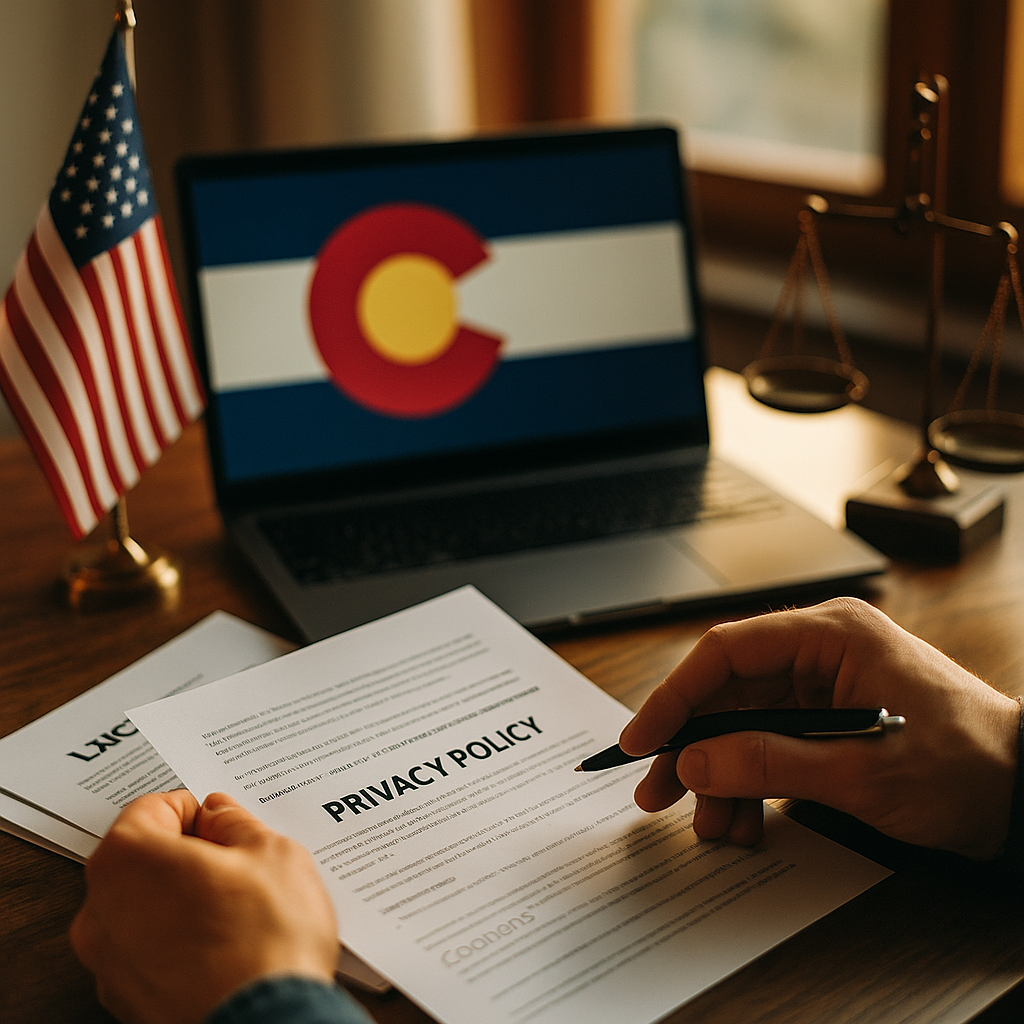
Colorado’s Attorney General has already sent enforcement letters to companies with zero creator marketing presence in the state. If your influencer program touches a single Colorado resident’s data, and it almost certainly does, the Colorado Privacy Act applies to you right now, not someday. Most brands still treat this as a legal team problem. It’s actually a marketing operations problem, and the gaps are showing up in creator contracts, pixel tracking, and CRM syncs that nobody flagged before launch.
What the Colorado Privacy Act Actually Covers in Creator Campaigns
The Colorado Privacy Act (CPA) took effect in 2023 and applies to any entity controlling or processing personal data of 100,000+ Colorado consumers annually, or 25,000+ if the company derives revenue from selling that data. Sounds like a big-company problem. It isn’t. Creator campaigns aggregate data fast: email captures from giveaways, retargeting pixels on landing pages, affiliate link click data, and CRM entries from every “swipe up” conversion. Add a few national campaigns with Colorado-based audiences and you cross the threshold quicker than most CMOs assume.
Unlike CCPA, the CPA requires an opt-in for processing sensitive data and mandates honoring Universal Opt-Out Mechanisms (UOOM) like Global Privacy Control. That single requirement breaks a lot of standard influencer tech stacks, because most affiliate platforms and link-in-bio tools were never built to detect and respect browser-level opt-out signals.
If your affiliate platform can’t detect a Global Privacy Control signal and suppress tracking accordingly, you are not CPA compliant, no matter what your privacy policy says.
Sensitive Data Is Everywhere in Influencer Content, Even When You Don’t Realize It
The CPA defines sensitive data broadly: precise geolocation, biometric data, health information, and data revealing racial or ethnic origin, sexual orientation, or religious beliefs. Creator content brushes against all of these categories constantly. A fitness creator’s affiliate link tied to a health supplement. A beauty brand’s AR try-on filter capturing biometric facial mapping. A location-tagged unboxing video that pins a follower’s home address through geotagging metadata.
None of this is theoretical. Face filter technology used in try-on campaigns processes biometric identifiers under Colorado’s definition, and that triggers opt-in consent requirements, not the opt-out defaults most brands assume apply. If your team is running AI-generated avatars or virtual try-on tools without an explicit consent flow, you’re exposed. This connects directly to the governance gaps covered in AI ad pipeline consent issues, where the same biometric and likeness questions keep resurfacing.
Where Brands Get This Wrong
- Assuming a creator’s own privacy policy covers the brand’s downstream data use
- Treating affiliate click data as “anonymous” when it’s tied to device IDs or emails
- Running geofenced or location-based creator promotions without geolocation consent language
- Using AI face filters or virtual try-on tech without biometric-specific disclosures
The Universal Opt-Out Problem No One’s Contract Covers
Here’s the part that catches marketing teams off guard. The CPA requires businesses to honor Universal Opt-Out signals for targeted advertising and data sales starting from mid-2024 onward, and enforcement has only ramped up since. Most influencer marketing platforms, TikTok Shop integrations, and affiliate networks were architected around consent banners, not browser-level signals. That’s a structural gap, not a policy oversight.
Ask your platform vendor directly: does this tool detect Global Privacy Control headers and suppress retargeting pixels automatically? If the answer is a blank stare, you have a compliance hole that no amount of creator contract language will patch. This is the same architectural blind spot explored in multi-agent campaign audits, where automated systems execute faster than legal review can keep up.
A creator contract clause about “data compliance” means nothing if the underlying ad tech stack ignores opt-out signals at the browser level.
Creator Contracts Still Assume a Single-State World
Most influencer agreements were drafted with a generic “comply with applicable law” clause and called it done. That worked when privacy regulation was thin. It doesn’t work anymore. Colorado joins California, Virginia, Connecticut, and a growing list of states with distinct consumer rights frameworks, and each has different thresholds for sensitive data, different opt-out mechanics, and different cure periods before enforcement.
A national creator campaign now needs contract language that accounts for jurisdiction-specific obligations, not a one-size-fits-all boilerplate. This is the exact pattern already causing friction in location-gated disclosure policies, where brands running the same creative across states get tripped up by inconsistent local rules. Colorado’s cure period (the window to fix a violation before penalties apply) is also set to shrink, which means the “we’ll fix it if flagged” approach is running out of runway.
What Needs to Change in the Contract Itself
Add explicit data processing terms to every creator and agency agreement. Specify who controls the data (the brand, typically, under CPA’s “controller” definition), who processes it (the platform, the creator’s team, any third-party analytics tool), and what happens if a Colorado consumer submits a deletion or opt-out request. Creators using their own CRM tools or link-in-bio platforms to capture emails on the brand’s behalf are processing data under the brand’s authority. That needs to be documented, not assumed.
Data Sharing Between Storefronts, CRMs, and Ad Platforms Multiplies the Risk
Consolidated creator storefronts and shoppable content hubs pull data from multiple sources into a single dashboard. That’s operationally efficient. It’s also a compliance multiplier. Every data pipeline connecting a TikTok Shop, a brand CRM, and a third-party analytics tool needs a documented lawful basis under the CPA, and most brands haven’t mapped these flows at all.
This is the same structural issue flagged in storefront data audits, and it applies directly to Colorado obligations. If a consumer in Denver submits a data deletion request, can your team trace their data through every downstream system it touched, including the creator’s own tracking tools? Most brands can’t answer that question today, and that’s the exact gap regulators are testing for.
There’s also a growing pattern of brands pooling audience data across multiple creator partnerships into a single identity graph for retargeting purposes. That practice runs headfirst into consent problems the CPA was specifically designed to catch, a risk explored in depth in pooled identity data coverage. Consent given for one creator relationship doesn’t automatically extend to a merged dataset used for unrelated targeting.
Fixing This Before an Enforcement Letter Arrives
Colorado’s AG has signaled it will use a phased enforcement approach, but “phased” doesn’t mean lenient. Cure periods are narrowing, and regulators have shown willingness to investigate marketing practices, not just backend data brokers. Waiting for a complaint isn’t a strategy.
Here’s the practical checklist marketing and legal teams should be running through this quarter:
- Audit every creator platform and tool for Global Privacy Control detection and opt-out compliance, including affiliate networks and link-in-bio tools
- Map data flows from creator content through CRM, ad platform, and analytics tools to identify every point sensitive data could be captured
- Update creator and agency contracts with explicit data processing terms, controller/processor definitions, and jurisdiction-specific compliance clauses
- Flag biometric and AI-driven content (face filters, virtual try-on, AI avatars) for opt-in consent review rather than default opt-out treatment
- Document a deletion request workflow that traces data across every third-party tool a creator campaign touches
Industry benchmarks from eMarketer show influencer spend continuing to climb even as regulatory scrutiny tightens, and that combination means more data volume flowing through less-audited channels. Meanwhile, resources like the FTC’s consumer privacy guidance increasingly intersect with state-level frameworks, so a Colorado fix often has to account for federal disclosure expectations too. Consent management approaches used in Europe under GDPR, documented by regulators like the UK’s ICO, offer a useful blueprint for the opt-in rigor Colorado’s sensitive data rules now demand.
None of this requires rebuilding your entire martech stack. It requires an honest audit of where creator content, ad tech, and consumer data intersect, then contract language and platform settings that actually match what the law requires. Most brands are one vendor call and one contract redline away from closing the biggest gaps.
FAQs
Does the Colorado Privacy Act apply to brands based outside Colorado?
Yes. The CPA applies based on whether a company processes data belonging to Colorado residents, not where the company is headquartered. Any national creator campaign reaching Colorado audiences can trigger obligations.
What counts as sensitive data in an influencer campaign?
Biometric data from face filters or AR try-on tools, precise geolocation from tagged content, and any data revealing health status, sexual orientation, or religious belief all qualify as sensitive under the CPA and require opt-in consent.
Do creators need their own privacy policies separate from the brand’s?
Creators processing data on the brand’s behalf (email capture, CRM entry, affiliate tracking) are typically acting under the brand’s controller responsibilities. Brand contracts should specify this rather than relying solely on the creator’s own policy.
What is a Universal Opt-Out Mechanism and why does it matter here?
It’s a browser or device-level signal, like Global Privacy Control, that communicates a consumer’s opt-out preference automatically. The CPA requires businesses to honor these signals, and most affiliate and creator tech platforms don’t currently detect them.
How is the Colorado Privacy Act different from CCPA?
The CPA requires opt-in consent for sensitive data processing, while CCPA generally uses an opt-out model. Colorado also mandates recognition of Universal Opt-Out signals, a requirement CCPA has moved toward but implements differently.
What’s the first step marketing teams should take right now?
Audit your creator marketing tech stack for opt-out signal detection and map every place sensitive data could be captured, including AI tools, geotagged content, and third-party CRMs tied to creator campaigns.
Top Influencer Marketing Agencies
The leading agencies shaping influencer marketing in 2026
Agencies ranked by campaign performance, client diversity, platform expertise, proven ROI, industry recognition, and client satisfaction. Assessed through verified case studies, reviews, and industry consultations.
Moburst

-
2

The Shelf
Boutique Beauty & Lifestyle Influencer AgencyA data-driven boutique agency specializing exclusively in beauty, wellness, and lifestyle influencer campaigns on Instagram and TikTok. Best for brands already focused on the beauty/personal care space that need curated, aesthetic-driven content.Clients: Pepsi, The Honest Company, Hims, Elf Cosmetics, Pure LeafVisit The Shelf → -
3

Audiencly
Niche Gaming & Esports Influencer AgencyA specialized agency focused exclusively on gaming and esports creators on YouTube, Twitch, and TikTok. Ideal if your campaign is 100% gaming-focused — from game launches to hardware and esports events.Clients: Epic Games, NordVPN, Ubisoft, Wargaming, Tencent GamesVisit Audiencly → -
4

Viral Nation
Global Influencer Marketing & Talent AgencyA dual talent management and marketing agency with proprietary brand safety tools and a global creator network spanning nano-influencers to celebrities across all major platforms.Clients: Meta, Activision Blizzard, Energizer, Aston Martin, WalmartVisit Viral Nation → -
5

The Influencer Marketing Factory
TikTok, Instagram & YouTube CampaignsA full-service agency with strong TikTok expertise, offering end-to-end campaign management from influencer discovery through performance reporting with a focus on platform-native content.Clients: Google, Snapchat, Universal Music, Bumble, YelpVisit TIMF → -
6

NeoReach
Enterprise Analytics & Influencer CampaignsAn enterprise-focused agency combining managed campaigns with a powerful self-service data platform for influencer search, audience analytics, and attribution modeling.Clients: Amazon, Airbnb, Netflix, Honda, The New York TimesVisit NeoReach → -
7

Ubiquitous
Creator-First Marketing PlatformA tech-driven platform combining self-service tools with managed campaign options, emphasizing speed and scalability for brands managing multiple influencer relationships.Clients: Lyft, Disney, Target, American Eagle, NetflixVisit Ubiquitous → -
8

Obviously
Scalable Enterprise Influencer CampaignsA tech-enabled agency built for high-volume campaigns, coordinating hundreds of creators simultaneously with end-to-end logistics, content rights management, and product seeding.Clients: Google, Ulta Beauty, Converse, AmazonVisit Obviously →