


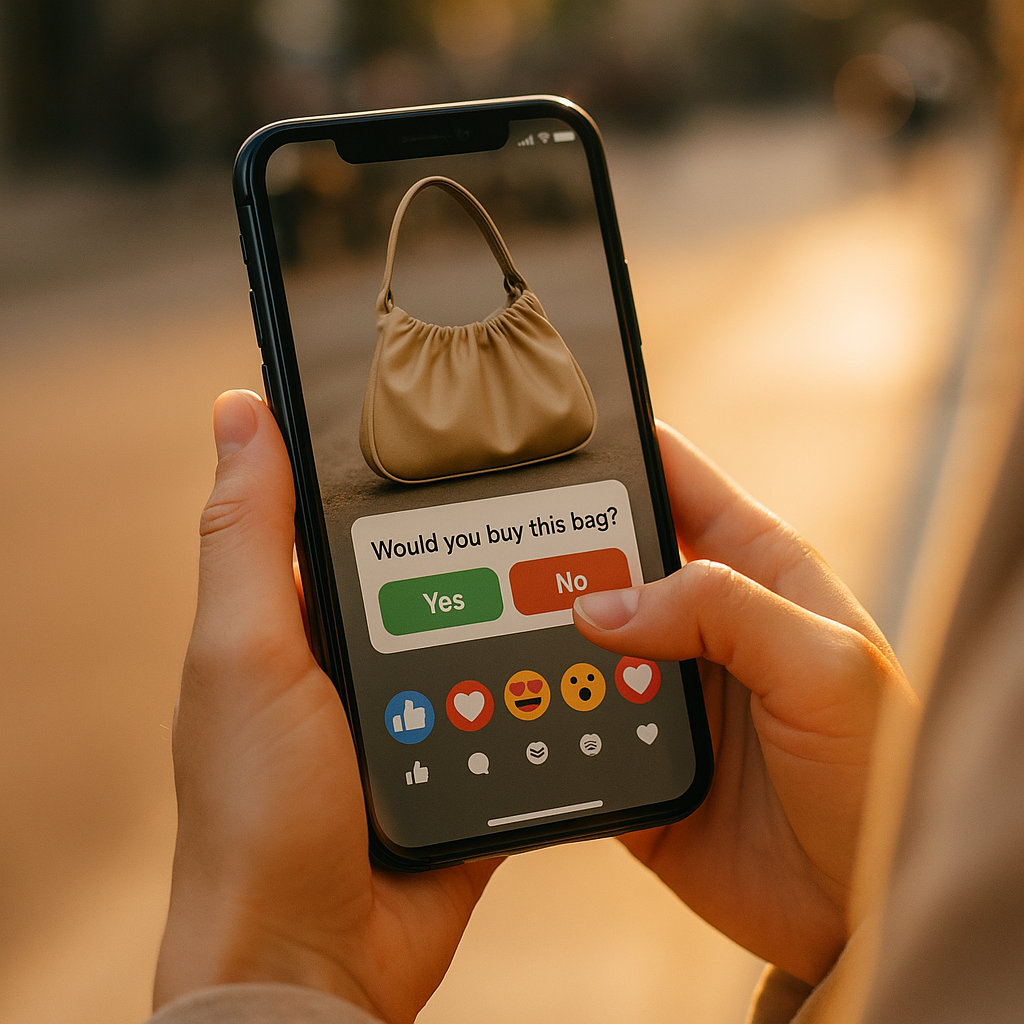
Livestreams with interactive overlays convert at rates two to three times higher than static shopping streams, according to platform data shared by TikTok Shop and Shopify Live partners. Why? Because a poll asking “Which color should I restock?” does something a product description never can: it makes the viewer complicit in the decision. That’s the psychological engine behind interactive livestream overlays, and it’s quietly becoming the highest-leverage tool in the live commerce stack.
Brands have spent years optimizing thumbnails, hooks, and CTAs. Overlays are the next frontier, and most marketing teams are still treating them as decoration instead of conversion infrastructure.
What Are Interactive Livestream Overlays, Really?
Strip away the jargon and an overlay is just a UI layer sitting on top of the video feed: polls, reaction buttons, countdown timers, live vote tallies, emoji bursts. On platforms like TikTok Live, Instagram Live Shopping, and Amazon Live, these overlays are native features. On owned channels (Shopify Live, YouTube Live), they usually require a third-party layer like Firework, Bambuser, or CommentSold.
The distinction that matters for brand teams isn’t the tech. It’s the psychology. A static livestream is a broadcast. An overlay turns it into a negotiation between host and audience, and negotiations create urgency.
Viewers who interact with a poll or reaction overlay during a livestream are roughly 40% more likely to click a product link in the same session, based on aggregated case data from live commerce platform vendors.
The Impulse Mechanics Behind Polls
Polls work because they collapse the distance between “watching” and “deciding.” A viewer who taps “Team Red” in a color poll has already made a micro-commitment. Getting them to tap “Add to Cart” ninety seconds later is a much smaller ask.
This isn’t new consumer psychology, it’s the foot-in-the-door principle applied to commerce. What’s new is the speed at which brands can operationalize it. A host running a “which one sells out first” poll can pivot the entire stream’s script based on live results, restocking urgency in real time.
- Binary polls (this vs. that) drive the fastest engagement, typically resolving in under 20 seconds.
- Ranked polls (rank your top 3) work better for bundle and multi-SKU drops.
- Live vote counters visible on screen create social proof that a static “127 people bought this” badge can’t replicate.
Teams building shoppable formats already know that friction kills conversion mid-stream. That’s the same logic behind shoppable video overlays built for on-demand clips: reduce the number of taps between desire and checkout, whether the content is live or recorded.
Reactions: The Low-Effort, High-Signal Layer
Reaction overlays (hearts, fire emojis, custom brand stickers) look trivial compared to polls, but they serve a different function: they signal social proof at a glance. A viewer arriving thirty seconds into a stream sees a wall of reactions flying across the screen and infers, correctly or not, that something worth watching is happening.
Sprout Social’s engagement research consistently shows that visible, ambient activity indicators (likes, reactions, comment counts) increase dwell time, and dwell time is the single best predictor of live commerce conversion. You can’t sell to someone who left the stream.
Why This Beats Static Product Pages
A product detail page is a monologue. A livestream with reaction and poll overlays is a dialogue, even if it’s asynchronous and one-to-many. That dialogue creates two things static commerce can’t: perceived scarcity and perceived consensus.
Perceived scarcity is obvious: “only 40% voted for the blue one, and it’s almost gone” is more persuasive than a stock counter. Perceived consensus is subtler but arguably more powerful. Humans are wired to defer to crowd behavior, and a live reaction feed is crowd behavior made visible in real time.
This is also why multi-host livestreams tend to outperform single-host formats when overlays are involved. Two hosts reacting to poll results in real time (disagreeing, riffing, building on each other) generates more overlay engagement than one person narrating alone.
The Compliance Angle Nobody Talks About
Polls and reactions move fast, and that speed creates real disclosure risk. If a host is using poll results to steer viewers toward a specific SKU, is that organic recommendation or paid promotion? The FTC’s endorsement guidance doesn’t carve out an exception for real-time formats. Brands running overlay-heavy streams need the same disclosure rigor they’d apply to a scripted ad, arguably more, since live content can’t be edited after the fact.
Teams that have already built compliance muscle around visual claims, like the ones covered in before and after skincare disclosure practices, should extend that same rigor to overlay-driven urgency claims. “Only 3 left, voted best by the chat” is a claim. Treat it like one.
Building the Overlay Brief: What Actually Belongs In It
Most brands skip a formal brief for livestream overlays because the format feels improvisational. That’s a mistake. Here’s what a working brief should include:
- Poll cadence: How often polls appear (every 5-7 minutes is a common benchmark to avoid overlay fatigue).
- Decision windows: How long a poll stays live before the host acts on results. Shorter windows (15-30 seconds) preserve urgency.
- Reaction triggers: Scripted moments where the host explicitly invites reactions (“hit the fire emoji if you want this restocked”).
- Fallback scripts: What the host says if poll results are split or engagement is low. Dead air kills momentum.
- Disclosure language: Baked into the script, not left to host improvisation.
- Escalation triggers: When a poll or reaction spike should prompt a producer to push a flash discount or restock alert.
This is the same discipline that governs countdown urgency clips, where scarcity messaging has to be scripted precisely enough to stay compliant but loose enough to feel spontaneous.
Measuring What Matters
Vanity metrics (total reactions, poll participation rate) look impressive in a recap deck but don’t tell you whether overlays are driving revenue. The metrics that actually matter:
- Poll-to-click rate: percentage of poll participants who click a product link within 60 seconds.
- Reaction-to-purchase lag: average time between a reaction spike and a checkout event.
- Overlay-attributed AOV: average order value for sessions with high overlay interaction versus passive viewers.
- Drop-off after poll close: if viewers leave right after a poll resolves, your follow-through script is weak.
Platforms like TikTok Shop and Amazon Live expose some of this natively through their analytics dashboards. For owned-channel streams, brands typically need to stitch together data from the streaming platform and their CRM or attribution stack to get a full picture.
If overlay engagement isn’t tied to a checkout event within the same session, you’re measuring entertainment, not commerce.
Where This Fits in the Broader Content Stack
Interactive overlays don’t replace scripted content, they sit alongside it. A brand running a layered video content strategy can use livestream overlays as the “hot” real-time layer, feeding clips and reaction highlights into shorter, recorded formats afterward. A poll that resolves dramatically (80% voted for a SKU that then sells out in nine minutes) becomes its own piece of proof-driven content for the next campaign cycle.
Similarly, brands already using AI chat overlays to answer viewer questions during shoppable video can layer poll and reaction data on top, using real-time sentiment to inform which questions the AI prioritizes surfacing.
Common Mistakes That Kill Overlay ROI
A few patterns show up repeatedly in underperforming streams:
- Too many polls, too little payoff. If every poll result gets a generic “great, thanks everyone!” instead of a visible action, viewers stop participating.
- No host training on pacing. Reading poll results cold, without energy, flattens the urgency the format is supposed to create.
- Ignoring negative reactions. A wave of skeptical or confused reactions is a signal to adjust the pitch, not push through the script.
- Overlay clutter. Stacking polls, reaction bars, countdown timers, and chat all at once overwhelms the viewer and actually suppresses click-through.
Marketers who’ve run live shopping audio rooms already know this lesson from the audio side: too many simultaneous interactive elements dilute attention rather than building it.
Next Step
Start with one overlay type, not five. Run a single binary poll format across three livestreams, track poll-to-click rate against a control stream with no overlay, and let that data decide whether reactions and countdown layers are worth adding next.
FAQs
Do interactive overlays actually increase sales, or just engagement?
Both, when built correctly. Engagement metrics alone (reactions, poll votes) don’t guarantee revenue. The key is tracking poll-to-click and reaction-to-purchase lag so you can prove the overlay is driving checkout behavior, not just screen activity.
Which platforms support native poll and reaction overlays?
TikTok Live, Instagram Live, and Amazon Live all offer native interactive features. Shopify Live and other owned-channel setups typically require third-party tools like Firework or Bambuser to add polls and reaction layers.
How often should polls appear during a livestream?
Most high-performing streams space polls five to seven minutes apart. More frequent polling tends to cause fatigue and lower participation over the course of the stream.
Are poll results and reaction counts subject to FTC disclosure rules?
If a host uses poll results or reaction spikes to imply popularity or scarcity as a sales argument, that framing needs the same disclosure treatment as any other endorsement or claim under FTC guidance.
What’s the biggest mistake brands make with livestream overlays?
Stacking too many interactive elements at once. Polls, reaction bars, countdown timers, and live chat competing for attention simultaneously tend to suppress click-through rather than boost it.
Can overlay data be reused after the livestream ends?
Yes. Dramatic poll swings or reaction spikes make strong proof points for follow-up short-form clips, turning a single live moment into ongoing content across the rest of the campaign.
Top Influencer Marketing Agencies
The leading agencies shaping influencer marketing in 2026
Agencies ranked by campaign performance, client diversity, platform expertise, proven ROI, industry recognition, and client satisfaction. Assessed through verified case studies, reviews, and industry consultations.
Moburst

-
2

The Shelf
Boutique Beauty & Lifestyle Influencer AgencyA data-driven boutique agency specializing exclusively in beauty, wellness, and lifestyle influencer campaigns on Instagram and TikTok. Best for brands already focused on the beauty/personal care space that need curated, aesthetic-driven content.Clients: Pepsi, The Honest Company, Hims, Elf Cosmetics, Pure LeafVisit The Shelf → -
3

Audiencly
Niche Gaming & Esports Influencer AgencyA specialized agency focused exclusively on gaming and esports creators on YouTube, Twitch, and TikTok. Ideal if your campaign is 100% gaming-focused — from game launches to hardware and esports events.Clients: Epic Games, NordVPN, Ubisoft, Wargaming, Tencent GamesVisit Audiencly → -
4

Viral Nation
Global Influencer Marketing & Talent AgencyA dual talent management and marketing agency with proprietary brand safety tools and a global creator network spanning nano-influencers to celebrities across all major platforms.Clients: Meta, Activision Blizzard, Energizer, Aston Martin, WalmartVisit Viral Nation → -
5

The Influencer Marketing Factory
TikTok, Instagram & YouTube CampaignsA full-service agency with strong TikTok expertise, offering end-to-end campaign management from influencer discovery through performance reporting with a focus on platform-native content.Clients: Google, Snapchat, Universal Music, Bumble, YelpVisit TIMF → -
6

NeoReach
Enterprise Analytics & Influencer CampaignsAn enterprise-focused agency combining managed campaigns with a powerful self-service data platform for influencer search, audience analytics, and attribution modeling.Clients: Amazon, Airbnb, Netflix, Honda, The New York TimesVisit NeoReach → -
7

Ubiquitous
Creator-First Marketing PlatformA tech-driven platform combining self-service tools with managed campaign options, emphasizing speed and scalability for brands managing multiple influencer relationships.Clients: Lyft, Disney, Target, American Eagle, NetflixVisit Ubiquitous → -
8

Obviously
Scalable Enterprise Influencer CampaignsA tech-enabled agency built for high-volume campaigns, coordinating hundreds of creators simultaneously with end-to-end logistics, content rights management, and product seeding.Clients: Google, Ulta Beauty, Converse, AmazonVisit Obviously →