


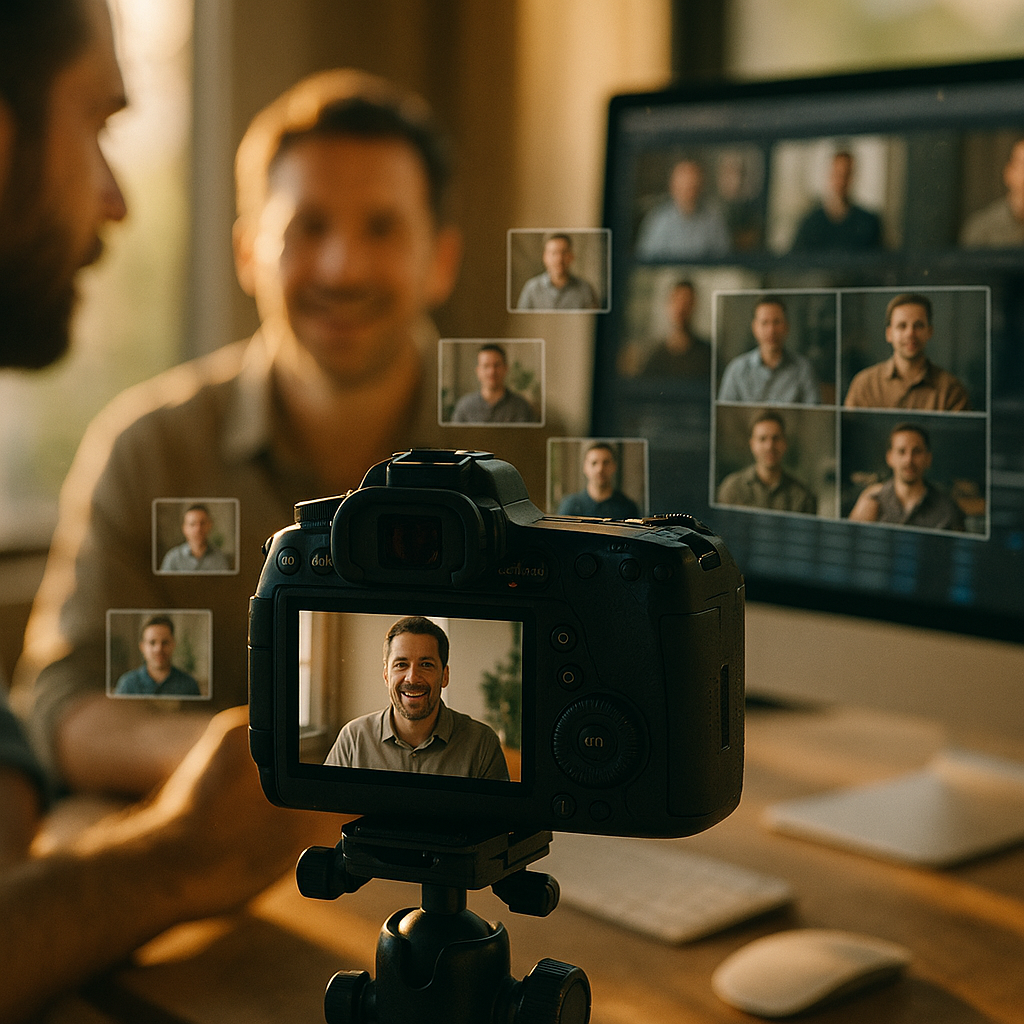
One creator shoot. Forty video variants. Zero extra shoot days. That’s the pitch behind AI personalized video variants, and it’s no longer a lab experiment, it’s a line item in media plans at brands like Unilever and L’Oreal. If your team is still cutting one creator video per campaign and hoping it resonates with a Gen Z college student and a 45 year old suburban parent equally, you’re leaving conversion on the table.
What AI Personalized Video Variants Actually Are
Strip away the buzzword and the concept is simple. You shoot one creator video, then use AI tools to generate multiple cuts of that same footage, each tailored to a different audience segment. That could mean swapping the hook line, changing the voiceover tone, altering on screen text, or even using AI dubbing to shift language and dialect. The creator stays the same, the core message stays the same, but the packaging flexes to match who’s watching.
This isn’t the same as running A/B tests on ad copy. It’s closer to what performance marketers already do with dark post ad creative, except now the variation happens inside the video itself, not just the caption or targeting layer. Tools like Rembrand, Arcads, and Synthesia have made this workflow accessible to mid-size brands, not just enterprise budgets with in-house VFX teams.
A single creator video can now spawn a dozen audience-specific cuts in the time it used to take to edit one, which fundamentally changes the math on influencer production budgets.
Why Segmentation Beats One-Size-Fits-All Creative
Marketers have known for years that segment specific messaging outperforms generic messaging. What’s changed is the cost of producing it. Historically, if you wanted five audience segments, you needed five separate creator briefs, five shoots, five rounds of approvals. That math didn’t work for most influencer budgets, so brands defaulted to one cut and hoped it traveled well across TikTok, Instagram, and connected TV.
AI variant production flips that constraint. According to eMarketer, personalized video ads consistently show higher completion rates than generic ones, and the gap widens when the personalization touches the first three seconds, the exact window where hook testing matters most. If you’ve already invested in hook testing at scale, variant production is the natural next layer. Instead of testing five hooks against one audience, you’re testing tailored hooks against five audiences simultaneously.
Segments worth building variants for typically include:
- Age or life stage cohorts (new parents versus empty nesters)
- Geographic or language markets
- Purchase intent stage (first time browser versus repeat buyer)
- Platform native behavior (TikTok scroll speed versus YouTube long form patience)
- Existing customer versus prospect retargeting pools
Building the Variant Pipeline Without Blowing Up Your Budget
Here’s where most teams get it wrong. They treat AI variant production as a post-production add-on instead of building it into the creator brief from day one. That’s backwards. The most efficient pipelines start with the shoot itself, briefing creators to deliver clean, modular footage: a wide shot without hardcoded captions, a separate voiceover track, and b-roll that isn’t tied to a single narrative thread.
Think of it like the three layer video stack approach, but applied to audience segments instead of platform formats. Layer one is the raw creator performance. Layer two is the AI driven variation engine (voice, text, pacing). Layer three is the distribution logic that routes the right cut to the right segment.
Practical steps that keep this from spiraling into fifty uncontrolled variants:
- Cap initial testing at three to five segments per campaign, not fifteen.
- Lock the core claim and CTA across all variants so legal only reviews once.
- Use AI dubbing and voice cloning tools that retain creator likeness rights in the contract, not as an afterthought.
- Build a naming convention early. “Segment_Platform_Version” chaos kills reporting later.
Agencies running this well often pair variant production with existing formats they already trust, like shoppable video templates or silent selling ad structures, so the variant engine only has to swap messaging, not rebuild pacing from scratch.
The Compliance Layer Nobody Wants to Deal With (But Must)
Here’s the uncomfortable part. Once you start altering a creator’s voice, likeness, or words with AI, you’re in murkier disclosure territory than a standard sponsored post. The FTC has already signaled that synthetic media used in endorsements needs clear disclosure, and that applies even when the underlying footage is real and the creator consented to the original shoot.
Three questions every brand should answer before shipping AI video variants:
- Did the creator’s contract explicitly cover AI modified derivatives, not just the original cut?
- Does each variant disclose AI involvement where voice, script, or likeness has been altered?
- Is there a version control log showing what was changed, by whom, and when?
This isn’t just a legal box to check. Brands that got this wrong with before and after skincare video claims learned the hard way that regulators move faster than production teams expect. Build the disclosure language into the variant template itself so it can’t be stripped out downstream by a media buyer in a hurry.
Measuring What Actually Moves the Needle
Vanity metrics won’t tell you if segmentation is working. Watch completion rate by segment, not just aggregate view count. Watch cost per qualified click by variant, not campaign wide average. And critically, watch whether variants are cannibalizing each other on the same platform, which happens more than teams admit when targeting overlaps.
Tools like Sprout Social and platform native analytics from Meta Business Suite and TikTok Ads Manager can break performance down by creative variant if you tag correctly at upload. The mistake most teams make is uploading all variants under one campaign name and losing the ability to isolate which segment cut actually drove the lift.
If you can’t attribute performance back to a specific variant and segment pairing, you’re not personalizing, you’re just guessing with extra steps.
Pair variant testing with structured dark post ad creative rotations so underperforming cuts get pulled fast instead of burning spend for a full flight cycle.
Where This Breaks Down in Practice
AI variant production isn’t magic. Overly aggressive segmentation can fragment your brand voice until the creator barely sounds like themselves across cuts. And creators, understandably, get uneasy when their likeness is being run through a voice cloning tool for a dozen versions they never personally reviewed. The best programs keep creators in the approval loop for at least the flagship variants, even if AI handles the long tail.
There’s also a diminishing returns curve. Past five or six segments, the incremental lift per variant usually shrinks while production and QA overhead climbs. HubSpot research on personalization consistently shows the biggest jump comes from moving away from zero segmentation to basic segmentation, not from micro-targeting twenty niche audiences.
Next step: Pick one live campaign, brief the creator for modular footage, and build three audience variants using an AI dubbing or captioning tool before your next flight. Measure completion rate by segment against your single cut baseline, then decide if the pipeline earns a permanent line in your production budget.
FAQs
What is the difference between AI personalized video variants and standard A/B testing?
Standard A/B testing usually varies copy, thumbnails, or targeting around one fixed video. AI personalized video variants change elements inside the video itself, like voiceover, on screen text, or pacing, to match specific audience segments while keeping the same creator performance.
Do AI generated video variants require separate FTC disclosures?
Yes, in most cases. If AI has altered a creator’s voice, script, or likeness in a way viewers wouldn’t expect, disclosure guidance from the FTC generally applies, separate from standard sponsored content disclosures.
How many audience segments should a brand start with?
Most teams see the strongest return starting with three to five segments. Beyond that, production and QA overhead tends to grow faster than the incremental performance lift.
Can creators refuse to have their content used for AI variant production?
Yes, and contracts should explicitly address this. Creator agreements need clear language covering AI modified derivatives, not just the original footage, to avoid disputes after the fact.
What tools are commonly used to produce these variants?
Brands and agencies commonly use AI video and dubbing platforms alongside standard analytics tools like Sprout Social or platform native dashboards from Meta and TikTok to track variant performance.
Top Influencer Marketing Agencies
The leading agencies shaping influencer marketing in 2026
Agencies ranked by campaign performance, client diversity, platform expertise, proven ROI, industry recognition, and client satisfaction. Assessed through verified case studies, reviews, and industry consultations.
Moburst

-
2

The Shelf
Boutique Beauty & Lifestyle Influencer AgencyA data-driven boutique agency specializing exclusively in beauty, wellness, and lifestyle influencer campaigns on Instagram and TikTok. Best for brands already focused on the beauty/personal care space that need curated, aesthetic-driven content.Clients: Pepsi, The Honest Company, Hims, Elf Cosmetics, Pure LeafVisit The Shelf → -
3

Audiencly
Niche Gaming & Esports Influencer AgencyA specialized agency focused exclusively on gaming and esports creators on YouTube, Twitch, and TikTok. Ideal if your campaign is 100% gaming-focused — from game launches to hardware and esports events.Clients: Epic Games, NordVPN, Ubisoft, Wargaming, Tencent GamesVisit Audiencly → -
4

Viral Nation
Global Influencer Marketing & Talent AgencyA dual talent management and marketing agency with proprietary brand safety tools and a global creator network spanning nano-influencers to celebrities across all major platforms.Clients: Meta, Activision Blizzard, Energizer, Aston Martin, WalmartVisit Viral Nation → -
5

The Influencer Marketing Factory
TikTok, Instagram & YouTube CampaignsA full-service agency with strong TikTok expertise, offering end-to-end campaign management from influencer discovery through performance reporting with a focus on platform-native content.Clients: Google, Snapchat, Universal Music, Bumble, YelpVisit TIMF → -
6

NeoReach
Enterprise Analytics & Influencer CampaignsAn enterprise-focused agency combining managed campaigns with a powerful self-service data platform for influencer search, audience analytics, and attribution modeling.Clients: Amazon, Airbnb, Netflix, Honda, The New York TimesVisit NeoReach → -
7

Ubiquitous
Creator-First Marketing PlatformA tech-driven platform combining self-service tools with managed campaign options, emphasizing speed and scalability for brands managing multiple influencer relationships.Clients: Lyft, Disney, Target, American Eagle, NetflixVisit Ubiquitous → -
8

Obviously
Scalable Enterprise Influencer CampaignsA tech-enabled agency built for high-volume campaigns, coordinating hundreds of creators simultaneously with end-to-end logistics, content rights management, and product seeding.Clients: Google, Ulta Beauty, Converse, AmazonVisit Obviously →