


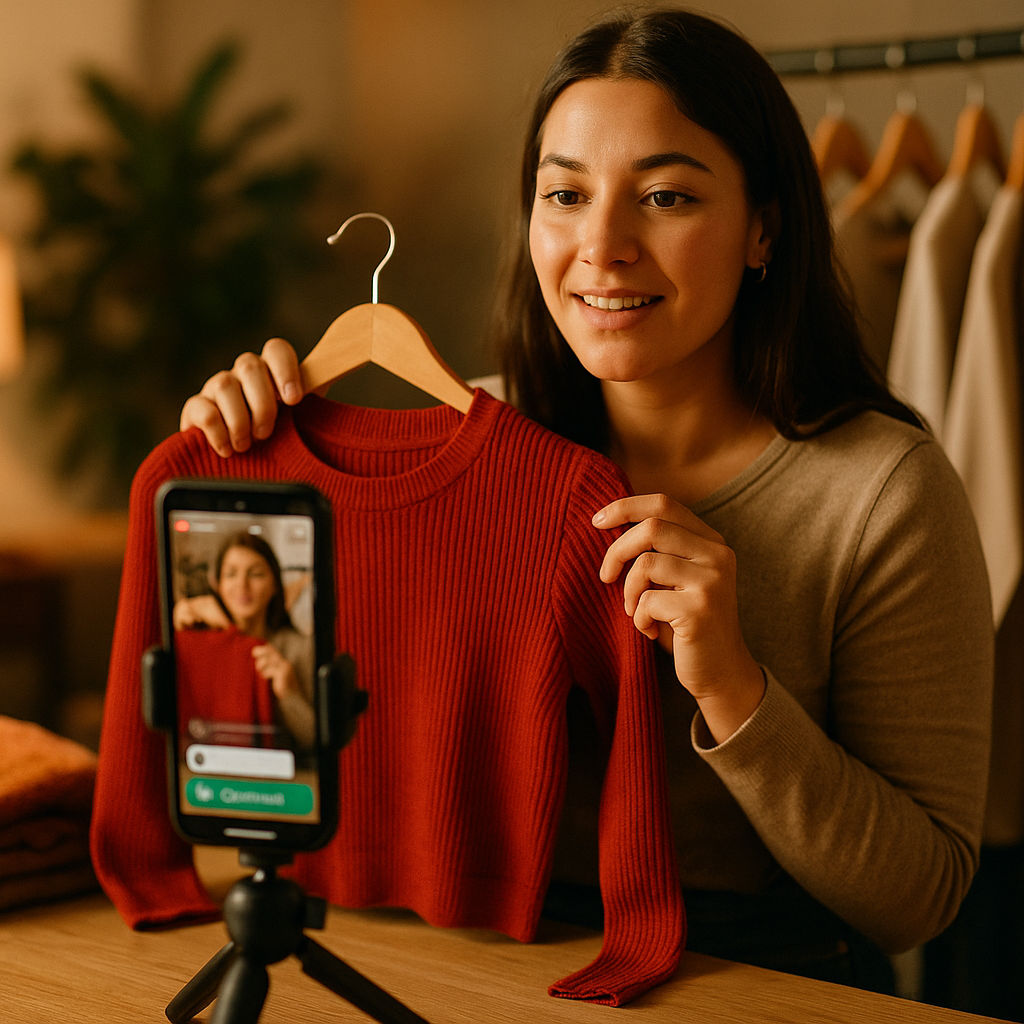
A pinned comment can outsell your best-performing host script. During live shopping sessions on TikTok Shop and Instagram, the pinned comment sits at the top of the feed for the entire broadcast, meaning it gets more sustained visual attention than almost anything the host says. Yet most brands treat it as an afterthought, a link dump instead of a conversion tool. Pinned comment checkout optimization changes that, turning a static text box into the highest-leverage real estate in your live shopping stream.
Why the Pinned Comment Outperforms the Host Script
Think about how people actually watch live shopping. They’re half-listening, scrolling, maybe watching while doing something else. The host’s voice fades into background noise after the first few minutes. But the pinned comment? It’s persistent. It doesn’t disappear when the host moves on to the next product. It stays put, at the top of the comment thread, visible every time a viewer glances down to check pricing or read what other shoppers are saying.
That persistence is the entire value proposition. A viewer who tunes in eleven minutes into a broadcast has missed the verbal pitch, missed the demo, missed the urgency cue the host delivered at minute three. But they haven’t missed the pinned comment. It’s still there, doing the job the host already did, for every single viewer who arrives late.
The pinned comment is the only piece of live shopping content that works for every viewer regardless of when they join the stream.
The Data Behind Comment-Driven Conversion
Live shopping platforms don’t publish granular pinned-comment click data, but the directional signal is strong. Social commerce researchers at eMarketer have repeatedly flagged live shopping as a channel where friction reduction, not persuasion, drives the biggest conversion lifts. A pinned comment with a working link, a clear price, and a code reduces friction more than another thirty seconds of enthusiastic narration ever could. Brands running consistent live shopping programs report that streams with actively managed pinned comments see meaningfully higher click-through to product pages compared to streams where the comment sits static for the full broadcast.
The pattern lines up with broader consumer behavior research from Sprout Social, which shows shoppers increasingly expect social commerce experiences to mirror the speed of app-based checkout. If a viewer has to hunt for the buy link, you’ve already lost a chunk of that impulse window.
What a High-Converting Pinned Comment Actually Contains
Strip away the fluff and a pinned comment that converts has four components, always in the same order: product name, price (with any live-only discount clearly stated), the shop link or “tap the yellow bag” instruction, and a scarcity or urgency cue if one is genuinely true. Notice what’s missing: no hashtags, no emoji walls, no brand mission statement. Viewers are scanning, not reading.
- Product identifier: Name the SKU exactly as it appears in the shop tab. Mismatched naming between the comment and the storefront creates hesitation, and hesitation kills impulse purchases.
- Price with context: “$34, was $48” beats “on sale now” every time. Specificity reads as credible. Vague framing reads as a sales tactic.
- Action instruction: Tell people exactly where to tap. Not everyone watching live shopping is a platform native. Some are first-time viewers who genuinely don’t know the yellow bag icon means checkout.
- Urgency, only if real: “12 left at this price” works if it’s true and can trigger FTC scrutiny if it’s not. More on that below.
Rotate or Freeze? The Timing Debate
There are two schools of thought on how often to update the pinned comment during a stream, and honestly, both have merit depending on your format.
The freeze approach keeps one product pinned for the duration of a single segment, usually five to eight minutes, then swaps it when the host moves to the next item. This works well for demo-heavy formats where the host is walking through a single product in depth, similar to the pacing used in chaptered video content where each section has its own clear focus.
The rotate approach cycles the pinned comment every ninety seconds to two minutes, matching a faster-paced multi-product stream. This suits flash-sale style broadcasts where the goal is volume across a catalog rather than depth on one hero item. The risk with rotation is moderator lag. If your team is manually updating the pin and the host has already moved on, you’ve got a comment promoting a product nobody’s currently looking at, which actively confuses viewers.
A mistimed pinned comment update does more damage than no pinned comment at all, because it actively misdirects intent instead of just failing to capture it.
Building the Moderation Workflow
Here’s the operational reality nobody talks about enough: pinned comment optimization is a staffing problem before it’s a copywriting problem. Somebody has to be watching the stream in real time, coordinating with the host’s script, and updating the comment at the right beat. For high-volume live shopping programs, that’s a dedicated moderator role, not something you bolt onto a social media manager’s existing workload.
A workable workflow looks like this:
- Host and moderator run a shared runsheet before the stream, timestamped to the minute, listing which product gets pinned when.
- Moderator pre-drafts every pinned comment variant before the stream starts. Live drafting under pressure produces typos, and typos in a price or link destroy trust instantly.
- Host gives a verbal cue (“alright, that link is pinned now”) that syncs the audience’s attention with the actual comment update.
- Moderator monitors comment replies for repeated questions (sizing, shipping, ingredient concerns) and either answers directly or feeds the question to the host to address on camera.
That last point matters more than most brands realize. A pinned comment doesn’t just sell, it also absorbs objection-handling at scale. If ten people ask “does this run small” in the thread, that’s a signal the host should address sizing on camera immediately, and the moderator should update the pinned comment to include a sizing note. This is the same principle behind reply engineering covered in comment bait hook strategy: comments aren’t passive, they’re a live feedback loop you can act on mid-broadcast.
Compliance Is Not Optional Here
Urgency language in a pinned comment is a compliance surface, not just a copywriting choice. If you write “only 8 left” and there are actually 200 units in the warehouse, that’s a deceptive scarcity claim under FTC guidance on unfair or deceptive practices. Live shopping’s real-time nature makes this easy to get sloppy about, because nobody’s fact-checking a comment that scrolls by in seconds. But regulators have made clear that ephemeral content is not exempt from truth-in-advertising standards.
The same applies to affiliate disclosure. If your pinned comment includes a link that generates commission for the host or a code that ties to an affiliate structure, that relationship needs to be disclosed clearly, not buried in a bio or a separate post. This mirrors the disclosure discipline required in before-and-after compliance frameworks, where the underlying principle is the same: don’t make the viewer hunt for material information.
UK-based brands running live shopping into that market should also cross-check pinned comment claims against ICO guidance on data handling if the comment link routes through any personalized retargeting mechanism.
What Breaks Pinned Comment Performance
A few recurring mistakes show up across brand livestreams:
- Link rot mid-stream. The product sells out, the link redirects to an error page, and nobody catches it for four minutes. Always have a fallback comment ready (“this style sold out, similar item linked here”) pre-drafted.
- Comment clutter from bots. Bot replies can bury a pinned comment’s visibility if your platform doesn’t lock pinning properly. Check your platform’s pinning settings before every stream, don’t assume last week’s configuration held.
- Generic phrasing that doesn’t match the host’s actual offer. If the host says “twenty percent off” and the pinned comment says “special live pricing,” viewers notice the mismatch and it reads as sloppy, not exciting.
- Overloading the comment with multiple products at once. One pinned comment, one product. Multi-product comments force viewers to parse text instead of tap and buy, which is the opposite of what live shopping should feel like. This is the same single-focus discipline that makes shoppable overlay checklists effective on recorded video.
Measuring What Actually Matters
Most live shopping dashboards report aggregate click-through and GMV per stream, not per pinned comment segment. That’s a measurement gap worth closing manually. If you can, track click timestamps against your pinned comment runsheet so you know which product pins actually drove clicks versus which ones sat there ignored. Over a handful of streams, patterns emerge fast: certain price framing converts better, certain urgency phrasing gets ignored, certain product categories need longer pin duration because the buying decision takes more consideration.
Brands running frequent live shopping cadences should treat pinned comment copy the way they’d treat ad copy: as a testable asset, not a one-time write-and-forget. Comparing a “price plus urgency” pin against a “price plus social proof” pin (think “1,200 sold this week” instead of “12 left”) across similar streams gives you a real read on what your specific audience responds to. This kind of structured testing mirrors the comparison logic used in versus format scripting, where the goal is isolating one variable at a time rather than guessing.
For teams building broader interactive commerce strategy, it’s also worth reviewing how interactive chat overlays handle similar real-time engagement challenges outside the live shopping context. The underlying principle carries over: real-time text is a conversion surface, and it deserves the same rigor as your paid ad copy.
Start your next live shopping stream with a pre-drafted pinned comment runsheet, a dedicated moderator, and a compliance check on every urgency claim, then measure click timing against your pin schedule to find out what your audience actually responds to.
FAQs
What is pinned comment checkout in live shopping?
Pinned comment checkout refers to the practice of using a platform’s pinned comment feature during a live shopping broadcast to display persistent purchase information, including product name, price, and a direct link to checkout, so viewers can convert without needing to catch the host’s verbal pitch.
How often should you update the pinned comment during a live stream?
It depends on stream format. Demo-heavy streams focused on one product per segment typically hold a pinned comment for five to eight minutes. Fast-paced multi-product flash streams often rotate every ninety seconds to two minutes, though rotation requires tight moderator coordination to avoid mismatched links.
Who should manage pinned comments during a live shopping broadcast?
A dedicated moderator, separate from the host, should manage pinned comments. This role handles pre-drafted comment variants, real-time updates synced to the host’s script, and monitoring viewer questions that might need a live response.
Are urgency claims in pinned comments legally risky?
Yes, if they’re not accurate. Claims like “only a few left” must reflect real inventory conditions. Inaccurate scarcity claims can trigger scrutiny under FTC guidance on deceptive advertising practices, and the same disclosure standards that apply to influencer posts apply to live pinned comments.
Can pinned comments replace verbal calls to action from the host?
No, they work best together. The host’s verbal cue draws attention to the fact that the comment has been updated, while the pinned comment itself gives late-arriving or half-attentive viewers the information they need without requiring them to have heard the pitch.
Top Influencer Marketing Agencies
The leading agencies shaping influencer marketing in 2026
Agencies ranked by campaign performance, client diversity, platform expertise, proven ROI, industry recognition, and client satisfaction. Assessed through verified case studies, reviews, and industry consultations.
Moburst

-
2

The Shelf
Boutique Beauty & Lifestyle Influencer AgencyA data-driven boutique agency specializing exclusively in beauty, wellness, and lifestyle influencer campaigns on Instagram and TikTok. Best for brands already focused on the beauty/personal care space that need curated, aesthetic-driven content.Clients: Pepsi, The Honest Company, Hims, Elf Cosmetics, Pure LeafVisit The Shelf → -
3

Audiencly
Niche Gaming & Esports Influencer AgencyA specialized agency focused exclusively on gaming and esports creators on YouTube, Twitch, and TikTok. Ideal if your campaign is 100% gaming-focused — from game launches to hardware and esports events.Clients: Epic Games, NordVPN, Ubisoft, Wargaming, Tencent GamesVisit Audiencly → -
4

Viral Nation
Global Influencer Marketing & Talent AgencyA dual talent management and marketing agency with proprietary brand safety tools and a global creator network spanning nano-influencers to celebrities across all major platforms.Clients: Meta, Activision Blizzard, Energizer, Aston Martin, WalmartVisit Viral Nation → -
5

The Influencer Marketing Factory
TikTok, Instagram & YouTube CampaignsA full-service agency with strong TikTok expertise, offering end-to-end campaign management from influencer discovery through performance reporting with a focus on platform-native content.Clients: Google, Snapchat, Universal Music, Bumble, YelpVisit TIMF → -
6

NeoReach
Enterprise Analytics & Influencer CampaignsAn enterprise-focused agency combining managed campaigns with a powerful self-service data platform for influencer search, audience analytics, and attribution modeling.Clients: Amazon, Airbnb, Netflix, Honda, The New York TimesVisit NeoReach → -
7

Ubiquitous
Creator-First Marketing PlatformA tech-driven platform combining self-service tools with managed campaign options, emphasizing speed and scalability for brands managing multiple influencer relationships.Clients: Lyft, Disney, Target, American Eagle, NetflixVisit Ubiquitous → -
8

Obviously
Scalable Enterprise Influencer CampaignsA tech-enabled agency built for high-volume campaigns, coordinating hundreds of creators simultaneously with end-to-end logistics, content rights management, and product seeding.Clients: Google, Ulta Beauty, Converse, AmazonVisit Obviously →