


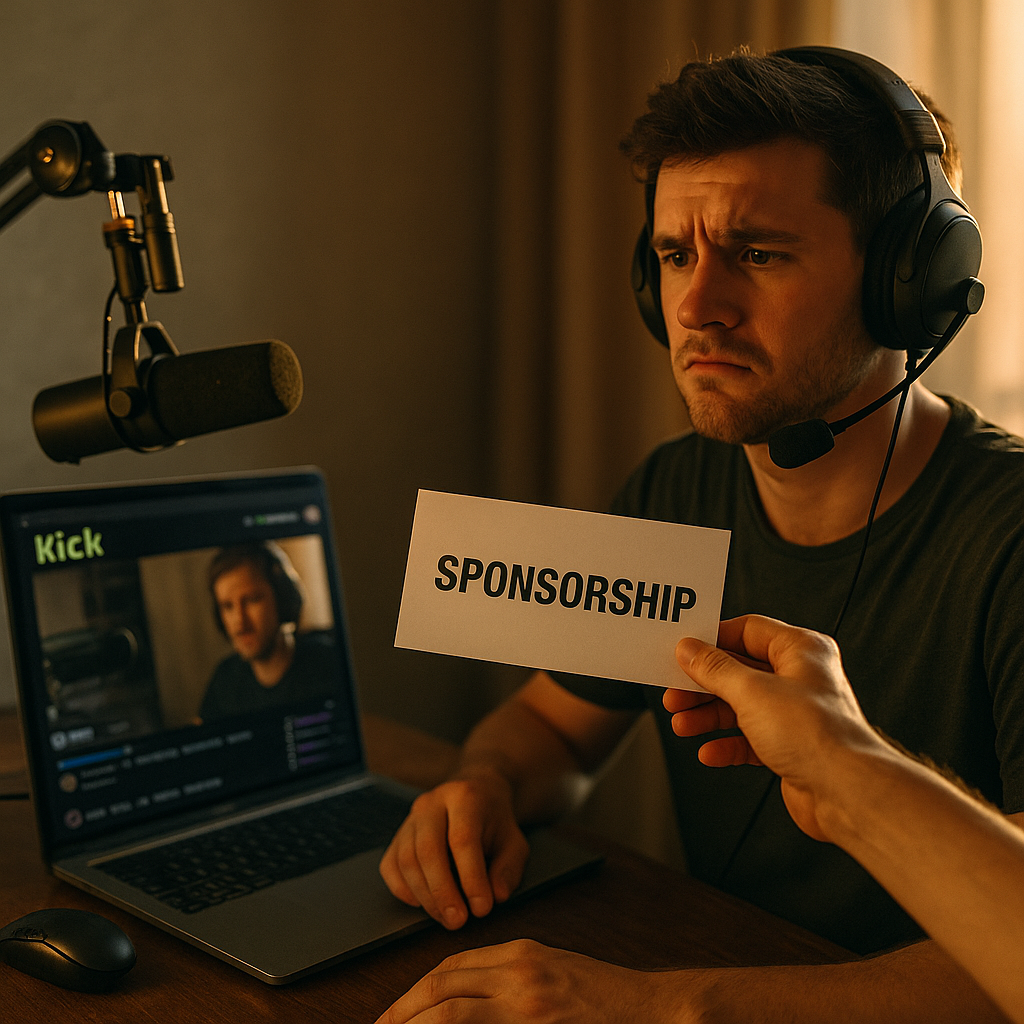
Kick pays out roughly 95% of subscription revenue to streamers, more than double what Twitch offers. That single number has pulled agencies and brand safety teams into an awkward position: chase the audience arbitrage, or protect the logo? A serious Kick streaming playbook has to answer that question with data, not vibes, because the platform’s moderation history is thin and its user base skews toward exactly the volatility that makes compliance teams nervous.
This isn’t a hit piece on Kick. It’s a risk framework. Some categories (gaming peripherals, energy drinks, betting adjacent products where legal) can justify the exposure. Others cannot. The job here is helping you tell the difference before a media buy goes live, not after a streamer says something that ends up in a trade publication headline.
What Kick Actually Is, and Why It Matters for Brand Deals
Kick launched as a Twitch alternative built on a gambling affiliate model, backed by crypto casino operators Stake and Easygoing. That origin story still shapes the platform. Slots and casino streaming remain a core content category, even as Kick has worked to diversify into IRL streaming, gaming, and creator-led variety content to attract mainstream advertisers.
The revenue split is the headline recruiting tool. Streamers keep up to 95% of subscription revenue on Kick, compared to the standard 50% most Twitch partners receive. That economic pull has drawn a wave of mid-tier and top-tier streamers, including several who maintain simultaneous channels on Twitch and YouTube. For brands, that multi-platform presence is actually useful: it means you can often reach the same creator’s audience through a channel with more mature moderation tooling.
The 95% revenue share is real, but it’s a creator acquisition subsidy, not evidence of platform maturity. Brand safety infrastructure has not scaled at the same pace as the payout model.
The Moderation Gap Is the Real Story
Kick’s content moderation has improved since its early days, but it still trails Twitch and YouTube in staffing, automated detection, and policy transparency. Twitch has years of precedent handling harassment cases, hate raids, and TOS enforcement at scale, plus documented community guidelines that most agencies already know how to audit against. Kick’s policy documentation is thinner, and enforcement has been inconsistent, particularly around gambling content and adult-adjacent streams during off-peak hours.
What does that mean operationally? It means your standard influencer vetting checklist, the one built for Instagram and TikTok, is not sufficient here. You need a live-monitoring component, not just a historical content audit. A creator’s last 90 days of VODs might look clean while their live chat moderation during off-hours is completely unmanaged.
- No consistent branded content labeling standard comparable to what YouTube enforces on paid placements. Compare that to the clarity in YouTube branded content labels, where disclosure requirements are baked into the upload flow.
- Limited automated flagging for real-time incidents during live broadcasts, meaning a brand’s logo can sit on a stream screen during an unmoderated moment for longer than it would elsewhere.
- Thinner creator vetting on the platform side, so due diligence largely falls on the brand or agency, not Kick’s trust and safety team.
Who’s Actually Watching? Audience Composition Matters
Kick’s audience skews young and heavily male, with strong overlap in gaming, gambling adjacent content, and IRL streaming verticals. That’s not automatically a problem, plenty of brands want exactly that demographic. But it does mean campaigns need tighter age gating and category alignment than a general lifestyle brand might expect.
eMarketer and Statista tracking on streaming platform demographics consistently shows younger platforms carrying higher variance in advertiser risk tolerance. If your brand serves a broad family audience, the mismatch alone might disqualify Kick regardless of moderation quality. Check current audience data through Statista’s platform demographics tracking before committing budget, since Kick’s user base composition has shifted as the platform has matured.
A Quick Gut Check Before You Greenlight a Deal
Ask three questions before signing off on any Kick placement:
- Does the creator maintain a parallel Twitch or YouTube channel with a documented moderation history you can review?
- Has the creator had any public TOS violations, chat bans, or platform suspensions in the past twelve months?
- Is your product category one where a chat-moderation lapse creates legal exposure, not just reputational embarrassment?
If you can’t answer all three confidently, pause the deal. This isn’t excessive caution, it’s the same diligence bar most agencies already apply to Twitch, just extended to a platform with less institutional track record.
Payout Structure and What It Signals
The 95% revenue share sounds generous until you model what it actually funds. Streamers earning through subs alone are Kick’s core retention play. Sponsorship and brand deal infrastructure, the tooling brands actually rely on for tracking, reporting, and campaign management, is comparatively immature. There’s no equivalent yet to the granular analytics dashboards brands get through established programs like YouTube’s creator tools or Twitch’s Bits and Subs ecosystem.
That gap matters for attribution. If you’re used to the reporting rigor described in Twitch Bits and Subs deals, expect to build your own measurement layer on Kick rather than relying on native platform reporting. Third party tracking links, unique promo codes, and manual VOD review become non-negotiable, not nice to haves.
Treat Kick sponsorships the way you’d treat an emerging market media buy: high potential upside, but you’re building the compliance infrastructure yourself instead of inheriting it from the platform.
Where Kick Actually Makes Sense for Brands
None of this means Kick is off limits. Categories with natural audience fit, gaming hardware, energy drinks, apparel targeting streaming culture, esports orgs, have run successful campaigns on the platform precisely because the audience is engaged and underexposed to traditional ad saturation. Early movers in gaming peripherals have reported strong cost efficiency compared to saturated Twitch inventory, partly because Kick ad rates and sponsorship costs remain lower while competition for placements is thinner.
Think of Kick the way you’d think about early TikTok circa 2018: real audience, real attention, immature guardrails. The brands that got in early and built their own safety protocols captured cheap reach. The ones that waited for the platform to mature paid more for the same attention later. Kick sits in a similar window right now, though the moderation risk is arguably higher given the gambling-adjacent content history.
If your category already tolerates adjacent platforms like Twitch, and your legal team has signed off on gambling-adjacent content exposure, Kick can be a legitimate line item. If your brand serves a general audience or operates in a regulated category (finance, pharma, alcohol in most markets), the exposure likely outweighs the CPM savings.
Building a Practical Vetting Workflow
Here’s what an operational Kick playbook should include before any spend commits:
- Pre-campaign chat audit. Watch live, unedited chat during at least two separate streams, ideally at different times of day, before signing a deal.
- Contractual moderation clauses. Require the creator to commit to active chat moderation during sponsored segments, with specific consequences for lapses spelled out in the contract, not implied.
- Disclosure language built into the contract. Kick doesn’t enforce FTC-style disclosure the way YouTube or Instagram increasingly do, so your contract needs to mandate it explicitly. Review current guidance from the FTC’s endorsement disclosure rules and build compliance language directly into creator agreements.
- Third party measurement. Don’t rely on platform-native analytics alone. Use UTM links, unique codes, and manual VOD spot checks similar to the attribution rigor covered in fixing creator attribution gaps.
- Kill switch clauses. Build in the contractual right to pull sponsorship immediately, with defined financial terms, if a moderation or TOS incident occurs.
A useful comparison point: brands running Twitch rate renegotiations already have contract language for platform volatility. Adapt those templates for Kick rather than starting from scratch, but tighten the moderation clauses considerably given the thinner platform-level enforcement.
The Verdict for Budget Planners
Kick earns a place in the test budget, not the core budget, for most brands right now. Allocate a small percentage of influencer spend, monitor closely, and treat every deal as a pilot with its own risk assessment rather than a repeatable template. As Kick’s moderation infrastructure matures (and platform leadership has signaled ongoing investment in trust and safety), the risk calculus will shift. Reassess quarterly rather than locking in annual commitments.
For deeper context on how platform economics affect creator behavior and payout reliability, HubSpot’s ongoing research on creator marketing benchmarks and Sprout Social’s platform trend tracking via Sprout Social’s social media reports are useful for benchmarking Kick against more established channels before you commit meaningful budget.
Frequently Asked Questions
Is Kick safe for brand sponsorships?
Kick can be safe for the right category and with the right diligence, but its moderation infrastructure trails Twitch and YouTube. Brands should conduct live chat audits and build strong contractual protections before committing budget.
How does Kick’s revenue split compare to Twitch?
Kick offers streamers up to 95% of subscription revenue, compared to the standard 50% split most Twitch partners receive. That gap has driven creator migration but hasn’t been matched by equivalent investment in brand safety tooling.
What categories perform best on Kick right now?
Gaming hardware, energy drinks, esports organizations, and apparel targeting streaming culture have seen the strongest early results, largely due to natural audience alignment and lower ad saturation compared to Twitch.
Does Kick enforce FTC disclosure requirements?
Kick does not enforce disclosure the way YouTube or Instagram increasingly do at the platform level. Brands need to build explicit disclosure language into creator contracts rather than relying on native platform tools.
What’s the biggest risk factor brands overlook on Kick?
Live, unmoderated chat during off-peak streaming hours is the most commonly overlooked risk. A creator’s edited VOD history can look clean while real-time chat moderation remains inconsistent.
Next step: Before allocating any budget to Kick, run a two-week pilot with a single creator, mandatory live chat audits, and a contractual kill switch clause. Treat the result as your evidence base, not your assumption, for scaling further.
Frequently Asked Questions
Is Kick safe for brand sponsorships?
Kick can be safe for the right category and with the right diligence, but its moderation infrastructure trails Twitch and YouTube. Brands should conduct live chat audits and build strong contractual protections before committing budget.
How does Kick’s revenue split compare to Twitch?
Kick offers streamers up to 95% of subscription revenue, compared to the standard 50% split most Twitch partners receive. That gap has driven creator migration but hasn’t been matched by equivalent investment in brand safety tooling.
What categories perform best on Kick right now?
Gaming hardware, energy drinks, esports organizations, and apparel targeting streaming culture have seen the strongest early results, largely due to natural audience alignment and lower ad saturation compared to Twitch.
Does Kick enforce FTC disclosure requirements?
Kick does not enforce disclosure the way YouTube or Instagram increasingly do at the platform level. Brands need to build explicit disclosure language into creator contracts rather than relying on native platform tools.
What’s the biggest risk factor brands overlook on Kick?
Live, unmoderated chat during off-peak streaming hours is the most commonly overlooked risk. A creator’s edited VOD history can look clean while real-time chat moderation remains inconsistent.
Top Influencer Marketing Agencies
The leading agencies shaping influencer marketing in 2026
Agencies ranked by campaign performance, client diversity, platform expertise, proven ROI, industry recognition, and client satisfaction. Assessed through verified case studies, reviews, and industry consultations.
Moburst

-
2

The Shelf
Boutique Beauty & Lifestyle Influencer AgencyA data-driven boutique agency specializing exclusively in beauty, wellness, and lifestyle influencer campaigns on Instagram and TikTok. Best for brands already focused on the beauty/personal care space that need curated, aesthetic-driven content.Clients: Pepsi, The Honest Company, Hims, Elf Cosmetics, Pure LeafVisit The Shelf → -
3

Audiencly
Niche Gaming & Esports Influencer AgencyA specialized agency focused exclusively on gaming and esports creators on YouTube, Twitch, and TikTok. Ideal if your campaign is 100% gaming-focused — from game launches to hardware and esports events.Clients: Epic Games, NordVPN, Ubisoft, Wargaming, Tencent GamesVisit Audiencly → -
4

Viral Nation
Global Influencer Marketing & Talent AgencyA dual talent management and marketing agency with proprietary brand safety tools and a global creator network spanning nano-influencers to celebrities across all major platforms.Clients: Meta, Activision Blizzard, Energizer, Aston Martin, WalmartVisit Viral Nation → -
5

The Influencer Marketing Factory
TikTok, Instagram & YouTube CampaignsA full-service agency with strong TikTok expertise, offering end-to-end campaign management from influencer discovery through performance reporting with a focus on platform-native content.Clients: Google, Snapchat, Universal Music, Bumble, YelpVisit TIMF → -
6

NeoReach
Enterprise Analytics & Influencer CampaignsAn enterprise-focused agency combining managed campaigns with a powerful self-service data platform for influencer search, audience analytics, and attribution modeling.Clients: Amazon, Airbnb, Netflix, Honda, The New York TimesVisit NeoReach → -
7

Ubiquitous
Creator-First Marketing PlatformA tech-driven platform combining self-service tools with managed campaign options, emphasizing speed and scalability for brands managing multiple influencer relationships.Clients: Lyft, Disney, Target, American Eagle, NetflixVisit Ubiquitous → -
8

Obviously
Scalable Enterprise Influencer CampaignsA tech-enabled agency built for high-volume campaigns, coordinating hundreds of creators simultaneously with end-to-end logistics, content rights management, and product seeding.Clients: Google, Ulta Beauty, Converse, AmazonVisit Obviously →