


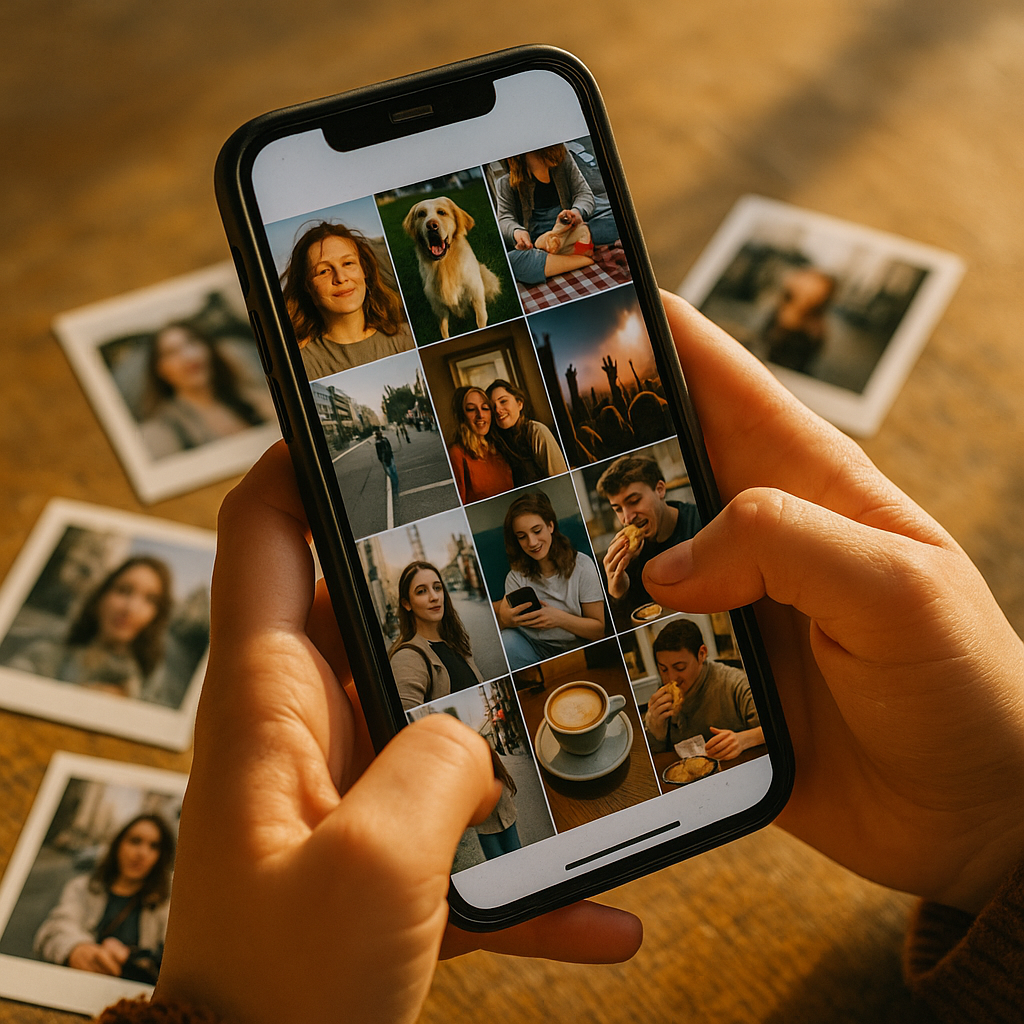
Instagram’s own creators have said it plainly: the algorithm favors content that feels native over content that feels like an ad. So why do so many brands still greenlight glossy product shoots for a platform where the photo dump format regularly out-performs them on saves, shares, and comments? A messy, ten-slide carousel of blurry candids and screenshots often beats a $15,000 studio shoot. That’s not an accident. It’s a signal.
The Algorithm Rewards Imperfection, Not Laziness
Instagram’s ranking systems weigh dwell time, shares, and saves heavily, and photo dumps win on all three because they invite scrolling behavior that looks like curiosity rather than passive viewing. A ten-image carousel with a mix of candids, screenshots, and one deliberately off-center shot keeps a thumb moving through slides. Every swipe is a signal to the algorithm that the content is worth showing to more people. Meta has confirmed as much in its own creator guidance, noting that engagement depth matters more than raw reach for organic distribution (Meta for Business).
Compare that to a single polished photo. It gets one glance, maybe a double tap, and then the scroll moves on. There’s no reason to linger. A photo dump, by contrast, is a small narrative. It has pacing. It rewards attention with a payoff, usually a funny caption on slide seven or a candid shot that humanizes the brand.
A photo dump isn’t the absence of strategy. It’s a different strategy: trading production value for perceived authenticity, which on Instagram now converts better than perfection.
Why Polish Reads as an Ad
Audiences have gotten fluent in spotting sponsored content, and that fluency has made them allergic to anything that looks staged. A perfectly lit flat lay with color-matched props triggers the same mental filter as a pre-roll ad: skip. Consumers have been trained by a decade of influencer marketing to associate high production value with low trust. Sprout Social’s ongoing research into consumer trust in branded content has repeatedly found that authenticity outranks aesthetics as the top driver of purchase consideration (Sprout Social).
This is the same dynamic behind the rise of static photo UGC outperforming heavily edited video on shoppable platforms. Buyers aren’t rejecting quality. They’re rejecting the tell-tale signs of a marketing department’s fingerprints. A photo dump, with its off-kilter crops and mismatched lighting, reads as something a friend made, not something a brand paid for.
What Actually Goes Into a “Low Effort” Carousel
Here’s the part brands miss: nothing about a high-performing photo dump is actually low effort. It’s low polish, which is different. The best ones follow a loose but repeatable structure:
- One establishing shot that sets context (a location, an event, a product in use).
- Two or three candid moments that feel unposed, even if they were shot three times to get right.
- A screenshot or text slide that breaks the visual rhythm and adds a conversational beat.
- One “ugly” photo, deliberately included because it reads as unfiltered honesty.
- A closing slide that either resolves the story or delivers a punchline.
Notice what’s missing: a hero shot with perfect lighting. That’s the point. Every slide is doing narrative work instead of showcase work. This is the same logic behind try-on haul optimization, where the goal isn’t the most flattering angle but the most believable one.
Building a Photo Dump Brief That Still Protects the Brand
The risk for brands isn’t that photo dumps look unpolished. It’s that “unpolished” can slide into “off-message” or “off-brand” without anyone noticing until the post is live. A workable brief needs guardrails that don’t kill the aesthetic. In practice, that means:
- Approving a shot list of moods, not exact images (a laughing moment, a behind-the-scenes beat, a product-in-context shot), so creators have room to improvise within brand-safe boundaries.
- Requiring one slide that includes the product or logo naturally, not staged, so paid partnership disclosure and FTC guidance are satisfied without breaking the format’s tone (FTC endorsement guidance).
- Setting a caption tone guide instead of a scripted caption, since photo dumps live or die on voice authenticity.
- Reviewing carousels as a full sequence, not slide by slide, because pacing is the actual creative asset here.
This is the same discipline brands apply when managing founder video diaries, where the appeal depends on looseness but the compliance risk demands structure underneath it. The format looks casual. The approval process shouldn’t be.
Where This Format Actually Fails
Photo dumps aren’t a universal fix, and treating them like one is where a lot of brand social teams get burned. They underperform for categories where trust depends on visual precision: skincare results, food photography, anything where the audience needs to see texture, color accuracy, or fine detail to make a purchase decision. A blurry candid of a serum doesn’t sell the serum. It sells the vibe around the serum, which works for lifestyle and apparel brands far better than for beauty efficacy claims or B2B product demos.
There’s also a frequency ceiling. Photo dumps work because they feel like a break from a feed’s normal rhythm. Post them every day and they become the new normal, at which point the format loses its “unscripted” charge and starts reading as a lazy content calendar shortcut. HubSpot’s social benchmarking research has noted a similar fatigue curve with over-used formats: novelty decays fast once an audience recognizes the pattern (HubSpot).
Brands running always-on influencer programs should treat the photo dump as one format in a rotation, not a replacement for every other content type. The same principle shows up in comment bait hooks and silent vlogging: novelty formats need rotation discipline, or the algorithm and the audience both stop rewarding them.
The Budget Argument Nobody Wants to Make
Here’s the uncomfortable ROI math: a photo dump costs a fraction of a studio shoot and, per Statista’s creator economy spend data, often delivers comparable or higher engagement rates on a per-dollar basis for mid-funnel brand awareness campaigns (Statista). That doesn’t mean cut the production budget entirely. Hero campaigns, product launches, and paid media still need polish. But for always-on organic content and creator partnerships built around relatability, reallocating spend toward more creators shooting looser content, rather than fewer creators shooting expensive content, is the more efficient play in 2026’s engagement environment.
Agencies negotiating creator rates should factor this in directly. A photo dump deliverable takes less studio time but more creative direction upfront to get the tone right. Price it accordingly, not as a discount format but as a different skill set.
Next step: Audit your last quarter of influencer deliverables and flag anything shot in a studio that didn’t need to be. Reroute that budget into more creator-led, lower-polish carousels, brief the tone instead of the shot list, and measure saves and shares against your existing benchmarks before scaling the format further.
FAQs
What is the photo dump format on Instagram?
A photo dump is a multi-image carousel post, usually five to ten photos, mixing candid shots, screenshots, and casual moments without the polish of a traditional branded photo shoot. It mimics how a regular person shares a week or event, rather than showcasing a single hero image.
Why does low effort content outperform professional photography on Instagram?
Low-polish carousels encourage longer dwell time and more swipes per session, both of which the Instagram algorithm weighs heavily for organic reach. They also read as more authentic to audiences who have grown skeptical of obviously staged branded content.
Can brands actually use the photo dump format, or is it only for personal accounts?
Brands can use it effectively, but it requires a different brief. Instead of scripting exact shots, brands should define moods and moments, then let creators shoot naturally within brand-safe guardrails, including required product visibility and disclosure compliance.
Does the photo dump format work for every industry?
No. It underperforms for categories that depend on visual precision, like skincare efficacy or food photography, where texture and detail drive purchase decisions. It works best for lifestyle, apparel, travel, and consumer categories where vibe matters more than visual accuracy.
How often should brands post in the photo dump format?
Treat it as one format in a broader content rotation rather than a daily default. Overuse erodes the “unscripted” feel that makes the format work, turning it into a recognizable pattern rather than a genuine break from polished content.
FAQs
Top Influencer Marketing Agencies
The leading agencies shaping influencer marketing in 2026
Agencies ranked by campaign performance, client diversity, platform expertise, proven ROI, industry recognition, and client satisfaction. Assessed through verified case studies, reviews, and industry consultations.
Moburst

-
2

The Shelf
Boutique Beauty & Lifestyle Influencer AgencyA data-driven boutique agency specializing exclusively in beauty, wellness, and lifestyle influencer campaigns on Instagram and TikTok. Best for brands already focused on the beauty/personal care space that need curated, aesthetic-driven content.Clients: Pepsi, The Honest Company, Hims, Elf Cosmetics, Pure LeafVisit The Shelf → -
3

Audiencly
Niche Gaming & Esports Influencer AgencyA specialized agency focused exclusively on gaming and esports creators on YouTube, Twitch, and TikTok. Ideal if your campaign is 100% gaming-focused — from game launches to hardware and esports events.Clients: Epic Games, NordVPN, Ubisoft, Wargaming, Tencent GamesVisit Audiencly → -
4

Viral Nation
Global Influencer Marketing & Talent AgencyA dual talent management and marketing agency with proprietary brand safety tools and a global creator network spanning nano-influencers to celebrities across all major platforms.Clients: Meta, Activision Blizzard, Energizer, Aston Martin, WalmartVisit Viral Nation → -
5

The Influencer Marketing Factory
TikTok, Instagram & YouTube CampaignsA full-service agency with strong TikTok expertise, offering end-to-end campaign management from influencer discovery through performance reporting with a focus on platform-native content.Clients: Google, Snapchat, Universal Music, Bumble, YelpVisit TIMF → -
6

NeoReach
Enterprise Analytics & Influencer CampaignsAn enterprise-focused agency combining managed campaigns with a powerful self-service data platform for influencer search, audience analytics, and attribution modeling.Clients: Amazon, Airbnb, Netflix, Honda, The New York TimesVisit NeoReach → -
7

Ubiquitous
Creator-First Marketing PlatformA tech-driven platform combining self-service tools with managed campaign options, emphasizing speed and scalability for brands managing multiple influencer relationships.Clients: Lyft, Disney, Target, American Eagle, NetflixVisit Ubiquitous → -
8

Obviously
Scalable Enterprise Influencer CampaignsA tech-enabled agency built for high-volume campaigns, coordinating hundreds of creators simultaneously with end-to-end logistics, content rights management, and product seeding.Clients: Google, Ulta Beauty, Converse, AmazonVisit Obviously →