


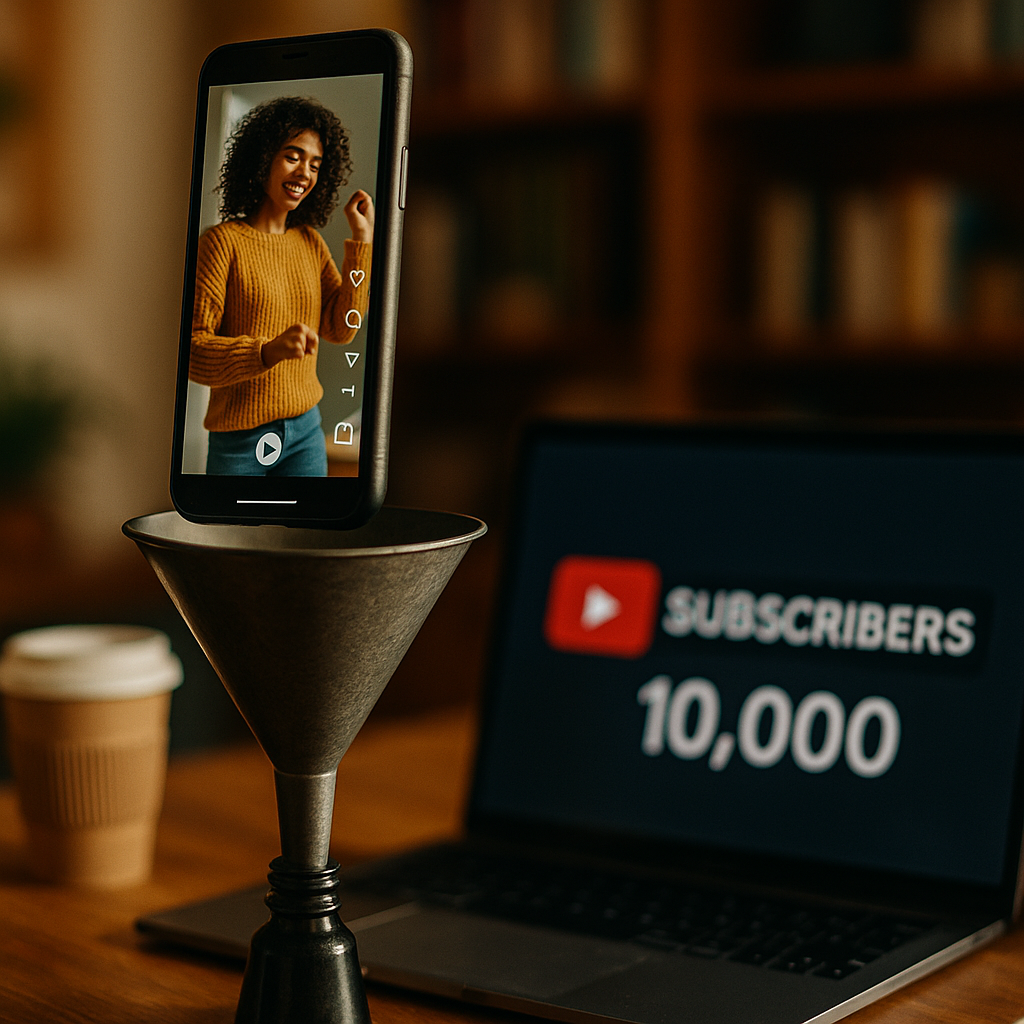
Fifteen seconds gets attention. Fifteen minutes builds a fan. If your multi format fandom strategy only lives on Reels and TikTok, you’re renting attention you’ll never own. The brands compounding audience value right now are the ones treating short form as the door and long form YouTube as the living room, one funnel, two formats, zero wasted footage.
Why One Format Alone Is Leaving Fans on the Table
Short form is a discovery machine. It’s cheap to produce, algorithm friendly, and brutally efficient at putting your brand in front of strangers. But discovery isn’t loyalty. A viewer who watches an eight second hook and swipes away has given you almost nothing: no context, no story, no reason to come back next week.
Long form YouTube does the opposite job. It’s slower to build, harder to distribute cold, but it’s where fandom actually forms. According to eMarketer, average YouTube session lengths continue to outpace every other major platform, and that watch time is exactly where brand recall and purchase intent get built. Treating Reels and YouTube as competing budgets, rather than sequential stages, is the single biggest strategic error brands make with creator content.
Short form buys you a stranger’s attention for fifteen seconds. Long form is the only format that can turn that stranger into a subscriber who shows up on purpose.
The Funnel Logic: Reels as the Hook, YouTube as the Home
Think of it as a two stage relationship. Reels and TikTok clips do the cold outreach: fast cuts, bold captions, pattern interrupts designed to stop a thumb mid scroll. YouTube is where you close. Once someone clicks through from a Reel to a full length video, you’ve moved them from passive scroller to active viewer, a fundamentally different level of intent.
This is not a new idea in theory. Podcasters have run this play for years, clipping episodes into shareable snippets that funnel back to the full show. The same mechanics apply to brand and creator content. Our own coverage of podcast snippet clipping lays out how a single long episode can generate dozens of short form entry points without extra shoot days.
The practical brief looks like this: shoot one long form piece, a product deep dive, a founder interview, a documentary style case study, then extract three to six vertical clips built specifically to tease it. Each clip should end on an open loop, a question unanswered, a result unshown, something that only the full video resolves.
What Actually Gets Clipped Well
- The moment right before a reveal, cut before the payoff lands.
- A controversial or surprising claim stated in under ten seconds.
- A visual transformation that’s obviously mid process.
- A reaction shot that raises an obvious “wait, what happened?” question.
None of this works if the short clip feels complete on its own. Completeness kills click through. The clip’s entire job is to feel unfinished.
One Shoot, Two Deliverables: The Production Math
Budget owners love this strategy once they see the arithmetic. A single well planned shoot day can produce one 10 to 15 minute YouTube video and five to eight short form cutdowns, all from the same footage, same talent day rate, same location fee. That’s a dramatic reduction in cost per asset compared to producing short and long form separately.
This only works if the shoot is planned for both formats from the start, not repurposed as an afterthought. Our piece on format agnostic distribution covers the briefing structure that makes this possible: wide establishing shots for YouTube pacing, tight vertical friendly framing for the cutdowns, and modular b-roll that editors can slot into either cut without reshoots.
Editing workflow matters just as much as the shoot itself. Teams that separate their long form editor from their short form editor often end up with inconsistent pacing and mismatched tone. A tighter model has one editor cut the long form spine first, then hand off timestamped highlight notes to whoever’s building the vertical cuts. Our guide to editing style testing is a useful reference here, since pacing decisions that work on a phone screen often feel jarring on a 15 minute YouTube watch.
Fandom Isn’t Built by Reach. It’s Built by Repetition.
Here’s the uncomfortable truth: virality doesn’t build fans, familiarity does. A creator who shows up in someone’s feed once, however impressively, is forgettable. A creator who shows up in a short clip on Tuesday, a full YouTube video on Thursday, and a follow up short referencing that video the following week starts to feel like a recurring presence rather than a one off encounter.
This is where serialized creator series earn their keep. A recurring format, same time slot, same visual identity, same recurring bit, gives audiences a reason to anticipate rather than stumble upon your content. Pair that serialized long form anchor with short form recaps and teasers, and you’ve built a rhythm that mimics appointment viewing without needing a broadcast slot.
The data backs the repetition thesis. Platforms like Sprout Social have repeatedly found that consistency of posting correlates more strongly with follower growth than any single viral hit. One massive Reel gets you a spike. A dependable weekly rhythm across two formats gets you a subscriber base.
Where Brands Get the Sequencing Wrong
The most common failure mode is publishing both formats simultaneously with no connective tissue. A brand drops a YouTube video on Monday and a completely unrelated Reel on Tuesday, then wonders why cross platform traffic is flat. If the short form content doesn’t explicitly reference the long form piece, whether through a caption, an on screen callout, or a literal “full story on YouTube” text overlay, viewers have no reason to hop platforms.
Compliance and consistency also get sloppy when formats are treated separately. If a creator’s long form video makes a paid partnership disclosure but the short form cutdowns from that same shoot don’t carry equivalent labeling, you’re exposed to the same disclosure risk the FTC has been actively enforcing across platforms. Every cutdown from a sponsored long form asset needs its own disclosure, not just the source video.
There’s also a subtler mistake: over polishing the short form cuts to match YouTube production values. Audiences on Reels and TikTok expect a rawer aesthetic. Our analysis of the b-roll diary format shows unscripted, lightly produced clips consistently outperform heavily edited ones on short form feeds, even when they’re cut from the exact same polished long form source.
Measuring the Handoff, Not Just Each Platform in Isolation
Most brands measure Reels performance and YouTube performance as two separate scorecards. That’s a mistake if the strategy is genuinely multi format. The metric that actually matters is the handoff rate: what percentage of short form viewers click through to the long form asset, and what percentage of those clickers become subscribers.
UTM tagging on YouTube video links shared in bios and captions, combined with YouTube’s own traffic source reporting, gives you a reasonably clean read on this. Google’s own support documentation for YouTube Analytics breaks down external traffic sources in enough detail to isolate short form referral spikes tied to specific posts.
Specialist teams increasingly build this cross platform view as a standing dashboard rather than a one off report. Some agencies’ analytics and BI teams, Moburst among them as a global growth agency that has worked with over 900 clients and won 45+ international awards, structure exactly this kind of handoff measurement into ongoing campaign reporting rather than a single post campaign summary. That’s the level of tracking multi format fandom strategy actually requires if the goal is subscriber growth, not just view counts.
If you’re not ready to build a full BI dashboard, a simpler proxy works: track subscriber growth in the 48 hours following each short form push that references a long form video. A consistent lift is your signal the sequencing is working.
Building the Content Calendar Around Two Cadences
Reels and YouTube run on different clocks. Short form content decays fast, often within 48 hours, and rewards near daily posting. Long form YouTube content has a much longer tail, sometimes accumulating the majority of its views months after publish. Your calendar needs to respect both rhythms rather than forcing them onto the same schedule.
A workable cadence for most mid sized brand programs: one long form YouTube video every one to two weeks, supported by four to six short form cutdowns released across the days surrounding it. The cutdowns don’t all need to drop at once. Stagger them, referencing the long form video from different angles, to keep the funnel active for the full life of the asset rather than front loading everything on launch day.
Creator input matters here too. Giving creators loose creative freedom over how they frame the short form teasers, rather than scripting every second, tends to produce better click through results. Our breakdown of creator choice narrative briefs found that creator-led framing of teaser content consistently outperformed brand-scripted versions, likely because the creator knows their own audience’s triggers better than a brand brief ever will.
Next step: pick one existing long form YouTube asset sitting in your library right now, cut three short form teasers from it this week, and track the click through rate back to the full video before you greenlight a single new shoot day.
FAQs
What is a multi format fandom strategy?
It’s an approach that uses short form content like Reels and TikTok clips to attract new viewers, then routes them into long form YouTube content designed to build deeper loyalty and repeat viewership over time.
Do I need separate content for short form and long form platforms?
Not necessarily. A single well planned shoot can generate both a long form YouTube video and multiple short form cutdowns, provided the shoot is briefed for both formats from the start rather than repurposed afterward.
How often should brands post long form YouTube content?
Most mid sized brand programs see solid results posting one long form video every one to two weeks, supported by several short form teasers released across the surrounding days.
What metric matters most for this strategy?
The handoff rate, meaning the percentage of short form viewers who click through to the long form video, is more important than measuring each platform’s performance in isolation.
Does disclosure need to appear on every short form cutdown, or just the original long form video?
Every cutdown from a sponsored long form asset needs its own clear disclosure. Relying on the source video’s disclosure alone does not meet FTC expectations for each individual post.
Top Influencer Marketing Agencies
The leading agencies shaping influencer marketing in 2026
Agencies ranked by campaign performance, client diversity, platform expertise, proven ROI, industry recognition, and client satisfaction. Assessed through verified case studies, reviews, and industry consultations.
Moburst

-
2

The Shelf
Boutique Beauty & Lifestyle Influencer AgencyA data-driven boutique agency specializing exclusively in beauty, wellness, and lifestyle influencer campaigns on Instagram and TikTok. Best for brands already focused on the beauty/personal care space that need curated, aesthetic-driven content.Clients: Pepsi, The Honest Company, Hims, Elf Cosmetics, Pure LeafVisit The Shelf → -
3

Audiencly
Niche Gaming & Esports Influencer AgencyA specialized agency focused exclusively on gaming and esports creators on YouTube, Twitch, and TikTok. Ideal if your campaign is 100% gaming-focused — from game launches to hardware and esports events.Clients: Epic Games, NordVPN, Ubisoft, Wargaming, Tencent GamesVisit Audiencly → -
4

Viral Nation
Global Influencer Marketing & Talent AgencyA dual talent management and marketing agency with proprietary brand safety tools and a global creator network spanning nano-influencers to celebrities across all major platforms.Clients: Meta, Activision Blizzard, Energizer, Aston Martin, WalmartVisit Viral Nation → -
5

The Influencer Marketing Factory
TikTok, Instagram & YouTube CampaignsA full-service agency with strong TikTok expertise, offering end-to-end campaign management from influencer discovery through performance reporting with a focus on platform-native content.Clients: Google, Snapchat, Universal Music, Bumble, YelpVisit TIMF → -
6

NeoReach
Enterprise Analytics & Influencer CampaignsAn enterprise-focused agency combining managed campaigns with a powerful self-service data platform for influencer search, audience analytics, and attribution modeling.Clients: Amazon, Airbnb, Netflix, Honda, The New York TimesVisit NeoReach → -
7

Ubiquitous
Creator-First Marketing PlatformA tech-driven platform combining self-service tools with managed campaign options, emphasizing speed and scalability for brands managing multiple influencer relationships.Clients: Lyft, Disney, Target, American Eagle, NetflixVisit Ubiquitous → -
8

Obviously
Scalable Enterprise Influencer CampaignsA tech-enabled agency built for high-volume campaigns, coordinating hundreds of creators simultaneously with end-to-end logistics, content rights management, and product seeding.Clients: Google, Ulta Beauty, Converse, AmazonVisit Obviously →