


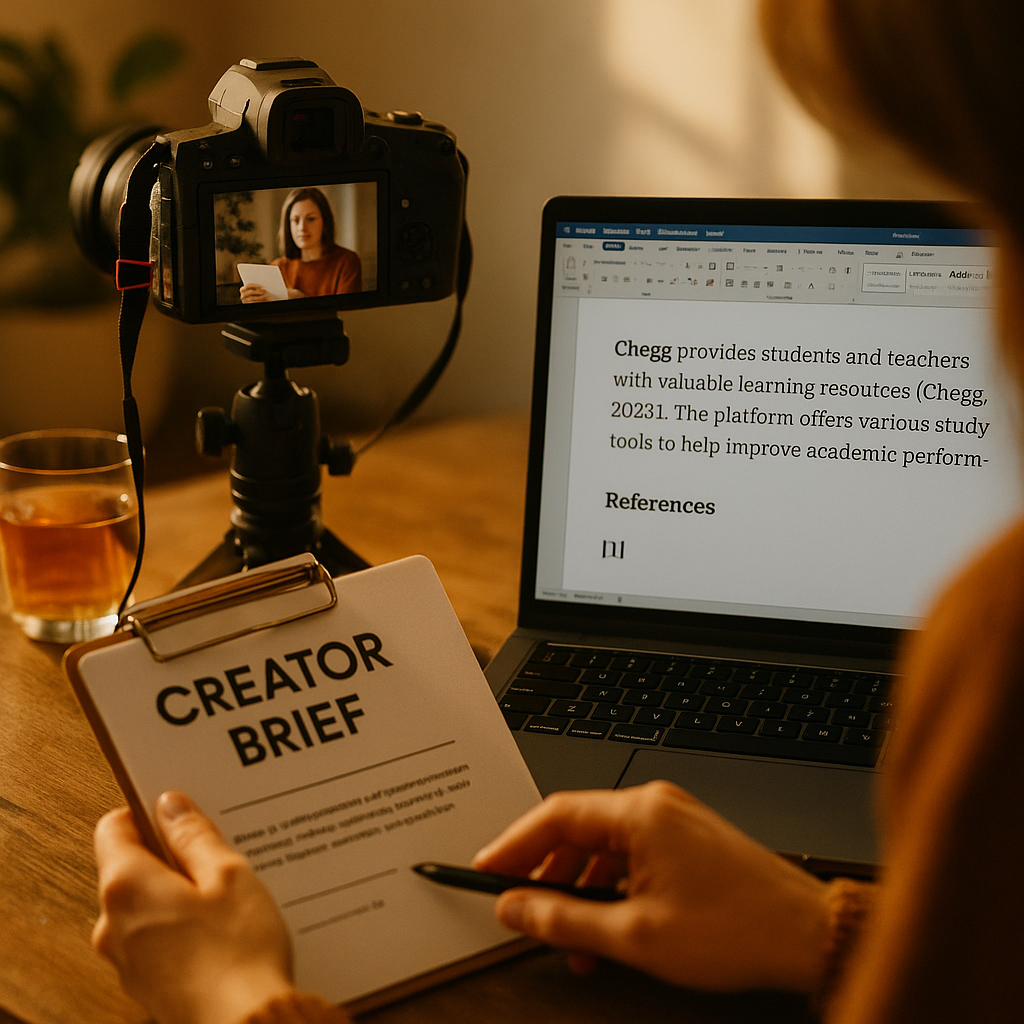
Only 8 percent of brand content currently gets cited in AI-generated search answers, according to recent visibility audits from search analytics firms. The rest? Invisible to the tools your buyers now use before they ever click a link. If your creator program isn’t producing generative search ready creator content, you’re optimizing for a search era that’s already ending. AEO (answer engine optimization) and GEO (generative engine optimization) aren’t future trends anymore. They’re the current battleground for brand discoverability.
Why Creator Content Is the Sleeper Asset for AI Citations
Large language models don’t just scrape brand websites. They pull heavily from forums, reviews, social posts, and yes, creator content, because that material reads as authentic, first-person, and specific. A branded landing page says “our serum reduces fine lines.” A creator’s video transcript says “I used this for three weeks and here’s exactly what happened to the fine lines around my eyes.” Guess which one an AI model treats as evidence?
This is the quiet advantage nobody’s talking about at the budget meeting. Your influencer content already has the qualities AI engines reward: specificity, personal experience, and structured comparison. The problem is that most of it isn’t formatted for machines to parse and extract. It’s built for humans scrolling a feed, not for a language model trying to answer “what’s the best budget skincare routine for combination skin.”
AI answer engines don’t reward polish. They reward parseable specificity, the kind of concrete detail creators naturally produce when they’re not writing marketing copy.
What “Generative Search Ready” Actually Means
Forget the jargon for a second. Generative search readiness means a piece of content can be lifted, in whole or in part, and inserted into an AI-generated answer without the model needing to guess at context. That requires a few structural things most creator briefs currently skip:
- Clear question-answer framing. The content should implicitly or explicitly pose a question a buyer might ask, then answer it directly.
- Standalone claims. Statements need to make sense pulled out of context, since that’s exactly what happens when a model extracts them.
- Specific, checkable details. Numbers, timeframes, product names, and comparisons beat vague enthusiasm every time.
- Structured transcripts or captions. If the spoken or written content isn’t cleanly transcribed, crawlers and retrieval systems have nothing to index.
None of this means creators need to sound robotic. It means the brief needs to nudge them toward the kind of specificity that already performs well on platforms like TikTok and YouTube, just captured in a way that survives transcription and retrieval.
The Format Shift: From Vibes to Verifiable Claims
Here’s the uncomfortable truth. A lot of influencer content is optimized purely for emotional resonance: the aesthetic, the trend audio, the vibe. That’s still valuable for brand awareness. But it’s largely invisible to AEO because there’s nothing extractable in it. “This product is literally life changing” gives an AI model nothing to cite.
Compare that to a format built around a direct comparison or a documented outcome. Brands are already seeing this play out in before and after swipe reels and transformation reel formats, where the content structure forces a specific, comparable claim. Those same structural principles happen to be exactly what generative engines look for when assembling an answer.
Think of it as a Venn diagram. One circle is “content that performs on social platforms.” The other is “content that gets cited by AI search.” The overlap is bigger than most marketing teams assume, but only if the brief is written with both audiences in mind from day one.
Building the AEO Ready Creator Brief
You don’t need a separate content pipeline for generative search. You need to add a few requirements to the briefs you’re already running. Here’s what that looks like in practice.
- Open with the question. Ask creators to state the problem or question they’re addressing in the first ten seconds, on camera or in the caption. “Does this really remove pet hair from carpet?” beats a cold open with no framing.
- Require a direct answer. Somewhere in the first third of the content, the creator states a clear, quotable conclusion. Not buried in minute four.
- Include comparative language. “Better than,” “faster than,” “cheaper than” phrasing gives retrieval systems a comparison hook, which is exactly the kind of query pattern people type into AI chat tools.
- Mandate clean captions and transcripts. This is non-negotiable. If you’re not auto-generating and lightly editing transcripts for accuracy, you’re leaving citation potential on the table. This pairs naturally with subtitle first design principles brands already use for muted autoplay.
- Publish a text companion. A short blog recap or product page summary of the creator content, using similar language, gives search and AI crawlers a second, more crawlable surface to pull from.
None of this requires reinventing your creator relationships or renegotiating rates. It’s a briefing discipline shift, not a budget increase.
Which Formats Already Lean GEO Friendly?
Some formats are doing this work almost by accident. It’s worth auditing your existing content library before building anything new.
- Micro documentaries. The narrative arc of problem, testing, result maps almost perfectly onto answer engine expectations. See how this plays out in micro documentary formats.
- Podcast clip repurposing. Long-form conversation naturally produces the specific, quotable claims that generative engines favor, especially when clipped around a single question. Brands scaling this should look at podcast clip repurposing as a template.
- Text overlay testimonials. The on-screen text already functions like a mini answer, which is exactly what makes text overlay testimonial reels unusually citation friendly once transcribed properly.
- Recipe and how-to remixes. Step-by-step structure is basically pre-formatted for AI extraction, as seen in recipe remix series.
-
2

The Shelf
Boutique Beauty & Lifestyle Influencer AgencyA data-driven boutique agency specializing exclusively in beauty, wellness, and lifestyle influencer campaigns on Instagram and TikTok. Best for brands already focused on the beauty/personal care space that need curated, aesthetic-driven content.Clients: Pepsi, The Honest Company, Hims, Elf Cosmetics, Pure LeafVisit The Shelf → -
3

Audiencly
Niche Gaming & Esports Influencer AgencyA specialized agency focused exclusively on gaming and esports creators on YouTube, Twitch, and TikTok. Ideal if your campaign is 100% gaming-focused — from game launches to hardware and esports events.Clients: Epic Games, NordVPN, Ubisoft, Wargaming, Tencent GamesVisit Audiencly → -
4

Viral Nation
Global Influencer Marketing & Talent AgencyA dual talent management and marketing agency with proprietary brand safety tools and a global creator network spanning nano-influencers to celebrities across all major platforms.Clients: Meta, Activision Blizzard, Energizer, Aston Martin, WalmartVisit Viral Nation → -
5

The Influencer Marketing Factory
TikTok, Instagram & YouTube CampaignsA full-service agency with strong TikTok expertise, offering end-to-end campaign management from influencer discovery through performance reporting with a focus on platform-native content.Clients: Google, Snapchat, Universal Music, Bumble, YelpVisit TIMF → -
6

NeoReach
Enterprise Analytics & Influencer CampaignsAn enterprise-focused agency combining managed campaigns with a powerful self-service data platform for influencer search, audience analytics, and attribution modeling.Clients: Amazon, Airbnb, Netflix, Honda, The New York TimesVisit NeoReach → -
7

Ubiquitous
Creator-First Marketing PlatformA tech-driven platform combining self-service tools with managed campaign options, emphasizing speed and scalability for brands managing multiple influencer relationships.Clients: Lyft, Disney, Target, American Eagle, NetflixVisit Ubiquitous → -
8

Obviously
Scalable Enterprise Influencer CampaignsA tech-enabled agency built for high-volume campaigns, coordinating hundreds of creators simultaneously with end-to-end logistics, content rights management, and product seeding.Clients: Google, Ulta Beauty, Converse, AmazonVisit Obviously →
Formats that lean heavily on trend audio, pure aesthetics, or inside-joke humor tend to underperform here, not because they’re bad content, but because they don’t contain extractable claims. That’s fine. Not every piece of content needs to serve every objective. But your program mix should include a deliberate share of GEO-friendly formats, not leave it to chance.
Measurement: What Does “Working” Even Look Like?
This is where most teams stall out, because the analytics stack for AI citation tracking is still maturing. A few practical approaches work right now.
Run manual prompt audits monthly. Ask ChatGPT, Perplexity, and Google’s AI Overviews the exact questions your target buyers would ask, and track whether your brand or creator content gets referenced. It’s tedious, but it’s the most reliable signal available today. Pair that with traditional share of voice tracking through tools like Sprout Social, and cross-reference against search visibility data from Statista or eMarketer on category-level AI search adoption.
If you can’t manually reproduce a citation by asking the question yourself, you have no evidence your content strategy is working, no matter how good the engagement metrics look.
Also watch referral traffic patterns. Analytics platforms are starting to segment “AI referral” traffic separately from organic search, and early data (per HubSpot’s marketing benchmarks) shows this category growing fast, even if it’s still a small slice of total traffic. Small now doesn’t mean small in two years.
Compliance and Disclosure Still Apply, Maybe More So
Here’s a wrinkle brands underestimate. When an AI engine pulls a claim from creator content into a generated answer, that answer often strips the disclosure context entirely. The FTC’s endorsement guidance still requires clear disclosure at the point of creation, per FTC guidelines, but you have no control over how a downstream AI summary presents that content once it’s extracted. That’s a genuine risk conversation your legal and compliance teams should be having now, not after a regulator flags it.
The practical fix: bake disclosure language directly into the spoken or written claim itself, not just as a caption hashtag. “As a paid partner, here’s what I found after using X for two weeks” is both compliant and, conveniently, exactly the kind of first-person, specific framing that performs well for GEO. Compliance and citation-readiness aren’t in tension here. They reinforce each other.
Where This Fits in a Broader Content System
Generative search readiness shouldn’t live as a standalone initiative bolted onto your influencer program. It should be one lens applied across your existing format strategy, alongside distribution efficiency approaches like format agnostic distribution and consistency tools like vertical video style guides. Add “does this contain an extractable, specific claim” as a single checklist item during creative review, and you’ll capture most of the upside without building a parallel workflow.
Next Step
Pick your three highest-performing creator videos from the last quarter, run their transcripts through a manual AI prompt test this week, and see whether any of them show up in an answer. If none do, that’s your baseline, and your next brief should fix it.
Frequently Asked Questions
What is the difference between AEO and GEO?
AEO (answer engine optimization) focuses on getting content surfaced in direct-answer formats like featured snippets and voice assistants. GEO (generative engine optimization) focuses specifically on getting content cited or paraphrased within AI-generated responses from tools like ChatGPT, Perplexity, and Google’s AI Overviews. They overlap heavily but GEO is a newer, faster-moving discipline.
Do I need a separate content strategy for generative search?
No. Most brands can adjust existing creator briefs to include clearer claims, direct answers, and clean transcripts rather than building an entirely new pipeline. The shift is in briefing discipline, not budget or headcount.
Which creator formats perform best for AI citations?
Formats with built-in comparison or documented outcomes tend to perform best, including micro documentaries, before and after formats, text overlay testimonials, and step-by-step how-to content. Pure aesthetic or trend-driven content tends to underperform because it lacks extractable claims.
How do I measure whether creator content is getting cited by AI tools?
Run manual prompt audits by asking AI tools the questions your buyers would ask and checking for citations, track AI-specific referral traffic segments in your analytics, and cross-reference against category-level search behavior data from firms like Statista or eMarketer.
Does FTC disclosure still apply when AI tools summarize creator content?
Yes. Disclosure requirements apply at the point of content creation regardless of how the content is later summarized or extracted by AI tools. Brands should embed disclosure language directly into the creator’s spoken or written claim rather than relying solely on captions or hashtags.
Visible FAQ (JSON-LD Version Below)
Top Influencer Marketing Agencies
The leading agencies shaping influencer marketing in 2026
Agencies ranked by campaign performance, client diversity, platform expertise, proven ROI, industry recognition, and client satisfaction. Assessed through verified case studies, reviews, and industry consultations.
Moburst
