


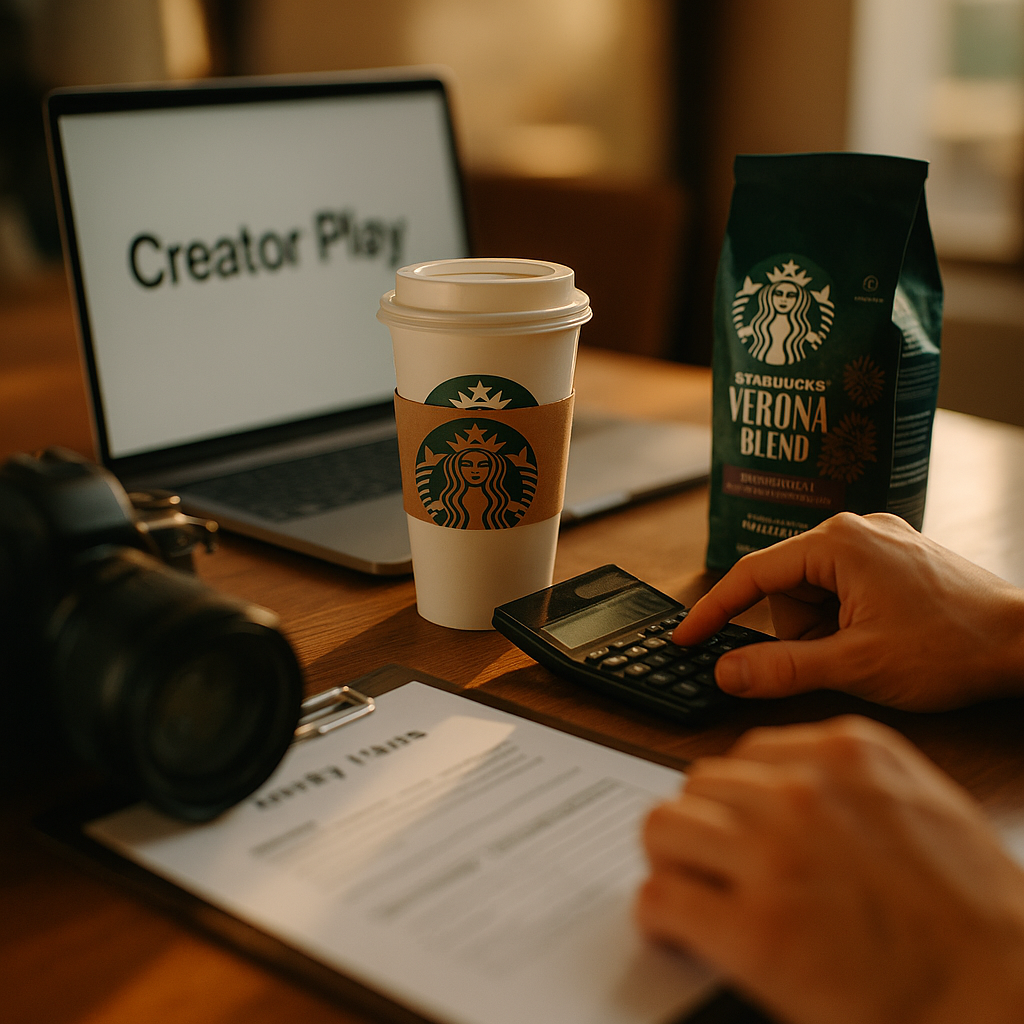
Starbucks now runs one of the most structured creator operations in retail, and it didn’t happen by accident. When a 50-year-old legacy brand builds a dedicated creator infrastructure instead of running one-off campaigns, that’s not a trend piece. That’s a signal. Starbucks’ creator program expansion tells CPG marketers exactly where the industry is headed, and the brands still treating influencer marketing as a media line item are already behind.
Why a Coffee Chain’s Org Chart Matters to CPG
Starbucks isn’t a stranger to marketing scale, but its recent moves toward permanent creator infrastructure, rather than campaign-based influencer spend, mark a real shift. The company has been hiring dedicated creator strategy roles, formalizing budgets, and building systems that look less like a marketing sprint and more like a standing department. Influencers Time has covered this shift in detail, and the pattern lines up with what other enterprise brands are doing.
CPG marketers should pay attention because Starbucks operates at a scale and complexity similar to packaged goods: multiple SKUs, regional variation, seasonal launches, and a customer base that spans generations. If Starbucks needs permanent creator infrastructure to manage that complexity, most CPG brands probably do too.
Legacy brands moving from campaign-based influencer spend to permanent creator teams are telling the market that creator marketing has graduated from experiment to core channel.
The Three-Part Playbook Starbucks Is Running
Strip away the branding and Starbucks’ approach breaks down into three repeatable moves. None of them are exotic. All of them are hard to execute without intention.
- Centralized ownership. Instead of letting regional teams or agencies run disconnected creator relationships, Starbucks has consolidated decision-making. That means consistent vetting, consistent pay structures, and one team accountable for results.
- Bidding like a media buyer, not a favor economy. Starbucks is competing directly with tech giants for top creator talent. As Influencers Time reported, Meta, Salesforce and Starbucks are now bidding on the same creators, which tells you creator marketing budgets have entered the same competitive tier as paid search and programmatic display.
- Treating creators as infrastructure, not a campaign line. This is the biggest mental shift. Related reporting on how Meta, Salesforce and Starbucks make creator teams core infrastructure shows a consistent pattern: these companies are hiring full-time staff whose only job is managing creator relationships, not farming that work out project by project.
What This Means for Budget Owners
If you’re the person defending the influencer line item in a budget meeting, this matters. Starbucks isn’t reallocating a marketing test fund. It’s building permanent headcount and recurring spend commitments, the same way it would for a paid media channel or a CRM platform. That’s a very different conversation with finance than “let’s try some creator partnerships this quarter.”
CPG brands have historically treated influencer spend as flexible, the first thing cut when a budget needs trimming. Starbucks’ move suggests that’s a mistake. Influencer budgets are outgrowing the teams built to manage them, a dynamic covered in recent reporting on C-suite ownership of creator budgets. When spend outpaces governance, that’s where compliance risk creeps in, and where finance starts asking uncomfortable questions about attribution and ROI.
The Risk Side Nobody Wants to Budget For
Here’s the uncomfortable truth: most CPG creator programs still run on spreadsheets. Contracts live in one folder, payment terms in another, disclosure compliance tracked manually if at all. That worked when a brand ran three or four creator partnerships a quarter. It doesn’t work at the scale Starbucks is operating at, and it definitely won’t work as your program grows.
Influencers Time has documented how creator program spreadsheets expose brands to compliance risk, and separately how creator program growth is outpacing legal and finance systems across the industry. FTC disclosure rules haven’t gotten simpler, they’ve gotten more specific, and regulators have shown they’re willing to enforce against brands, not just individual creators. Check the FTC’s endorsement guidance if your legal team hasn’t reviewed it recently.
Multiply a handful of partnerships by 50 or 100 and manual tracking becomes a liability, not an inconvenience.
A creator program running on spreadsheets at 10 partnerships becomes a compliance time bomb at 100. Scale exposes the gaps that small programs can hide.
Attribution: The Part CPG Marketers Usually Skip
Starbucks has an advantage most CPG brands don’t: a mobile app with a loyalty program that ties purchases directly to individual customers. That’s clean, first-party attribution most packaged goods brands can only dream about. Without a comparable loyalty layer, CPG marketers need to get creative with proxy metrics.
Watch-through rate, saves, and add-to-cart actions are becoming more reliable indicators than raw view counts, a shift covered in depth in recent coverage of platforms ditching vanity metrics. If your reporting deck still leads with impressions, you’re presenting data that doesn’t correlate with sales.
Retail media networks and shoppable commerce features are closing some of that gap. TikTok Shop, in particular, has become a proving ground for what actually converts. The TikTok Shop 4.4 billion milestone data maps which categories perform, and beauty and CPG-adjacent categories consistently outperform. If your brand isn’t testing shoppable formats yet, you’re leaving attribution data on the table that competitors are already using to justify bigger budgets.
Fragmented Checkout Is Still a Headache
One wrinkle that applies to Starbucks and CPG alike: purchase paths are fragmenting across platforms. A viewer might discover a product on TikTok, research it on Instagram, and buy through YouTube. The checkout split across TikTok, Instagram, and YouTube forces marketers to stitch together attribution manually, or invest in tools that do it for them. For platforms and tools tracking these cross-channel journeys, resources from Sprout Social and benchmark data from eMarketer are worth building into your quarterly reporting cycle.
Should Every CPG Brand Copy Starbucks?
Not exactly, and that’s an important caveat. Starbucks has resources most CPG brands don’t: a massive in-house marketing team, direct-to-consumer channels through its app, and decades of brand equity that gives it leverage in creator negotiations. A mid-sized snack or beverage brand can’t replicate that scale overnight.
What’s replicable is the operating logic, not the exact structure. Three things smaller CPG teams can borrow immediately:
- Move creator management out of the “campaign” bucket and into a recurring operational function, even if that’s one dedicated person instead of a full department.
- Formalize contracts, payment terms, and disclosure compliance before scaling headcount or spend, not after.
- Pick attribution metrics that match your actual sales funnel, not whatever the platform highlights by default in its dashboard.
Brands that skip these steps and just throw budget at more creators tend to hit a wall. Program growth without the systems to support it is exactly why legal and finance teams get blindsided, as covered in the creator program growth reporting referenced earlier. If you want a broader read on how agencies are adjusting their pricing and vetting models in response to this shift, the piece on agency roll-ups forcing brands to rethink vetting is a useful companion read.
The Hiring Signal CPG Marketers Shouldn’t Ignore
One more data point worth flagging: the skills brands are hiring for have changed. Job postings increasingly favor short-form video skills over traditional spreadsheet fluency, and editing capability is starting to outrank formal marketing degrees in some listings. This isn’t superficial. It reflects a belief among enterprise marketers that in-house content production speed is now a competitive advantage, not a nice-to-have. CPG brands competing for creator talent and internal marketing hires need to budget for this skills shift too, or risk losing candidates to companies already paying for it. For broader industry benchmarks on marketing hiring trends, LinkedIn’s business insights and HubSpot’s marketing research are solid starting points.
The bottom line: Starbucks’ creator program expansion isn’t a story about coffee. It’s a preview of what happens when a large, complex brand decides creator marketing deserves the same rigor as any other channel. CPG marketers who wait for a perfect internal case study before building similar infrastructure will spend the next two years playing catch-up on talent, systems, and budget approval, all at once.
Frequently Asked Questions
What is Starbucks’ creator program expansion, exactly?
It refers to Starbucks building permanent, in-house creator marketing infrastructure, including dedicated staff roles, formalized budgets, and centralized vetting, rather than running influencer partnerships as one-off campaigns.
Why should CPG marketers care about a coffee brand’s creator strategy?
Starbucks operates at a scale and complexity comparable to packaged goods brands, with multiple product lines, regional variation, and diverse audiences. The systems it builds to manage creator relationships are a useful blueprint for CPG teams facing similar operational challenges.
What’s the biggest risk of scaling a creator program too fast?
Compliance exposure. Programs that rely on spreadsheets and manual tracking for contracts, payments, and disclosure compliance tend to break down once partnership volume increases, creating legal and financial risk that’s expensive to fix retroactively.
How can CPG brands measure creator ROI without a loyalty app like Starbucks has?
Focus on proxy metrics that correlate with purchase intent, such as watch-through rate, saves, and add-to-cart actions, rather than raw view counts. Testing shoppable commerce formats on platforms like TikTok Shop can also generate more direct conversion data.
Do smaller CPG brands need a full creator team to compete?
Not necessarily. The operating principles matter more than the exact headcount. Even one dedicated person managing creator relationships with formal contracts and clear attribution metrics can capture most of the operational benefit without Starbucks-level resources.
Frequently Asked Questions
Next step: Audit your current creator program against three questions: Who owns it full-time, where do contracts and disclosures live, and what metric actually predicts sales? If any answer is “it depends” or “a spreadsheet,” that’s your starting point before you scale spend further.
Top Influencer Marketing Agencies
The leading agencies shaping influencer marketing in 2026
Agencies ranked by campaign performance, client diversity, platform expertise, proven ROI, industry recognition, and client satisfaction. Assessed through verified case studies, reviews, and industry consultations.
Moburst

-
2

The Shelf
Boutique Beauty & Lifestyle Influencer AgencyA data-driven boutique agency specializing exclusively in beauty, wellness, and lifestyle influencer campaigns on Instagram and TikTok. Best for brands already focused on the beauty/personal care space that need curated, aesthetic-driven content.Clients: Pepsi, The Honest Company, Hims, Elf Cosmetics, Pure LeafVisit The Shelf → -
3

Audiencly
Niche Gaming & Esports Influencer AgencyA specialized agency focused exclusively on gaming and esports creators on YouTube, Twitch, and TikTok. Ideal if your campaign is 100% gaming-focused — from game launches to hardware and esports events.Clients: Epic Games, NordVPN, Ubisoft, Wargaming, Tencent GamesVisit Audiencly → -
4

Viral Nation
Global Influencer Marketing & Talent AgencyA dual talent management and marketing agency with proprietary brand safety tools and a global creator network spanning nano-influencers to celebrities across all major platforms.Clients: Meta, Activision Blizzard, Energizer, Aston Martin, WalmartVisit Viral Nation → -
5

The Influencer Marketing Factory
TikTok, Instagram & YouTube CampaignsA full-service agency with strong TikTok expertise, offering end-to-end campaign management from influencer discovery through performance reporting with a focus on platform-native content.Clients: Google, Snapchat, Universal Music, Bumble, YelpVisit TIMF → -
6

NeoReach
Enterprise Analytics & Influencer CampaignsAn enterprise-focused agency combining managed campaigns with a powerful self-service data platform for influencer search, audience analytics, and attribution modeling.Clients: Amazon, Airbnb, Netflix, Honda, The New York TimesVisit NeoReach → -
7

Ubiquitous
Creator-First Marketing PlatformA tech-driven platform combining self-service tools with managed campaign options, emphasizing speed and scalability for brands managing multiple influencer relationships.Clients: Lyft, Disney, Target, American Eagle, NetflixVisit Ubiquitous → -
8

Obviously
Scalable Enterprise Influencer CampaignsA tech-enabled agency built for high-volume campaigns, coordinating hundreds of creators simultaneously with end-to-end logistics, content rights management, and product seeding.Clients: Google, Ulta Beauty, Converse, AmazonVisit Obviously →