


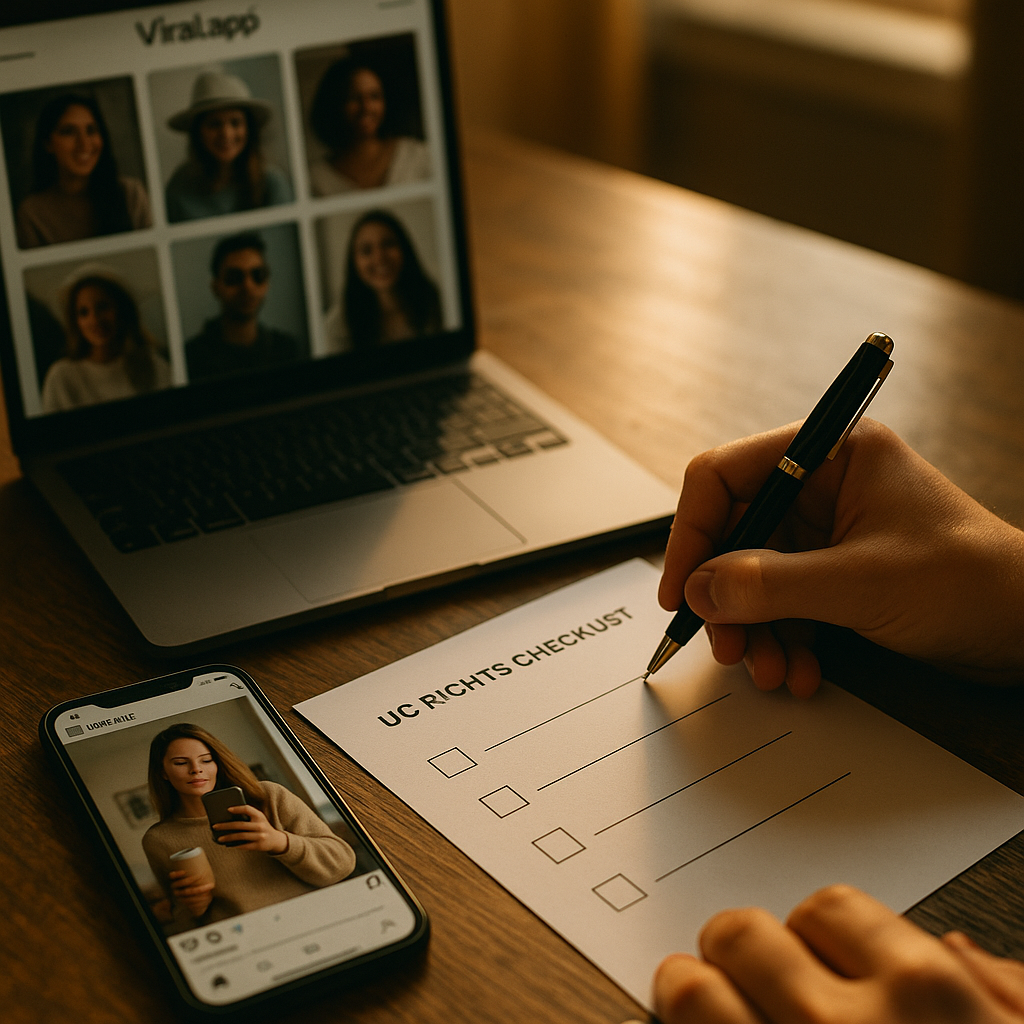
Brands now spend more time testing creative than making it. That single sentence explains why canvas UGC infrastructure, the category Viral.app helped popularize, has become one of the fastest-growing line items in performance marketing budgets. If your team is still treating creator content generation and paid testing as separate workflows, you’re already behind the curve.
What Is Canvas UGC Infrastructure, Anyway?
“Canvas UGC” refers to platforms that let brands generate, remix, and stress-test creator-style content inside a single visual workspace, often before a real creator ever touches a brief. Instead of commissioning ten creators and hoping three hooks land, teams use canvas tools to storyboard variations, layer AI-generated voiceovers or avatars, and push winning concepts straight into paid social buying.
Viral.app sits squarely in this lane. It positions itself less as a creator marketplace and more as a production and testing layer: drag-and-drop scripts, swap hooks, generate multiple cuts, and route the best performers into ad accounts. Think of it as a hybrid of a video editor, a UGC brief generator, and a rudimentary media-buying assistant.
This matters because the old model, brief a creator, wait a week, review a rough cut, request revisions, was never built for the testing velocity that TikTok and Meta ad algorithms now reward. Canvas infrastructure compresses that cycle from days into hours.
The real value proposition of canvas UGC tools isn’t the content itself, it’s the speed at which brands can kill a losing hook and scale a winning one.
Where Viral.app Fits in the Stack
Most mid-market and enterprise brands already run a patchwork of tools: a creator discovery platform, an editing tool, a payment processor, and a separate attribution layer. Viral.app doesn’t try to replace all of that. It slots into the creative production stage, sitting between creator sourcing and ad deployment.
For teams comparing it against dedicated editing tools like CapCut or Adobe Premiere Rush, the distinction is important. Editing software is about polish and control. Canvas UGC platforms are about volume and speed, generating many rough variants fast rather than perfecting one. Our breakdown of editing speed versus creative risk is worth reading if you’re deciding where the line should sit in your own workflow.
The bigger question brand teams should ask isn’t “does this tool make content,” it’s “does this tool make content I can legally and safely deploy at scale?” That’s where things get complicated, and where a lot of canvas UGC vendors get vague fast.
The Buyer’s Checklist: Six Questions Before You Sign
Procurement teams evaluating Viral.app or any canvas UGC competitor should be asking harder questions than “how many templates do you have.” Here’s what actually matters at renewal time:
- Rights clarity. Does the platform clearly define who owns AI-remixed content, and does it flow through to paid usage rights or organic-only?
- Creator consent chain. If real creator likenesses or voices are involved, how is consent captured, stored, and auditable?
- Attribution handoff. Can testing data (hook performance, thumb-stop rate) export cleanly into your media buying or attribution stack?
- Compliance posture. Does the tool support FTC disclosure requirements for AI-generated or synthetic UGC?
- Payout and creator relations. If real creators supply raw footage that gets remixed, how are they compensated for reuse?
- Scalability of review. Who signs off on brand safety when you’re generating fifty variants an hour instead of five a week?
Skip any one of these and you’re not buying efficiency, you’re buying a liability with a nice interface. For a deeper vendor-by-vendor comparison, our canvas UGC testing platform scorecard walks through how hook ROI and rights risk trade off across the category.
Rights and Risk: The Part Everyone Skips
Here’s the uncomfortable truth about canvas UGC infrastructure: the faster you can generate content, the faster you can generate content you don’t actually have the rights to run. AI voice cloning, likeness remixing, and template-based hook swapping all raise questions that most in-house legal teams haven’t fully mapped yet.
The Federal Trade Commission has been increasingly explicit that AI-generated endorsements and synthetic testimonials still fall under standard disclosure rules. Brands relying on canvas tools to produce “creator-style” content without an actual creator involved need to review guidance from the FTC’s endorsement rules before assuming a disclaimer in the caption is enough.
There’s also a quieter risk: brand safety at volume. When your team generates forty ad variants a day, manual review becomes the bottleneck, not the creative. This is why more procurement teams are pairing canvas UGC platforms with dedicated brand safety scanning tools rather than trusting output review to whoever happens to be free that afternoon.
If your legal team hasn’t reviewed how your canvas UGC vendor handles synthetic likeness rights, assume you’re one viral complaint away from a very expensive lesson.
Rights questions get even thornier when real creator footage feeds the canvas. If a brand licenses raw clips from a creator and then remixes them dozens of times across variants, does the original contract cover that scope? Most legacy influencer agreements were written for a single deliverable, not for infinite AI remixing. Our comparison of UGC rights scope across platforms is a useful gut check before you sign a canvas tool contract that assumes broader usage than your creator agreements actually grant.
Does Speed Actually Translate to ROI?
This is the question every CMO eventually asks, and the honest answer is: it depends on what happens after the content gets made. Canvas UGC tools generate volume, but volume without a fast attribution loop is just noise. According to eMarketer’s creator economy research, brands that pair rapid creative testing with real-time performance data see meaningfully faster payback on ad spend than those testing on gut feel alone.
That means canvas UGC infrastructure is only half the equation. The other half is whether your team can actually route winning variants into a measurement system fast enough to matter. If your attribution stack has a 48-hour lag while your canvas tool produces new hooks every hour, you’ve built a very fast car with no dashboard. Teams tackling this gap should look at how real-time attribution tools handle latency risk, since that’s usually the actual bottleneck once creative production stops being the constraint.
There’s also the discovery side. Canvas tools are great at remixing what you already have, but they don’t solve the front-end problem of finding the right creators or reference content to build from. That’s a separate procurement decision, and one where AI creator discovery tools are increasingly being bought as a companion, not a replacement.
Build vs Buy: When Canvas Tools Don’t Make Sense
Not every brand needs this. If you’re running two or three campaigns a quarter with a small, trusted creator roster, canvas UGC infrastructure is probably overkill, an expensive answer to a problem you don’t have. The category makes the most sense for brands running high-volume paid social testing, DTC performance marketing, or agencies managing multiple client accounts where hook fatigue is a constant threat.
Ask yourself honestly: how many creative variants does your team actually test per week right now? If the number is under five, a canvas platform’s speed advantage won’t offset its cost and rights complexity. If it’s twenty-plus, the math starts favoring the tool, provided you’ve solved the compliance and attribution pieces above.
There’s also a talent-relations argument worth considering. Creators are increasingly wary of brands that treat their raw content as infinitely remixable AI training material. According to Sprout Social’s creator economy reporting, trust and fair compensation remain top concerns among professional creators, and how you handle canvas remixing of their work will shape whether your best creators want to work with you again. Payment structure matters here too. If creators are supplying source footage that gets multiplied across dozens of variants, your payout model needs to reflect that expanded usage, not just the original single deliverable. Reviewing how creator payment platforms handle scaled usage is a reasonable next step before finalizing canvas tool contracts that assume unlimited remix rights.
Frequently Asked Questions
FAQs
What makes Viral.app different from a standard video editing tool?
Viral.app is built for generating and testing multiple creative variants quickly, closer to a UGC brief and hook-testing engine than a polished editing suite. Traditional editors like Premiere Rush focus on refining a single piece of content rather than mass-producing variations.
Is canvas-generated UGC required to carry FTC disclosures?
Generally yes, if the content implies a genuine endorsement or uses synthetic likenesses meant to resemble real creators, standard disclosure rules still apply. Brands should confirm compliance details directly through official FTC guidance rather than relying on a vendor’s default settings.
Do canvas UGC platforms replace the need for creator discovery tools?
No. Canvas tools handle production and testing, not sourcing. Most brands still need a separate discovery process to find creators whose raw content or style informs what gets built and tested inside the canvas.
How do rights work when a creator’s original footage gets remixed dozens of times?
This depends entirely on the original creator contract’s usage scope. Many legacy agreements only cover a single deliverable, so brands need updated terms that account for AI remixing and expanded paid usage.
What’s the biggest risk brands overlook with canvas UGC infrastructure?
Review bottlenecks. When creative volume scales into dozens of daily variants, manual brand safety review can’t keep pace, which is why many teams pair canvas tools with dedicated automated safety scanning.
Bottom line: treat Viral.app and its canvas UGC peers as a production accelerant, not a compliance shortcut. Before signing, confirm rights scope, attribution handoff, and creator compensation terms in writing, then pilot with a capped budget before scaling spend.
Top Influencer Marketing Agencies
The leading agencies shaping influencer marketing in 2026
Agencies ranked by campaign performance, client diversity, platform expertise, proven ROI, industry recognition, and client satisfaction. Assessed through verified case studies, reviews, and industry consultations.
Moburst

-
2

The Shelf
Boutique Beauty & Lifestyle Influencer AgencyA data-driven boutique agency specializing exclusively in beauty, wellness, and lifestyle influencer campaigns on Instagram and TikTok. Best for brands already focused on the beauty/personal care space that need curated, aesthetic-driven content.Clients: Pepsi, The Honest Company, Hims, Elf Cosmetics, Pure LeafVisit The Shelf → -
3

Audiencly
Niche Gaming & Esports Influencer AgencyA specialized agency focused exclusively on gaming and esports creators on YouTube, Twitch, and TikTok. Ideal if your campaign is 100% gaming-focused — from game launches to hardware and esports events.Clients: Epic Games, NordVPN, Ubisoft, Wargaming, Tencent GamesVisit Audiencly → -
4

Viral Nation
Global Influencer Marketing & Talent AgencyA dual talent management and marketing agency with proprietary brand safety tools and a global creator network spanning nano-influencers to celebrities across all major platforms.Clients: Meta, Activision Blizzard, Energizer, Aston Martin, WalmartVisit Viral Nation → -
5

The Influencer Marketing Factory
TikTok, Instagram & YouTube CampaignsA full-service agency with strong TikTok expertise, offering end-to-end campaign management from influencer discovery through performance reporting with a focus on platform-native content.Clients: Google, Snapchat, Universal Music, Bumble, YelpVisit TIMF → -
6

NeoReach
Enterprise Analytics & Influencer CampaignsAn enterprise-focused agency combining managed campaigns with a powerful self-service data platform for influencer search, audience analytics, and attribution modeling.Clients: Amazon, Airbnb, Netflix, Honda, The New York TimesVisit NeoReach → -
7

Ubiquitous
Creator-First Marketing PlatformA tech-driven platform combining self-service tools with managed campaign options, emphasizing speed and scalability for brands managing multiple influencer relationships.Clients: Lyft, Disney, Target, American Eagle, NetflixVisit Ubiquitous → -
8

Obviously
Scalable Enterprise Influencer CampaignsA tech-enabled agency built for high-volume campaigns, coordinating hundreds of creators simultaneously with end-to-end logistics, content rights management, and product seeding.Clients: Google, Ulta Beauty, Converse, AmazonVisit Obviously →