


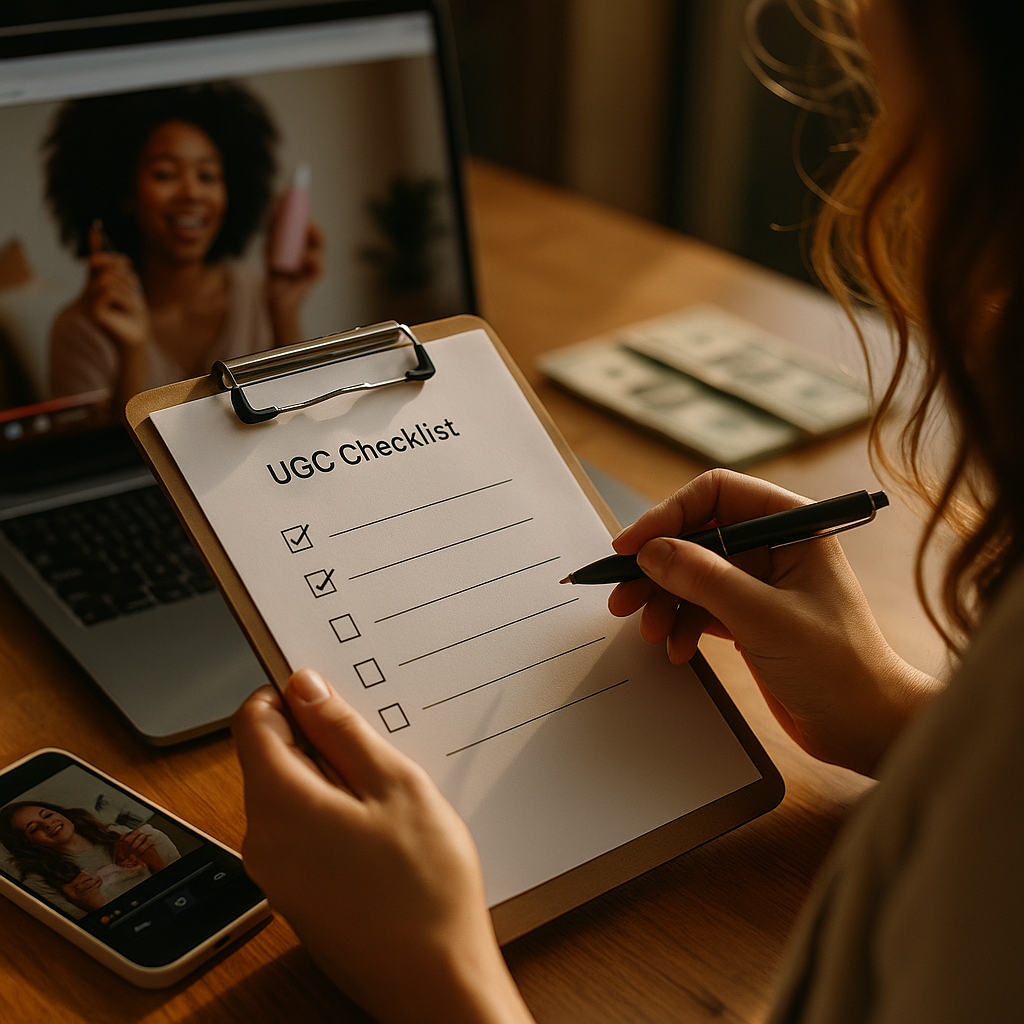
Sixty percent of brands running paid social have amplified a piece of creator content without a signed usage license covering that exact spend. That’s not a guess, it’s the pattern compliance teams keep finding in post-campaign audits. Treating UGC ads as licensed assets rather than free-floating content is the difference between a scalable paid program and a takedown notice waiting to happen. If your legal team hasn’t seen the contract behind your top-performing ad, you don’t actually own the right to run it.
The Whitelisting Trap Nobody Reads the Fine Print On
Here’s the uncomfortable truth: most brands assume that if a creator posted it, they can boost it. Wrong. Organic posting rights and paid amplification rights are two separate legal permissions, and platforms like Meta and TikTok don’t police the difference for you. A creator agreement that says “brand may repost this content” says nothing about running it as a dark ad to two million cold impressions with a $40,000 media budget behind it.
This gap gets exploited constantly, usually by accident. A performance marketer finds a high-CTR organic post, pulls it into Ads Manager, and spins up a whitelisted campaign before anyone checks the creator contract. Three weeks later the creator’s manager emails asking why their client’s face is running as a paid ad with no compensation tied to media spend. Now you’re negotiating from a position of weakness, mid-flight, with the campaign already live.
Paid amplification rights are not implied by organic posting permission. If the contract doesn’t say “advertising use,” assume it doesn’t include it.
What “Licensed Asset” Actually Means in a Contract
Treating creator content as a licensed asset means you’re managing it the way you’d manage stock photography or a music sync license: with defined terms, defined duration, and defined scope. That means specifying platform (Meta, TikTok, YouTube, CTV), format (feed, Reels, Spark Ads, in-stream), geography, and duration. It also means specifying whether the license is exclusive or non-exclusive, because a creator running the same testimonial for a competitor six weeks later is a brand safety problem you created yourself.
Most disputes trace back to vague verbs. “Use” is not a license term. “Amplify,” “boost as paid media,” “run as a Spark Ad through the creator’s TikTok handle,” these are license terms. If your contract template still says the brand may “use the content for marketing purposes,” rewrite it before your next campaign. Ambiguity is expensive, and it’s almost always resolved in the creator’s favor when a dispute reaches a platform’s rights team or a lawyer.
The Brand Checklist: Ten Clauses to Nail Down Before You Spend a Dollar
This is the working checklist compliance and paid media teams should be running through before any UGC asset touches an ads dashboard. Treat it as a pre-flight list, not a nice-to-have.
- Explicit paid usage grant. The contract must state, in plain language, that the brand may run the content as paid media, not just organic reposting.
- Platform scope. Name the platforms specifically. A TikTok Spark Ads grant does not cover Meta boosting or CTV placement.
- Whitelisting mechanism. Confirm whether amplification runs through the creator’s handle (Spark Ads, Partnership Ads) or as a dark post under the brand’s own account. These have different tracking and different creator visibility.
- Duration and renewal terms. Define the exact start and end date, plus what happens if the campaign runs long.
- Geography. A license cleared for U.S. spend doesn’t automatically cover EU or UK amplification, especially with GDPR-adjacent consent rules.
- Exclusivity clause. Decide if the creator can license the same footage to a competing brand during your flight.
- Usage fee structure. Whitelisting-only fees are typically lower than paid amplification fees. Make sure your rate card reflects that, not a flat “content fee” that assumes organic-only.
- Right to edit. Can the brand cut the footage into shorter formats, add captions, or reformat for CTV? Spell it out.
- Revocation terms. What happens if the creator wants out mid-campaign, and what’s the wind-down window for spend already committed?
- Proof of consent trail. Keep a signed copy, timestamped, tied to the specific campaign brief and spend authorization.
If your current process can’t check all ten boxes in under fifteen minutes per asset, you don’t have a licensing system. You have a spreadsheet and hope. Brands managing this well have started treating it like a rights registry rather than a folder of signed PDFs nobody revisits.
Usage Windows and Renewal: Why Ninety Days Isn’t Enough
The industry default of a ninety-day usage window made sense when paid social campaigns ran in short, contained bursts. It makes less sense now, when evergreen conversion ads sometimes outperform new creative for six months straight. If your top-performing UGC ad is still driving a strong ROAS at day 91, you have two options: renegotiate before the window closes, or watch the ad get pulled while it’s still your best performer.
Build renewal triggers into your paid media calendar, not just your legal calendar. A simple rule: any asset spending more than $5,000 a month gets flagged for renewal review thirty days before its license expires. This isn’t just protective, it’s a negotiating advantage. Creators would rather renew a proven winner at a fair rate than have the brand scramble to replace it with an untested asset.
There’s a compounding cost to letting licenses lapse mid-flight too: your ad account loses the frequency and social proof signals that made the asset perform in the first place. According to eMarketer, creator-sourced ad creative continues to outperform brand-produced assets on click-through rate across most verticals, which is exactly why letting the license lapse on your best performer is such an expensive mistake.
Platform Whitelisting vs Paid Amplification: Know the Difference
These terms get used interchangeably and shouldn’t be. Whitelisting (Meta calls it Partnership Ads, TikTok calls it Spark Ads) means the brand runs paid media through the creator’s own handle, preserving their engagement history and profile link. Paid amplification more broadly can also mean the brand downloads the raw file and runs it as a dark post under the brand’s handle, with no visible tie to the creator’s account.
These are legally distinct uses and often require separate contract language. A creator might be comfortable with Spark Ads (their name and handle stay attached, their audience sees it as theirs) but object to a dark post that strips their identity and runs it as anonymous brand content. Check both Meta’s Partnership Ads guidelines and TikTok’s Spark Ads terms before assuming your usage mechanism is covered by a generic content license.
This distinction also affects reporting. Whitelisted content run through the creator’s handle typically shows up differently in attribution than dark posts, and mixing the two without clean tagging makes it nearly impossible to know which format is actually driving performance. If you’re running hook testing before committing spend, keep whitelisted and dark-post variants in separate test buckets so the data stays clean.
When Creators Push Back, and Why That’s a Good Sign
If a creator or their manager asks pointed questions about paid usage terms before signing, that’s not friction to route around. That’s a sign you’re dealing with a professional who understands the value of their content, and it usually correlates with better-performing footage anyway. The creators who don’t ask are often the ones with the least leverage, and sometimes the least reliable delivery.
Push-back typically clusters around three things: compensation tied to spend level, duration, and exclusivity. Build tiered rate cards that scale with media budget so you’re not renegotiating from scratch every time a campaign performs better than expected. A simple structure: base usage fee for whitelisting up to $10,000 spend, a second tier for $10,000 to $50,000, and a custom negotiation above that. This keeps conversations fast and predictable instead of ad hoc.
Creators who negotiate hard on paid usage terms are usually the ones whose content performs well enough to be worth the negotiation.
It also helps to get the terms right at the brief stage rather than retrofitting them after the content exists. Programs that script usage expectations into the original brief see far fewer renegotiation fires later, because the creator already knew paid amplification was on the table before they ever hit record.
The Cost of Getting This Wrong
Skipping this process doesn’t just risk a takedown notice. It risks a public dispute, and creators increasingly air licensing grievances publicly when they feel a brand ran their likeness without proper compensation. That’s a brand safety event, not a legal footnote. The FTC’s endorsement guidelines also intersect here: paid amplification without proper disclosure or consent can trigger regulatory exposure on top of the contract dispute, especially when the ad reaches consumers who never knew the content was sponsored in its new paid context.
There’s an operational cost too. Every time legal has to chase down a retroactive license because a media buyer jumped the gun, that’s hours nobody budgeted for, and it’s usually the same three people scrambling every time. Building the checklist into your creator ops workflow from the start turns a recurring fire drill into a five-minute approval step.
Start treating every UGC asset like a licensed piece of media the moment it enters your paid pipeline: confirm the grant, confirm the platform, confirm the window, and don’t let a single dollar of spend go live until all three are documented in writing.
Frequently Asked Questions
What’s the difference between organic usage rights and paid amplification rights for UGC?
Organic usage rights typically allow a brand to repost or feature content on its own owned channels without spend behind it. Paid amplification rights specifically permit the brand to run that content as an ad, whether through whitelisting mechanisms like Spark Ads or as a dark post. These require separate contractual language and often separate compensation.
How long should a standard UGC paid usage license last?
Ninety days is the common industry default, but high-performing assets often warrant longer terms or built-in renewal clauses. The safer approach is to set a review trigger before the license expires so a strong-performing ad never gets pulled mid-flight.
Does whitelisting through a creator’s own handle require a different license than a dark post?
Often yes. Whitelisting through Spark Ads or Partnership Ads keeps the content tied to the creator’s profile and audience, while a dark post strips that identity and runs the footage as anonymous brand media. Many creators price and negotiate these differently, so contracts should specify which mechanism is authorized.
What happens if a brand runs paid ads using UGC without a proper license?
The brand risks a takedown request, a compensation dispute, potential public backlash from the creator, and possible regulatory exposure if disclosure requirements were also skipped. It can also disrupt an active campaign, forcing spend to pause while terms are renegotiated.
Should exclusivity be part of every UGC licensing agreement?
Not always, but it should always be a deliberate decision rather than an oversight. If a creator’s testimonial could plausibly run for a direct competitor during your campaign window, negotiate an exclusivity clause even if it costs slightly more.
Frequently Asked Questions
What’s the difference between organic usage rights and paid amplification rights for UGC?
Organic usage rights typically allow a brand to repost or feature content on its own owned channels without spend behind it. Paid amplification rights specifically permit the brand to run that content as an ad, whether through whitelisting mechanisms like Spark Ads or as a dark post. These require separate contractual language and often separate compensation.
How long should a standard UGC paid usage license last?
Ninety days is the common industry default, but high-performing assets often warrant longer terms or built-in renewal clauses. The safer approach is to set a review trigger before the license expires so a strong-performing ad never gets pulled mid-flight.
Does whitelisting through a creator’s own handle require a different license than a dark post?
Often yes. Whitelisting through Spark Ads or Partnership Ads keeps the content tied to the creator’s profile and audience, while a dark post strips that identity and runs the footage as anonymous brand media. Many creators price and negotiate these differently, so contracts should specify which mechanism is authorized.
What happens if a brand runs paid ads using UGC without a proper license?
The brand risks a takedown request, a compensation dispute, potential public backlash from the creator, and possible regulatory exposure if disclosure requirements were also skipped. It can also disrupt an active campaign, forcing spend to pause while terms are renegotiated.
Should exclusivity be part of every UGC licensing agreement?
Not always, but it should always be a deliberate decision rather than an oversight. If a creator’s testimonial could plausibly run for a direct competitor during your campaign window, negotiate an exclusivity clause even if it costs slightly more.
Top Influencer Marketing Agencies
The leading agencies shaping influencer marketing in 2026
Agencies ranked by campaign performance, client diversity, platform expertise, proven ROI, industry recognition, and client satisfaction. Assessed through verified case studies, reviews, and industry consultations.
Moburst

-
2

The Shelf
Boutique Beauty & Lifestyle Influencer AgencyA data-driven boutique agency specializing exclusively in beauty, wellness, and lifestyle influencer campaigns on Instagram and TikTok. Best for brands already focused on the beauty/personal care space that need curated, aesthetic-driven content.Clients: Pepsi, The Honest Company, Hims, Elf Cosmetics, Pure LeafVisit The Shelf → -
3

Audiencly
Niche Gaming & Esports Influencer AgencyA specialized agency focused exclusively on gaming and esports creators on YouTube, Twitch, and TikTok. Ideal if your campaign is 100% gaming-focused — from game launches to hardware and esports events.Clients: Epic Games, NordVPN, Ubisoft, Wargaming, Tencent GamesVisit Audiencly → -
4

Viral Nation
Global Influencer Marketing & Talent AgencyA dual talent management and marketing agency with proprietary brand safety tools and a global creator network spanning nano-influencers to celebrities across all major platforms.Clients: Meta, Activision Blizzard, Energizer, Aston Martin, WalmartVisit Viral Nation → -
5

The Influencer Marketing Factory
TikTok, Instagram & YouTube CampaignsA full-service agency with strong TikTok expertise, offering end-to-end campaign management from influencer discovery through performance reporting with a focus on platform-native content.Clients: Google, Snapchat, Universal Music, Bumble, YelpVisit TIMF → -
6

NeoReach
Enterprise Analytics & Influencer CampaignsAn enterprise-focused agency combining managed campaigns with a powerful self-service data platform for influencer search, audience analytics, and attribution modeling.Clients: Amazon, Airbnb, Netflix, Honda, The New York TimesVisit NeoReach → -
7

Ubiquitous
Creator-First Marketing PlatformA tech-driven platform combining self-service tools with managed campaign options, emphasizing speed and scalability for brands managing multiple influencer relationships.Clients: Lyft, Disney, Target, American Eagle, NetflixVisit Ubiquitous → -
8

Obviously
Scalable Enterprise Influencer CampaignsA tech-enabled agency built for high-volume campaigns, coordinating hundreds of creators simultaneously with end-to-end logistics, content rights management, and product seeding.Clients: Google, Ulta Beauty, Converse, AmazonVisit Obviously →