


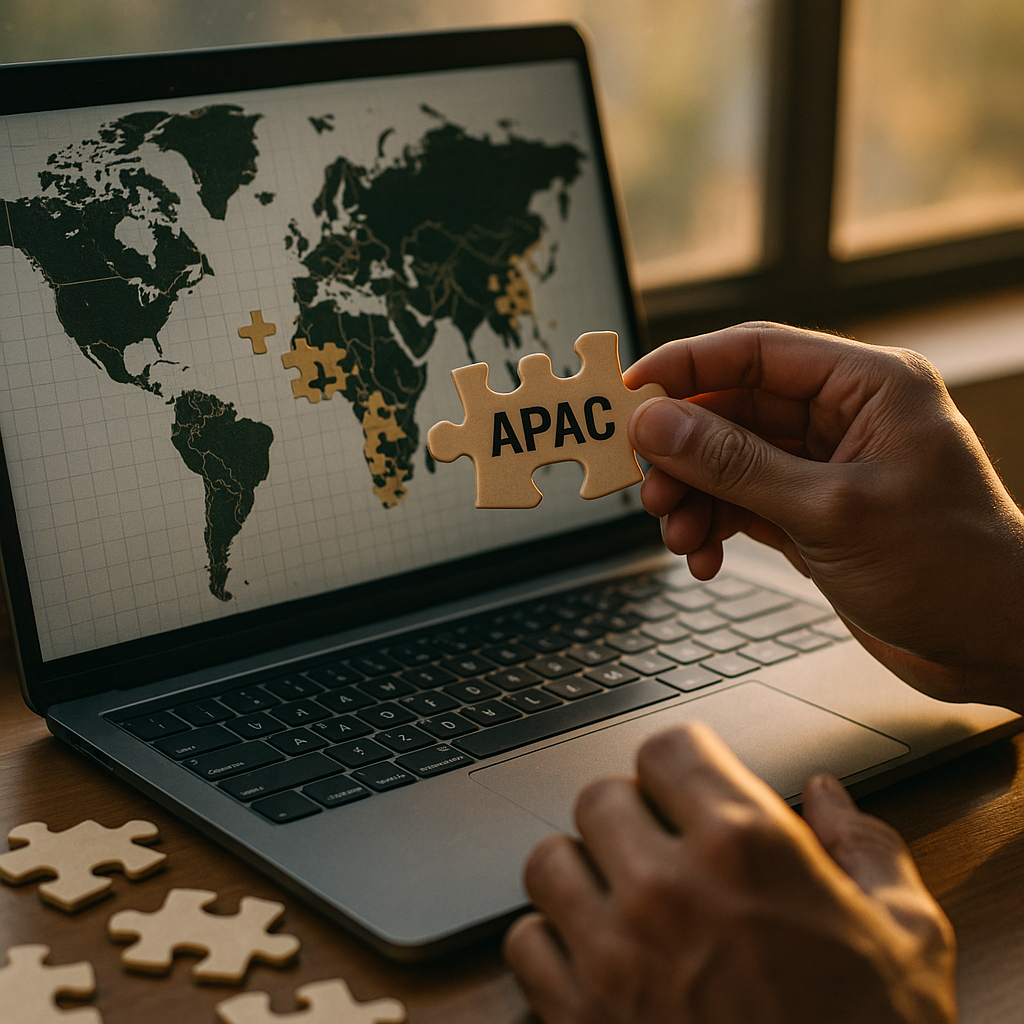
Only 34% of APAC marketers say they trust the attribution data behind their influencer campaigns, according to sessions at this year’s MarTech Summit Bangkok. That number should stop every global brand lead in their tracks. If the region driving a growing share of worldwide creator spend can’t measure its own results with confidence, what does that mean for the “global” dashboards sitting on headquarters desks? The APAC measurement gap isn’t a regional footnote. It’s a preview of problems headed everywhere else.
What Bangkok Made Impossible to Ignore
MarTech Summit Bangkok pulled together brand marketers, platform reps, and measurement vendors from across Southeast Asia, India, and Greater China. The conversations weren’t about creative or casting. They were about something far less glamorous: whether anyone in the room actually trusted the numbers their teams reported up the chain.
One panel, featuring measurement leads from regional CPG and beauty brands, put it bluntly: campaign reports built for Jakarta, Manila, and Bangkok often use three different definitions of “engagement,” pulled from three different platform APIs, reconciled by hand in spreadsheets. That’s not measurement. That’s guesswork with a nice template.
This echoes a broader pattern Influencers Time has covered before. Marketing leaders already distrust their own performance data in mature markets like the US and UK. APAC just makes the problem impossible to paper over, because the fragmentation is more visible and the stakes (double-digit e-commerce growth tied to creator content) are higher.
Why APAC Breaks Western Measurement Models
Most global attribution frameworks were built around a tidy assumption: one dominant social platform, one primary currency, one regulatory environment. APAC has none of that.
- Platform plurality. A single campaign in Southeast Asia might run across TikTok, Instagram, LINE, KakaoTalk, Xiaohongshu, and Lazada Live simultaneously, each with its own reporting logic and none of them talking to each other.
- Commerce-first behavior. In China, Indonesia, and increasingly Vietnam, influencer content converts inside live shopping streams. Western multi-touch attribution models, built for a browse-then-buy journey on desktop, simply don’t map onto that.
- Currency and payment friction. Cross-border creator payments and localized GMV tracking introduce reconciliation delays that break real-time reporting assumptions baked into most global martech stacks.
- Regulatory variance. Data privacy rules differ sharply by market, limiting what can be pooled into a single global data warehouse without local legal review.
APAC isn’t failing to adopt Western measurement standards. It’s proving those standards were never built for a platform-fragmented, commerce-native creator economy in the first place.
This isn’t a knock on the region’s sophistication. If anything, APAC marketers have been forced to get creative faster because the shortcuts that worked in single-platform markets never worked for them. Global teams are only now catching up to problems APAC practitioners have wrestled with for years.
The Platform Fragmentation Problem, Quantified
Speakers at the summit shared internal data showing that a typical enterprise creator program in Southeast Asia touches an average of five distinct platforms per quarter, compared to roughly two for equivalent US programs. Each platform reports impressions, reach, and engagement differently. Some report views at three seconds, others at six. Some count a “share” as an engagement; others don’t.
Multiply that inconsistency across dozens of markets and hundreds of creators, and you get exactly what one panelist called “attribution theater”: reports that look rigorous but collapse under any real scrutiny. This is the same structural issue explored in transaction-level attribution debates forcing brands to judge ROAS more honestly rather than accepting vanity-metric rollups.
Industry data from eMarketer has flagged APAC as the fastest-growing region for social commerce spend, which means the measurement stakes only rise from here. Brands can’t keep bolting spreadsheet reconciliation onto a problem that’s scaling faster than the workaround can handle.
Three Lessons Global Creator Programs Can Steal From APAC
Here’s the counterintuitive part. Because APAC never had the luxury of a single dominant platform, its best-run programs built workarounds that global teams should be borrowing right now.
- Build platform-agnostic KPIs before campaign launch, not after. Regional teams that perform best define what “success” means in normalized terms (cost per verified engagement, not raw reach) before content goes live, then map every platform’s native metrics back to that definition.
- Treat local commerce data as the source of truth, not the social platform. Instead of trusting TikTok Shop or Shopee’s own attribution claims, sophisticated APAC teams reconcile against their own order management systems. It’s slower, but it’s honest. This mirrors the shift covered in fashion and electronics splitting social commerce GMV playbooks by category rather than applying one global formula.
- Localize the creative brief, not just the language. Multilingual content that’s simply translated performs worse than content rebuilt for local platform behavior. That’s the same lesson behind multilingual UGC replacing single-market playbooks globally.
Is Attribution Even the Right Question?
Maybe not, at least not the way most brands frame it. Several Bangkok speakers argued that chasing perfect cross-platform attribution in a fragmented region is a fool’s errand. The better question: what decision does this data need to inform?
If a brand is deciding budget allocation between markets, directional data (which platform, which creator tier, which content format is trending in a given quarter) matters more than penny-perfect ROAS. If a brand is defending spend to finance, then transaction-level tracking matters enormously, and no amount of “directional confidence” will satisfy a CFO. Global teams need to stop applying one measurement rigor level to every decision. That’s the real gap Bangkok exposed: not a lack of data, but a lack of discipline about which data matters for which decision.
This ties directly into ongoing standardization efforts. The IAB’s AI attribution standard forcing brands to prove revenue is a useful reference point, but even that framework assumes a level of platform data access that many APAC markets simply don’t offer uniformly yet.
What This Means for Global Budget Conversations
Regional measurement gaps eventually become global budget fights. When APAC country teams can’t produce clean ROAS numbers, headquarters defaults to two bad options: cutting the regional budget on the assumption that “we can’t prove it’s working,” or approving it blindly because the growth story is too good to ignore. Neither is a strategy.
Smarter global teams are starting to build tiered reporting standards: a baseline set of normalized KPIs every market must report, plus market-specific supplementary data that doesn’t get forced into a one-size-fits-all template. It’s more work upfront. It saves everyone from the quarterly ritual of defending numbers nobody fully trusts. Platforms like TikTok for Business have made moves toward standardized reporting APIs, but brands still need internal frameworks to reconcile that data against local commerce reality.
The brands closing the APAC measurement gap fastest aren’t the ones with the most sophisticated dashboards. They’re the ones willing to admit their global template doesn’t fit every market, and building for that reality instead of ignoring it.
Operational Fixes Worth Copying
A few tactical takeaways came up repeatedly in Bangkok side conversations, and they’re worth putting into any global creator program audit:
- Assign a single owner per market responsible for reconciling platform-reported metrics against internal commerce data, rather than leaving it to whoever built the campaign report.
- Audit vendor contracts for reporting API access before signing, not after launch. Several brands discovered mid-campaign that their martech stack couldn’t pull granular data from certain regional platforms at all.
- Build creator payment and legal workflows that account for cross-border delays, echoing concerns raised in creator payment delays exposing brands to legal risk.
- Train regional teams on data literacy, not just platform mechanics. Resources like HubSpot’s marketing analytics guidance and LinkedIn’s B2B measurement frameworks offer useful starting points even outside their native use cases.
None of this is glamorous. It’s also exactly the kind of unglamorous fix that separates programs with real ROI confidence from programs running on hope and a nicely formatted slide deck.
Next Step
Don’t wait for a global measurement standard to arrive. Audit one APAC market’s reporting stack this quarter, map every metric back to a single normalized KPI, and use that as the template to pressure-test every other region’s numbers.
Frequently Asked Questions
What is the APAC measurement gap in influencer marketing?
It refers to the inconsistency between how different platforms and markets across Asia-Pacific report campaign performance, making it difficult for global brands to compare or consolidate results using a single attribution model.
Why is measurement harder in APAC than in Western markets?
APAC campaigns typically span more platforms per market, rely heavily on live commerce and in-app checkout, and operate under varied data privacy regulations, all of which break attribution models built for single-platform, browse-then-buy markets.
How can global brands fix inconsistent creator campaign reporting?
Brands should define normalized KPIs before launch, reconcile platform data against internal commerce systems rather than trusting native platform attribution, and build tiered reporting standards that separate baseline metrics from market-specific data.
Does platform fragmentation actually hurt campaign ROI?
Fragmentation itself doesn’t hurt ROI directly, but the resulting reporting inconsistency makes it harder to prove ROI to finance and leadership, which often leads to under-investment in genuinely high-performing markets.
What can global creator programs learn from APAC measurement practices?
APAC teams have been forced to build platform-agnostic KPIs and commerce-based reconciliation earlier than most Western programs, offering a practical blueprint as global platform fragmentation increases everywhere.
Top Influencer Marketing Agencies
The leading agencies shaping influencer marketing in 2026
Agencies ranked by campaign performance, client diversity, platform expertise, proven ROI, industry recognition, and client satisfaction. Assessed through verified case studies, reviews, and industry consultations.
Moburst

-
2

The Shelf
Boutique Beauty & Lifestyle Influencer AgencyA data-driven boutique agency specializing exclusively in beauty, wellness, and lifestyle influencer campaigns on Instagram and TikTok. Best for brands already focused on the beauty/personal care space that need curated, aesthetic-driven content.Clients: Pepsi, The Honest Company, Hims, Elf Cosmetics, Pure LeafVisit The Shelf → -
3

Audiencly
Niche Gaming & Esports Influencer AgencyA specialized agency focused exclusively on gaming and esports creators on YouTube, Twitch, and TikTok. Ideal if your campaign is 100% gaming-focused — from game launches to hardware and esports events.Clients: Epic Games, NordVPN, Ubisoft, Wargaming, Tencent GamesVisit Audiencly → -
4

Viral Nation
Global Influencer Marketing & Talent AgencyA dual talent management and marketing agency with proprietary brand safety tools and a global creator network spanning nano-influencers to celebrities across all major platforms.Clients: Meta, Activision Blizzard, Energizer, Aston Martin, WalmartVisit Viral Nation → -
5

The Influencer Marketing Factory
TikTok, Instagram & YouTube CampaignsA full-service agency with strong TikTok expertise, offering end-to-end campaign management from influencer discovery through performance reporting with a focus on platform-native content.Clients: Google, Snapchat, Universal Music, Bumble, YelpVisit TIMF → -
6

NeoReach
Enterprise Analytics & Influencer CampaignsAn enterprise-focused agency combining managed campaigns with a powerful self-service data platform for influencer search, audience analytics, and attribution modeling.Clients: Amazon, Airbnb, Netflix, Honda, The New York TimesVisit NeoReach → -
7

Ubiquitous
Creator-First Marketing PlatformA tech-driven platform combining self-service tools with managed campaign options, emphasizing speed and scalability for brands managing multiple influencer relationships.Clients: Lyft, Disney, Target, American Eagle, NetflixVisit Ubiquitous → -
8

Obviously
Scalable Enterprise Influencer CampaignsA tech-enabled agency built for high-volume campaigns, coordinating hundreds of creators simultaneously with end-to-end logistics, content rights management, and product seeding.Clients: Google, Ulta Beauty, Converse, AmazonVisit Obviously →