


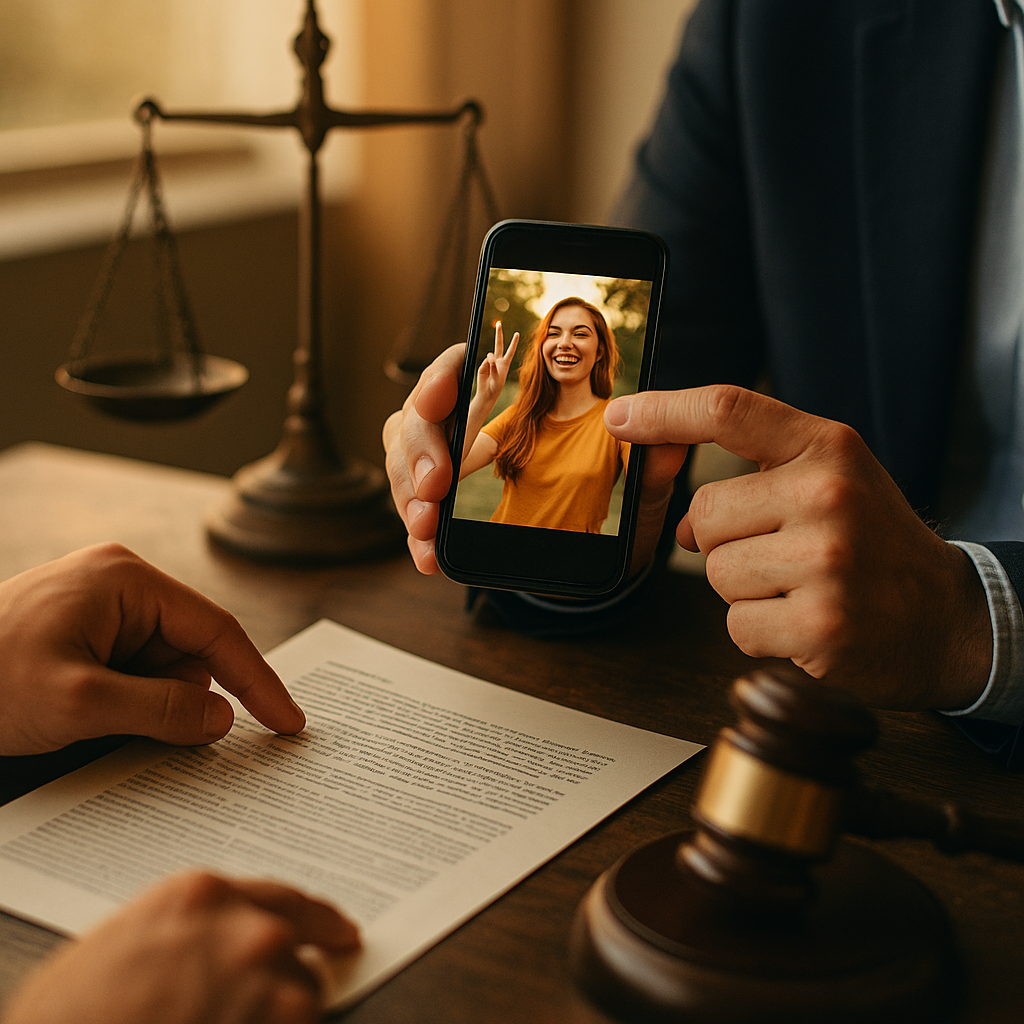
Fifty states, fifty definitions of “identity,” and one careless boost budget away from a lawsuit. That’s the reality of right of publicity by state when brands repurpose creator content across national campaigns. A single UGC clip cleared for organic use can trigger statutory damages in Indiana, criminal exposure in Utah, or a postmortem claim in California, depending entirely on where the creator lives, where the ad runs, and what the original contract actually said.
Why This Isn’t a Contract Problem, It’s a Map Problem
Most brands treat right of publicity as a boilerplate line item: get the release signed, move on. That works fine for a single-market campaign. It falls apart the moment marketing teams repurpose a creator’s face, voice, or likeness for paid amplification in states the original agreement never contemplated.
Right of publicity is not federal law. There’s no single statute, no unified damages framework, no consistent duration of protection. Some states codify it in statutes with explicit dollar penalties. Others rely purely on common law precedent, which means outcomes hinge on how a local judge interprets “commercial use” or “identifiable likeness.” A handful of states barely address it at all, leaving brands to guess.
A UGC release that’s airtight in New York can be functionally worthless in Tennessee, where the statute extends publicity rights for decades after death and imposes damages regardless of actual harm proven.
For a national paid social campaign running the same testimonial in fifteen states simultaneously, that patchwork isn’t a legal footnote. It’s an operational risk that needs its own compliance workflow, the same way brands already track disclosure rules across jurisdictions, as covered in our disclosure rules mapped breakdown.
The States Where Publicity Rights Bite Hardest
Not all states carry equal risk. Some are aggressive, litigation-friendly, and financially punishing. Others are practically dormant. Knowing the tiers matters more than memorizing every statute.
- California: Civil Code Section 3344 provides statutory damages starting at $750 per violation, plus profits disgorgement. The postmortem right extends 70 years after death, and California courts have been willing to certify class actions when a brand runs the same unauthorized creative across a large user base.
- New York: Civil Rights Law Sections 50 and 51 cover both privacy and publicity, with recent amendments extending protection to digital replicas and deceased performers. New York’s Attorney General has also shown appetite for enforcement action tied to synthetic media.
- Tennessee: The Personal Rights Protection Act (bolstered by the ELVIS Act) is one of the most creator-protective statutes in the country, explicitly covering voice cloning and AI-generated likenesses, with damages available even without proof of actual loss.
- Indiana: Broad statutory language, a 100-year postmortem right, and damages of $1,000 minimum per violation make Indiana a state where “we didn’t know” is an expensive defense.
- Washington: Publicity rights apply during life and for a lengthy period after death, with statutory damages and no requirement to prove the use caused financial harm.
Contrast that with states like Vermont or North Dakota, where publicity claims are thin, case law is sparse, and enforcement is rare. That doesn’t mean brands should ignore compliance there. It means the risk calculus shifts: the exposure in a national campaign is driven by the toughest state you touch, not the average.
Common Law States Are Not the Safe Harbor They Look Like
Roughly half the country has no dedicated publicity statute and instead relies on common law tort claims for misappropriation of likeness. Brands sometimes assume this means lighter risk. Wrong assumption. Common law claims can be just as costly to litigate, and juries in states like Illinois or Ohio have awarded substantial damages when brands used a person’s identity for commercial gain without consent, statute or not.
The absence of a bright line statute just means outcomes are less predictable, which from a risk management standpoint is arguably worse. Predictable risk can be priced and insured. Unpredictable risk gets litigated case by case, at your legal team’s expense.
Where National UGC Campaigns Actually Break
The exposure rarely comes from the original post. It comes from repurposing: taking organic UGC and pushing it into paid media, out of home, retail displays, or a different platform than the creator agreed to.
Three failure points show up repeatedly in brand legal reviews:
- Scope creep in usage rights. A contract granting “social media use” gets stretched to cover programmatic display ads running nationally. That’s a publicity rights violation waiting to happen the moment the ad serves in a state with strong statutory protection.
- Duration mismatch. Many UGC agreements grant usage for six or twelve months. Campaigns that recycle “evergreen” testimonial content past that window are operating without consent, full stop.
- Deceased or unreachable creators. Repurposing older content from a creator who has since died, gone dark, or become unreachable for re-consent creates exposure in postmortem-rights states like California, Tennessee, and Indiana.
Add AI into the mix and the exposure multiplies. Voice cloning, synthetic likeness extensions, and AI-generated “new” content built from a real creator’s face or voice sit squarely inside the newest wave of state legislation, much of it modeled on Tennessee’s ELVIS Act. Brands experimenting with AI spokespeople or digital doubles should read our coverage on AI spokespeople disclosure requirements before greenlighting any synthetic reuse of creator likeness.
Building the Actual Risk Map
A repurposing risk map isn’t a legal memo nobody reads. It’s a working document that maps campaign geography against statute severity, and it should live inside your creator ops workflow, not a shared drive folder.
Here’s a practical structure marketing ops teams can adopt:
- Tier the states. Group states into high risk (statutory damages, postmortem rights, AI-specific language), moderate risk (common law with active precedent), and low risk (thin case law, no statute).
- Tag every creator contract with a usage geography field. Not just “US” but specific states or “all states” with an explicit acknowledgment of tiered risk.
- Set a repurposing trigger. Any time UGC moves from organic to paid, or from single-platform to cross-platform, route it through a compliance check against the risk tier list.
- Build renewal reminders into contract management. Usage windows should trigger automatic flags 30 to 60 days before expiration, similar to how smart teams track music licensing audits for sync rights expiration.
If your creator contract doesn’t specify usage geography and duration in plain language, assume you have zero repurposing rights outside the original platform and timeframe.
This kind of tiering isn’t theoretical. Legal teams at large retail and DTC brands already run something similar for FTC disclosure compliance across states, a practice detailed in our state UDAP gap analysis. Right of publicity deserves the same rigor, arguably more, because the damages are often statutory and immediate rather than dependent on regulatory enforcement priorities.
What Indemnification Clauses Can and Can’t Fix
Indemnification language shifts financial responsibility, but it doesn’t prevent the lawsuit from being filed, and it doesn’t stop reputational damage. Brands relying purely on indemnification as their publicity rights strategy are solving for the wrong variable.
A well-drafted indemnification clause paired with clear usage geography terms is a strong combination. One without the other leaves gaps. For a deeper look at how indemnification interacts with repurposed content specifically, our piece on repurposed UGC indemnification walks through where coverage typically fails brands during audits.
Insurance carriers are also paying attention. Media liability policies increasingly ask brands to document their UGC repurposing controls before underwriting coverage, which means the risk map isn’t just a legal exercise anymore. It’s becoming a prerequisite for affordable insurance.
Practical Steps for the Next Campaign Cycle
Marketing leads don’t need to become right of publicity experts. They need a workflow that flags risk before creative goes live nationally.
- Audit existing UGC contracts for usage geography language. Most were never written with a 50-state paid media push in mind.
- Classify current campaign creative by originating creator contract terms and cross-reference against the state risk tiers above.
- Require legal sign-off specifically for any campaign expanding UGC into paid media, OOH, or AI-modified formats.
- Build a standard consent renewal process for evergreen content instead of relying on the original one-time release.
None of this needs to slow campaigns down permanently. It needs to happen once, structurally, so every future repurposing decision runs through a known framework instead of an ad hoc legal scramble. According to eMarketer, creator-driven content now accounts for a growing share of paid social spend, which only raises the stakes for getting this right at scale. Industry benchmarking from Sprout Social shows brands increasingly repurposing organic UGC into paid formats as a core strategy, not an exception, making the risk map a baseline requirement rather than a nice-to-have.
Frequently Asked Questions
What is the right of publicity in simple terms?
It’s a legal right that protects a person’s name, image, voice, or likeness from unauthorized commercial use. It exists separately from copyright, which protects the content itself rather than the identity of the person in it.
Does a signed UGC release cover all future uses of the content?
Not automatically. Most releases specify a platform, duration, and geography. Using content beyond those terms, especially in paid media or a new state, can violate the creator’s publicity rights even with a signed release on file.
Which states have the strictest right of publicity laws?
California, Tennessee, Indiana, New York, and Washington are generally considered the highest risk due to statutory damages, long postmortem protections, or explicit language covering AI-generated likeness and voice cloning.
Do right of publicity rules apply after a creator dies?
In many states, yes. States like California, Tennessee, Indiana, and Washington extend publicity rights for decades after death, meaning brands can face claims from a deceased creator’s estate for continued use of their likeness.
How does AI-generated content affect right of publicity risk?
Newer laws, particularly Tennessee’s ELVIS Act, explicitly extend protection to AI-cloned voices and synthetic likenesses. Brands using AI to extend or modify creator content face heightened exposure in states adopting similar language.
Can indemnification clauses fully protect a brand from publicity claims?
No. Indemnification shifts financial liability but doesn’t prevent litigation or reputational fallout. It works best paired with clear usage geography and duration terms in the original creator contract.
Right of publicity by state isn’t a compliance footnote, it’s a live operational risk sitting inside every repurposing decision your team makes. Build the tiered risk map now, wire it into contract review, and stop treating a fifty state legal patchwork like a single-market checkbox.
Frequently Asked Questions
What is the right of publicity in simple terms?
It’s a legal right that protects a person’s name, image, voice, or likeness from unauthorized commercial use. It exists separately from copyright, which protects the content itself rather than the identity of the person in it.
Does a signed UGC release cover all future uses of the content?
Not automatically. Most releases specify a platform, duration, and geography. Using content beyond those terms, especially in paid media or a new state, can violate the creator’s publicity rights even with a signed release on file.
Which states have the strictest right of publicity laws?
California, Tennessee, Indiana, New York, and Washington are generally considered the highest risk due to statutory damages, long postmortem protections, or explicit language covering AI-generated likeness and voice cloning.
Do right of publicity rules apply after a creator dies?
In many states, yes. States like California, Tennessee, Indiana, and Washington extend publicity rights for decades after death, meaning brands can face claims from a deceased creator’s estate for continued use of their likeness.
How does AI-generated content affect right of publicity risk?
Newer laws, particularly Tennessee’s ELVIS Act, explicitly extend protection to AI-cloned voices and synthetic likenesses. Brands using AI to extend or modify creator content face heightened exposure in states adopting similar language.
Can indemnification clauses fully protect a brand from publicity claims?
No. Indemnification shifts financial liability but doesn’t prevent litigation or reputational fallout. It works best paired with clear usage geography and duration terms in the original creator contract.
Top Influencer Marketing Agencies
The leading agencies shaping influencer marketing in 2026
Agencies ranked by campaign performance, client diversity, platform expertise, proven ROI, industry recognition, and client satisfaction. Assessed through verified case studies, reviews, and industry consultations.
Moburst

-
2

The Shelf
Boutique Beauty & Lifestyle Influencer AgencyA data-driven boutique agency specializing exclusively in beauty, wellness, and lifestyle influencer campaigns on Instagram and TikTok. Best for brands already focused on the beauty/personal care space that need curated, aesthetic-driven content.Clients: Pepsi, The Honest Company, Hims, Elf Cosmetics, Pure LeafVisit The Shelf → -
3

Audiencly
Niche Gaming & Esports Influencer AgencyA specialized agency focused exclusively on gaming and esports creators on YouTube, Twitch, and TikTok. Ideal if your campaign is 100% gaming-focused — from game launches to hardware and esports events.Clients: Epic Games, NordVPN, Ubisoft, Wargaming, Tencent GamesVisit Audiencly → -
4

Viral Nation
Global Influencer Marketing & Talent AgencyA dual talent management and marketing agency with proprietary brand safety tools and a global creator network spanning nano-influencers to celebrities across all major platforms.Clients: Meta, Activision Blizzard, Energizer, Aston Martin, WalmartVisit Viral Nation → -
5

The Influencer Marketing Factory
TikTok, Instagram & YouTube CampaignsA full-service agency with strong TikTok expertise, offering end-to-end campaign management from influencer discovery through performance reporting with a focus on platform-native content.Clients: Google, Snapchat, Universal Music, Bumble, YelpVisit TIMF → -
6

NeoReach
Enterprise Analytics & Influencer CampaignsAn enterprise-focused agency combining managed campaigns with a powerful self-service data platform for influencer search, audience analytics, and attribution modeling.Clients: Amazon, Airbnb, Netflix, Honda, The New York TimesVisit NeoReach → -
7

Ubiquitous
Creator-First Marketing PlatformA tech-driven platform combining self-service tools with managed campaign options, emphasizing speed and scalability for brands managing multiple influencer relationships.Clients: Lyft, Disney, Target, American Eagle, NetflixVisit Ubiquitous → -
8

Obviously
Scalable Enterprise Influencer CampaignsA tech-enabled agency built for high-volume campaigns, coordinating hundreds of creators simultaneously with end-to-end logistics, content rights management, and product seeding.Clients: Google, Ulta Beauty, Converse, AmazonVisit Obviously →