


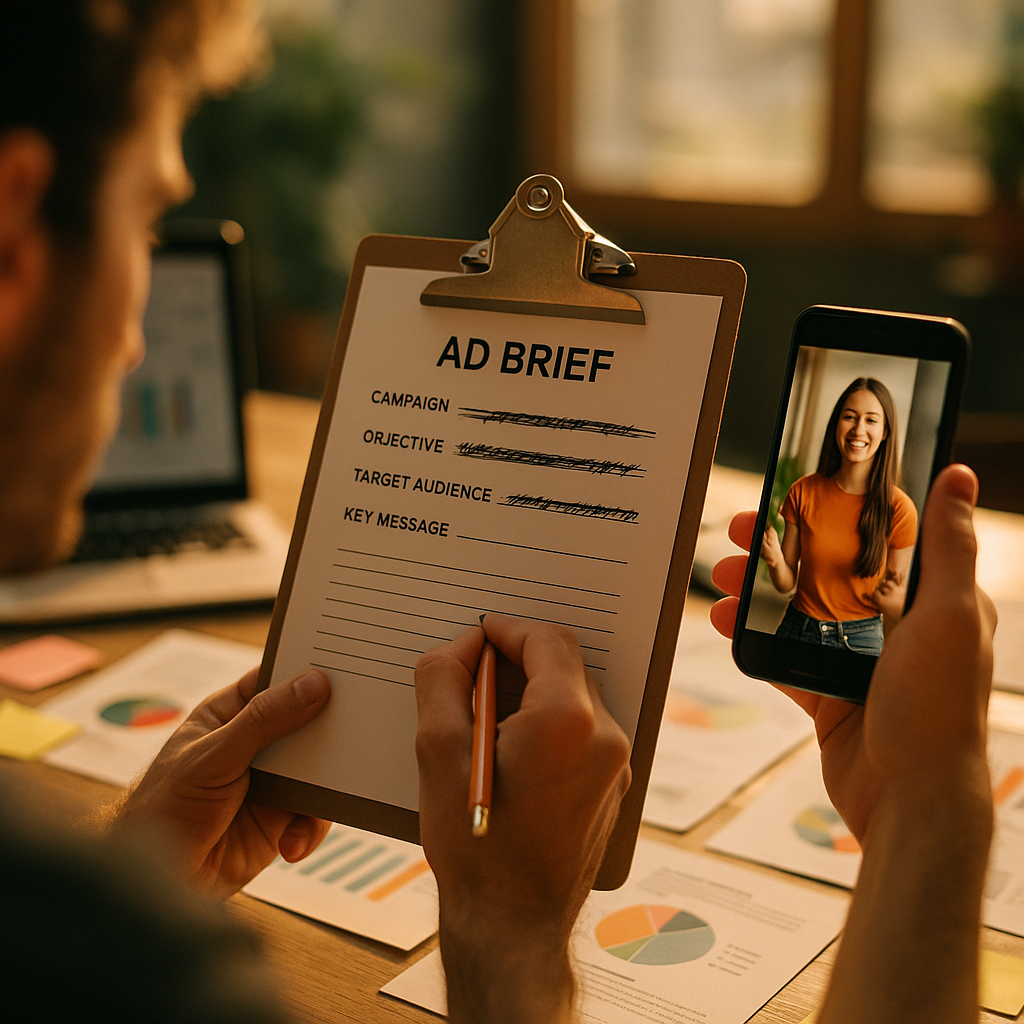
One in four US marketers now builds every ad brief around a 9:16 frame first. Not as an afterthought, not as a “also cut a vertical version,” but as the default ad unit from the first storyboard sketch. That is the headline finding reshaping creative departments heading into this year’s planning cycles, and it explains why so many brands are scrapping their horizontal-first workflows entirely.
Vertical video stopped being a format decision years ago. It is now a budget decision, a staffing decision, and increasingly, a brand safety decision. If your team is still shooting landscape and cropping down, you are already behind a quarter of your competitors.
Why a Quarter of Marketers Flipped the Default
The shift did not happen overnight, but the tipping point arrived fast. For years, vertical was treated as a secondary deliverable, something you exported after the “real” ad was locked in 16:9. That hierarchy has inverted. Marketing teams surveyed across US brands and agencies now report that vertical is the first format greenlit, with horizontal and square versions treated as derivatives, if they get made at all.
Three forces drove this. First, platform economics: TikTok, Instagram Reels, and YouTube Shorts all reward native vertical content with better distribution, and eMarketer’s time-spent data has consistently shown short-form vertical consumption outpacing every other video category on mobile. Second, production cost. Shooting vertical-first with a phone-forward aesthetic is cheaper and faster than commissioning a full horizontal shoot and reformatting. Third, and maybe most important, audience behavior has normalized vertical as “native” content rather than “ad” content, which matters enormously for completion rates.
When a quarter of the market changes its default production format, the remaining three-quarters are not debating whether to follow. They are debating how fast they can catch up without blowing their production budget.
What “Default” Actually Means for Brand Workflows
Default does not mean exclusive. It means the starting point for every creative brief, the format that gets storyboarded, shot, and tested first before anything else gets built around it. That distinction matters for how finance and creative teams plan spend.
- Briefs now specify vertical composition first. Shot lists, talent blocking, and text overlay zones are designed for a 9:16 safe area before any horizontal cutdown is considered.
- Agencies are restructuring production pods around mobile-native shooting. That means phone-based capture, in-feed editing turnarounds, and less reliance on traditional studio setups.
- Media buyers are shifting spend allocation. Platforms optimized for vertical placements, Spark Ads, Reels ads, Shorts overlays, are getting a larger share of test budgets than static or horizontal video units.
This operational shift connects directly to the compressed trend cycles brands are already wrestling with. The same teams adapting to 48 hour trend lifecycles are discovering that vertical-first production is the only workflow fast enough to keep pace. You cannot storyboard a horizontal ad, shoot it, edit it, then reformat for vertical inside a two-day trend window. The math does not work.
ROI: Does Vertical Actually Perform Better?
Here is where brand leaders should get skeptical of the hype and demand numbers. Vertical format alone does not guarantee performance. What drives the lift is native-feeling content that matches platform norms, and vertical happens to be the dominant visual grammar of that native feel right now.
Platforms themselves have pushed hard on this. Meta’s business guidance has repeatedly flagged that vertical, full-screen placements outperform horizontal crops on completion and click-through metrics within Reels inventory. TikTok’s ad platform was architected around vertical from day one, so advertisers running horizontal creative there are essentially fighting the algorithm’s native format bias. This mirrors what Influencers Time covered when examining how Meta Reels algorithm favors raw ads over studio-polished horizontal spots. The pattern is consistent: platforms reward content that looks like it belongs in the feed, not content that looks like it was imported from a TV buy.
The ROI case gets stronger when you factor in production efficiency. A single vertical-first shoot can generate a dozen cutdowns for Stories, Reels, Shorts, and TikTok without reformatting costs. That efficiency is part of why UGC hiring surges have pushed brands to build in-house editing pods, since in-house teams can turn vertical assets around faster than external agencies billing by format variation.
The Budget Conversation Nobody Wants to Have
Switching defaults is not free. Brands that built their production pipelines around horizontal broadcast-style video now face a retooling cost: new talent briefs, new shot lists, new review processes for platform-specific safe zones and caption placement. Procurement teams negotiating creator contracts are already feeling this, since vertical-first deliverables often require different usage rights language than traditional horizontal spots.
This is where the conversation overlaps with budget justification exercises happening across the industry. The same scrutiny applied when a 93 percent budget surge forced brands to justify spend internally now applies to format retooling. CFOs want to know: is this a one-time production overhaul, or an ongoing cost increase? Most agencies report it is the former. Once a vertical-first workflow is established, it is typically cheaper per asset than the horizontal-plus-reformatting model it replaces.
There is also a measurement wrinkle. Attribution models built around horizontal video completion rates do not map cleanly onto vertical’s shorter, faster consumption patterns. Brands tracking performance need to recalibrate what “success” looks like for a six-second vertical hook versus a thirty-second horizontal narrative arc. This is part of the broader attribution reckoning discussed at Advertising Week’s creator attribution sessions, where panelists repeatedly flagged format-specific measurement as an unresolved gap.
Risk and Compliance: What Changes When Vertical Is Default?
Brand safety teams should pay attention here too. Vertical-first production often means faster turnaround, lighter review cycles, and more reliance on creator-shot footage rather than agency-controlled sets. That speed is the whole point, but it also means less time for legal and compliance review before assets go live.
The FTC’s endorsement guidelines still apply regardless of aspect ratio, and disclosure requirements do not get easier just because the format changed. If anything, the compressed production timelines that vertical-first workflows enable make it easier to skip disclosure checks under deadline pressure. Brands running high-volume vertical programs should treat compliance review as a non-negotiable gate, not a step that gets cut when the trend window is closing.
This risk compounds when vertical-first production scales across large creator rosters without proper vetting. The same operational gaps flagged in coverage of mega creator rosters without vetting creating brand risk apply directly here: faster production cycles mean less oversight per asset unless brands build that oversight into the workflow from the start, not bolt it on afterward.
Platform Differences Still Matter
Not all vertical is created equal. YouTube Shorts, TikTok, and Instagram Reels each have slightly different safe zones, caption conventions, and algorithmic preferences. Brands treating “vertical” as a single monolithic format are leaving performance on the table.
- YouTube Shorts increasingly ties overlay and merchant link placement to watch time signals, which Influencers Time covered when YouTube Shorts overlays tied merchant links to watch time. That means vertical creative here needs to sustain attention longer than a quick-hit TikTok hook.
- TikTok Shop integrations reward vertical content built specifically for shoppable overlays, a dynamic tied to the platform’s 50 billion GMV milestone signaling a budget shift toward commerce-native vertical formats.
- Instagram Reels still favors a rawer, less polished aesthetic, which means brands cannot simply reuse TikTok Shop creative and expect equal performance.
Retention curve data adds another layer. Research presented at VidSummit showing how retention curves force brands to rebuild ad briefs applies with extra force to vertical formats, where the first two seconds determine whether a viewer scrolls past or stays. Vertical’s dominance has not simplified brief-writing, it has made the hook even more make-or-break than it already was in horizontal formats.
Where This Leaves Agencies and In-House Teams
The talent conversation is shifting too. Brands that moved creator management in-house, following the pattern seen in Salesforce and ByteDance hires signaling an in-house creator shift, are often better positioned to adopt vertical-first defaults quickly because they control the full production pipeline without waiting on agency reformatting cycles.
Agencies are not sitting still either. Many have restructured retainer models to reflect vertical-first output expectations, a shift that overlaps with the broader move toward multi-year retainers replacing one-off creator campaigns. When vertical is the default, ongoing retainer relationships make more sense than one-off project fees, since the cadence of content needed to feed vertical-first feeds is relentless and does not fit a quarterly campaign model well.
For marketers evaluating platform selection, tools like Sprout Social and HubSpot have both expanded vertical video analytics and scheduling features in response to this demand, which is a useful signal: when martech vendors retool their product roadmaps around a format, that format is not a passing trend.
What to Do With This Before Your Next Planning Cycle
If a quarter of the market has already made vertical the default and you have not, the gap will show up in cost-per-completion and engagement benchmarks before it shows up anywhere else. Start by auditing your last ten briefs. If vertical was treated as a derivative rather than the lead format, that is your retooling priority for the next quarter, not next year.
Frequently Asked Questions
What does it mean for vertical video to become the “default ad unit”?
It means brands and agencies now design the initial creative brief, shot list, and talent direction around a 9:16 vertical frame first, treating horizontal or square versions as secondary cutdowns rather than the primary deliverable.
Is vertical video actually more effective than horizontal for paid social?
On platforms built around full-screen feeds like TikTok, Reels, and Shorts, vertical formats generally see better completion rates and click-through performance because they match the platform’s native visual grammar. Horizontal content often reads as an interruption rather than native content on these surfaces.
Does switching to vertical-first production actually save money?
Most agencies report lower per-asset costs once the workflow is established, since a single vertical shoot can generate multiple platform-specific cutdowns without separate reformatting costs. The upfront retooling of briefs, talent direction, and review processes does carry a one-time cost.
Do FTC disclosure rules change for vertical ad formats?
No. Endorsement and disclosure requirements apply regardless of aspect ratio or platform. The risk is that faster vertical production cycles can tempt teams to skip compliance review steps under deadline pressure, which brands should guard against explicitly.
Which platforms prioritize vertical video most heavily?
TikTok was built vertical-first from launch. Instagram Reels and YouTube Shorts have both restructured algorithmic distribution and ad formats to favor full-screen vertical content, making all three platforms the primary testing ground for vertical-first creative strategies.
Top Influencer Marketing Agencies
The leading agencies shaping influencer marketing in 2026
Agencies ranked by campaign performance, client diversity, platform expertise, proven ROI, industry recognition, and client satisfaction. Assessed through verified case studies, reviews, and industry consultations.
Moburst

-
2

The Shelf
Boutique Beauty & Lifestyle Influencer AgencyA data-driven boutique agency specializing exclusively in beauty, wellness, and lifestyle influencer campaigns on Instagram and TikTok. Best for brands already focused on the beauty/personal care space that need curated, aesthetic-driven content.Clients: Pepsi, The Honest Company, Hims, Elf Cosmetics, Pure LeafVisit The Shelf → -
3

Audiencly
Niche Gaming & Esports Influencer AgencyA specialized agency focused exclusively on gaming and esports creators on YouTube, Twitch, and TikTok. Ideal if your campaign is 100% gaming-focused — from game launches to hardware and esports events.Clients: Epic Games, NordVPN, Ubisoft, Wargaming, Tencent GamesVisit Audiencly → -
4

Viral Nation
Global Influencer Marketing & Talent AgencyA dual talent management and marketing agency with proprietary brand safety tools and a global creator network spanning nano-influencers to celebrities across all major platforms.Clients: Meta, Activision Blizzard, Energizer, Aston Martin, WalmartVisit Viral Nation → -
5

The Influencer Marketing Factory
TikTok, Instagram & YouTube CampaignsA full-service agency with strong TikTok expertise, offering end-to-end campaign management from influencer discovery through performance reporting with a focus on platform-native content.Clients: Google, Snapchat, Universal Music, Bumble, YelpVisit TIMF → -
6

NeoReach
Enterprise Analytics & Influencer CampaignsAn enterprise-focused agency combining managed campaigns with a powerful self-service data platform for influencer search, audience analytics, and attribution modeling.Clients: Amazon, Airbnb, Netflix, Honda, The New York TimesVisit NeoReach → -
7

Ubiquitous
Creator-First Marketing PlatformA tech-driven platform combining self-service tools with managed campaign options, emphasizing speed and scalability for brands managing multiple influencer relationships.Clients: Lyft, Disney, Target, American Eagle, NetflixVisit Ubiquitous → -
8

Obviously
Scalable Enterprise Influencer CampaignsA tech-enabled agency built for high-volume campaigns, coordinating hundreds of creators simultaneously with end-to-end logistics, content rights management, and product seeding.Clients: Google, Ulta Beauty, Converse, AmazonVisit Obviously →