


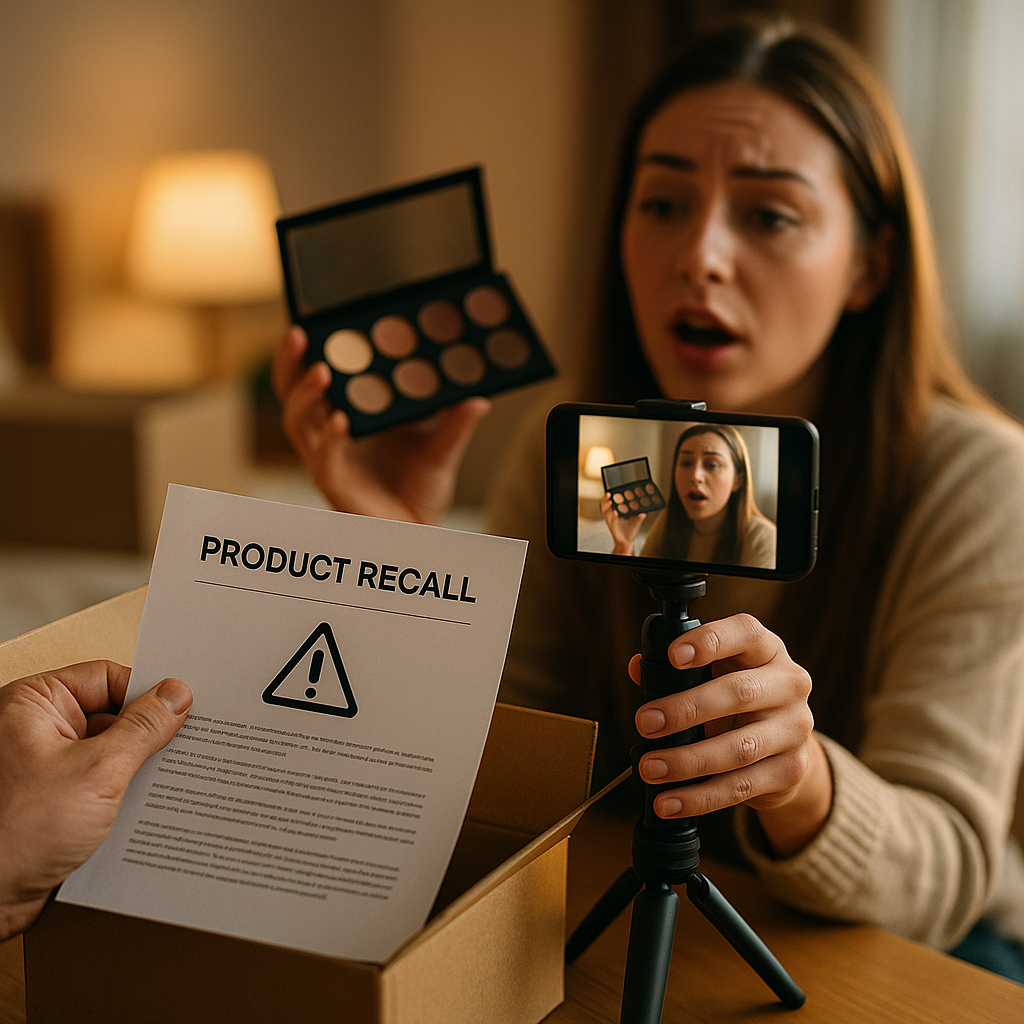
A recalled air fryer, a viral unboxing video, and 40,000 units already sold through affiliate links. That’s not a hypothetical, it’s a Tuesday for brands running creator-led product launches. When the Consumer Product Safety Commission issues a recall and a creator’s video is still the top search result for that SKU, who actually eats the liability? Spoiler: it’s rarely the creator, and product recall liability almost always flows back to the brand that shipped the defect, no matter who hyped it first.
This isn’t a theoretical compliance exercise. With creator-driven commerce now touching physical goods at scale, from TikTok Shop hauls to Amazon affiliate storefronts, the gap between “who promoted it” and “who’s legally responsible” has turned into a real exposure line item for marketing and legal teams alike.
Why Brands Can’t Hide Behind the Creator
Product liability law in the United States is built around the supply chain: manufacturers, distributors, and sellers. A creator posting a review or an unboxing is, in almost every court’s eyes, a marketer, not a seller of record. They didn’t design the product, didn’t manufacture it, and typically didn’t take title to the goods. That means strict product liability claims, the kind that don’t require proving negligence, land on the brand and its supply chain partners, not the person who filmed a 90 second TikTok about how great the product felt out of the box.
The exception that trips brands up is when a creator operates as a live seller, say through TikTok Shop or a similar affiliate storefront model where they’re technically the “seller” in the transaction record. Even there, courts have generally treated the platform and brand as the parties with deeper pockets and more control over the product, which is exactly where plaintiffs’ attorneys aim first.
If your legal team thinks a creator disclaimer shields the brand from recall liability, they’re confusing endorsement risk with product liability risk. Those are two different bodies of law, and only one of them cares who made the defective part.
The Contract Clause Nobody Reads Until There’s a Recall
Most influencer agreements are written to manage disclosure compliance and content usage rights. Few are written with a recall scenario in mind. That’s the gap. When a defect surfaces months after a campaign wrapped, brands scramble to figure out whether their creator contracts even addressed takedown obligations, let alone indemnification.
Here’s what a recall-ready creator contract should actually include:
- Mandatory takedown clause: a defined window (48 to 72 hours is standard) for removing or updating content once a brand issues a recall notice.
- Content archive rights: brand access to pull down sponsored posts across all platforms, not just the ones it paid to boost.
- No independent warranty language: creators shouldn’t be making safety claims (“this is completely safe for toddlers”) that exceed what the brand itself has certified.
- Indemnification carve outs: clarity that the brand indemnifies the creator for product defects, while the creator indemnifies the brand for false claims made outside the approved messaging.
Without that last point, you end up in a messy dispute over who said what first: the brand’s product page or the creator’s ad lib commentary. Agencies managing creator rosters are increasingly building this into standard paper, and it ties directly into broader questions about agency vicarious liability when disclosures or claims go sideways.
What Happens to the Content After the Recall Hits
This is where things get operationally ugly. A recall doesn’t just mean pulling product from shelves, it means an active, searchable, shareable piece of promotional content is still telling consumers the product is great. Google doesn’t de-index a creator’s video just because the CPSC posted a notice. The content keeps living, keeps getting discovered, and keeps generating affiliate commissions in some cases, unless someone actively intervenes.
Brands need a recall response playbook that treats creator content as a live asset requiring immediate management, not an afterthought. That means:
- Pulling a full inventory of every piece of creator content tied to the SKU, across owned, earned, and paid placements.
- Issuing takedown or correction requests within the contractual window.
- Updating any boosted or whitelisted ad content immediately, since paid media keeps serving stale claims long after organic posts go quiet.
- Documenting the entire response timeline, because regulators and plaintiffs’ attorneys will ask for it.
Brands that treat this as a checklist item rather than a sprint tend to get burned twice: once by the recall itself, and again by a wave of consumer complaints citing the creator video as “proof” the brand knew the product was safe and marketed it anyway.
FTC Rules Don’t Disappear Just Because There’s a Recall
Here’s a wrinkle a lot of legal teams miss. A recall doesn’t erase the brand’s FTC endorsement obligations, it compounds them. If a creator made unsubstantiated safety or performance claims before the recall, and the brand approved or failed to flag that content, the FTC can treat that as a separate violation layered on top of the product defect itself. The agency has shown it’s willing to scrutinize brand oversight of creator claims closely, something covered in detail in our breakdown of the FTC endorsement sweep and its expanding brand liability implications.
This matters because recall events often trigger closer regulatory attention generally. A brand that’s already dealing with a CPSC recall doesn’t want an open FTC inquiry running in parallel because a creator’s old video claimed the product was “completely non-toxic” when the defect involved exactly that.
Insurance: The Policy Question Most Marketing Teams Never Ask
Product liability insurance typically covers the brand’s exposure from defective goods. But does it cover the marketing fallout, the reputational damage, the cost of a rapid-response PR campaign, the legal fees tied to creator content disputes? Often not, at least not without a specific rider.
This is where media liability coverage designed for creator programs becomes relevant. Standard commercial general liability policies weren’t written with influencer marketing in mind, and plenty of brands discover the gap only after a claim gets denied. It’s worth reviewing how creator marketing insurance can close that specific gap, especially for brands running high-volume affiliate or UGC programs where dozens of creators are making product claims simultaneously.
A product recall tied to viral creator content isn’t just a supply chain problem, it’s a marketing crisis, a legal exposure, and an insurance gap rolled into one event. Brands that only plan for the first part get blindsided by the other two.
A Quick Scenario: Who Pays When the Creator Went Rogue?
Say a creator ignores brand messaging and claims a skincare product is “dermatologist tested” when it wasn’t. The product later gets recalled for an unrelated contamination issue. Now there are two separate problems tangled together: the recall liability (brand’s problem, almost entirely) and the false claim liability (potentially the creator’s problem, if the brand can show it never approved that language).
The brand’s defense here hinges entirely on documentation. Did the content go through an approval workflow? Is there a paper trail showing the creator deviated from approved talking points? Without that, the brand absorbs both liabilities by default, because regulators and courts default to holding the party with more control and more resources accountable. This is the same logic running through disputes over AI generated testimonials, where brands similarly can’t outsource their claims substantiation obligations to a third party, human or synthetic.
Building a Recall Ready Creator Program
None of this requires a legal overhaul. It requires a few structural habits:
- Centralize content approval so there’s a record of exactly what claims were sanctioned before publish.
- Build takedown clauses into every creator contract, not just the ones involving physical products.
- Maintain a searchable archive of sponsored content tied to SKUs, refreshed quarterly.
- Loop legal and product safety teams into influencer briefs for any product with safety-sensitive claims (ingestibles, electronics, children’s products, anything with a battery).
- Confirm insurance coverage explicitly addresses creator-driven marketing fallout, not just manufacturing defects.
Brands running frequent product drops through affiliate or TikTok Shop channels should treat this as part of standard campaign hygiene, the same way they’d check compliance checklists before a GMV-driving launch. According to eMarketer data on creator commerce growth, the volume of physical product sales flowing through creator channels keeps climbing, which means the recall exposure surface grows right alongside it.
FAQs
Frequently Asked Questions
Is a creator legally liable if a product they promoted gets recalled?
Rarely, in most cases. Product liability law generally holds manufacturers, distributors, and sellers responsible for defective goods, not the marketers who promoted them. A creator could face separate liability for false or unsubstantiated claims, but that’s distinct from recall liability itself.
Does a brand have to remove creator content after a recall?
There’s no blanket federal law requiring takedown, but regulators and plaintiffs’ attorneys view live promotional content for a recalled product unfavorably. Most well-drafted creator contracts now include mandatory takedown clauses triggered by a recall notice.
Can a brand sue a creator for making unauthorized safety claims?
Yes, if the contract includes indemnification language covering claims made outside approved messaging. Without that clause, pursuing a creator for unauthorized statements becomes much harder to prove and even harder to collect on.
Does standard business insurance cover creator related recall fallout?
Often not fully. Standard commercial general liability and product liability policies weren’t designed with influencer marketing programs in mind. Brands typically need a specific media liability rider to cover marketing related fallout from a recall event.
What should a recall response plan include for creator content?
A full inventory of creator content tied to the affected SKU, a defined takedown timeline, updated messaging for any boosted or whitelisted ads, and documentation of the entire response process for regulatory and legal purposes.
The next time legal signs off on a product launch brief, make sure the creator contract has a recall clause attached, because the defect question will always come back to the brand, regardless of who filmed the first unboxing.
Top Influencer Marketing Agencies
The leading agencies shaping influencer marketing in 2026
Agencies ranked by campaign performance, client diversity, platform expertise, proven ROI, industry recognition, and client satisfaction. Assessed through verified case studies, reviews, and industry consultations.
Moburst

-
2

The Shelf
Boutique Beauty & Lifestyle Influencer AgencyA data-driven boutique agency specializing exclusively in beauty, wellness, and lifestyle influencer campaigns on Instagram and TikTok. Best for brands already focused on the beauty/personal care space that need curated, aesthetic-driven content.Clients: Pepsi, The Honest Company, Hims, Elf Cosmetics, Pure LeafVisit The Shelf → -
3

Audiencly
Niche Gaming & Esports Influencer AgencyA specialized agency focused exclusively on gaming and esports creators on YouTube, Twitch, and TikTok. Ideal if your campaign is 100% gaming-focused — from game launches to hardware and esports events.Clients: Epic Games, NordVPN, Ubisoft, Wargaming, Tencent GamesVisit Audiencly → -
4

Viral Nation
Global Influencer Marketing & Talent AgencyA dual talent management and marketing agency with proprietary brand safety tools and a global creator network spanning nano-influencers to celebrities across all major platforms.Clients: Meta, Activision Blizzard, Energizer, Aston Martin, WalmartVisit Viral Nation → -
5

The Influencer Marketing Factory
TikTok, Instagram & YouTube CampaignsA full-service agency with strong TikTok expertise, offering end-to-end campaign management from influencer discovery through performance reporting with a focus on platform-native content.Clients: Google, Snapchat, Universal Music, Bumble, YelpVisit TIMF → -
6

NeoReach
Enterprise Analytics & Influencer CampaignsAn enterprise-focused agency combining managed campaigns with a powerful self-service data platform for influencer search, audience analytics, and attribution modeling.Clients: Amazon, Airbnb, Netflix, Honda, The New York TimesVisit NeoReach → -
7

Ubiquitous
Creator-First Marketing PlatformA tech-driven platform combining self-service tools with managed campaign options, emphasizing speed and scalability for brands managing multiple influencer relationships.Clients: Lyft, Disney, Target, American Eagle, NetflixVisit Ubiquitous → -
8

Obviously
Scalable Enterprise Influencer CampaignsA tech-enabled agency built for high-volume campaigns, coordinating hundreds of creators simultaneously with end-to-end logistics, content rights management, and product seeding.Clients: Google, Ulta Beauty, Converse, AmazonVisit Obviously →