


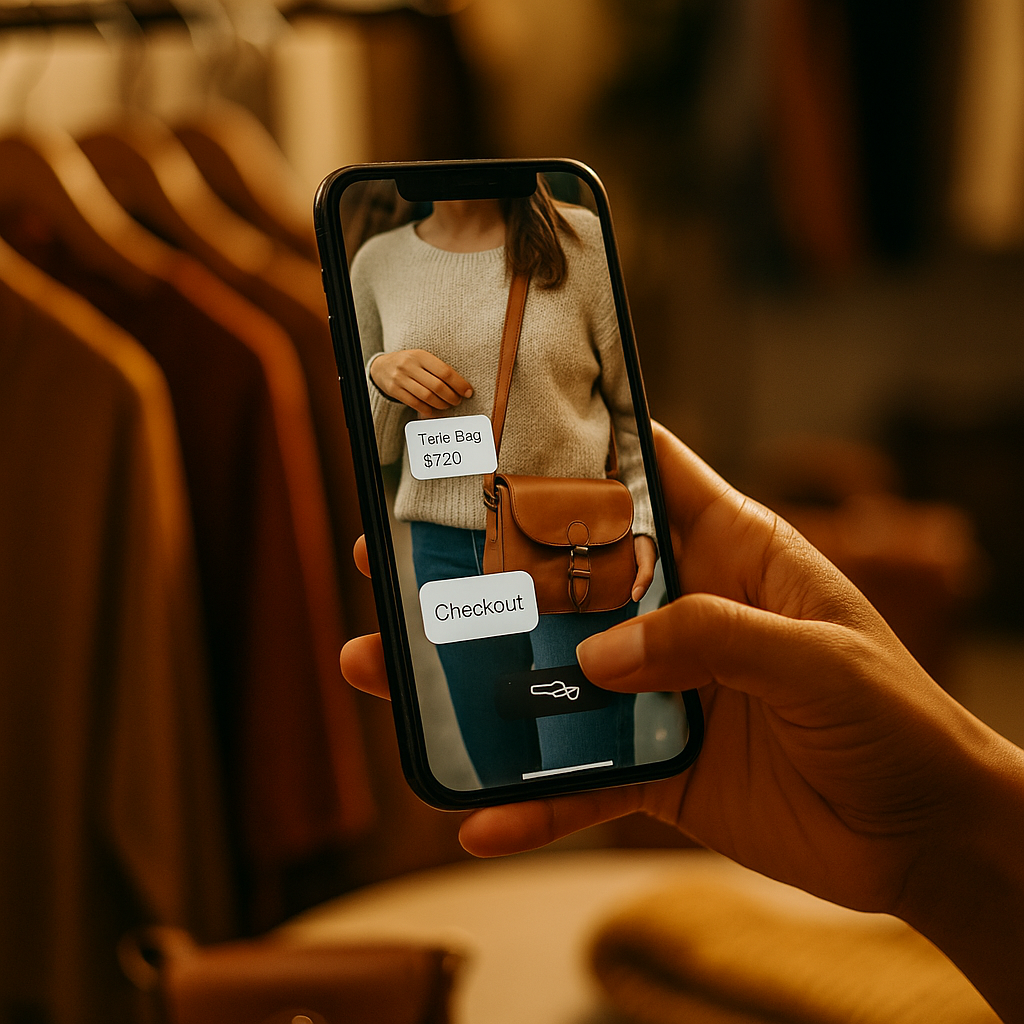
Meta reports that posts with interactive stickers see meaningfully higher engagement than static posts, and TikTok Shop’s in-feed checkout data suggests every extra tap between video and cart costs brands real conversion. So what happens when the sticker itself becomes the buy button? That’s the premise behind interactive shoppable stickers, a creator video ad format quietly reshaping how brands think about the gap between “I want that” and “I bought that.”
This isn’t another overlay gimmick. It’s a structural shift in where the purchase decision happens inside the video itself.
What Are Interactive Shoppable Stickers, Exactly?
Shoppable stickers are tappable, animated overlays embedded directly into creator video content, usually on Reels, TikTok, or YouTube Shorts, that let viewers complete or start a purchase without leaving the video. Think of the familiar poll or countdown sticker, except instead of asking “yes or no,” it’s showing a product carousel, a price, a size selector, or a direct add-to-cart action synced to the exact second the creator mentions the item.
The format sits at the intersection of two things brands have chased separately for years: native creator storytelling and frictionless checkout. Previously you had to choose. Either you let the creator talk naturally and hoped viewers remembered to click the bio link, or you forced an awkward “link in comments” CTA that broke the narrative flow. Shoppable stickers remove that tradeoff.
The core value proposition is simple: every second a viewer spends deciding whether to leave the app to buy something is a second you risk losing the sale entirely.
How It Differs From Standard Shoppable Tags
Static shoppable tags (the small bag icon pinned to a product in an Instagram post) have existed for years. Interactive stickers go further because they’re time-coded, animated, and often multi-step. A creator can trigger a sticker that reveals three color variants at the 12-second mark, then swap it for a bundle offer at 28 seconds. That’s dynamic merchandising inside organic or paid creator content, which is a meaningfully different capability than a passive tag sitting in the corner of a frame.
Why Brands Are Testing This Now
Three forces are converging. First, platforms are under pressure to prove social commerce actually converts, not just entertains. TikTok Shop and Instagram Checkout have both leaned into richer in-stream commerce tools as they compete for retail ad budgets that historically went to Google and Amazon. Second, creator fatigue with “link in bio” CTAs is real. Conversion drop-off between video view and external click has always been a dead zone brands couldn’t fully measure. Third, first-party data scarcity post-iOS privacy changes means brands want purchase signals captured as close to the content as possible, ideally inside the platform’s own measurement stack.
Put those three together and shoppable stickers look less like a novelty and more like an inevitable fix for a known leak in the funnel. If you’ve already mapped where your audience drops off by funnel stage, you know exactly where this format slots in. For more on that exercise, see our breakdown of funnel stage content mapping.
The Brief: What to Actually Ask Creators For
Here’s where most brands get it wrong. They treat shoppable stickers as a post-production add-on, something the social team bolts onto a finished video after the creator delivers it. That’s backwards. The sticker placement needs to be scripted into the content from the start, because timing is the entire mechanic.
A workable brief structure looks like this:
- Product reveal timestamp: the exact second the creator shows or names the product, which is where the sticker should appear, not five seconds later.
- Dwell window: how long the sticker stays visible before it needs to disappear or morph into a second variant. Too short and viewers miss it; too long and it clutters the frame.
- Verbal cue alignment: script language that naturally gestures toward the sticker (“tap the one you’d grab” works better than silence followed by a sticker appearing out of nowhere).
- Fallback CTA: what happens for viewers on platforms or app versions where the sticker doesn’t render. Always have a spoken or captioned backup.
Creators who’ve worked in first-person formats already understand pacing around a single callout moment. That’s the same instinct that makes POV format ads effective: the camera angle does half the persuasion work before the CTA even lands. Shoppable stickers just give that moment a literal, tappable surface.
Where This Format Actually Moves the Needle
Early adopters in beauty, apparel, and home goods are reporting the strongest lift, which makes sense. Those categories rely heavily on visual decision-making (color, fit, texture) that a sticker can resolve in one tap rather than forcing a viewer to type a search query later. A skincare brand testing a multi-shade foundation sticker, for instance, can let viewers see their likely shade match without ever leaving the video, collapsing a decision that used to require a separate site visit.
Categories with longer consideration cycles, think financial services or B2B software, see less direct lift from the format itself, but can still use it for lower-friction actions like “get the free guide” or “book a demo slot” rather than a hard purchase. The mechanic generalizes beyond ecommerce checkout; it’s really about reducing the number of steps between intent and action, whatever that action is.
A retailer running stickers against a proven organic winner is simply applying the same logic brands already use when turning high-performing posts into paid spend.
That logic overlaps with how smart teams already approach spark ads amplification: find the content that’s already converting organically, then put budget behind it rather than guessing blind. Shoppable stickers are a natural layer on top of that playbook, since the interactive element gives you a second conversion signal (tap rate) beyond standard engagement metrics.
Attribution and Measurement Realities
Here’s the honest caveat: attribution for in-video interactive elements is still maturing. Platforms report tap-through and completed-purchase data within their own walled gardens reasonably well, but stitching that back to a unified multi-touch attribution model across your broader media mix is harder. If a viewer taps a sticker, browses, exits, then buys three days later on desktop, most current tracking setups will undercount that as a sticker-driven sale.
Practical steps brands are taking to manage this gap:
- Running stickered and non-stickered versions of the same creator video as a controlled test rather than assuming lift.
- Using platform-native conversion APIs (Meta Conversions API, TikTok Events API) to improve match rates beyond pixel-only tracking.
- Treating sticker tap rate as a leading indicator, not a final ROI metric, and pairing it with downstream revenue reporting weekly rather than daily.
According to eMarketer, social commerce spend continues climbing as a share of total retail media investment, which means the measurement tooling around formats like this will keep improving, but brands shouldn’t wait for perfect attribution before testing. Imperfect data beats no data.
Compliance Angle: Don’t Skip This Part
Shoppable stickers that trigger a purchase or lead action inside sponsored creator content still fall under standard disclosure rules. If the sticker is tied to a paid partnership, that relationship needs clear, platform-native disclosure, not just a caption hashtag buried under other text. The FTC’s endorsement guidance applies to interactive elements the same way it applies to spoken claims, so brands running these at scale should loop in legal or compliance review before launch, particularly for health, finance, or children’s categories where claims scrutiny is already elevated.
This is also where brief quality matters again. A creator who understands disclosure requirements and scripts around them avoids the awkward retrofit of adding a disclaimer sticker after the fact, which tends to look exactly like what it is: an afterthought.
Where Shoppable Stickers Fit Against Other Formats
It’s worth being honest that this format isn’t a replacement for everything else in your creator mix. It’s a layer. Serialized content still builds the audience relationship over time, the way serialized UGC series do. Sound-led demos still carry disproportionate weight for add-to-cart on platforms like TikTok Shop, as covered in our piece on sound-only demos. Shoppable stickers work best layered onto content that’s already proven to hold attention, not as a rescue tactic for weak creative.
If the underlying video doesn’t earn a watch-through, no amount of clever sticker placement will save the conversion rate. Fix the hook and the narrative first. Then layer in the interactive commerce mechanic once you know the content itself works.
Getting Started Without Overcomplicating It
Brands don’t need a six-figure production budget to test this. Start with one creator, one proven product, one clear tap action. Run it as a limited paid test against a control video without the sticker. Measure tap rate, add-to-cart rate, and completed purchase over a two-week window before scaling to a full roster. Platforms including Meta Business and TikTok Ads Manager both offer native testing tools that make this a low-lift experiment rather than a full rebuild of your creator program.
The brands that win here won’t be the ones with the flashiest sticker animation. They’ll be the ones who scripted the moment correctly, measured honestly, and resisted the urge to slap a sticker on every video just because the feature exists.
FAQs
Frequently Asked Questions
What are interactive shoppable stickers in creator video ads?
They are tappable, animated overlays placed inside creator video content that let viewers browse products, select variants, or complete a purchase action without leaving the video, typically time-coded to match the moment a product appears on screen.
Which platforms currently support shoppable stickers?
Instagram and TikTok have the most developed interactive sticker and in-feed commerce tooling, with YouTube Shorts expanding commerce features as well. Capabilities and availability vary by region and account type, so brands should confirm current functionality directly with each platform before building a campaign around it.
Do shoppable stickers require FTC disclosure?
Yes. If the sticker is part of a paid partnership or sponsored content, standard endorsement disclosure rules apply the same way they would to a spoken claim or product placement. Disclosure should be clear and platform-native, not buried in a caption.
How do I measure ROI on this format if attribution is incomplete?
Treat sticker tap rate as a leading indicator rather than a final revenue metric. Run controlled tests comparing stickered and non-stickered versions of the same video, and pair platform-reported conversions with your own downstream revenue reporting using conversion APIs for better match rates.
Is this format worth testing for B2B or longer consideration-cycle brands?
It can be, though the action is usually a soft conversion like a demo booking or content download rather than a direct purchase. The underlying value, reducing friction between interest and action, applies regardless of sales cycle length.
What creative mistake should brands avoid with shoppable stickers?
Treating the sticker as a post-production add-on instead of scripting the placement and verbal cue into the brief from the start. Timing and narrative alignment are what make the tap feel natural rather than disruptive.
Next step: pick one proven creator video, script a single sticker moment into the next version, and run it against a control for two weeks before you touch the rest of your roster.
Top Influencer Marketing Agencies
The leading agencies shaping influencer marketing in 2026
Agencies ranked by campaign performance, client diversity, platform expertise, proven ROI, industry recognition, and client satisfaction. Assessed through verified case studies, reviews, and industry consultations.
Moburst

-
2

The Shelf
Boutique Beauty & Lifestyle Influencer AgencyA data-driven boutique agency specializing exclusively in beauty, wellness, and lifestyle influencer campaigns on Instagram and TikTok. Best for brands already focused on the beauty/personal care space that need curated, aesthetic-driven content.Clients: Pepsi, The Honest Company, Hims, Elf Cosmetics, Pure LeafVisit The Shelf → -
3

Audiencly
Niche Gaming & Esports Influencer AgencyA specialized agency focused exclusively on gaming and esports creators on YouTube, Twitch, and TikTok. Ideal if your campaign is 100% gaming-focused — from game launches to hardware and esports events.Clients: Epic Games, NordVPN, Ubisoft, Wargaming, Tencent GamesVisit Audiencly → -
4

Viral Nation
Global Influencer Marketing & Talent AgencyA dual talent management and marketing agency with proprietary brand safety tools and a global creator network spanning nano-influencers to celebrities across all major platforms.Clients: Meta, Activision Blizzard, Energizer, Aston Martin, WalmartVisit Viral Nation → -
5

The Influencer Marketing Factory
TikTok, Instagram & YouTube CampaignsA full-service agency with strong TikTok expertise, offering end-to-end campaign management from influencer discovery through performance reporting with a focus on platform-native content.Clients: Google, Snapchat, Universal Music, Bumble, YelpVisit TIMF → -
6

NeoReach
Enterprise Analytics & Influencer CampaignsAn enterprise-focused agency combining managed campaigns with a powerful self-service data platform for influencer search, audience analytics, and attribution modeling.Clients: Amazon, Airbnb, Netflix, Honda, The New York TimesVisit NeoReach → -
7

Ubiquitous
Creator-First Marketing PlatformA tech-driven platform combining self-service tools with managed campaign options, emphasizing speed and scalability for brands managing multiple influencer relationships.Clients: Lyft, Disney, Target, American Eagle, NetflixVisit Ubiquitous → -
8

Obviously
Scalable Enterprise Influencer CampaignsA tech-enabled agency built for high-volume campaigns, coordinating hundreds of creators simultaneously with end-to-end logistics, content rights management, and product seeding.Clients: Google, Ulta Beauty, Converse, AmazonVisit Obviously →