


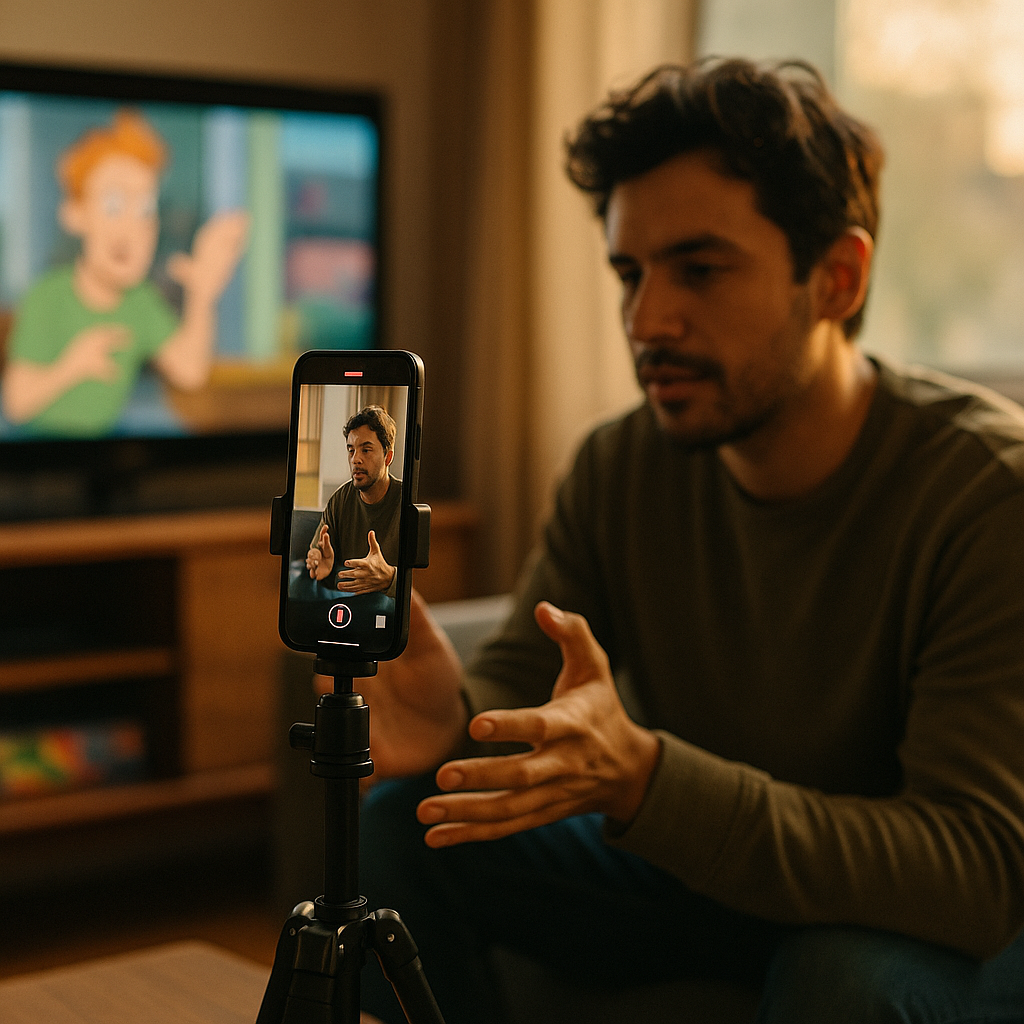
Ninety-four percent of marketers say short-form video delivers the highest ROI of any format, yet almost none of them own a single piece of that content as a durable asset. That’s the gap. An original creator series built like real intellectual property, not a one-off campaign, can migrate from a phone screen to a connected TV without losing its identity or its audience.
Most brands treat creator content as disposable media. Shoot it, boost it, archive it, repeat. But the smartest marketing teams have quietly flipped that model. They’re building formats with recurring characters, consistent structure, and episodic arcs that work on TikTok, hold up on Hulu’s ad tier, and still make sense embedded on a product page. That’s not content production anymore. That’s format ownership.
Why “Series” Beats “Campaign” in 2026
A campaign has an end date. A series has a season two. That distinction matters more than most budget decks acknowledge, because series thinking forces discipline around characters, recurring segments, and narrative hooks that survive beyond a single flight. Netflix didn’t win streaming by making great movies. It won by making shows people returned to weekly, then bingeable catalogs people returned to on demand.
Brands chasing the same loyalty loop are starting to copy that playbook with creators instead of actors. Dunkin’s partnership with Ben Affleck leaned into recurring bits rather than single ads. Duolingo’s owl has become a recognizable character across formats precisely because the brand treated the mascot like a franchise, not a logo refresh. The lesson: a format with a name, a rhythm, and a face outlives any single platform’s algorithm shift.
A one-off branded video dies when the media budget stops. A series with episodic structure keeps generating search traffic, social shares, and CTV impressions long after the initial spend ends.
What Makes a Format Actually Portable
Not every creator concept translates across screens. A trend-driven dance challenge dies the moment the sound falls out of rotation. What survives the jump from vertical feed to living room is structure, not novelty. Three elements decide portability:
- A recurring premise. Think “weekly product teardown” or “founder reacts to customer DMs.” The premise needs to work whether the episode is 30 seconds or 22 minutes.
- A consistent host or ensemble. Viewers come back for people, not just topics. This is why founder led video formats have scaled so well into longer-form content: the trust transfers across runtime.
- Modular pacing. The best series are edited so a 15-second cutdown, a 90-second social edit, and a 10-minute CTV episode all feel native to their platform rather than trimmed versions of each other.
That third point is where most brands stumble. They shoot for TikTok first, then try to stretch a 20-second script into something that justifies a CTV ad slot. It never works. The better move is to shoot long and edit short, capturing enough raw footage in one session to cut multiple formats without reshooting. This is the same operational logic behind live event content capture, where a single shoot day fuels months of derivative assets instead of one hero video.
The Streaming Opportunity Brands Are Underpricing
CTV ad spend keeps climbing according to eMarketer forecasts, and inventory on ad-supported tiers from Netflix, Amazon, and Disney+ is cheaper per impression than most people assume relative to linear TV. The catch is that CTV audiences expect production value closer to television than to a ring-light TikTok. A creator series built with real structure, consistent branding, and episodic hooks can clear that bar without requiring a full agency production budget, especially if the format was designed cross-platform from day one.
Brands that wait for “enough budget” to make a CTV-native show are missing the actual opportunity: repurposing a social-first series that already has proven watch-through data. If an episode retains viewers on Instagram Reels, that’s a signal, not just a vanity metric, that the format has narrative pull worth testing on a bigger screen.
Format Design: Start With the IP, Not the Platform
The brands getting this right design the format bible before they pick a platform. That means defining the recurring segment name, the visual motif, the episode length tiers, and the creator’s on-camera role before a single shot list goes out. It’s closer to how a TV studio builds a pilot deck than how a social team builds a content calendar.
Consider a skincare brand building a “What’s In My Routine” series. The social cut is 45 seconds, fast-paced, sound-on, built for discovery. The YouTube cut runs five minutes with more product education. The CTV cut becomes a 15-second interstitial that references the longer series, driving curious viewers to search. Same IP, three formats, one consistent host and visual identity. That consistency is what lets the format compound in brand recall instead of resetting with every new video.
This approach also solves a budgeting headache. Instead of separate line items for “social content” and “CTV creative,” a format-first series lets finance teams treat the IP as a single capitalized asset with multiple distribution outputs. That’s a cleaner story for CFOs who’ve grown tired of unpredictable influencer line items with no residual value.
Mapping Format to Funnel, Not Just Platform
Portability doesn’t mean every episode should chase every funnel stage simultaneously. A series works best when individual episodes are mapped deliberately, some built for cold-audience discovery, others for consideration, a few engineered purely for conversion. Funnel stage content mapping gives teams a framework for deciding which episode type belongs in a CTV pre-roll versus a retargeting feed.
Serialization also helps retention metrics in ways single assets never could. Brands running serialized UGC series formats have found that episodic structure trains audiences to expect the next installment, which lifts return visit rates on owned channels and extends paid media efficiency because the same creative keeps earning organic impressions between paid flights.
Compliance and Rights: The Part Nobody Wants to Budget For
Here’s where IP ambitions run into contract reality. Most influencer agreements are written for single-use or limited-term licensing, not for a format that might run across Instagram, a CTV buy, and a retail media network eighteen months later. If your legal team hasn’t touched the usage rights clause since the first draft, you don’t actually own the series, you’re renting it.
Before building a format around a specific creator, negotiate broad, multi-platform usage rights with defined terms for paid amplification, including CTV and streaming placements. The FTC’s endorsement guidance also applies regardless of where the content eventually airs, so disclosure requirements need to travel with the format across every platform it touches, not just the one it launched on. Teams that skip this step often end up rebuilding a successful format from scratch with a new creator because the original contract capped usage at 90 days of social-only distribution.
If your contract doesn’t explicitly cover CTV, streaming, and retail media placements, assume it doesn’t, and renegotiate before you scale the format past its original platform.
Measurement Gets Messier, and That’s Fine
Cross-platform series complicate attribution. A viewer might discover the format on TikTok, watch an episode on YouTube, and see the CTV cutdown weeks later before converting on-site. Multi-touch attribution models from platforms like Google and the major DSPs are improving, but marketers should expect some blended, directional measurement rather than clean last-click data. Brand lift studies and incrementality testing, not last-touch attribution, are the more honest scorecard for format-level IP investment.
Track completion rates and sequential viewing (did someone who watched episode one come back for episode two) as leading indicators of format health. Those numbers tell you whether you’ve built a series worth protecting or just a string of unrelated videos wearing the same intro graphic. For brands building a long-term content hub strategy, pairing a series with creator owned channel hubs gives the format a permanent home that compounds SEO value independent of any single platform’s algorithm.
Production Tactics That Keep Series Sustainable
Scaling a series without burning out the budget or the creator requires some production discipline:
- Batch-shoot multiple episodes per session to reduce per-episode cost, similar to how event-based capture stretches one production day across months of content.
- Use AI-assisted editing tools to generate platform-specific cuts faster. Workflows built around CapCut AI editing are already compressing turnaround from days to minutes for cutdown variants.
- Keep a consistent visual motif (title card, sound sting, lower-third style) so the format reads as a series even when hosted by rotating creators, an approach that also underpins multi-creator collab formats.
None of this requires a Hollywood budget. It requires treating the format, not the individual video, as the thing worth protecting and refining over time. Platforms like Meta Business Suite and TikTok Ads Manager now support longer-form and series-style creative in ways they didn’t two years ago, which makes the distribution side easier than the format design side.
Next step: audit your last six months of creator content for any format that got repeated organically, by the creator or the audience, without you asking. That’s your pilot episode. Build the format bible around it, lock the usage rights for multi-platform distribution, and test one cutdown on a CTV ad-supported tier before committing further budget.
Frequently Asked Questions
What does it mean to treat a creator series as intellectual property?
It means defining the format, host, visual identity, and recurring structure as an owned brand asset with documented usage rights, rather than treating each video as a disposable, single-use campaign deliverable.
How is an original creator series different from a regular influencer campaign?
A campaign has a fixed flight and ends. A series has episodic structure, a recurring premise, and is designed to continue generating value and new installments across multiple platforms over time.
Can creator-made content really work on CTV and streaming platforms?
Yes, provided the format was designed with modular pacing and sufficient production quality. Social-first formats with proven watch-through data are often lower-risk candidates for CTV testing than untested concepts.
What contract terms matter most for cross-platform creator series?
Usage rights need to explicitly cover paid amplification across social, CTV, and streaming placements, with clear terms on duration and renewal, so the brand can scale a successful format without renegotiating from scratch.
How should brands measure success for a format-based series versus a single campaign?
Track completion rates, sequential episode viewership, and brand lift or incrementality studies rather than relying solely on last-click attribution, since cross-platform discovery paths are rarely linear.
FAQs
See the Frequently Asked Questions section above for full details on building, licensing, and measuring original creator series as cross-platform IP.
Top Influencer Marketing Agencies
The leading agencies shaping influencer marketing in 2026
Agencies ranked by campaign performance, client diversity, platform expertise, proven ROI, industry recognition, and client satisfaction. Assessed through verified case studies, reviews, and industry consultations.
Moburst

-
2

The Shelf
Boutique Beauty & Lifestyle Influencer AgencyA data-driven boutique agency specializing exclusively in beauty, wellness, and lifestyle influencer campaigns on Instagram and TikTok. Best for brands already focused on the beauty/personal care space that need curated, aesthetic-driven content.Clients: Pepsi, The Honest Company, Hims, Elf Cosmetics, Pure LeafVisit The Shelf → -
3

Audiencly
Niche Gaming & Esports Influencer AgencyA specialized agency focused exclusively on gaming and esports creators on YouTube, Twitch, and TikTok. Ideal if your campaign is 100% gaming-focused — from game launches to hardware and esports events.Clients: Epic Games, NordVPN, Ubisoft, Wargaming, Tencent GamesVisit Audiencly → -
4

Viral Nation
Global Influencer Marketing & Talent AgencyA dual talent management and marketing agency with proprietary brand safety tools and a global creator network spanning nano-influencers to celebrities across all major platforms.Clients: Meta, Activision Blizzard, Energizer, Aston Martin, WalmartVisit Viral Nation → -
5

The Influencer Marketing Factory
TikTok, Instagram & YouTube CampaignsA full-service agency with strong TikTok expertise, offering end-to-end campaign management from influencer discovery through performance reporting with a focus on platform-native content.Clients: Google, Snapchat, Universal Music, Bumble, YelpVisit TIMF → -
6

NeoReach
Enterprise Analytics & Influencer CampaignsAn enterprise-focused agency combining managed campaigns with a powerful self-service data platform for influencer search, audience analytics, and attribution modeling.Clients: Amazon, Airbnb, Netflix, Honda, The New York TimesVisit NeoReach → -
7

Ubiquitous
Creator-First Marketing PlatformA tech-driven platform combining self-service tools with managed campaign options, emphasizing speed and scalability for brands managing multiple influencer relationships.Clients: Lyft, Disney, Target, American Eagle, NetflixVisit Ubiquitous → -
8

Obviously
Scalable Enterprise Influencer CampaignsA tech-enabled agency built for high-volume campaigns, coordinating hundreds of creators simultaneously with end-to-end logistics, content rights management, and product seeding.Clients: Google, Ulta Beauty, Converse, AmazonVisit Obviously →