


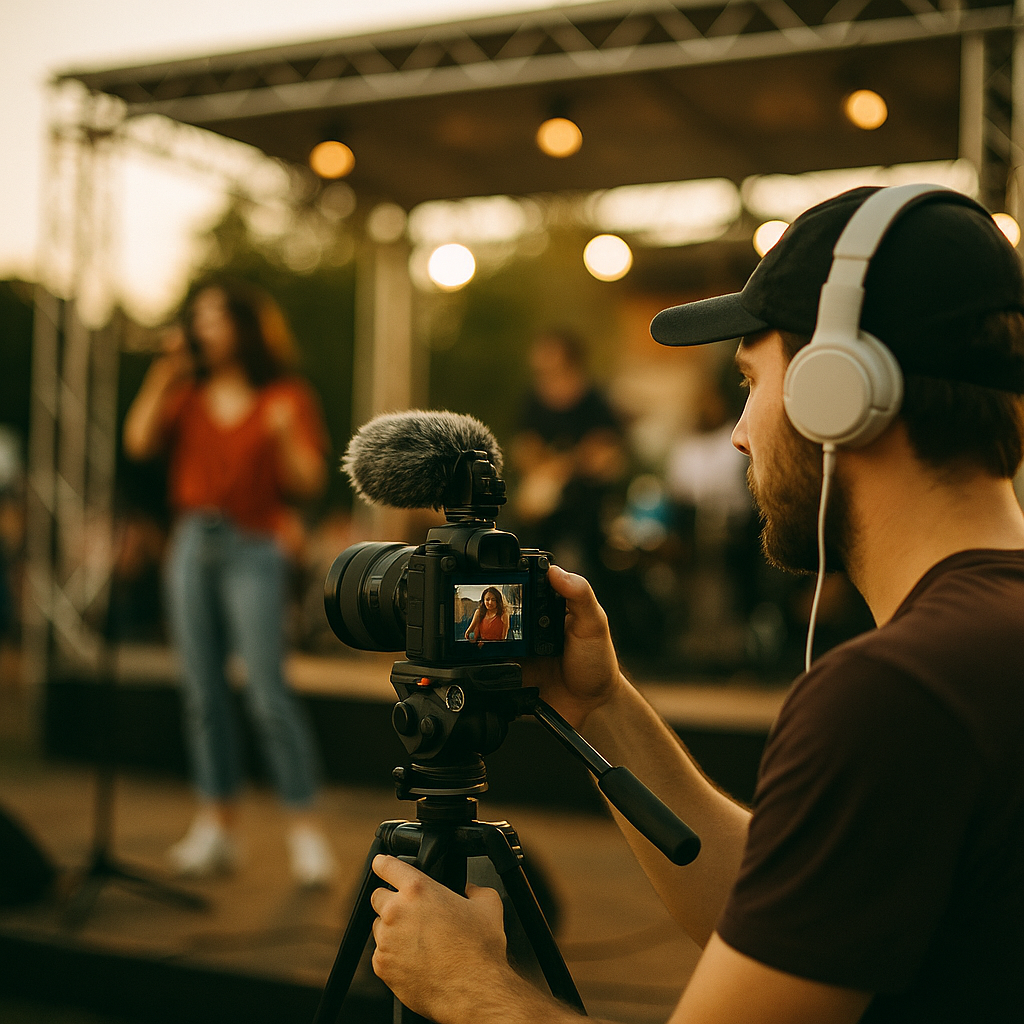
Seventy percent of a live event’s impressionable value is wasted the moment the lights go down, because most brands treat activations as one-off spikes instead of content fuel. A single pop-up or festival booth can generate weeks of creator content if it’s briefed that way from the start. The brands winning right now aren’t choosing between live events and always-on creator content calendars. They’re building the two together, on purpose, from the planning stage.
Why Live Events Alone Don’t Move the Needle Anymore
Experiential marketing budgets have ballooned over the past few years, but the attribution story rarely holds up past the event weekend. You rent a venue, fly in ten creators, get a burst of Stories and a few thousand impressions, and then the content dies. No retargeting pool, no evergreen asset, nothing for the paid team to spark into ads six weeks later.
That’s the gap. Events generate emotion and proof, but without a distribution plan that stretches past the live moment, you’re paying premium production costs for content with a 48 hour shelf life. Compare that to brands that treat the activation as a raw footage factory, feeding a content calendar for the next quarter.
An IRL activation isn’t a campaign moment, it’s a content production day. Brief it like one, staff it like one, and you’ll get months of assets instead of one weekend of noise.
Building the Always-On Creator Content Calendar Around Live Moments
Start by mapping your live events calendar against your always-on content calendar before either one is finalized. If you know a product launch, trade show appearance, or pop-up store is happening in month three, you build creator deliverables around it in month one. That means pre-event teaser content, day-of capture, and a post-event drip schedule that can run for six to eight weeks.
This is where funnel stage content mapping earns its keep. A live event naturally produces top of funnel awareness content (crowd energy, unboxing reactions), but it also produces mid and bottom funnel assets if you brief creators to capture product demos, customer testimonials, and sound bites that work as proof points later. Don’t let the awareness content crowd out the conversion content just because it’s more fun to shoot.
- Pre-event (two to three weeks out): Teaser POVs, countdown content, creator “what to expect” posts.
- Day-of: Raw capture across formats, live pinned comment engagement, behind-the-scenes b-roll.
- Post-event (four to eight weeks): Edited recaps, testimonial cutdowns, retargeting ad variants, evergreen SEO hub content.
What Should You Actually Brief Creators to Capture On-Site?
Most brands brief for vibe. Smart brands brief for assets. Before creators show up, give them a shot list that mirrors your paid and organic needs: vertical clips for Reels and TikTok, horizontal b-roll for YouTube and website hero sections, tight close-ups for product demos, and wide shots for context. Ask for at least one unscripted testimonial per creator, because that raw, slightly imperfect footage often outperforms polished brand video in paid placements, a pattern that echoes what we’ve seen with sound-only product demos beating silent UGC on add to cart rates.
Also brief for sound. Ambient crowd noise, music, and live reactions are gold for vertical video sound design that matches platform cadence later. A flat, scripted talking head on a trade show floor is a wasted opportunity when the room itself is doing half the storytelling for you.
Turning One Activation Into a Multi-Format Content Library
A single two-day activation, shot correctly, should yield somewhere between 40 and 80 usable clips once you account for multiple creators, multiple angles, and multiple product moments. That’s not a stretch goal, it’s standard output if you staff a content producer on-site whose only job is capture, separate from the creators who are performing or engaging with attendees.
From there, the editing team’s job is repurposing, not reshooting. Raw testimonial footage becomes frame grab stills for static ad wins. Longer interview clips get trimmed into carousel to reel conversions for the feed. Strong organic performers get flagged for spark ads amplification so paid media can scale what’s already proven instead of commissioning fresh creative from zero.
This is also where creator owned channel hubs matter. Event content, especially testimonials and demos, has long-tail SEO value if it’s hosted somewhere searchable instead of buried in a Stories archive. A blog post or landing page built around the event, embedding creator clips, compounds in organic search long after the hashtag has stopped trending.
The Phygital Bridge: Turning Foot Traffic Into Feed Content
Retail pop-ups and in-store activations deserve their own mention here because they close a loop that pure digital campaigns can’t: they turn creator content into physical store visits and then turn those visits back into content. Phygital content formats work precisely because they give online audiences a reason to show up somewhere real, and that in-person visit becomes the next piece of content, whether it’s a customer’s own UGC or a staff-captured reaction clip.
If you’re running QR-driven in-store experiences or AR try-ons tied to a live event, brief creators to demonstrate the tech on camera before launch. It reduces confusion at the point of sale and sets expectations, a lesson also proven out with AR product configurators briefed before launch, which cut return rates by giving shoppers accurate expectations up front.
Operational Realities: Staffing, Rights, and Rollout Timing
None of this works without the right staffing model. You need a producer on-site whose sole job is capture and logging, not talent wrangling. You need creator contracts that include usage rights extending beyond the event date, ideally with paid amplification rights baked in so you’re not renegotiating six weeks later when a clip starts performing. And you need an editor or small team on standby to turn footage around within 48 to 72 hours, because content loses relevance fast when it’s tied to a live moment.
Rights negotiation is the part most teams underprice. If a creator’s contract only covers organic posting on their own channel for 30 days, you’ve lost the ability to run that same clip as a paid ad or repost it on your brand channel three months later. Build usage terms that match your actual content calendar horizon, not just the event window. Industry benchmarks from HubSpot and Sprout Social both point to extended usage rights as one of the biggest cost-saving levers in creator partnerships, since reshoots are consistently the most expensive line item in any content budget.
The real cost of an IRL activation isn’t the venue or the travel, it’s the reshoot fees you pay later because nobody negotiated usage rights past the event weekend.
Rollout Timing: Don’t Dump Everything at Once
Resist the urge to post every clip in the week following the event. Spread the library across your always-on calendar using the same cadence logic you’d apply to any other content batch: lead with the highest-energy recap content in week one, follow with testimonial and demo content in weeks two and three, then let evergreen, non-time-sensitive clips (product close-ups, general brand footage) refill gaps in the calendar for months. This is the same discipline behind serialized UGC series, where spacing out related content keeps audiences coming back instead of burning through everything in a single week.
It also helps to pair recap clips with live engagement formats once they’re posted. A live pinned comment Q&A tied to an event recap keeps the conversation going well past the actual activation, giving the algorithm fresh signals without new production spend.
Measuring ROI Beyond Vanity Event Metrics
Foot traffic counts and badge scans are fine for the event recap deck, but they tell you almost nothing about downstream content performance. Track the content library separately: cost per usable asset, time-to-publish after capture, organic engagement by repurposed format, and paid conversion lift when event clips get spun into spark ads. If you can’t tie at least some portion of your post-event content to a measurable lift in add to cart rate or site traffic, the activation budget needs a harder look next cycle.
Platforms like Meta Business Suite and TikTok Ads Manager both let you tag and track content by campaign source, so there’s no excuse for losing attribution between the live moment and the paid push that follows. Set up this tagging before the event, not after, because retroactive tracking is messy and usually incomplete.
The brands getting outsized return from live events in the current market aren’t spending more on activations, they’re spending smarter on the content pipeline wrapped around them. Treat your next event as the first week of a two-month content calendar, not a standalone campaign, and the ROI math starts looking very different.
Frequently Asked Questions
How far in advance should we plan creator content around a live event?
Start mapping deliverables at least six to eight weeks out so teaser content, on-site shot lists, and post-event distribution windows are locked before the event date, not improvised afterward.
How many creators do we need for a single activation to build a real content calendar?
Three to six creators with varied content styles (demo-focused, testimonial-focused, lifestyle) usually generates enough raw footage variety to fill six to eight weeks of always-on content without repetition.
Should usage rights differ for event-based creator content versus standard UGC deals?
Yes. Event content tends to have a longer useful life because it’s tied to proof and social momentum, so usage terms should extend well past the standard 30-day organic window, ideally with paid amplification rights included.
What’s the biggest mistake brands make when repurposing event footage?
Posting everything immediately instead of spacing it across the calendar. Dumping the full library in one week burns through the content’s shelf life and gives the algorithm no reason to keep surfacing it later.
How do we measure ROI on IRL activations tied to content production?
Track cost per usable asset, time-to-publish, organic engagement on repurposed formats, and paid conversion lift from amplified clips, rather than relying solely on event attendance or impressions.
Top Influencer Marketing Agencies
The leading agencies shaping influencer marketing in 2026
Agencies ranked by campaign performance, client diversity, platform expertise, proven ROI, industry recognition, and client satisfaction. Assessed through verified case studies, reviews, and industry consultations.
Moburst

-
2

The Shelf
Boutique Beauty & Lifestyle Influencer AgencyA data-driven boutique agency specializing exclusively in beauty, wellness, and lifestyle influencer campaigns on Instagram and TikTok. Best for brands already focused on the beauty/personal care space that need curated, aesthetic-driven content.Clients: Pepsi, The Honest Company, Hims, Elf Cosmetics, Pure LeafVisit The Shelf → -
3

Audiencly
Niche Gaming & Esports Influencer AgencyA specialized agency focused exclusively on gaming and esports creators on YouTube, Twitch, and TikTok. Ideal if your campaign is 100% gaming-focused — from game launches to hardware and esports events.Clients: Epic Games, NordVPN, Ubisoft, Wargaming, Tencent GamesVisit Audiencly → -
4

Viral Nation
Global Influencer Marketing & Talent AgencyA dual talent management and marketing agency with proprietary brand safety tools and a global creator network spanning nano-influencers to celebrities across all major platforms.Clients: Meta, Activision Blizzard, Energizer, Aston Martin, WalmartVisit Viral Nation → -
5

The Influencer Marketing Factory
TikTok, Instagram & YouTube CampaignsA full-service agency with strong TikTok expertise, offering end-to-end campaign management from influencer discovery through performance reporting with a focus on platform-native content.Clients: Google, Snapchat, Universal Music, Bumble, YelpVisit TIMF → -
6

NeoReach
Enterprise Analytics & Influencer CampaignsAn enterprise-focused agency combining managed campaigns with a powerful self-service data platform for influencer search, audience analytics, and attribution modeling.Clients: Amazon, Airbnb, Netflix, Honda, The New York TimesVisit NeoReach → -
7

Ubiquitous
Creator-First Marketing PlatformA tech-driven platform combining self-service tools with managed campaign options, emphasizing speed and scalability for brands managing multiple influencer relationships.Clients: Lyft, Disney, Target, American Eagle, NetflixVisit Ubiquitous → -
8

Obviously
Scalable Enterprise Influencer CampaignsA tech-enabled agency built for high-volume campaigns, coordinating hundreds of creators simultaneously with end-to-end logistics, content rights management, and product seeding.Clients: Google, Ulta Beauty, Converse, AmazonVisit Obviously →