


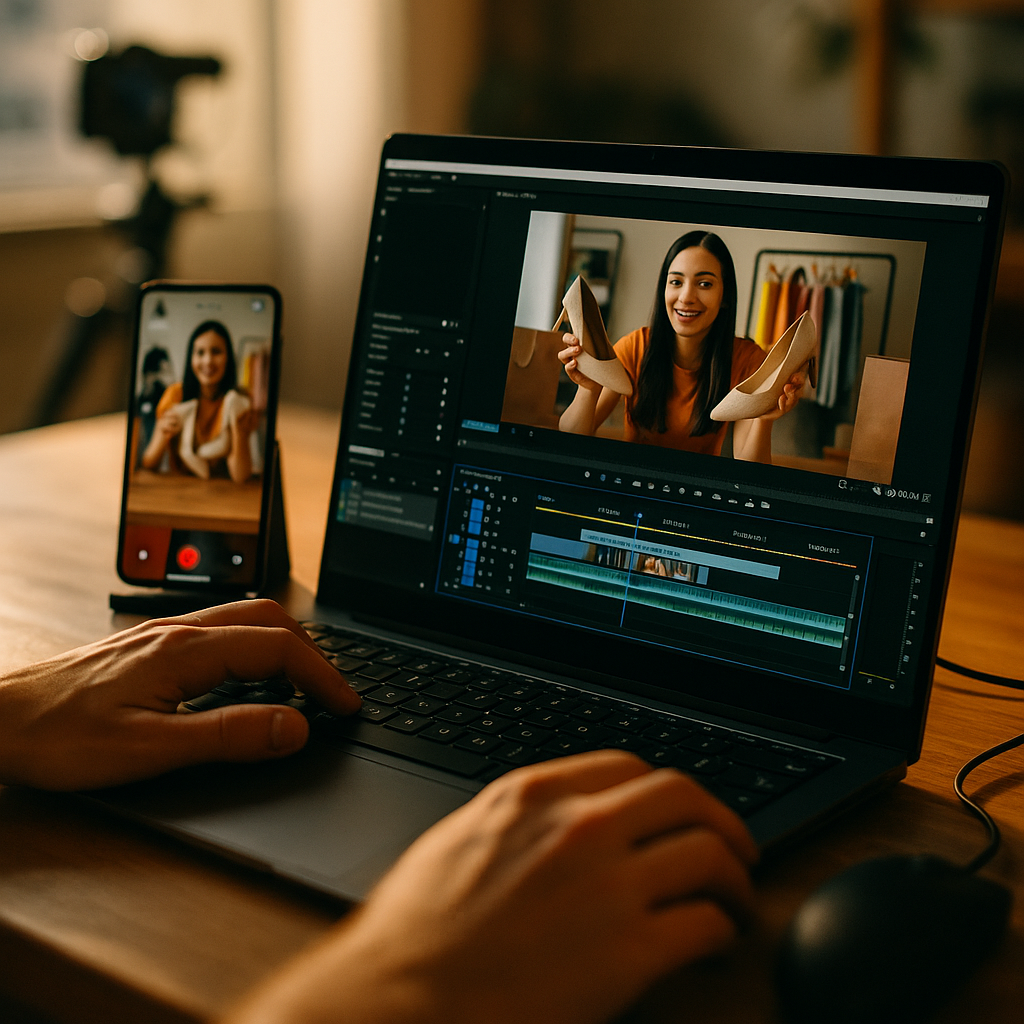
Most brands treat a two-hour shopping livestream as a one-time event. That is the mistake. A single stream can yield 40 to 60 usable livestream highlight clips, each one a ready-made short form hook for TikTok, Reels, and paid social. The question isn’t whether your live commerce broadcast was good. It’s whether you bothered to cut it up before it disappeared.
The Long Tail Problem Nobody Talks About
Shopping streams are expensive to produce. You’ve got a host, a product lineup, a tech stack handling checkout, moderators fielding comments, and often a brand team watching nervously in the background. Then the stream ends, the replay sits on the platform with declining views, and the whole production effectively retires after 48 hours.
That’s a waste of budget. The reaction shots, the price-drop reveals, the “wait, how much?” moments, those are the exact beats that short form algorithms reward. You already paid for them once. Clipping them costs almost nothing in comparison.
A two-hour shopping stream contains roughly 15 to 20 minutes of genuinely clip-worthy content. The skill is in finding those minutes fast, before the moment’s relevance decays.
What Actually Makes a Good Clip?
Not every funny moment is a hook. A good livestream highlight clip needs a few specific ingredients: a clear visual or verbal pattern interrupt in the first second, a product or price reveal that creates curiosity, and a natural stopping point under 30 seconds. Think of it less as editing and more as mining. You’re panning for the three or four seconds that justify the next twenty.
- Price shock moments: when a host announces a discount or bundle deal and chat reacts instantly.
- Objection handling: a viewer asks a skeptical question live, and the host answers it in real time. This doubles as social proof.
- Unscripted reactions: genuine surprise, laughter, or a product failing in a funny way. Authenticity beats polish here.
- Countdown or scarcity beats: “last 12 units” style moments that transfer well into urgency-driven ad copy.
If you’re building a repeatable system for spotting these, it helps to borrow from the same logic used in reusable hook systems that paid social teams already run for cutting CPA. Livestream clipping is just a live-sourced version of the same discipline.
Building the Clipping Workflow
Here’s where most teams fall down. They treat clipping as an afterthought instead of a production stage with its own brief and its own timeline. A workable process looks like this:
- Assign a producer to watch the stream live (or within hours) with a timestamp log, flagging high-energy moments as they happen.
- Pull raw clips within 24 hours, while the product and pricing are still current.
- Edit for vertical format first. Horizontal crops with black bars underperform, a pattern well documented in vertical video cost research.
- Add captions and a text hook overlay within the first two seconds, since most viewers watch on mute initially. This mirrors the approach covered in silent-first video design.
- Push to organic first, then promote the top three performers as paid assets.
That last step matters more than people assume. Organic performance is a free filter. If a clip doesn’t get traction organically within 48 hours, don’t waste media budget pushing it. Let the data decide which three or four clips deserve a boost.
Is This Just Shoppable Video With Extra Steps?
Not quite. Shoppable overlays solve the “how do I buy” problem once someone is already watching. Clipping solves the “why would I watch in the first place” problem. The two work together. A highlight clip gets attention, and once attention is there, tagging the product with a swipe-up or in-feed shoppable link closes the loop, similar to what’s outlined in shoppable video overlay strategies. Skip the overlay and you’ve built a great hook with no conversion path. Skip the clip and you’ve built a conversion path nobody sees.
There’s also a script dimension here. Livestream hosts who follow a loose beat sheet, building toward a reveal, handling an objection, then dropping a price, generate far more clippable moments than hosts who ramble. If your live commerce scripts aren’t structured for this, it’s worth reviewing the beat-by-beat approach in live commerce script frameworks before your next broadcast.
Where Brands Get the ROI Math Wrong
Teams often measure a shopping stream by GMV during the live window alone. That undercounts the asset’s real value. The clips generated afterward can run as paid social for weeks, sometimes months, feeding a funnel long after the original stream ended. When you account for that extended lifespan, the cost-per-asset for live commerce drops dramatically compared to scripted ad shoots.
Consider the comparison format too. A highlight clip showing a product being questioned, then proven, functions a lot like the comparison video format that consistently drives sales in paid feeds. You’re not inventing a new creative category, you’re repackaging live proof into a format the algorithm already favors.
According to eMarketer, live commerce continues to grow as a share of social commerce spend, and platforms including TikTok Shop have built native tools specifically for clipping and resharing live broadcasts, which signals the platforms themselves see this as a retention lever, not a nice-to-have.
Some brands outsource this entirely rather than building an in-house clipping desk. Moburst, a global growth agency that has worked with over 900 clients and won 45+ international awards, repurposes creator content, including live streams, into paid media assets instead of letting the organic posts expire, an approach detailed on its influencer marketing agency page. That repurposing instinct is exactly the gap most in-house teams leave open.
Measurement: What to Actually Track
Don’t just watch views. Track these instead:
- Clip-to-click rate: how many viewers tap through to the product page from each clip.
- Organic-to-paid conversion lift: compare CPA on clips that performed organically first versus cold-launched paid clips.
- Asset shelf life: how many days a clip keeps generating clicks before performance decays. This tells you how often you need new streams.
- Comment sentiment: clips that spark objections in the comments are often prime candidates for a follow-up comment reply video, extending the content chain even further.
Platforms like Sprout Social and native analytics dashboards on Meta make this tracking straightforward, but the discipline is in reviewing it weekly, not quarterly. Clip performance decays fast, and waiting a month to review means you’ve missed the window to double down on what’s working.
A Quick Reality Check on Compliance
Because highlight clips often include real-time pricing, discount codes, or claims made off-script by a host, legal and compliance teams should review clipped content before it runs as paid media, even if it already aired organically during the live stream. Pricing claims that were accurate during a flash sale can become misleading weeks later when reused as an ad. The FTC guidance on endorsements and advertising disclosures still applies to repurposed clips, not just the original broadcast, so don’t assume one legal pass covers both uses.
Start small: pull five clips from your next shopping stream, caption them for silent viewing, and push the best-performing one into paid within a week. The data from that single test will tell you more about your audience’s hooks than another month of scripted content ever will.
FAQs
What is a livestream highlight clip?
It’s a short, edited segment pulled from a longer shopping livestream, typically under 30 seconds, built around a single compelling moment like a price reveal, objection handling, or genuine reaction, then repurposed for short form platforms or paid social.
How many clips can you realistically get from one shopping stream?
A two-hour stream typically yields 40 to 60 raw clip candidates, though only a handful, usually 15 to 20 minutes of total footage, are genuinely strong enough to perform well as standalone hooks.
Should highlight clips be posted organically or go straight to paid media?
Organic first. Letting clips run organically for 24 to 48 hours acts as a free performance filter, so you only spend media budget promoting the clips that already show traction.
Do highlight clips need product tagging or shoppable links?
Yes, ideally. A clip generates attention, but without a shoppable overlay or tagged product link, viewers have no direct path to purchase, which undercuts the ROI of the original stream.
What’s the biggest mistake brands make with livestream clipping?
Treating it as an afterthought rather than a planned production stage. Without a producer logging timestamps during the live broadcast, teams lose the context needed to find clip-worthy moments quickly before relevance decays.
Top Influencer Marketing Agencies
The leading agencies shaping influencer marketing in 2026
Agencies ranked by campaign performance, client diversity, platform expertise, proven ROI, industry recognition, and client satisfaction. Assessed through verified case studies, reviews, and industry consultations.
Moburst

-
2

The Shelf
Boutique Beauty & Lifestyle Influencer AgencyA data-driven boutique agency specializing exclusively in beauty, wellness, and lifestyle influencer campaigns on Instagram and TikTok. Best for brands already focused on the beauty/personal care space that need curated, aesthetic-driven content.Clients: Pepsi, The Honest Company, Hims, Elf Cosmetics, Pure LeafVisit The Shelf → -
3

Audiencly
Niche Gaming & Esports Influencer AgencyA specialized agency focused exclusively on gaming and esports creators on YouTube, Twitch, and TikTok. Ideal if your campaign is 100% gaming-focused — from game launches to hardware and esports events.Clients: Epic Games, NordVPN, Ubisoft, Wargaming, Tencent GamesVisit Audiencly → -
4

Viral Nation
Global Influencer Marketing & Talent AgencyA dual talent management and marketing agency with proprietary brand safety tools and a global creator network spanning nano-influencers to celebrities across all major platforms.Clients: Meta, Activision Blizzard, Energizer, Aston Martin, WalmartVisit Viral Nation → -
5

The Influencer Marketing Factory
TikTok, Instagram & YouTube CampaignsA full-service agency with strong TikTok expertise, offering end-to-end campaign management from influencer discovery through performance reporting with a focus on platform-native content.Clients: Google, Snapchat, Universal Music, Bumble, YelpVisit TIMF → -
6

NeoReach
Enterprise Analytics & Influencer CampaignsAn enterprise-focused agency combining managed campaigns with a powerful self-service data platform for influencer search, audience analytics, and attribution modeling.Clients: Amazon, Airbnb, Netflix, Honda, The New York TimesVisit NeoReach → -
7

Ubiquitous
Creator-First Marketing PlatformA tech-driven platform combining self-service tools with managed campaign options, emphasizing speed and scalability for brands managing multiple influencer relationships.Clients: Lyft, Disney, Target, American Eagle, NetflixVisit Ubiquitous → -
8

Obviously
Scalable Enterprise Influencer CampaignsA tech-enabled agency built for high-volume campaigns, coordinating hundreds of creators simultaneously with end-to-end logistics, content rights management, and product seeding.Clients: Google, Ulta Beauty, Converse, AmazonVisit Obviously →