


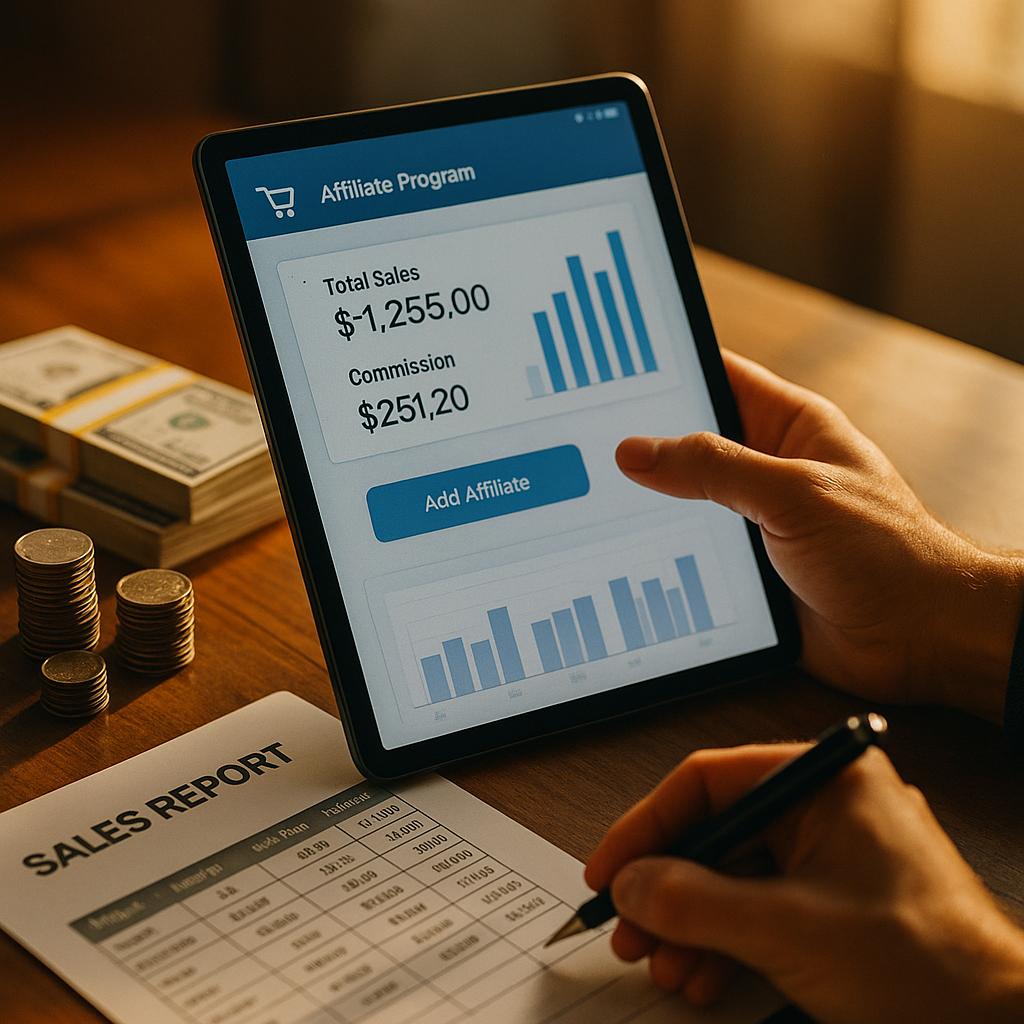
Only 22% of brands say they can directly tie influencer content to revenue, according to recent benchmarking from eMarketer. The rest are still buying reach and hoping conversion follows. If your creative briefs are written for impressions, you’re funding entertainment, not commerce. Commission ready creative briefs flip that script, literally, by structuring every scene around the action you’re paying for.
Why Reach Based Briefs Leak Budget
Most influencer briefs read like mood boards. “Show the product in your morning routine.” “Keep it authentic.” “Have fun with it.” These instructions produce charming content and forgettable performance. Nobody told the creator where the add to cart button lives in the narrative arc, so they never built toward it.
Reach metrics are seductive because they’re easy to report. Views, likes, shares, all climb a dashboard that looks good in a slide deck. But a brand running on commission based affiliate deals or performance bonuses needs something sharper: content engineered to produce the click, the code entry, the swipe up. That requires a brief that treats the script like a sales funnel, not a vibe.
A brief that doesn’t specify the exact second a CTA appears isn’t a performance brief. It’s a content suggestion.
The Cost of Vague Direction
When briefs skip structure, creators default to whatever got them views last week. That might be a trending sound or a slow aesthetic pan, neither of which drives purchase intent. Agencies running paid amplification on this content then discover CPAs climbing because the asset was never built to convert in the first place. Fixing it in post production or with a slapped-on text overlay rarely recovers the loss.
What Performance Scripting Actually Looks Like
Commission ready briefs borrow from direct response copywriting, not influencer culture. They map a script to the stages a viewer moves through before buying: stop the scroll, create a problem, present the product as the resolution, and close with an unmistakable next step. Every beat earns its place because every beat is measured against an outcome, not a feeling.
This is the same logic behind the beat sheet structure that’s driving TikTok Shop sales. The format isn’t creative for creativity’s sake. It’s a sequence tested against purchase data, then handed to creators as a repeatable template.
Good performance scripts also borrow tested hooks rather than reinventing the opening line every time. Brands building hook libraries are essentially pre-validating the first three seconds, which is where most scroll stopping or scroll losing happens. A commission ready brief should point creators to proven hooks instead of asking them to invent from scratch under deadline pressure.
The Anatomy of a Commission Ready Brief
Strip away the branding language and a performance brief has a consistent skeleton. Here’s what belongs in it:
- A single conversion goal. Not “drive engagement.” Specify add to cart, code redemption, app install, or booked call.
- A timestamped CTA placement. Tell the creator exactly where in a 30 to 60 second script the call to action lands, and script the line verbatim if needed.
- Objection handling built in. Performance scripts name the hesitation (price, skepticism, fit) and answer it on camera before the viewer can click away.
- A trackable link or code requirement. No brief should ship without a unique UTM, affiliate link, or promo code tied to that specific creator.
- Disclosure language pre-approved. Build in compliant disclosure per FTC endorsement guidelines so legal review isn’t a bottleneck after filming.
Notice what’s missing: tone of voice paragraphs, mood board links, aspirational lifestyle language. Those things still matter for brand fit, but they’re secondary to the mechanics that move a viewer toward purchase.
Matching Format to Funnel Stage
Not every performance brief should look the same, because not every creator is working the same stage of the funnel. A cold audience discovery asset needs a different structure than a retargeting piece aimed at cart abandoners. This is the core argument behind job specific creative briefs: match the format to the funnel job, then write commission terms around that specific job’s outcome. A top of funnel awareness video shouldn’t be judged by the same CPA target as a bottom of funnel conversion clip.
Comparison style content, for example, tends to outperform generic demo videos lower in the funnel because it answers the “why this over that” question directly. The X versus Y format works precisely because the brief forces a decision moment into the script instead of leaving it implied.
Live Commerce Needs Its Own Script Logic
Briefing a livestream host is its own discipline entirely. Unlike a 30 second clip that can be cut and reshot, live commerce scripts have to hold attention and drive purchase in real time, with no edit bay to fix a flat segment. The beat sheet behind every sale in live commerce relies on pacing cues: when to repeat the offer, when to manufacture urgency, when to answer a comment on camera to simulate social proof. A commission ready brief for livestream talent should include a minute-by-minute rundown, not a loose topic list.
The same discipline applies to clipping highlights after the stream ends. Brands that are cutting CPA from shopping streams do it by identifying the exact moment in a two hour stream where conversion spiked, then briefing editors to rebuild short form content around that moment specifically. That’s performance thinking applied after the fact, which works, but it’s far cheaper to brief for it upfront.
Where Most Briefs Still Fail
Three recurring mistakes show up across brand teams, regardless of industry.
First, briefs assume the creator will “figure out” the CTA placement. They won’t, not consistently. Creators optimize for watch time and retention because that’s what their platform rewards them for. If a brand wants a mid-video pivot to a sales pitch, that has to be scripted explicitly, with language the creator can say naturally in their own voice.
Second, briefs over-index on brand safety language and under-index on measurement. Legal and compliance teams understandably want disclosure and messaging guardrails locked down. But a 12 page brief with two lines about tracking links is a brief that won’t produce attributable results. Commission structures only work if the measurement infrastructure is specified as clearly as the brand voice guidelines.
Third, briefs don’t account for platform-specific cropping and format requirements. A script written for horizontal YouTube doesn’t translate to vertical TikTok without cost. As covered in the analysis of why cropped ads pay a cost penalty, reformatted content underperforms native vertical scripts because framing, pacing, and CTA placement all shift. A commission ready brief should be written for the native format of the platform it’s running on, not retrofitted afterward.
If the brief doesn’t specify a tracking mechanism, the “commission” in commission based content is unenforceable, and disputes over payout will follow.
Building the Testing Loop
A single commission ready brief isn’t the finish line. It’s the first iteration of a system that should get sharper with every campaign cycle. Treat each script like a hypothesis: did the CTA at second 18 outperform the one at second 24? Did naming the objection out loud reduce bounce on the landing page? Tools like HubSpot and platform-native analytics from TikTok Ads Manager or Meta Business Suite can close that loop quickly if UTMs and codes are built into the brief from day one.
Format testing matters too. Silent autoplay environments reward different scripting choices than sound-on platforms, which is why briefs for silent first video design look structurally different from an ASMR-style product demo built to sell on sound. A commission ready brief should state up front whether the asset is expected to perform muted, and script captions and on-screen text accordingly.
Over several cycles, the brand builds a library of proven script structures tied to actual commission payouts, not guesswork. That library becomes the real asset, more valuable than any single viral clip, because it compounds. New creators onboard faster. Legal review gets quicker because disclosure language is already baked in. And performance marketers finally get a creative partner who speaks their language instead of a wildcard they’re hoping converts.
Start your next brief by deleting every line that doesn’t map to a measurable action, then rebuild around the CTA timestamp, the tracking link, and the objection the creator needs to kill on camera. That’s the difference between funding content and funding revenue.
Frequently Asked Questions
What makes a creative brief “commission ready”?
A commission ready brief specifies a single measurable conversion goal, the exact timestamp for the call to action, built-in objection handling, a trackable link or code, and pre-approved disclosure language, so payout can be tied directly to a verifiable action rather than reach metrics.
How is a performance brief different from a standard influencer brief?
Standard briefs focus on brand voice, tone, and general content direction. Performance briefs add funnel-stage targeting, scripted CTA placement, and measurement requirements, treating the creator’s script as a conversion asset rather than a branded entertainment piece.
Should every influencer be paid on commission?
No. Commission structures work best for creators whose audience has high purchase intent and where tracking links or codes are feasible to issue. Upper funnel awareness creators are often better suited to flat fees paired with performance bonuses tied to specific metrics.
What tracking tools help measure commission based content?
UTM parameters, platform-native tools like TikTok Ads Manager and Meta Business Suite, affiliate link platforms, and CRM systems such as HubSpot all help attribute sales back to a specific creator and specific piece of content.
Does scripting too tightly hurt creator authenticity?
Not if the brief leaves room for the creator’s natural phrasing while locking the structural beats (hook, problem, CTA placement, objection handling). Authenticity lives in delivery and tone, not in whether a CTA timestamp exists.
Top Influencer Marketing Agencies
The leading agencies shaping influencer marketing in 2026
Agencies ranked by campaign performance, client diversity, platform expertise, proven ROI, industry recognition, and client satisfaction. Assessed through verified case studies, reviews, and industry consultations.
Moburst

-
2

The Shelf
Boutique Beauty & Lifestyle Influencer AgencyA data-driven boutique agency specializing exclusively in beauty, wellness, and lifestyle influencer campaigns on Instagram and TikTok. Best for brands already focused on the beauty/personal care space that need curated, aesthetic-driven content.Clients: Pepsi, The Honest Company, Hims, Elf Cosmetics, Pure LeafVisit The Shelf → -
3

Audiencly
Niche Gaming & Esports Influencer AgencyA specialized agency focused exclusively on gaming and esports creators on YouTube, Twitch, and TikTok. Ideal if your campaign is 100% gaming-focused — from game launches to hardware and esports events.Clients: Epic Games, NordVPN, Ubisoft, Wargaming, Tencent GamesVisit Audiencly → -
4

Viral Nation
Global Influencer Marketing & Talent AgencyA dual talent management and marketing agency with proprietary brand safety tools and a global creator network spanning nano-influencers to celebrities across all major platforms.Clients: Meta, Activision Blizzard, Energizer, Aston Martin, WalmartVisit Viral Nation → -
5

The Influencer Marketing Factory
TikTok, Instagram & YouTube CampaignsA full-service agency with strong TikTok expertise, offering end-to-end campaign management from influencer discovery through performance reporting with a focus on platform-native content.Clients: Google, Snapchat, Universal Music, Bumble, YelpVisit TIMF → -
6

NeoReach
Enterprise Analytics & Influencer CampaignsAn enterprise-focused agency combining managed campaigns with a powerful self-service data platform for influencer search, audience analytics, and attribution modeling.Clients: Amazon, Airbnb, Netflix, Honda, The New York TimesVisit NeoReach → -
7

Ubiquitous
Creator-First Marketing PlatformA tech-driven platform combining self-service tools with managed campaign options, emphasizing speed and scalability for brands managing multiple influencer relationships.Clients: Lyft, Disney, Target, American Eagle, NetflixVisit Ubiquitous → -
8

Obviously
Scalable Enterprise Influencer CampaignsA tech-enabled agency built for high-volume campaigns, coordinating hundreds of creators simultaneously with end-to-end logistics, content rights management, and product seeding.Clients: Google, Ulta Beauty, Converse, AmazonVisit Obviously →