


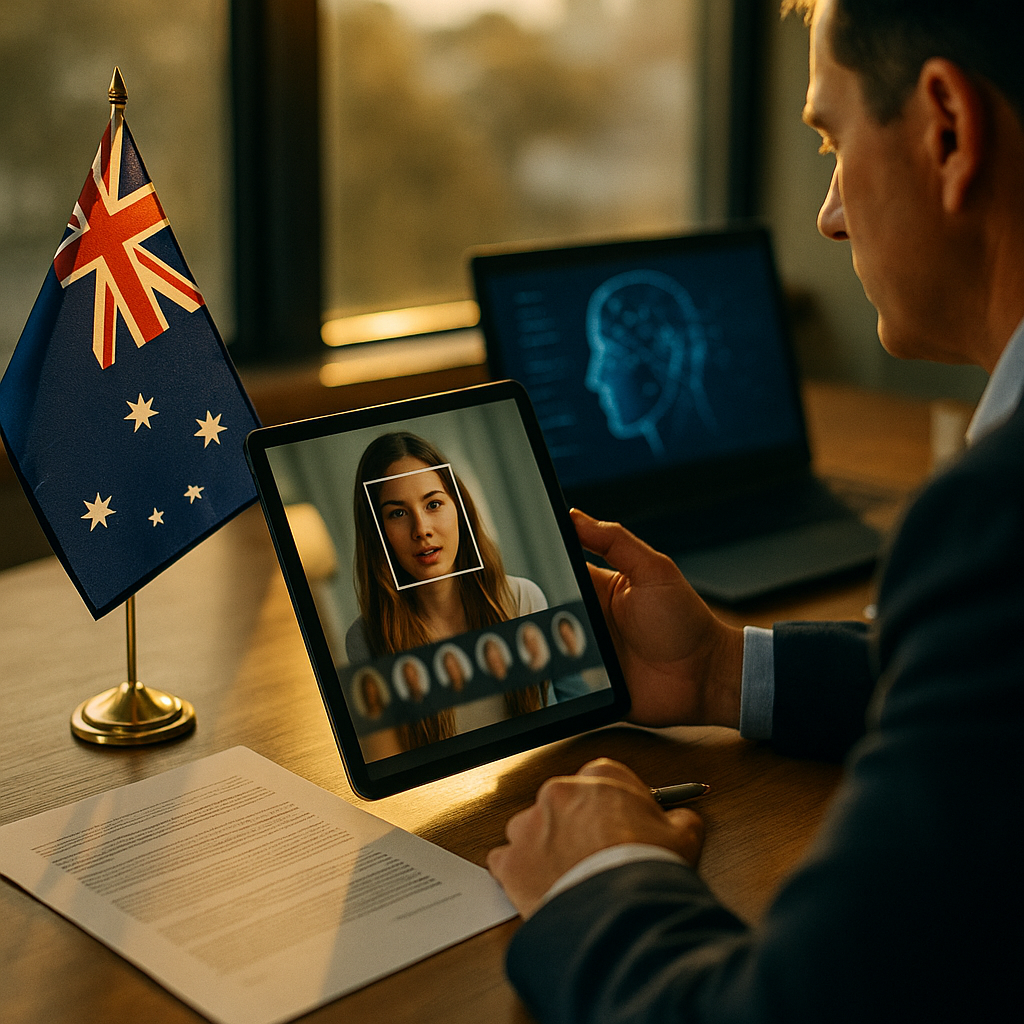
If a machine guesses you’re pregnant, depressed, or in financial trouble based on your scrolling habits, is that guess your personal data? Australia’s privacy reform says yes, and the implications for brands running influencer and AI-driven targeting campaigns are massive. The Australia AI inferences privacy bill doesn’t just tighten rules around raw data collection, it reaches into the predictive layer that most martech stacks have quietly relied on for years.
For marketers who’ve treated inferred data as a gray zone, that gray zone is closing fast.
What the Bill Actually Changes
Australia’s Privacy Act reforms have been grinding through consultation for a while, but the latest draft adds a provision that should make every CMO sit up: inferred and derived data, meaning conclusions an algorithm draws about a person rather than data they directly provided, now falls under the definition of personal information if it relates to an identified or reasonably identifiable individual.
That’s a big deal because so much of modern influencer marketing runs on inference. Lookalike audiences, propensity scores, sentiment classification, “likely to churn” flags, all of it is built on guesses, not declarations. Under the new framework, those guesses carry the same compliance weight as a name or an email address.
The shift means brands can no longer treat algorithmic inference as a compliance blind spot. If the output identifies or profiles a real person, it’s regulated, full stop.
This mirrors a broader global pattern. The EU has been tightening its own rules around automated decisioning, as we covered in our breakdown of the EU digital omnibus proposal, and Australia appears to be borrowing from that playbook while adding its own enforcement teeth.
Why Influencer Marketing Is Squarely in the Blast Radius
Here’s the uncomfortable truth: influencer campaigns generate inference data constantly, often without anyone on the brand side realizing it. Platforms score audience affinity. Creator management tools predict engagement likelihood. AI content tools infer demographic skew from comment sentiment. None of that was built with “is this personal data under Australian law” in mind.
Consider a brand running a TikTok Shop affiliate push targeting creators whose audiences “likely skew toward new parents” based on inferred signals rather than declared data. Under the new bill, that inference, if tied to identifiable individuals, could trigger the same consent, access, and correction obligations as explicit personal data. Brands using AI decisioning tools for audience targeting need to audit whether their consent trails actually cover inferred outputs, not just raw inputs.
Most don’t. That’s the gap regulators are now aiming at.
The Creator Economy’s Data Supply Chain Problem
Brands rarely build these inference engines themselves. They rely on a chain of vendors: the social platform, the influencer marketing software, the analytics layer, sometimes a third-party AI model bolted on top. Each link in that chain may generate its own inferences about Australian consumers, and under the new bill, liability doesn’t necessarily stop at the vendor.
If your agency’s AI tool infers a creator’s audience is “high income, likely to purchase luxury goods” and that inference is wrong or discriminatory, who’s accountable? Right now the answer is murky. Under the reformed Act, it’s increasingly the brand commissioning the campaign, not just the tool provider.
This echoes the liability questions we’ve seen play out with AI scraping and vendor liability debates elsewhere, where brands assumed a platform’s terms of service covered them and found out the hard way that it didn’t.
Right to Erasure Gets Harder to Dodge
Australia’s reforms already introduced a stronger erasure right, which we detailed in our piece on the Australia privacy bill erasure right. Layer the inference classification on top, and the compliance burden compounds. It’s not enough to delete a user’s name and email on request. If your systems also generated an inferred profile, say, a risk score or interest category, based on that person’s behavior, that inference likely needs to be deleted or corrected too.
For influencer platforms running thousands of micro-segments across creator audiences, this is an operational headache. Deleting a row in a database is easy. Tracing every downstream inference that row fed into, including ones baked into a trained model, is not.
Marketers should ask their martech vendors a blunt question: can you actually locate and delete an individual inference, or only the source data point? Most vendors, if they’re honest, will admit their current architecture doesn’t support that level of granularity. That’s a product gap regulators are effectively forcing into existence.
How This Compares to Other APAC and Global Frameworks
Australia isn’t inventing this concept from scratch. South Korea’s recent enforcement push, covered in our analysis of South Korea’s FTC daily fines, shows a regional trend toward treating algorithmic outputs as enforceable obligations rather than abstract technical byproducts. China has gone even further with its creator-specific data rules, detailed in our coverage of China’s creator data rules.
What makes Australia notable is the explicit focus on inference as a category, not just collection or processing. It’s a narrower, sharper legal instrument, and that precision is exactly what makes it harder for brands to argue “we didn’t know this counted.”
According to Statista, data privacy concerns continue to rank among the top factors influencing consumer trust in brands globally, and Australian regulators appear to be responding directly to that pressure rather than waiting for a scandal to force their hand.
What Brands Should Actually Do Right Now
Waiting for final legislative text before acting is a mistake. Smart marketing teams are already auditing their inference pipelines. Here’s where to start:
- Map every inference point in your creator and influencer stack. That includes affinity scoring, lookalike modeling, sentiment classification, and any AI content tool generating audience predictions.
- Ask vendors for inference-level deletion capability. Not just “can you delete the user,” but “can you delete what the system concluded about the user.”
- Update consent language to cover derived data explicitly. Most current disclosures only reference collected data, not algorithmic outputs.
- Build an audit trail for AI decisioning. Similar to the consent trail gaps we flagged in AI decisioning workflows, you need to be able to show a regulator what the system inferred and why.
- Loop in legal before the campaign launches, not after a complaint. Retrofitting compliance after an inference has already shaped targeting decisions is far costlier than building it in upfront.
Treat inference data the way you already treat PII: assume it’s regulated, assume it’s discoverable, and assume you’ll eventually have to prove what your algorithm decided and why.
Marketing automation platforms are watching this closely too. Firms like HubSpot have been building more granular consent management into their CRM tooling, anticipating that inference-level governance will become standard across multiple jurisdictions, not just Australia.
The Penalty Question Nobody’s Asking Loudly Enough
Australia’s recent privacy enforcement has shown a willingness to escalate penalties well beyond symbolic fines, a trend that parallels what we’ve seen with state AG enforcement surges in the US. If inferred data gets folded into the personal information definition, the penalty exposure for mishandling it scales with every other breach category under the Act. That means a brand that mishandles an inferred audience segment could face the same exposure as one that leaked a customer database outright.
For an industry still treating “the algorithm decided” as a kind of liability shield, that’s a rude awakening.
Where This Leaves Creator Partnerships
Influencer agreements increasingly reference data handling clauses, but most were drafted before anyone seriously considered inference as a regulated category. Brands negotiating new creator contracts in or targeting Australian audiences should explicitly address who owns, stores, and is liable for inferred audience data generated during a campaign.
This isn’t theoretical. Creator franchise and IP contracts, as we explored in creator franchise IP contracts, already show how quickly ownership ambiguity turns into expensive disputes. Inference data is the next frontier for that same kind of conflict, just with a regulator involved instead of just two parties negotiating in private.
Platforms like Sprout Social and similar social listening tools generate exactly the kind of sentiment and behavioral inference data this bill targets, which means brands relying heavily on social listening for campaign targeting should get ahead of this now, not after the legislation passes.
Bottom line: audit your inference pipeline before the law forces you to. Start by listing every AI-driven prediction your influencer and marketing stack makes about Australian consumers, then confirm with each vendor whether that inference can be traced, corrected, and deleted on request. If the answer is no, that’s your highest-priority fix this quarter.
FAQs
What counts as an AI-generated inference under Australia’s privacy bill?
It includes any conclusion an algorithm draws about an identifiable individual, such as predicted interests, income bracket, health status, or purchase likelihood, even if that conclusion wasn’t directly provided by the person.
Does this apply to brands outside Australia running campaigns there?
Yes. If the campaign targets or processes data related to individuals in Australia, the obligations generally apply regardless of where the brand or agency is headquartered.
How is this different from existing GDPR-style rules?
GDPR addresses automated decision-making broadly, but Australia’s bill is more explicit about classifying the inference itself, not just the decision process, as personal information subject to access, correction, and erasure rights.
What happens if a brand can’t delete an inferred data point?
That’s a compliance gap regulators are expected to scrutinize. Brands should push vendors now to build inference-level deletion capability rather than waiting for an enforcement action to expose the limitation.
Should influencer contracts be updated because of this bill?
Yes. Contracts should clarify who owns and is liable for inferred audience data generated during a campaign, since ambiguity here is likely to become a common dispute point.
FAQs
What counts as an AI-generated inference under Australia’s privacy bill?
It includes any conclusion an algorithm draws about an identifiable individual, such as predicted interests, income bracket, health status, or purchase likelihood, even if that conclusion wasn’t directly provided by the person.
Does this apply to brands outside Australia running campaigns there?
Yes. If the campaign targets or processes data related to individuals in Australia, the obligations generally apply regardless of where the brand or agency is headquartered.
How is this different from existing GDPR-style rules?
GDPR addresses automated decision-making broadly, but Australia’s bill is more explicit about classifying the inference itself, not just the decision process, as personal information subject to access, correction, and erasure rights.
What happens if a brand can’t delete an inferred data point?
That’s a compliance gap regulators are expected to scrutinize. Brands should push vendors now to build inference-level deletion capability rather than waiting for an enforcement action to expose the limitation.
Should influencer contracts be updated because of this bill?
Yes. Contracts should clarify who owns and is liable for inferred audience data generated during a campaign, since ambiguity here is likely to become a common dispute point.
Top Influencer Marketing Agencies
The leading agencies shaping influencer marketing in 2026
Agencies ranked by campaign performance, client diversity, platform expertise, proven ROI, industry recognition, and client satisfaction. Assessed through verified case studies, reviews, and industry consultations.
Moburst

-
2

The Shelf
Boutique Beauty & Lifestyle Influencer AgencyA data-driven boutique agency specializing exclusively in beauty, wellness, and lifestyle influencer campaigns on Instagram and TikTok. Best for brands already focused on the beauty/personal care space that need curated, aesthetic-driven content.Clients: Pepsi, The Honest Company, Hims, Elf Cosmetics, Pure LeafVisit The Shelf → -
3

Audiencly
Niche Gaming & Esports Influencer AgencyA specialized agency focused exclusively on gaming and esports creators on YouTube, Twitch, and TikTok. Ideal if your campaign is 100% gaming-focused — from game launches to hardware and esports events.Clients: Epic Games, NordVPN, Ubisoft, Wargaming, Tencent GamesVisit Audiencly → -
4

Viral Nation
Global Influencer Marketing & Talent AgencyA dual talent management and marketing agency with proprietary brand safety tools and a global creator network spanning nano-influencers to celebrities across all major platforms.Clients: Meta, Activision Blizzard, Energizer, Aston Martin, WalmartVisit Viral Nation → -
5

The Influencer Marketing Factory
TikTok, Instagram & YouTube CampaignsA full-service agency with strong TikTok expertise, offering end-to-end campaign management from influencer discovery through performance reporting with a focus on platform-native content.Clients: Google, Snapchat, Universal Music, Bumble, YelpVisit TIMF → -
6

NeoReach
Enterprise Analytics & Influencer CampaignsAn enterprise-focused agency combining managed campaigns with a powerful self-service data platform for influencer search, audience analytics, and attribution modeling.Clients: Amazon, Airbnb, Netflix, Honda, The New York TimesVisit NeoReach → -
7

Ubiquitous
Creator-First Marketing PlatformA tech-driven platform combining self-service tools with managed campaign options, emphasizing speed and scalability for brands managing multiple influencer relationships.Clients: Lyft, Disney, Target, American Eagle, NetflixVisit Ubiquitous → -
8

Obviously
Scalable Enterprise Influencer CampaignsA tech-enabled agency built for high-volume campaigns, coordinating hundreds of creators simultaneously with end-to-end logistics, content rights management, and product seeding.Clients: Google, Ulta Beauty, Converse, AmazonVisit Obviously →