


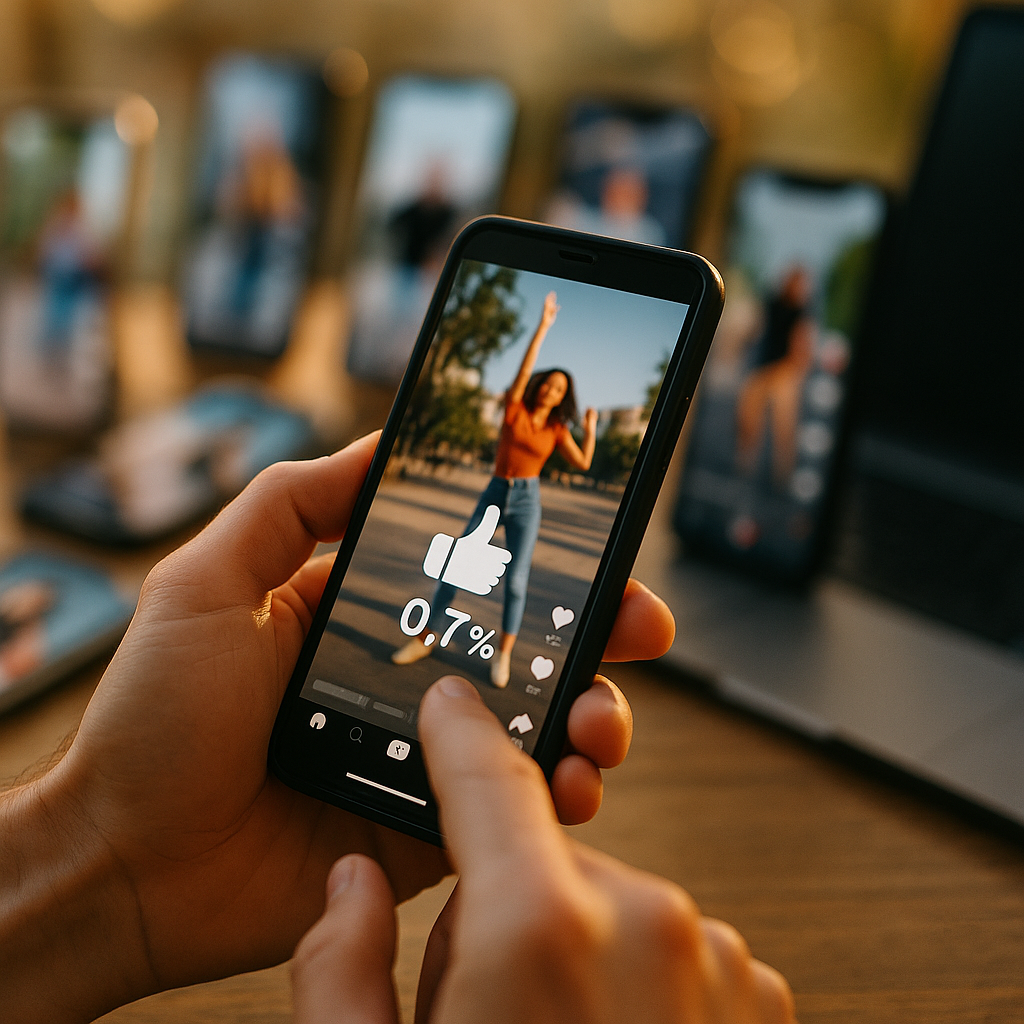
Average click-through rates on short form video have dropped below 1 percent on several major platforms, even as impressions and reach hit record highs for brand accounts. That is not a measurement glitch. It is the arithmetic of short form video saturation catching up with every marketer who treated reach as a proxy for results.
If your dashboards show more views and fewer clicks, you are not imagining it. You are watching a format eat itself.
The Reach Trap: More Eyeballs, Less Action
Reach was always the easiest metric to sell internally. It is big, it trends upward, and it looks great in a quarterly deck. The problem is that reach measures exposure, not intent. As TikTok, Instagram Reels, and YouTube Shorts have flooded their algorithms with an almost infinite supply of content, the average viewer now scrolls past dozens of videos per minute. Attention has become the scarcest resource in marketing, and clicking a link requires a level of intent that passive scrolling simply does not generate anymore.
Platforms have also optimized their own feeds to maximize watch time, not outbound traffic. Every swipe keeps the user inside the app. That is great for TikTok and Meta’s ad revenue, less great for a brand trying to drive traffic to a product page.
Reach has become a vanity metric dressed up as a performance metric. Impressions are cheap. Attention, and the click that follows it, is the actual currency, and it is getting more expensive every quarter.
Why CTR Keeps Falling: Three Structural Causes
This is not one problem. It is three compounding ones.
- Volume outpacing demand. The number of short form videos uploaded daily has grown faster than the number of people willing to act on any single one of them. More supply, same demand, lower conversion per unit of content.
- Format fatigue. The jump cuts, trending sounds, and “wait for it” hooks that worked in 2022 are now so familiar that viewers mentally tune them out before the CTA even appears.
- Algorithmic suppression of outbound links. Platforms deprioritize content that routes users away from the app, which means even strong creative gets throttled before it reaches people likely to click.
Put those together and you get exactly what the data shows: reach climbing because algorithms reward watch time, and CTR falling because the same algorithms punish exit intent.
The Creator Economy Learned This the Hard Way
Brands chasing TikTok Shop and livestream commerce have already run into this wall. The category’s own growth data tells the story. According to coverage of TikTok Shop GMV distribution, creators now drive the overwhelming majority of sales, but that success came from shifting toward conversion-optimized formats, not just posting more content. Similarly, the shift toward livestream commerce over static posts reflects a broader truth: when standard short form clicks stop converting, the market moves toward formats with built-in purchase intent, like live shopping, instead of hoping a link in bio does the work.
This matters because it shows the industry already adapting around the saturation problem rather than denying it. The brands still obsessing over reach are optimizing for a metric that stopped correlating with revenue two algorithm updates ago.
Attribution Is Making the Problem Look Worse Than It Is (And Also Hiding Real Damage)
Part of the CTR decline is real saturation. Part of it is a measurement failure stacked on top. Last click models were never built for a world where a viewer sees a TikTok, closes the app, searches the brand on Google, and buys three days later with zero recorded click. That journey shows up as organic or direct traffic, not influencer-driven, even though the creator did the actual persuading.
This is the exact dynamic covered in the analysis of how last click attribution fails creator driven journeys: the model undercounts influence by design. Add in the rise of AI chatbot referrals, where consumers ask an AI assistant for recommendations instead of clicking through a feed, and you get another layer of invisible influence. The piece on AI chatbot dark traffic makes the case that this invisible path is quietly inflating customer acquisition cost calculations across the board, because the spend gets logged against channels that look like they are underperforming.
So when a CMO asks why CTR is down, the honest answer has two parts: genuine saturation, and a tracking stack that was never designed to see the paths modern consumers actually take.
What Falling CTR Actually Costs You
This is not an abstract metrics debate. Falling CTR against flat or rising spend is a direct hit to efficiency, and it compounds fast when leadership is already struggling to tie spend to outcomes. The broader measurement crisis is well documented: a majority of CMOs report they still cannot measure ROI even as budgets keep climbing. Short form saturation makes that gap worse, not better, because it erodes the one metric (click-through) that finance teams instinctively trust as a proxy for intent.
There is also a benchmarking angle. Platform-level CAC comparisons, like those in the creator CAC benchmarks by platform breakdown, show wide variance in what “good” performance looks like depending on category and channel. A 0.4 percent CTR might be a disaster on one platform and perfectly healthy on another. Context matters more than the raw number, which is exactly why benchmarking against your own historical baseline, not industry averages, is the smarter move for budget defense.
What to Do When Reach Keeps Climbing but Clicks Keep Shrinking
You cannot out-produce saturation. Posting more frequently into a feed that is already overloaded just adds to the noise you are competing against. A few moves actually change the math.
- Shift KPIs away from CTR as the primary success metric. Use saves, shares, and completion rate as earlier signals of resonance, then measure downstream conversion through branded search lift or promo code redemption instead of relying solely on link clicks.
- Invest in formats with built-in intent. Shoppable livestreams and in-app checkout reduce the number of steps between interest and purchase, sidestepping the click entirely.
- Rebuild your creative library for reuse. Instead of churning out disposable one-off clips, treat your best-performing hooks and formats as reusable assets. The approach detailed in reusable creative libraries cuts production cost while letting you iterate on what already proves it can hold attention, rather than gambling on volume.
- Diversify beyond the feed. Retail media integrations, like the ones emerging through Amazon creator storefronts, put creator content in front of shoppers who are already in a buying mindset rather than a scrolling one. That context shift alone can meaningfully change click behavior.
- Fix your attribution stack before you fix your content. If you cannot see the AI search and chatbot paths influencing purchase, as outlined in the AI search surge funnel rebuild coverage, you are optimizing creative against incomplete data.
None of this means abandon short form video. It means stop measuring it like it is 2021.
A Quick Gut Check for Your Next Planning Cycle
Before the next budget cycle, run this test: pull your last two quarters of short form performance and plot reach against CTR side by side. If the lines are diverging, which for most brands they now are, that is your signal to renegotiate what success looks like with stakeholders before someone else does it for you in a budget review. Agencies are already having this conversation openly, which is part of why many are defending fees as risk control rather than racing to the bottom on cheaper, higher-volume content production.
For additional context on industry-wide performance trends, both eMarketer and Statista publish regularly updated benchmarks worth cross-referencing against your own data, as does Sprout Social’s social media research.
Frequently Asked Questions
Why is short form video CTR declining while reach keeps increasing?
Platforms are optimizing feeds for watch time, which rewards content that keeps users scrolling rather than content that drives them to click away. Combined with a massive increase in content volume, this means more impressions are being distributed across a shrinking pool of viewer attention willing to act on any single video.
Does falling CTR mean short form video is no longer effective for brands?
Not necessarily. It means click-through rate alone is an incomplete measure of effectiveness. Many consumers now see a short form video, search the brand separately, and convert later through a different channel, which standard click tracking does not capture.
What metrics should replace CTR as a primary success indicator?
Completion rate, saves, shares, and branded search lift tend to be stronger early indicators of resonance. Downstream, promo code redemption and direct traffic spikes following a campaign can reveal influence that last click attribution misses entirely.
How does short form video saturation affect customer acquisition cost?
As CTR falls while media spend stays flat or rises, the effective cost per click and per acquisition increases even if underlying creative quality hasn’t changed. This is compounded when attribution systems fail to credit creator-driven influence that happens outside of trackable clicks.
Should brands reduce short form video production to combat saturation?
Reducing volume for its own sake rarely helps. The better move is shifting investment toward reusable, high-performing creative formats and intent-driven formats like shoppable livestreams, rather than continuing to flood feeds with disposable one-off clips.
Top Influencer Marketing Agencies
The leading agencies shaping influencer marketing in 2026
Agencies ranked by campaign performance, client diversity, platform expertise, proven ROI, industry recognition, and client satisfaction. Assessed through verified case studies, reviews, and industry consultations.
Moburst

-
2

The Shelf
Boutique Beauty & Lifestyle Influencer AgencyA data-driven boutique agency specializing exclusively in beauty, wellness, and lifestyle influencer campaigns on Instagram and TikTok. Best for brands already focused on the beauty/personal care space that need curated, aesthetic-driven content.Clients: Pepsi, The Honest Company, Hims, Elf Cosmetics, Pure LeafVisit The Shelf → -
3

Audiencly
Niche Gaming & Esports Influencer AgencyA specialized agency focused exclusively on gaming and esports creators on YouTube, Twitch, and TikTok. Ideal if your campaign is 100% gaming-focused — from game launches to hardware and esports events.Clients: Epic Games, NordVPN, Ubisoft, Wargaming, Tencent GamesVisit Audiencly → -
4

Viral Nation
Global Influencer Marketing & Talent AgencyA dual talent management and marketing agency with proprietary brand safety tools and a global creator network spanning nano-influencers to celebrities across all major platforms.Clients: Meta, Activision Blizzard, Energizer, Aston Martin, WalmartVisit Viral Nation → -
5

The Influencer Marketing Factory
TikTok, Instagram & YouTube CampaignsA full-service agency with strong TikTok expertise, offering end-to-end campaign management from influencer discovery through performance reporting with a focus on platform-native content.Clients: Google, Snapchat, Universal Music, Bumble, YelpVisit TIMF → -
6

NeoReach
Enterprise Analytics & Influencer CampaignsAn enterprise-focused agency combining managed campaigns with a powerful self-service data platform for influencer search, audience analytics, and attribution modeling.Clients: Amazon, Airbnb, Netflix, Honda, The New York TimesVisit NeoReach → -
7

Ubiquitous
Creator-First Marketing PlatformA tech-driven platform combining self-service tools with managed campaign options, emphasizing speed and scalability for brands managing multiple influencer relationships.Clients: Lyft, Disney, Target, American Eagle, NetflixVisit Ubiquitous → -
8

Obviously
Scalable Enterprise Influencer CampaignsA tech-enabled agency built for high-volume campaigns, coordinating hundreds of creators simultaneously with end-to-end logistics, content rights management, and product seeding.Clients: Google, Ulta Beauty, Converse, AmazonVisit Obviously →