


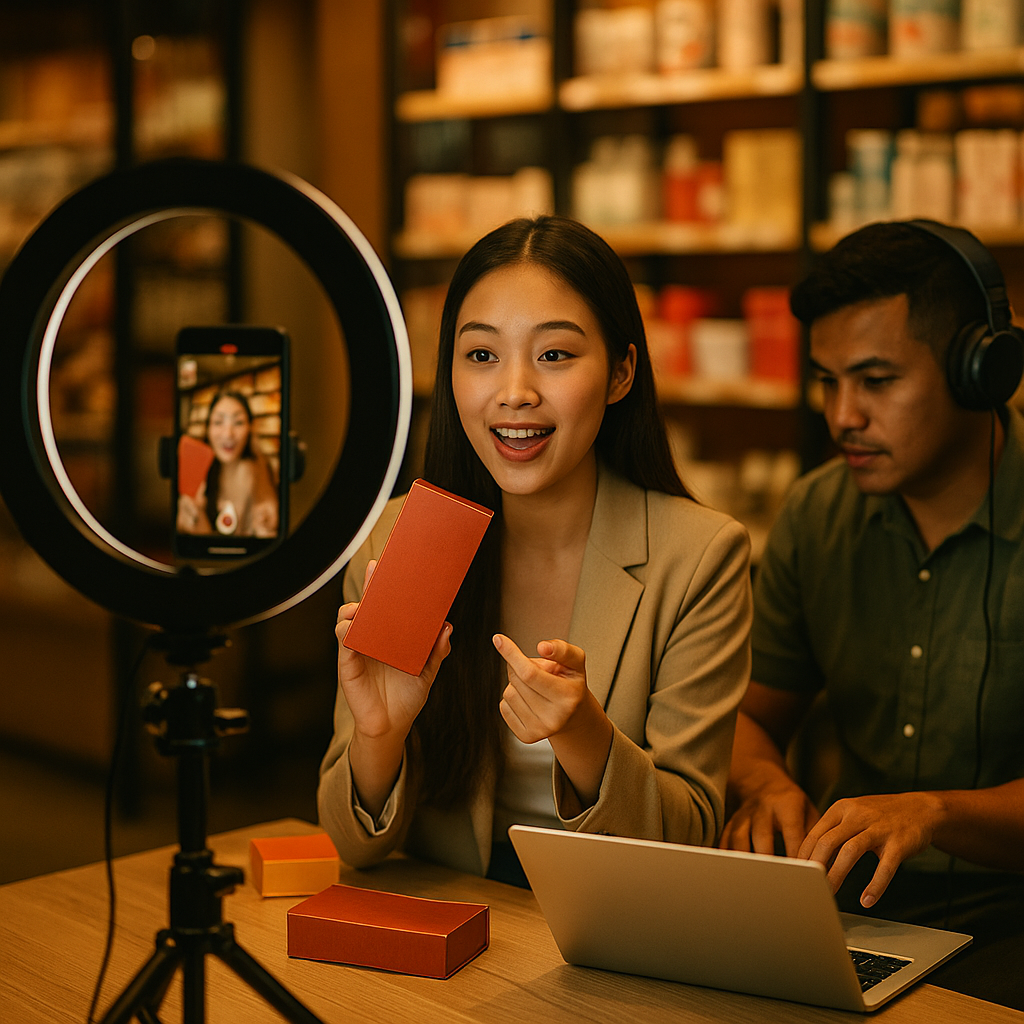
Brands across APAC are now spending more on live commerce slots than on traditional influencer retainers, a reversal that would have sounded absurd three years ago. In markets like Indonesia, Vietnam, and Thailand, live commerce spending has quietly overtaken flat-fee influencer deals as the dominant line item in social commerce budgets. For brand strategists still allocating dollars the old way, that’s not a trend to watch. It’s a budget model that’s already obsolete.
The Numbers Behind the Shift
Live commerce in Southeast Asia and Greater China isn’t a niche format anymore. It’s the primary revenue engine for platforms like TikTok Shop, Shopee Live, and Taobao Live, and brands have noticed. Industry estimates from eMarketer put APAC live commerce GMV growth well ahead of overall ecommerce growth rates, and that gap is widening every quarter.
Here’s the part that matters for budget owners: spend on live slots, hosting fees, and commission-based livestream partnerships is now outpacing what brands pay for one-off influencer posts or flat sponsorship fees in several APAC markets. That’s not anecdotal. It shows up in agency pitch decks, in platform ad spend dashboards, and in the quarterly reports of brands running direct-to-consumer operations in the region.
In markets like Indonesia and Vietnam, brands are reallocating up to 40 percent of what used to be flat influencer fees into live commerce slot buys and commission structures tied directly to units sold.
Our earlier coverage on livestream commerce overtaking static posts flagged this shift months ago. What’s new is the scale. We’re no longer talking about a format preference. We’re talking about a budget reallocation that’s restructuring how marketing teams justify spend to finance.
Why Are Fees Losing Ground?
Flat influencer fees have one structural problem: they’re paid regardless of outcome. A creator posts, gets their check, and the brand hopes for conversion. Live commerce flips that logic entirely. Hosts earn commission on units moved, sometimes stacked with a base appearance fee, but the bulk of the economics ties directly to sales during the stream.
For a CFO who’s tired of defending influencer line items with soft engagement metrics, that’s an easy sell. Live commerce gives you a number you can actually report up the chain: units sold, revenue per minute of stream, cost per acquisition tied to a specific broadcast window. It’s performance marketing wearing an influencer costume, and finance teams love it.
There’s also a trust dynamic at play. Viewers watching a live stream see real-time demonstrations, real-time Q&A, and real-time stock counters ticking down. That urgency converts better than a static post ever could. Our analysis of supplement brands chasing lower CAC through TikTok Shop showed exactly this pattern: categories with high trust barriers see outsized gains when the format shifts from passive content to live demonstration.
Which Markets Are Leading This Shift?
Indonesia and Vietnam are the clearest examples. Both markets have mobile-first populations, high TikTok Shop penetration, and consumer bases that treat live shopping as entertainment first, commerce second. That combination is exactly what makes live commerce economically superior to flat fees in those regions.
Thailand and the Philippines are close behind, with Shopee Live and Lazada’s livestream features driving similar budget reallocation. China remains the reference case, obviously. Taobao Live and Douyin have run commission-heavy livestream economics for years, and APAC’s emerging markets are essentially fast-following that playbook with TikTok Shop as the delivery mechanism.
Japan and South Korea are outliers worth noting. Both markets still lean heavily on traditional sponsored content and brand ambassador deals, partly due to regulatory caution around disclosure and partly due to consumer preference for curated content over high-pressure live selling. If you’re running a pan-APAC campaign, you cannot apply one budget model across the whole region. That’s the mistake we keep seeing in agency pitches.
What This Means for Brand Budgets
If you’re still negotiating flat influencer fees as your primary line item in Southeast Asian markets, you’re likely overpaying for underperformance. The math is straightforward once you run it: a flat fee guarantees a post regardless of sales, while a live commerce commission structure ties spend directly to revenue generated.
- Shift fixed costs to variable. Negotiate base appearance fees plus commission tiers rather than flat sponsorship rates.
- Track revenue per stream minute. This metric exposes underperforming hosts faster than engagement rate ever will.
- Budget for production, not just talent. Live commerce requires studio setups, inventory staging, and real-time moderation that static content doesn’t.
- Reallocate agency retainers. Many agencies still bill as if static content dominates. Push for live commerce specialization in your next RFP.
This isn’t just a tactical shift. It’s forcing a rebuild of how agencies structure margins, a theme we covered in detail in retail media absorbing creator budgets. Agencies that priced themselves around flat-fee influencer campaigns are scrambling to retrofit commission-based models, and not all of them are managing it well.
The Risk Side Nobody Talks About
Here’s where brand strategists need to slow down. Live commerce isn’t risk-free just because it’s performance-based. Hosts under pressure to hit sales targets sometimes overstate product claims in real time, with no editing pass before the content reaches thousands of viewers. That’s a compliance headache waiting to happen, particularly in regulated categories like supplements, skincare, and financial products.
There’s also the gifting and tipping layer. Platforms increasingly let viewers send virtual gifts to hosts during streams, and that revenue stream can create incentive misalignment between what’s best for the brand and what maximizes host earnings. We broke this down in live stream gifting as a brand risk signal, and it’s worth a close read before you greenlight your next livestream partnership.
A host optimizing for tips and gifts isn’t necessarily optimizing for your brand’s compliance requirements, and that gap gets expensive fast if regulators get involved.
Attribution is another sticking point. Last-click models struggle badly with live commerce because the buying journey often starts in the stream, gets interrupted, and converts later through a different channel entirely. If your measurement stack still runs on last-click logic, you’re almost certainly undercounting live commerce’s actual contribution. Our piece on last-click attribution failing creator journeys covers the fix in more depth.
Building a Live Commerce Playbook That Doesn’t Blow Up Compliance
Treat live commerce like paid media with a human host, not like influencer marketing with a shopping cart bolted on. That means pre-approved claim scripts, real-time moderation protocols, and clear commission structures that don’t incentivize overpromising. Platforms like TikTok Shop publish seller guidelines that address some of this, but brand-side compliance still falls on your team, not the platform.
Build host vetting into your procurement process the same way you’d vet a media vendor. Check prior stream recordings for claim accuracy. Set clear boundaries on what hosts can and cannot say about product efficacy, especially in regulated categories. And make sure your legal team has reviewed disclosure requirements for the specific market you’re operating in, since APAC disclosure rules vary significantly by country.
On the budget side, start treating AI-driven forecasting as standard practice. Our research on APAC leaders letting AI steer budget decisions found that a majority of regional marketing teams now use predictive tools to allocate live commerce spend across hosts and time slots, rather than relying on gut instinct or past relationships with specific talent agencies. That shift alone is improving budget efficiency for early adopters.
For benchmarking purposes, tools like Statista and Sprout Social offer useful regional ecommerce and social commerce data if you need to validate your internal numbers against market-wide trends before presenting to leadership.
Frequently Asked Questions
Why is live commerce spending overtaking traditional influencer fees in APAC?
Live commerce ties spend directly to measurable sales outcomes through commission structures, while flat influencer fees pay regardless of conversion. Finance teams increasingly prefer the former because it’s easier to justify and report.
Which APAC markets show the strongest live commerce growth?
Indonesia, Vietnam, Thailand, and the Philippines lead the shift, driven largely by TikTok Shop and Shopee Live adoption. China remains the mature reference market, while Japan and South Korea still favor traditional sponsored content.
Does live commerce reduce influencer marketing risk?
Not automatically. Real-time claims, gifting incentives, and attribution gaps create new compliance and measurement challenges that brands need to manage proactively rather than assume away.
How should brands restructure budgets for live commerce?
Shift from flat fees toward base-plus-commission structures, invest in production and moderation infrastructure, and update attribution models to capture delayed conversions from live stream exposure.
Are traditional influencer fees becoming obsolete in APAC?
Not entirely, but their share of budget is shrinking in markets where live commerce converts more efficiently. Brands are likely to keep flat fees for awareness campaigns while shifting conversion-focused spend to live formats.
Next step: audit your current APAC influencer budget line by line, flag every flat-fee deal in a live-commerce-dominant market, and model what a commission-based restructure would have returned last quarter. The gap will tell you exactly how much you’re leaving on the table.
Top Influencer Marketing Agencies
The leading agencies shaping influencer marketing in 2026
Agencies ranked by campaign performance, client diversity, platform expertise, proven ROI, industry recognition, and client satisfaction. Assessed through verified case studies, reviews, and industry consultations.
Moburst

-
2

The Shelf
Boutique Beauty & Lifestyle Influencer AgencyA data-driven boutique agency specializing exclusively in beauty, wellness, and lifestyle influencer campaigns on Instagram and TikTok. Best for brands already focused on the beauty/personal care space that need curated, aesthetic-driven content.Clients: Pepsi, The Honest Company, Hims, Elf Cosmetics, Pure LeafVisit The Shelf → -
3

Audiencly
Niche Gaming & Esports Influencer AgencyA specialized agency focused exclusively on gaming and esports creators on YouTube, Twitch, and TikTok. Ideal if your campaign is 100% gaming-focused — from game launches to hardware and esports events.Clients: Epic Games, NordVPN, Ubisoft, Wargaming, Tencent GamesVisit Audiencly → -
4

Viral Nation
Global Influencer Marketing & Talent AgencyA dual talent management and marketing agency with proprietary brand safety tools and a global creator network spanning nano-influencers to celebrities across all major platforms.Clients: Meta, Activision Blizzard, Energizer, Aston Martin, WalmartVisit Viral Nation → -
5

The Influencer Marketing Factory
TikTok, Instagram & YouTube CampaignsA full-service agency with strong TikTok expertise, offering end-to-end campaign management from influencer discovery through performance reporting with a focus on platform-native content.Clients: Google, Snapchat, Universal Music, Bumble, YelpVisit TIMF → -
6

NeoReach
Enterprise Analytics & Influencer CampaignsAn enterprise-focused agency combining managed campaigns with a powerful self-service data platform for influencer search, audience analytics, and attribution modeling.Clients: Amazon, Airbnb, Netflix, Honda, The New York TimesVisit NeoReach → -
7

Ubiquitous
Creator-First Marketing PlatformA tech-driven platform combining self-service tools with managed campaign options, emphasizing speed and scalability for brands managing multiple influencer relationships.Clients: Lyft, Disney, Target, American Eagle, NetflixVisit Ubiquitous → -
8

Obviously
Scalable Enterprise Influencer CampaignsA tech-enabled agency built for high-volume campaigns, coordinating hundreds of creators simultaneously with end-to-end logistics, content rights management, and product seeding.Clients: Google, Ulta Beauty, Converse, AmazonVisit Obviously →