


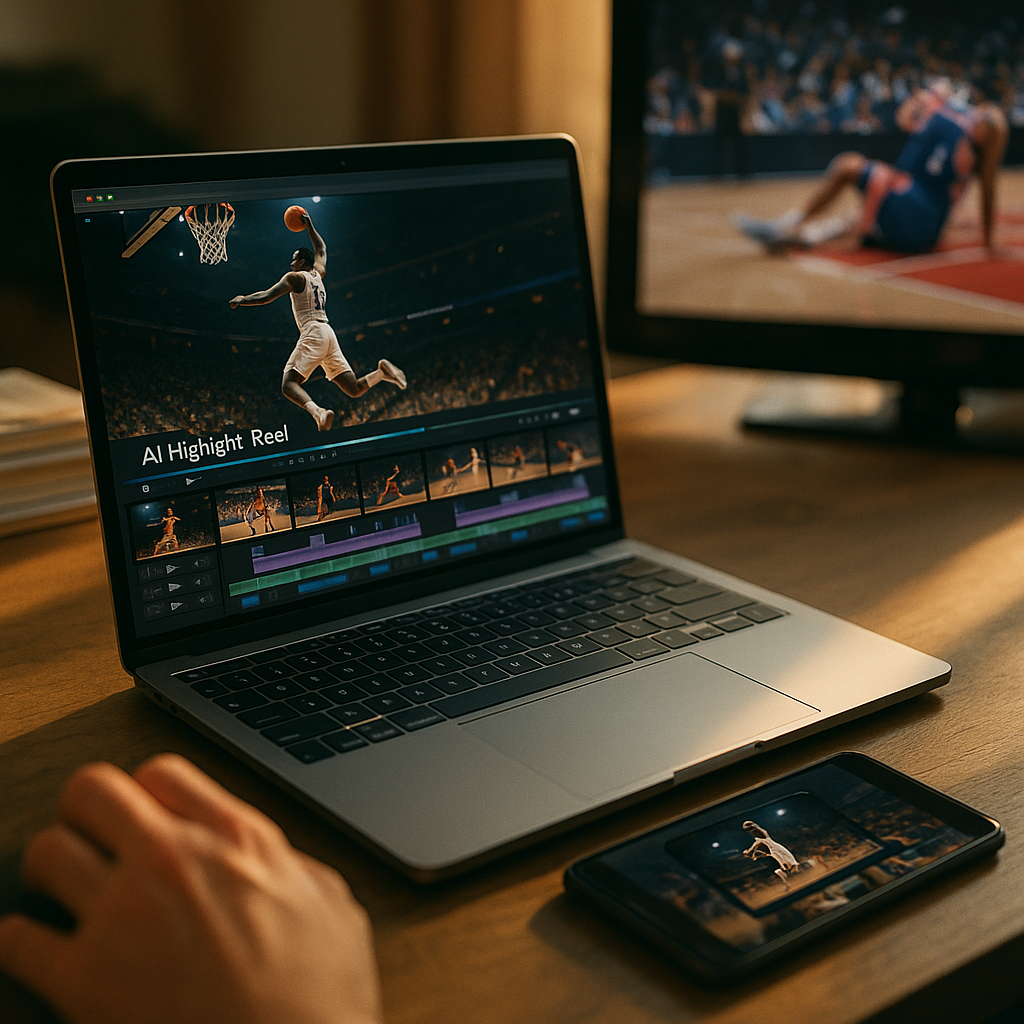
Most brands let eighty percent of their livestream value evaporate the moment the stream ends. The replay sits in a dashboard, unwatched, while the team scrambles to film new short-form content from scratch. Repurposing livestream replays into AI generated highlight reels flips that math, turning a single two-hour shopping stream into dozens of ready-to-post clips without a second shoot day. The question isn’t whether this works anymore. It’s why more teams haven’t operationalized it yet.
The Replay Graveyard Problem
Walk into almost any brand’s content library and you’ll find the same thing: a folder of livestream VODs nobody has opened since the stream aired. That’s not a storage problem, it’s a strategy gap. Live shopping and creator livestreams on TikTok Shop, Amazon Live, and Instagram generate hours of raw footage packed with genuine reactions, product demos, and objection-handling moments that paid social teams would otherwise pay thousands to recreate.
The replay itself rarely gets reused because manual clipping is slow. A producer watching back a ninety-minute stream to find the three best thirty-second moments can burn half a day per session. Multiply that across a weekly livestream cadence and most teams simply give up. The footage gets archived, not mined.
A single one-hour livestream typically contains six to ten clip-worthy moments, but fewer than one in five brands currently extracts more than two of them.
That gap is exactly where AI highlight tools step in. They don’t replace the editor, they remove the search-and-scrub bottleneck that made manual repurposing impractical at scale.
How AI Highlight Generation Actually Works
Modern highlight tools analyze livestream replays across three signal layers: audio, visual, and engagement data. Speech-to-text models flag moments where tone shifts, excitement spikes, or specific keywords (price, discount, “does this work for”) appear in the transcript. Computer vision models detect product-in-hand moments, close-ups, and on-screen graphics. Engagement overlays, meaning the live chat volume, reaction spikes, and viewer drop-off or surge points, tell the algorithm where real audiences actually leaned in.
Stack those three signals together and you get a ranked list of candidate clips, typically fifteen to sixty seconds long, already cropped for vertical formats. Some tools go further, auto-generating captions, adding brand-safe music beds, and even suggesting which clip pairs best with which ad objective (awareness versus conversion).
This isn’t fundamentally different from the logic used in livestream clip mining for hook libraries, except the output here is a finished, publishable reel rather than a raw hook fragment waiting on an editor. Think of highlight generation as the next rung up the repurposing ladder.
What Should You Actually Clip?
Not every spike in chat activity deserves an ad budget. The highest-performing highlight reels tend to cluster around a few recognizable moment types:
- Unscripted objection handling: a host answering “is this worth the price” in real time, unscripted and credible.
- Genuine surprise reactions: the moments viewers can’t fake, which is why they outperform staged reaction content.
- Side-by-side demos: product comparisons that happened organically mid-stream.
- Social proof spikes: segments where chat volume or purchase notifications visibly surged.
If your highlight tool is only optimizing for watch-time retention curves, you’ll end up with clips that are engaging but not necessarily sellable. Pair the AI ranking with a human pass that asks one question: does this clip resolve a buying objection in under ten seconds? That framing lines up closely with the thinking behind myth busting explainers that name doubts directly, just sourced from live footage instead of a scripted shoot.
Risk, Compliance, and the FTC Factor
Here’s where a lot of teams get sloppy. A livestream replay often includes disclosures, pricing that’s since changed, or claims made casually by a host that wouldn’t survive legal review in a scripted ad. When you auto-generate highlight reels and push them to paid social, you’re effectively turning off-the-cuff commentary into a paid advertisement, and the FTC’s endorsement guidance applies just as strongly to that repurposed clip as it would to a polished commercial.
Build a compliance checkpoint into the workflow before any AI-selected clip goes to the ad account. Confirm pricing and claims are still accurate, confirm sponsorship disclosures carry over into the caption, and confirm the creator’s contract actually permits repurposing livestream content into paid media (this is a common gap in older influencer agreements). Teams already running structured repurposing pipelines, like those covered in livestream clip repurposing for ad assets, usually bake this review into a single approval gate rather than leaving it to individual editors’ judgment.
Tools Brands Are Actually Using
You don’t need a custom machine learning stack to do this. Most mid-market and enterprise teams are stitching together existing platforms:
- Native highlight and clip tools inside TikTok Shop and Amazon Live, which surface top-performing moments based on real viewer behavior.
- Third-party repurposing platforms that ingest a VOD and output ranked, captioned clips within minutes rather than hours.
- Social listening and analytics tools (many teams already use Sprout Social for broader content performance tracking) layered on top to validate which highlight themes actually drive clicks once published.
The stack matters less than the workflow discipline around it. A highlight generator that spits out twenty clips a week is useless if nobody’s assigned to review, caption-check, and schedule them. Treat the tool as a sourcing engine, not a publishing engine.
Measuring the Payoff
The ROI case here isn’t theoretical. Production cost per asset drops sharply because you’re not booking a new shoot, a new creator fee, or new studio time. One brand running weekly livestreams can realistically generate forty-plus distinct short-form assets a month purely from replay repurposing, a volume that would otherwise require a dedicated production budget.
Track three metrics specifically: cost per asset produced, scroll-stop rate on the repurposed clip versus originally scripted content, and CPA on the resulting ad. Teams that have implemented similar pipelines around livestream highlight clips cutting CPA consistently report that authentic, unscripted moments outperform polished ads on cost efficiency, even when the production value is objectively lower. That’s counterintuitive to anyone trained on traditional ad standards, but it tracks with broader eMarketer research on creator content performance showing authenticity consistently beats polish on conversion metrics.
Build a lightweight hook library from your best-performing highlights, similar to the structured systems described in reusable hook libraries cutting paid social CPA, so your media buyers always have a rotating supply of fresh creative without waiting on the next livestream.
Where This Breaks Down
AI highlight tools are good at finding engagement, not strategy. They can’t tell you if a clip undermines your brand voice, contradicts a current campaign message, or features a creator mid-contract-dispute. Keep a human in the loop at the approval stage, always. And don’t assume every platform’s native “highlights” feature is optimized for ad use, some are built purely for organic re-engagement and will crop awkwardly or strip captions when exported for paid placement on TikTok Ads Manager or Meta’s ad platform.
One more thing worth flagging: highlight reels work best as a supplement to, not a replacement for, intentional short-form scripting. Pair them with structured formats like shoppable video overlays to actually convert the attention these clips earn into checkout activity.
Next step: audit your last three livestream replays this week, run them through an AI highlight tool, and ship the top two compliant clips to paid social before the footage goes cold. The brands winning on repurposing aren’t the ones with the best tool, they’re the ones with a weekly habit of actually using it.
FAQs
What exactly counts as an AI generated highlight reel?
It’s a short-form video clip, usually fifteen to sixty seconds, automatically extracted from a longer livestream replay using AI models that analyze speech, visuals, and audience engagement data to surface the most compelling moments.
Do I need special software to repurpose livestream replays?
Not necessarily. Platforms like TikTok Shop and Amazon Live offer native highlight features, and several third-party repurposing tools can ingest raw VOD files and output ranked clips within minutes.
How long should a repurposed highlight clip be?
Most high-performing clips run between fifteen and forty-five seconds. Shorter clips tend to work better for cold-audience paid placements, while slightly longer clips suit retargeting or owned-channel posting.
Is it legal to turn livestream moments into paid ads?
Generally yes, but only if your creator contract permits repurposing for paid media and any claims or disclosures in the clip still meet current FTC endorsement guidelines. Always review pricing and claims before publishing.
How much production cost does this actually save?
Because no new shoot, talent fee, or studio time is required, brands running weekly livestreams can generate dozens of short-form assets monthly at a fraction of the cost of scripted production.
Can AI highlight tools replace a human editor entirely?
No. AI is excellent at surfacing candidate moments based on engagement signals, but a human should always make the final call on brand fit, compliance, and messaging consistency before a clip goes live.
Top Influencer Marketing Agencies
The leading agencies shaping influencer marketing in 2026
Agencies ranked by campaign performance, client diversity, platform expertise, proven ROI, industry recognition, and client satisfaction. Assessed through verified case studies, reviews, and industry consultations.
Moburst

-
2

The Shelf
Boutique Beauty & Lifestyle Influencer AgencyA data-driven boutique agency specializing exclusively in beauty, wellness, and lifestyle influencer campaigns on Instagram and TikTok. Best for brands already focused on the beauty/personal care space that need curated, aesthetic-driven content.Clients: Pepsi, The Honest Company, Hims, Elf Cosmetics, Pure LeafVisit The Shelf → -
3

Audiencly
Niche Gaming & Esports Influencer AgencyA specialized agency focused exclusively on gaming and esports creators on YouTube, Twitch, and TikTok. Ideal if your campaign is 100% gaming-focused — from game launches to hardware and esports events.Clients: Epic Games, NordVPN, Ubisoft, Wargaming, Tencent GamesVisit Audiencly → -
4

Viral Nation
Global Influencer Marketing & Talent AgencyA dual talent management and marketing agency with proprietary brand safety tools and a global creator network spanning nano-influencers to celebrities across all major platforms.Clients: Meta, Activision Blizzard, Energizer, Aston Martin, WalmartVisit Viral Nation → -
5

The Influencer Marketing Factory
TikTok, Instagram & YouTube CampaignsA full-service agency with strong TikTok expertise, offering end-to-end campaign management from influencer discovery through performance reporting with a focus on platform-native content.Clients: Google, Snapchat, Universal Music, Bumble, YelpVisit TIMF → -
6

NeoReach
Enterprise Analytics & Influencer CampaignsAn enterprise-focused agency combining managed campaigns with a powerful self-service data platform for influencer search, audience analytics, and attribution modeling.Clients: Amazon, Airbnb, Netflix, Honda, The New York TimesVisit NeoReach → -
7

Ubiquitous
Creator-First Marketing PlatformA tech-driven platform combining self-service tools with managed campaign options, emphasizing speed and scalability for brands managing multiple influencer relationships.Clients: Lyft, Disney, Target, American Eagle, NetflixVisit Ubiquitous → -
8

Obviously
Scalable Enterprise Influencer CampaignsA tech-enabled agency built for high-volume campaigns, coordinating hundreds of creators simultaneously with end-to-end logistics, content rights management, and product seeding.Clients: Google, Ulta Beauty, Converse, AmazonVisit Obviously →