


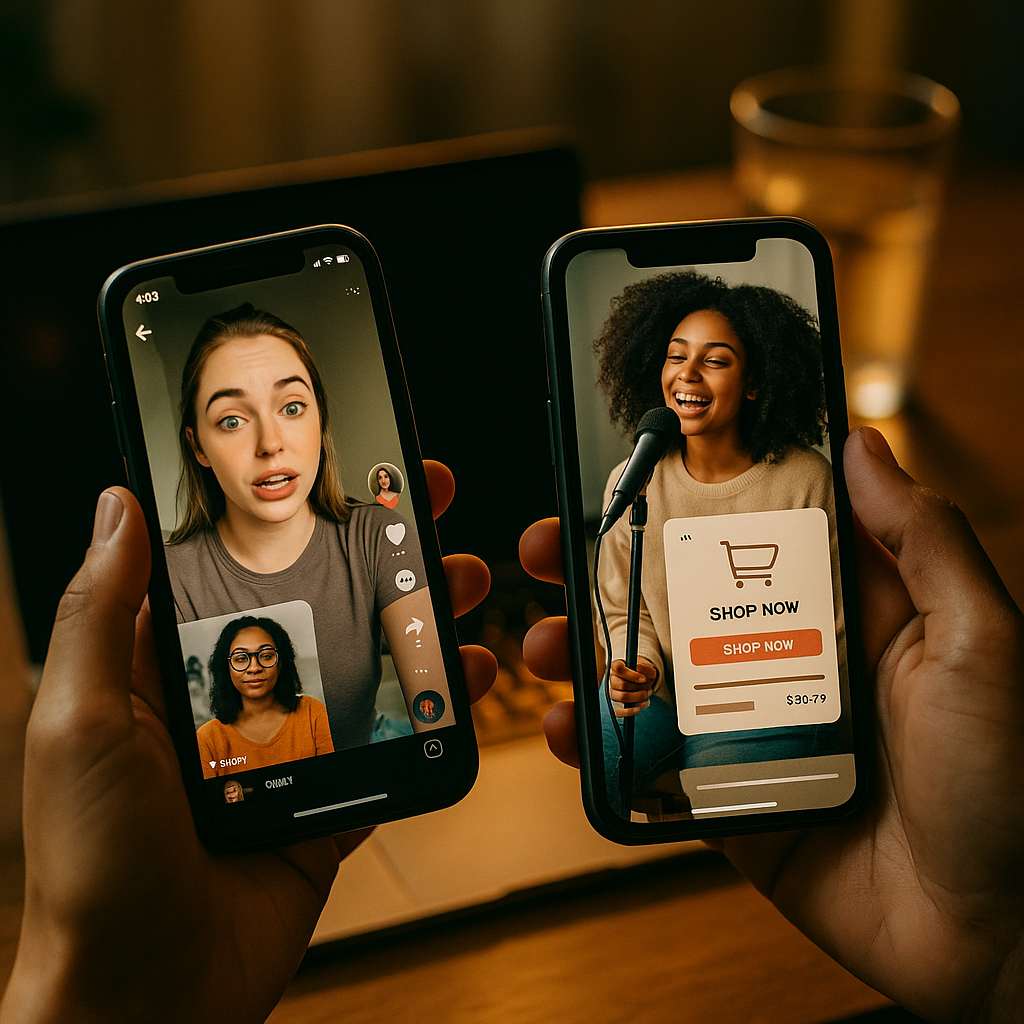
TikTok users spend an average of 95 minutes a day on the app, and a huge chunk of that scroll is spent chasing trend chains, the stitched and duetted responses that spiral off one original clip into dozens of remixes. A stitch and duet chain can hand a brand free distribution worth more than a paid media line item, but only if marketers know how to ride it instead of hijacking it. Most don’t. That’s the gap this piece closes.
Why Trend Chains Outperform Standalone Posts
A single creator video is a bet. A stitch chain is a portfolio. When dozens of creators duet or stitch the same original, the platform’s recommendation system treats the whole cluster as a signal of relevance, not just one post. That means every new stitch gets a distribution boost borrowed from the chain’s cumulative engagement, not just its own.
Brands that jump into a chain early get a multiplier effect that no amount of ad spend replicates cheaply. Think of it like compounding interest on attention. You’re not buying reach, you’re borrowing momentum that’s already proven itself with real audiences.
A well-timed stitch inside an active trend chain can outperform a scripted brand video by 3 to 5 times on watch-through rate, simply because the audience has already opted into the format before your brand shows up.
That’s not a guess. It mirrors what social platform engagement research consistently shows: content that arrives inside an existing conversation thread converts attention faster than content that tries to start one.
What Actually Makes a Chain “Brand Safe” Enough to Join
Not every trend deserves a brand cameo. Before greenlighting a stitch or duet, run it through three filters.
- Origin clarity: Can you trace the trend back to its first post? If the source is unclear or disputed, you risk amplifying a format tied to a controversy you didn’t vet.
- Sentiment stability: Is the comment section still positive, or has the trend tipped into parody and backlash? Chains have a shelf life, and joining too late reads as desperate.
- Creative compatibility: Does the trend’s format actually let your product sit inside it naturally, or are you forcing a logo into a joke that was never about commerce?
Skipping this filter is how brands end up in screenshots on marketing Twitter for the wrong reasons. Compliance teams should treat trend-jacking with the same scrutiny as any paid partnership, because a stitch still counts as brand speech even if it feels improvised.
Legal and Disclosure Basics Still Apply
Stitching or duetting under a brand handle, or briefing a creator to do it on your behalf, still triggers disclosure obligations. The FTC’s endorsement guidance doesn’t care that the content format is “native” and spontaneous-looking. If there’s material connection, label it. This is especially easy to miss with duet chains because the format feels like organic commentary rather than sponsored content, which is exactly why some legal teams flag it as higher risk than a standard sponsored post.
Building the Operational Playbook
Here’s where most brand social teams fall down: they treat trend-jacking as a reactive scramble instead of a repeatable process. A real playbook looks more like a newsroom desk than a content calendar.
- Monitor daily, not weekly. Trend chains peak and decay within 48 to 72 hours on most platforms. A weekly content meeting is structurally too slow to catch them.
- Pre-approve a creative range, not a script. Give your social team or creator partners boundaries (tone, banned topics, required disclosure language) rather than locked copy, so they can move fast without legal re-review on every post.
- Keep a hook library on standby. Many trend formats reuse the same beat structure (reaction, reveal, punchline). Brands that already maintain a hook library can slot a new trend’s audio or format into existing creative faster than teams starting from zero.
- Assign a single approver. Trend windows close fast. If your sign-off chain requires four stakeholders, you’ve already missed the chain.
This operational discipline matters more than creative talent. A mediocre stitch posted in hour six of a trend’s life beats a brilliant one posted on day four.
From Creator Trend to Paid Asset
The smartest move isn’t just joining the organic chain, it’s extracting the best-performing stitch and feeding it into paid media before the trend fatigue sets in. Treat the organic chain as a testing ground. Whichever variant gets the strongest hook retention in the first three seconds becomes your next ad.
This is the same logic behind multi-hook testing, except instead of generating ten openers from one shoot, you’re letting the trend chain generate dozens of openers for free, then picking the winner. Teams already running hook taxonomy systems have an advantage here because they can tag and sort trend-born hooks the same way they’d sort scripted ones.
Repurposing works both directions, too. Brands sitting on archives of past livestreams or replay footage can mine those assets for moments that fit an emerging trend format, similar to the approach covered in AI highlight reel workflows and livestream clip mining.
Measuring a Trend Chain the Way Finance Will Respect
Vanity metrics won’t survive a budget review. If you’re asking for incremental spend to staff trend monitoring, you need numbers that map to cost per acquisition or media efficiency, not just views.
Track these at minimum:
- Hook retention rate on the stitched or duetted clip versus your brand’s baseline organic content.
- Cost per thousand impressions when the clip is boosted, compared to a scripted ad running the same week.
- Conversion lift on any linked product page or shop tab, attributed through platform-native analytics.
- Time from trend detection to publish, which tells you whether your operational speed is actually improving.
Finance teams are increasingly asking creative teams to justify spend the same way they’d justify a performance channel. That shift is already reshaping brief structures, as outlined in product explainer KPI frameworks. Trend-chain content should be held to the same standard, not exempted because it “felt organic.”
For broader context on how creators are shifting platform behavior and spend, eMarketer’s creator economy coverage and Statista’s social media usage data are useful baselines when building your own benchmark deck.
Common Mistakes That Kill a Stitch Campaign
A few patterns show up again and again when brand-led trend chains flop.
First, overwriting the trend’s native tone with brand copy. If the trend is self-deprecating or absurdist, a polished brand voiceover kills the joke and reads as tone-deaf. Second, joining too late. By the time a trend hits a brand’s weekly content calendar, the audience has often moved on, and stitching it reads as out of touch rather than current. Third, ignoring format fidelity. Trend chains have unwritten rules, specific cuts, specific audio placement, specific pacing, and skipping those rules signals that the brand didn’t actually watch the trend before jumping in.
The fix for all three is the same: have someone on the team who lives on the platform, not someone translating a trend report secondhand. That’s not a nice-to-have anymore, it’s the job description for anyone running brand social in the creator economy.
Next step: audit your current trend-response process this week. Time how long it takes from “we noticed this trend” to “we published a stitch.” If that number is over 24 hours, fix the approval chain before you touch another creative brief.
FAQs
What is a stitch and duet chain in influencer marketing?
It’s a sequence of creator videos built on a shared original clip, where each new post stitches or duets the one before it, creating a connected trend that platforms amplify as a cluster rather than individual posts.
Do brands need disclosure labels when joining a trend chain?
Yes. If a brand account posts the stitch or duet, or a paid creator does it on the brand’s behalf, standard endorsement disclosure rules still apply regardless of how organic the format feels.
How fast do brands need to move to catch a trend chain?
Most trend chains peak within 48 to 72 hours. Brands with a single approver and pre-approved creative boundaries can realistically publish same-day, while multi-layer approval chains typically miss the window entirely.
Can trend-chain content be repurposed into paid ads?
Yes, and it’s one of the highest-value moves available. The organic chain functions as free creative testing, letting brands identify the strongest hook before committing paid media budget to it.
How do you measure ROI on stitch and duet participation?
Track hook retention rate, boosted CPM versus scripted content, conversion lift on linked product pages, and the speed from trend detection to publish. These metrics let the work be judged against performance channels, not just view counts.
FAQs
Visible FAQ content is listed above. JSON-LD version follows below.
Top Influencer Marketing Agencies
The leading agencies shaping influencer marketing in 2026
Agencies ranked by campaign performance, client diversity, platform expertise, proven ROI, industry recognition, and client satisfaction. Assessed through verified case studies, reviews, and industry consultations.
Moburst

-
2

The Shelf
Boutique Beauty & Lifestyle Influencer AgencyA data-driven boutique agency specializing exclusively in beauty, wellness, and lifestyle influencer campaigns on Instagram and TikTok. Best for brands already focused on the beauty/personal care space that need curated, aesthetic-driven content.Clients: Pepsi, The Honest Company, Hims, Elf Cosmetics, Pure LeafVisit The Shelf → -
3

Audiencly
Niche Gaming & Esports Influencer AgencyA specialized agency focused exclusively on gaming and esports creators on YouTube, Twitch, and TikTok. Ideal if your campaign is 100% gaming-focused — from game launches to hardware and esports events.Clients: Epic Games, NordVPN, Ubisoft, Wargaming, Tencent GamesVisit Audiencly → -
4

Viral Nation
Global Influencer Marketing & Talent AgencyA dual talent management and marketing agency with proprietary brand safety tools and a global creator network spanning nano-influencers to celebrities across all major platforms.Clients: Meta, Activision Blizzard, Energizer, Aston Martin, WalmartVisit Viral Nation → -
5

The Influencer Marketing Factory
TikTok, Instagram & YouTube CampaignsA full-service agency with strong TikTok expertise, offering end-to-end campaign management from influencer discovery through performance reporting with a focus on platform-native content.Clients: Google, Snapchat, Universal Music, Bumble, YelpVisit TIMF → -
6

NeoReach
Enterprise Analytics & Influencer CampaignsAn enterprise-focused agency combining managed campaigns with a powerful self-service data platform for influencer search, audience analytics, and attribution modeling.Clients: Amazon, Airbnb, Netflix, Honda, The New York TimesVisit NeoReach → -
7

Ubiquitous
Creator-First Marketing PlatformA tech-driven platform combining self-service tools with managed campaign options, emphasizing speed and scalability for brands managing multiple influencer relationships.Clients: Lyft, Disney, Target, American Eagle, NetflixVisit Ubiquitous → -
8

Obviously
Scalable Enterprise Influencer CampaignsA tech-enabled agency built for high-volume campaigns, coordinating hundreds of creators simultaneously with end-to-end logistics, content rights management, and product seeding.Clients: Google, Ulta Beauty, Converse, AmazonVisit Obviously →