


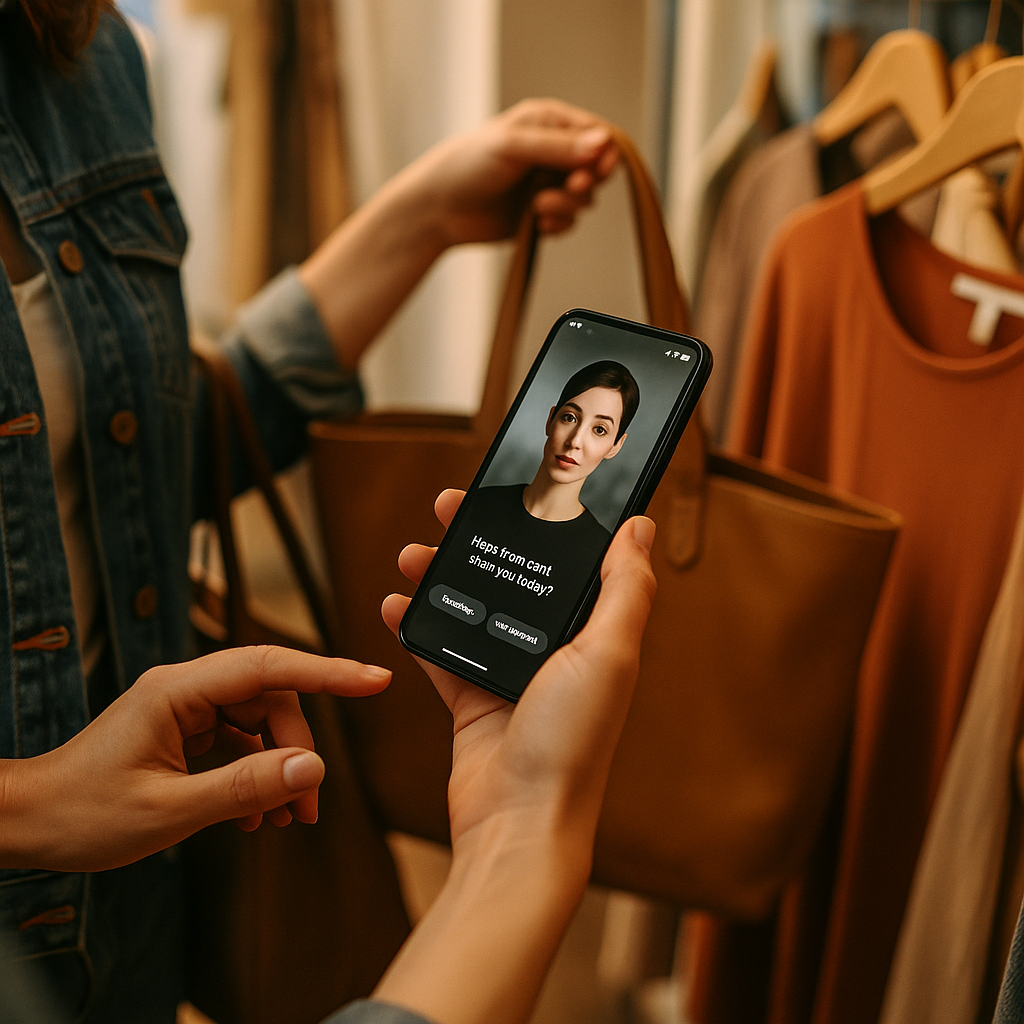
An AI shopping assistant tells a customer your supplement is “clinically proven” to cut recovery time in half. It isn’t. You never said that. Your influencer never said that. The bot just inferred it from scraped reviews and a confident tone. Now you have a Lanham Act problem, a possible FTC inquiry, and a customer demanding a refund. Welcome to the liability gap nobody budgeted for: agentic AI shopping assistants making claims no human at your company ever approved.
This isn’t a hypothetical for the next product cycle. Agentic shopping tools from Perplexity, Amazon’s Rufus, Google’s Gemini-powered shopping features, and a growing swarm of TikTok and Shopify-adjacent bots are already fielding millions of product queries a month. They compare, recommend, and increasingly transact on a shopper’s behalf. The question brand and legal teams need answered now isn’t whether this technology is useful. It’s who absorbs the risk when the AI gets the product wrong.
What Counts as “Misrepresentation” When a Bot Is Talking
Misrepresentation law wasn’t written with autonomous agents in mind, but the bar hasn’t moved. A statement is actionable if it’s false, material to a purchase decision, and likely to deceive a reasonable consumer. The FTC doesn’t care whether a human, an influencer, or a large language model generated the claim. It cares whether the consumer was misled and whether the brand materially contributed to or benefited from the deception.
Agentic shopping assistants create misrepresentation risk in a few distinct ways:
- Hallucinated specs or claims: the AI states a feature, certification, or health benefit that doesn’t exist, often stitched together from unrelated product listings.
- Stale or outdated data: the assistant pulls pricing, ingredient lists, or availability from a cached index that no longer matches reality.
- Context collapse: the bot summarizes a mixed bag of reviews into an oversimplified, overly positive verdict that erases real caveats.
- Comparative distortion: the assistant frames your product against a competitor using criteria that favor a false conclusion, which can trigger false advertising claims even if no single sentence is technically untrue.
The moment an AI agent transacts on a brand’s behalf or represents a brand’s product to a consumer, that brand inherits the reputational and legal exposure, whether or not it trained the model.
Who’s Actually on the Hook: Brand, Platform, or Vendor?
Liability in agentic commerce tends to split across three parties, and most contracts today don’t address any of them clearly.
The brand. If a shopping assistant is pulling from your product feed, your listing copy, or an API you maintain, regulators and plaintiffs will look at you first. You’re the party that profited from the sale. Ignorance of how the AI phrased something is rarely a defense, the same way “the influencer said it, not us” has never held up under FTC scrutiny. We’ve seen that logic fail repeatedly in disclosure cases, and it maps directly onto the FTC’s fake ads enforcement notice, which made clear that brands share responsibility for downstream claims even when they didn’t write the exact words.
The platform. Amazon, Google, and TikTok Shop each operate their own agentic assistants and generally shield themselves with broad terms of service that disclaim accuracy. That protects the platform. It does not protect the brand whose product got mischaracterized on that platform. Retail media placements compound this, since brands often don’t control how their listing data feeds an AI layer sitting on top of a retailer’s storefront, an issue we’ve tracked closely in retail media network ad ownership gaps.
The AI vendor. Third-party agentic tools (chatbots embedded in a brand’s own site, AI concierge plugins, custom GPT-style shopping assistants) usually come with indemnification language buried in a master services agreement. Read it twice. Most vendor contracts indemnify against IP infringement, not against the vendor’s own model hallucinating a product claim. That gap is exactly what surfaced in Google’s fact-check mandate exposing AI indemnification gaps, and it’s becoming a standard due-diligence item for procurement teams vetting any generative tool that touches customer-facing claims.
The Compliance Blind Spot Nobody’s Budgeting For
Most brand compliance teams built their influencer and advertising review processes around a simple model: a human creates content, legal reviews it, it goes live. Agentic AI breaks that pipeline entirely. There’s no draft to review because the output is generated live, per query, per user. You can’t pre-approve a conversation that hasn’t happened yet.
That’s forcing a shift from content review to system review. Instead of auditing individual claims after the fact, forward-leaning teams are auditing the data sources, prompt structures, and guardrails that feed the assistant in the first place. This mirrors the orchestration audit work already happening around multi-agent AI workflows, where the compliance question isn’t “what did the agent say” but “what decision logic produced that output, and can we reconstruct it.”
Practically, that means:
- Maintaining a clean, current product feed (PDP data, ingredient lists, claims substantiation) as the single source of truth the AI is required to cite.
- Logging every AI-generated response involving your product, even on platforms you don’t own, where legally possible through API access agreements.
- Running periodic “mystery shopper” audits where internal staff query shopping assistants the way a real customer would, then flag divergences from approved claims.
- Building escalation paths so a flagged hallucination triggers a takedown or correction request within hours, not weeks.
None of this is free. But it’s considerably cheaper than a state AG inquiry, and enforcement at that level is accelerating faster than most legal teams realize, a trend covered in depth in our look at state AG enforcement surging past FTC timelines.
Disclosure Rules Weren’t Built for Autonomous Agents, But They Still Apply
Here’s where things get messier. Influencer marketing has spent the last several years building muscle memory around disclosure: #ad tags, FTC-compliant captions, platform-level labeling. Agentic AI shopping assistants sidestep almost all of it. There’s no caption. There’s no post. There’s a conversational exchange that vanishes the moment the session ends.
Regulators are starting to notice. The EU’s approach to AI-generated commercial content, detailed in our breakdown of EU AI ad rules and brand compliance, increasingly treats AI-mediated recommendations as a form of commercial communication requiring disclosure, not a neutral utility. The same logic underpinning the EU’s AI detectability mandate for synthetic content is likely to extend to shopping assistants that steer purchase decisions without disclosing sponsorship, affiliate relationships, or paid placement.
In the US, state-level AI disclosure laws are moving faster than federal rulemaking. If you’re running influencer campaigns across multiple states, you’re probably already tracking this patchwork through resources like state AI disclosure law mapping. The same patchwork logic will almost certainly extend to agentic shopping tools once a few high-profile misrepresentation cases hit headlines.
A shopping assistant that recommends your product for an affiliate commission, without disclosing that relationship to the shopper, is running an undisclosed ad campaign at machine speed, and the liability doesn’t disappear just because no human wrote the script.
What Brand Contracts Need Right Now
If you’re sourcing an agentic AI tool, whether it’s a site-embedded concierge or a listing feed going into a third-party assistant, your contract needs specific language that most current MSAs don’t have:
- Accuracy warranties tied to source data: the vendor warrants the assistant will cite from the brand’s approved feed and flag when it can’t verify a claim against that feed.
- Indemnification for model hallucination, not just IP infringement. This is the single most commonly missing clause in current AI vendor agreements.
- Audit and logging rights: the brand can request transcripts of AI-shopper interactions involving its products for compliance review.
- Takedown SLAs: a defined window (24 to 48 hours is becoming standard) for correcting a flagged misrepresentation.
Settlement patterns in adjacent disputes are instructive here. The structure used in the Paramount Fanatics indemnification settlement shows how quickly indemnification gaps turn into eight-figure exposure when a licensed product gets misrepresented downstream of the brand’s direct control. Agentic AI is the next version of that same structural problem, just with a model instead of a licensee.
For broader context on how AI decisioning is reshaping consent and audit trails across marketing stacks, it’s worth reviewing how AI decisioning tools are closing creator consent trail gaps, since the documentation standards emerging there are a reasonable template for shopping assistant oversight too.
Industry data backs the urgency. eMarketer has tracked accelerating consumer reliance on AI-assisted product discovery, and Statista‘s retail tech surveys show rising adoption of conversational commerce tools across major retailers. The FTC has signaled, through existing endorsement guidance, that it views automated recommendation systems through the same deceptive-practices lens as human endorsers. That signal alone should be enough to move this from a “someday” risk to a current-quarter agenda item.
Next Step
Audit every AI shopping assistant touching your product data this quarter: confirm your feed is the source of truth, get indemnification language for hallucinated claims into your next vendor renewal, and start logging AI-shopper transcripts before a regulator asks you why you weren’t.
FAQs
Who is legally liable when an AI shopping assistant misrepresents a product?
In most cases, the brand bears primary exposure because it benefits commercially from the sale, even if it didn’t write the AI’s exact statement. Platforms and AI vendors may share liability depending on contract terms and how much control they had over the data feeding the assistant.
Can a brand be held responsible for a chatbot’s hallucinated claim?
Yes. Regulators generally treat AI-generated claims the same way they treat human-generated ones: if the statement is false, material, and likely to mislead a consumer, the brand that profited from the transaction can be held accountable regardless of who or what generated the language.
Do FTC disclosure rules apply to AI shopping assistants?
Current FTC guidance was written around human endorsers and sponsored content, but the underlying deceptive-practices standard applies broadly. Expect enforcement bodies to extend disclosure expectations to AI-mediated recommendations, particularly where affiliate or sponsorship relationships influence the output.
What should be in a contract with an agentic AI vendor to limit liability?
Brands should require accuracy warranties tied to an approved product feed, indemnification specifically covering model hallucination (not just IP claims), audit and transcript access rights, and a defined takedown SLA for correcting flagged misrepresentations.
How can brands monitor what AI shopping assistants say about their products?
Through periodic mystery-shopper style audits where staff query assistants directly, API-based logging agreements where platforms allow it, and ongoing maintenance of a single accurate product data feed that reduces the chance of the AI pulling from stale or third-party sources.
FAQs
Top Influencer Marketing Agencies
The leading agencies shaping influencer marketing in 2026
Agencies ranked by campaign performance, client diversity, platform expertise, proven ROI, industry recognition, and client satisfaction. Assessed through verified case studies, reviews, and industry consultations.
Moburst

-
2

The Shelf
Boutique Beauty & Lifestyle Influencer AgencyA data-driven boutique agency specializing exclusively in beauty, wellness, and lifestyle influencer campaigns on Instagram and TikTok. Best for brands already focused on the beauty/personal care space that need curated, aesthetic-driven content.Clients: Pepsi, The Honest Company, Hims, Elf Cosmetics, Pure LeafVisit The Shelf → -
3

Audiencly
Niche Gaming & Esports Influencer AgencyA specialized agency focused exclusively on gaming and esports creators on YouTube, Twitch, and TikTok. Ideal if your campaign is 100% gaming-focused — from game launches to hardware and esports events.Clients: Epic Games, NordVPN, Ubisoft, Wargaming, Tencent GamesVisit Audiencly → -
4

Viral Nation
Global Influencer Marketing & Talent AgencyA dual talent management and marketing agency with proprietary brand safety tools and a global creator network spanning nano-influencers to celebrities across all major platforms.Clients: Meta, Activision Blizzard, Energizer, Aston Martin, WalmartVisit Viral Nation → -
5

The Influencer Marketing Factory
TikTok, Instagram & YouTube CampaignsA full-service agency with strong TikTok expertise, offering end-to-end campaign management from influencer discovery through performance reporting with a focus on platform-native content.Clients: Google, Snapchat, Universal Music, Bumble, YelpVisit TIMF → -
6

NeoReach
Enterprise Analytics & Influencer CampaignsAn enterprise-focused agency combining managed campaigns with a powerful self-service data platform for influencer search, audience analytics, and attribution modeling.Clients: Amazon, Airbnb, Netflix, Honda, The New York TimesVisit NeoReach → -
7

Ubiquitous
Creator-First Marketing PlatformA tech-driven platform combining self-service tools with managed campaign options, emphasizing speed and scalability for brands managing multiple influencer relationships.Clients: Lyft, Disney, Target, American Eagle, NetflixVisit Ubiquitous → -
8

Obviously
Scalable Enterprise Influencer CampaignsA tech-enabled agency built for high-volume campaigns, coordinating hundreds of creators simultaneously with end-to-end logistics, content rights management, and product seeding.Clients: Google, Ulta Beauty, Converse, AmazonVisit Obviously →