


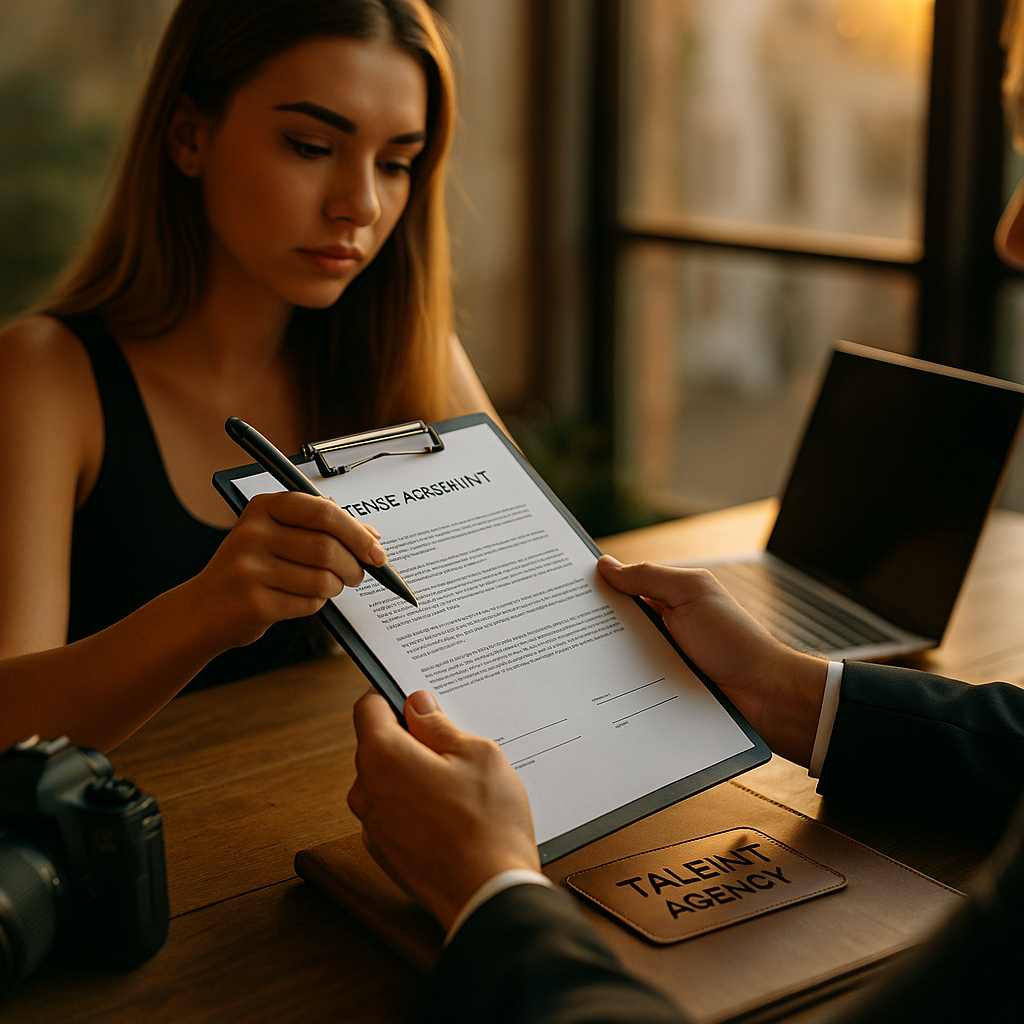
Forty six states regulate talent agencies. Not one of those statutes was written with a TikTok manager in mind. Yet brands are routinely signing six figure influencer deals through “management companies” that would fail a basic licensing check in California, New York, or Texas, and few procurement teams are even asking the question. Influencer talent agency licensing sounds like a back office formality. It is actually a contract validity problem, and if the agency on the other end of your deal isn’t properly licensed, your brand could be the one left holding an unenforceable agreement.
A Law Nobody Updated for Creators
Talent agency statutes mostly predate Instagram by half a century. California’s Talent Agencies Act dates to 1978. New York’s General Business Law Article 11 governs “theatrical employment agencies” and has been on the books even longer. These laws were built for actors, musicians, and models, and they require anyone who “procures employment” for talent to hold a state license, post a bond, and follow specific fee caps.
Nobody rewrote these statutes for creator economy business models. So when an influencer management company negotiates a brand deal, collects a 20 percent commission, and calls itself a “talent agency” on its website, it may be operating exactly within the legal definition that triggers licensing requirements, whether or not anyone involved realizes it.
If an influencer management company is negotiating fees, pitching brands, and taking a cut of the deal, it’s performing the function of a licensed talent agency in the eyes of most state regulators, regardless of what it calls itself on its homepage.
California, New York, and the States That Actually Enforce This
Enforcement intensity varies wildly, which is exactly what makes this a patchwork brands need to map before signing.
- California: The Talent Agencies Act is enforced through the Labor Commissioner’s office, and unlicensed procurement of employment can void the entire representation agreement, meaning the “agent” may have no legal right to collect commissions, and disputes often end up voiding fee structures retroactively.
- New York: Article 11 requires a license from the Department of Consumer Affairs for anyone procuring employment, and New York courts have historically sided with talent challenging unlicensed representation arrangements.
- Texas and Louisiana: Both states require talent agency licensing with bonding requirements, and both distinguish agents from personal managers, a distinction that matters enormously (more on that below).
- Florida: Talent agencies must register with the Department of Agriculture and Consumer Services, a quirk that trips up out of state brands every year.
- States with light or no licensing regimes: A meaningful chunk of states, including much of the Midwest and Mountain West, impose minimal or no talent agency licensing obligations, which is exactly why some management companies incorporate there regardless of where their clients or brand partners are based.
That last point matters more than most brands realize. A management company can be headquartered in a light touch state while negotiating deals with creators based in California and brands headquartered in New York. Which state’s law governs? Usually whichever jurisdiction has the strongest connection to the transaction, and that’s often decided after a dispute has already started, not before.
Manager or Agent? The Distinction That Decides Who’s Liable
Most influencer representation firms call themselves “managers,” not “agents,” and for good reason: personal managers are exempt from licensing in most states, as long as they stick to career guidance, strategy, and general business advice. The moment a manager starts directly procuring brand deals, negotiating specific contract terms, and taking commission on that negotiated work, they cross into agent territory, licensed or not.
This is not a theoretical distinction. It’s the exact fact pattern that has unraveled management agreements in entertainment law for decades, and the same logic now applies to creator deals. A manager who “just happens” to pitch your brand directly, negotiate the rate, and sign the IO on the creator’s behalf is functionally acting as an unlicensed agent in states like California, even if the word “agent” never appears on a business card.
For brands, the practical question isn’t philosophical. It’s: who actually has the legal authority to bind this creator to a deal, and does that authority survive a licensing challenge? If it doesn’t, your signed agreement could be voidable, your usage rights could be challenged later, and your commission payments could become a legal gray area none of your lawyers budgeted time for.
What Brands Risk When the Paperwork Is Wrong
Here’s where this stops being an academic licensing debate and becomes a brand side risk problem.
If a representation agreement between a creator and their management company is later found void because the manager operated as an unlicensed agent, the creator can potentially walk away from obligations the brand assumed were locked in, including exclusivity clauses, usage rights, and non-compete terms. Brands that paid commissions directly to the management entity, rather than to the creator with the agency fee deducted downstream, face additional exposure if a court later finds that entity never had standing to collect in the first place.
There’s also the practical mess of unwinding a campaign mid-flight. Imagine discovering, three weeks before a product launch, that the “agency” representing your anchor creator isn’t licensed in the state governing the contract. Legal has to get involved. The timeline slips. And if the creator’s team decides to use the licensing gap as leverage to renegotiate, your campaign budget just became a negotiating chip in someone else’s dispute.
An unlicensed talent agency isn’t just a compliance footnote, it’s a potential escape hatch for the other side of your contract if the relationship ever turns adversarial.
This sits alongside a broader set of liability questions brands are already navigating in creator partnerships, from errors and omissions coverage to the fine print buried in matching platform terms that quietly shift risk onto the brand. Talent agency licensing just adds another layer that most legal teams haven’t built a checklist for yet.
Building Licensing Checks Into Vendor Vetting
None of this requires a law degree to manage. It requires a process, and most brands simply haven’t built one yet for influencer representation entities the way they have for traditional ad agency vendor onboarding.
A workable approach looks like this:
- Identify the governing state. Determine which state’s law most likely applies based on where the creator resides, where the management company is incorporated, and where the brand is headquartered. Flag any mismatch for legal review before signing.
- Request license documentation. If the entity is negotiating fees and procuring the deal, ask for proof of talent agency licensing in the relevant state, the same way you’d request a W9 or insurance certificate.
- Clarify who signs. Contracts should be executed by the creator directly whenever possible, with the management company named as an authorized representative rather than the contracting party. This limits your exposure if the agency relationship itself is later challenged.
- Route payment carefully. Paying the creator directly, with commission structures handled between the creator and their representative, reduces the brand’s exposure to disputes over who was legally entitled to collect fees.
- Loop this into existing compliance sign off. If your team already runs creator deals through a structured compliance sign off workflow, add a licensing verification step rather than building a separate process from scratch.
For high stakes categories like finance, where regulatory scrutiny is already intense, this check becomes even more important. Brands running finfluencer legal review processes should treat agency licensing verification as a standard line item, not an edge case. The same logic applies to termination clause drafting, where an unlicensed representation arrangement can complicate exit terms if a campaign needs to wind down early.
Industry data on creator economy spend keeps climbing, with eMarketer and Statista both tracking double digit growth in influencer budgets year over year, which means more dollars are flowing through representation structures that haven’t caught up with the legal frameworks governing them. Resources like HubSpot’s marketing operations guidance and Sprout Social’s influencer management research are useful for operational benchmarking, but neither substitutes for state specific legal review when real money and real contracts are on the line.
Frequently Asked Questions
FAQs
Does influencer talent agency licensing apply to social media managers, or only traditional entertainment agents?
It applies based on function, not job title. If a management company negotiates brand deals, procures employment, and collects commission on that negotiated work, most state statutes treat that as talent agency activity, regardless of whether the company brands itself as a “creator management firm” rather than a traditional agency.
What happens to a brand contract if the creator’s management company turns out to be unlicensed?
Outcomes vary by state, but in jurisdictions like California, courts have voided representation agreements entered into by unlicensed agents, which can cascade into disputes over who had authority to sign on the creator’s behalf and who was entitled to collect commissions.
Is there a difference between a “manager” and an “agent” under these laws?
Yes, and it’s significant. Personal managers who provide career guidance without directly procuring deals are typically exempt from licensing. Once a manager starts negotiating specific brand contracts and taking commission on that work, they functionally step into agent territory, which can trigger licensing requirements.
Should brands require proof of licensing before signing with a creator’s representative?
It’s a reasonable and increasingly standard precaution, especially for high value or long term partnerships. Requesting license documentation alongside standard vendor paperwork, like insurance certificates or tax forms, adds minimal friction and meaningfully reduces downstream legal exposure.
Which states have the strictest talent agency licensing enforcement?
California and New York are generally considered the most actively enforced, given their large entertainment industries and established case law. Texas, Louisiana, and Florida also maintain licensing requirements, while many other states have lighter or less defined regulatory frameworks.
FAQs
Add one line to your vendor intake form this week: “Is this entity licensed as a talent agency in the applicable state?” It costs nothing to ask, and it’s the single cheapest insurance policy against a contract that quietly unravels when you need it most.
Top Influencer Marketing Agencies
The leading agencies shaping influencer marketing in 2026
Agencies ranked by campaign performance, client diversity, platform expertise, proven ROI, industry recognition, and client satisfaction. Assessed through verified case studies, reviews, and industry consultations.
Moburst

-
2

The Shelf
Boutique Beauty & Lifestyle Influencer AgencyA data-driven boutique agency specializing exclusively in beauty, wellness, and lifestyle influencer campaigns on Instagram and TikTok. Best for brands already focused on the beauty/personal care space that need curated, aesthetic-driven content.Clients: Pepsi, The Honest Company, Hims, Elf Cosmetics, Pure LeafVisit The Shelf → -
3

Audiencly
Niche Gaming & Esports Influencer AgencyA specialized agency focused exclusively on gaming and esports creators on YouTube, Twitch, and TikTok. Ideal if your campaign is 100% gaming-focused — from game launches to hardware and esports events.Clients: Epic Games, NordVPN, Ubisoft, Wargaming, Tencent GamesVisit Audiencly → -
4

Viral Nation
Global Influencer Marketing & Talent AgencyA dual talent management and marketing agency with proprietary brand safety tools and a global creator network spanning nano-influencers to celebrities across all major platforms.Clients: Meta, Activision Blizzard, Energizer, Aston Martin, WalmartVisit Viral Nation → -
5

The Influencer Marketing Factory
TikTok, Instagram & YouTube CampaignsA full-service agency with strong TikTok expertise, offering end-to-end campaign management from influencer discovery through performance reporting with a focus on platform-native content.Clients: Google, Snapchat, Universal Music, Bumble, YelpVisit TIMF → -
6

NeoReach
Enterprise Analytics & Influencer CampaignsAn enterprise-focused agency combining managed campaigns with a powerful self-service data platform for influencer search, audience analytics, and attribution modeling.Clients: Amazon, Airbnb, Netflix, Honda, The New York TimesVisit NeoReach → -
7

Ubiquitous
Creator-First Marketing PlatformA tech-driven platform combining self-service tools with managed campaign options, emphasizing speed and scalability for brands managing multiple influencer relationships.Clients: Lyft, Disney, Target, American Eagle, NetflixVisit Ubiquitous → -
8

Obviously
Scalable Enterprise Influencer CampaignsA tech-enabled agency built for high-volume campaigns, coordinating hundreds of creators simultaneously with end-to-end logistics, content rights management, and product seeding.Clients: Google, Ulta Beauty, Converse, AmazonVisit Obviously →