


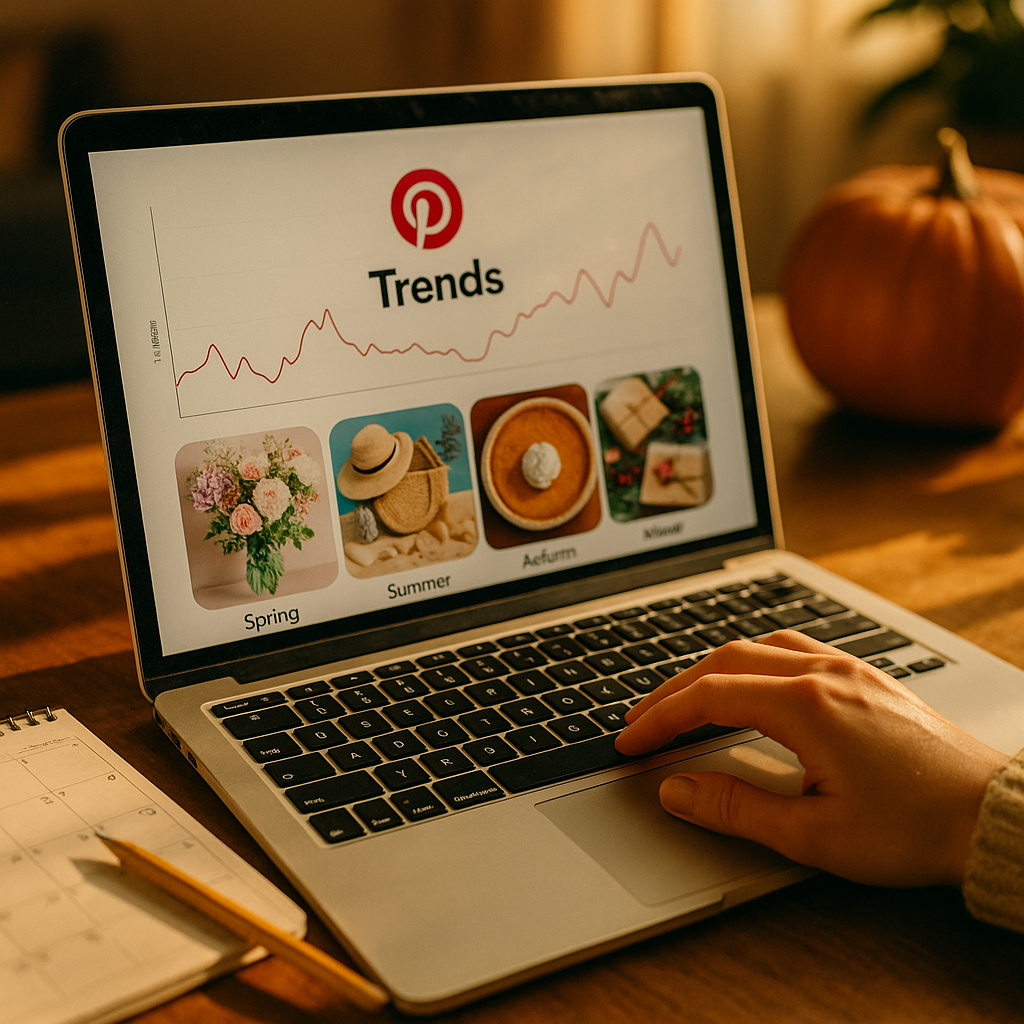
Pinterest users search “fall outfit ideas” a monthly average that peaks four to five months before fall even starts. Most brands still brief creators the week before a season begins, chasing a wave that already crested. The Pinterest Trends tool exists precisely to fix that lag, and brands ignoring it are leaving reach on the table every single quarter.
This isn’t another “Pinterest is underrated” think piece. It’s an operational playbook for using a free, publicly available tool to time seasonal creator content so it publishes while demand is still climbing, not after it’s already peaked and platform algorithms have moved on.
Why Pinterest’s Search Behavior Breaks the Usual Content Calendar
Pinterest is a planning platform, not a reaction platform. People don’t pin “Halloween costume ideas” on October 30th. They pin in July and August, building boards for an event that’s still months away. That single behavioral quirk changes everything about how brands should structure creator timelines.
Compare that to Instagram or TikTok, where trend cycles run in days or weeks. A TikTok sound can peak and die inside ten days. Pinterest seasonal searches, by contrast, often ramp for 8 to 12 weeks before the actual holiday or season, then decay slowly afterward. That long runway is a gift for brands willing to plan ahead, and a trap for brands running campaigns on the same short-cycle logic they use for every other platform.
Pinterest’s own data has repeatedly shown that searches for major seasonal moments like back-to-school and holiday gifting begin climbing as early as June, months ahead of when most brand creative briefs even get written.
What the Trends Tool Actually Shows You
Pinterest Trends (trends.pinterest.com) is free and requires no ad spend to access. It shows search volume trajectories for keywords over time, broken out by region, and lets you compare multiple terms side by side. Brands typically use it for three things:
- Trajectory mapping: seeing when a seasonal term starts climbing, not just that it exists.
- Regional variance: “spring wardrobe refresh” might trend three weeks earlier in warmer climates than colder ones.
- Related term discovery: the tool surfaces adjacent rising searches, which is often where the real creator brief ideas live.
It will not tell you demographic breakdowns or give you the granular funnel data you’d get from Pinterest’s ad platform. Think of it as a weather forecast, not a dashboard. It tells you when to expect the storm, not exactly who’s standing in it.
The Lead Time Math Brands Keep Getting Wrong
Here’s the part most brand teams underestimate: Pinterest content itself has a longer discovery tail than almost any other platform. A pin published today can still surface in search results six, even twelve months later. That means timing isn’t just about when you publish, it’s about when the content needs to be indexed and gaining early traction so the algorithm has time to understand and distribute it before the seasonal peak.
A reasonable rule of thumb: if Trends data shows a keyword starting to climb in week one of a month, your creator content should already be live by then, which means briefing, production, and creator turnaround needs to happen 4 to 6 weeks earlier. For seasonal moments like holiday gifting, that can push your brief deadline into late summer.
Building the Creator Brief Around Trend Data
Trend data is only useful if it actually changes what you ask creators to make. Too many briefs still say “create a cozy fall content piece” without specifying the exact search terms Pinterest data says are climbing. That’s a missed opportunity, because Pinterest’s algorithm leans heavily on text, keywords in titles, descriptions, and even on-image text, to match content with search intent.
A trend-informed brief should include:
- The 3 to 5 specific keywords from Trends data the creator should naturally work into captions and pin titles.
- A target publish window based on the trajectory, not just a generic “post sometime in September.”
- Guidance on format: static pins still perform well for search-driven intent, while idea pins and video work better for discovery-driven browsing.
- A note on evergreen potential, since the best Pinterest creator content keeps earning impressions long after the campaign budget is spent.
This is a different muscle than briefing for Instagram Reels or TikTok Spark Ads, where trend windows are measured in days. If your team is used to those faster cycles, it’s worth reviewing how creator search insights shape brief structure on short-cycle platforms, then consciously slowing that process down for Pinterest.
Who Should Actually Own This Process?
In most mid-size marketing teams, Pinterest trend research falls into a gap between the social team and the SEO team, and it often gets owned by neither. That’s a mistake. The skill set needed here, reading search trajectory data and translating it into content timing, sits much closer to an SEO or search marketer’s instinct than a typical social scheduler’s.
Brands getting this right are pairing a social strategist (who understands creator relationships and content format) with someone who thinks in search terms and seasonal curves. If your organization doesn’t have that pairing, it’s worth borrowing a quarter of an SEO analyst’s time rather than letting the social team guess at timing alone.
Shopping Content Adds a Second Layer
If your creator content links to product, Pinterest’s shopping ecosystem adds another timing variable. Product pins and shopping ads perform best when they’re already indexed and gaining traction before the seasonal search spike, which means the content and the commerce tagging need to launch together, not commerce tagging bolted on after the fact. For a deeper look at how shopping formats interact with creator content specifically, see this guide to Pinterest shopping ads and creator ROI.
A Practical Quarterly Workflow
Here’s a simplified cadence that works for most consumer brands running seasonal creator programs on Pinterest:
- 12 to 16 weeks out: Pull Trends data for the upcoming season’s core keywords. Identify when searches historically start climbing.
- 10 to 12 weeks out: Finalize creator briefs with specific keyword guidance and publish windows.
- 8 weeks out: Creator content is produced and reviewed.
- 6 to 7 weeks before peak search: Content goes live, giving the algorithm time to index and start distributing before demand peaks.
- Ongoing: Monitor which pins start gaining saves and impressions early. Those are candidates for small paid boosts to extend reach during the actual peak window.
Notice how different this is from the reactive, “what’s trending right now” workflow brands apply to TikTok or Instagram. Pinterest rewards the brand that plans ahead, not the brand that reacts fastest. That’s a genuinely different skill, and it’s one agencies built purely around fast-turnaround social content sometimes struggle to deliver.
The brands winning on Pinterest aren’t the ones with the biggest creator budgets. They’re the ones who briefed their creators before their competitors even opened the Trends tool.
Measuring Success Without Overcomplicating It
Resist the urge to measure Pinterest creator content the same way you measure a TikTok campaign. Impressions in week one mean almost nothing on Pinterest. The metrics that matter are saves over time, click-through rate once search volume actually peaks, and whether the content keeps earning impressions months after publish. If a pin is still generating saves in its third month, that’s evergreen value most other platforms simply can’t offer, and it’s worth factoring into how you compare Pinterest’s cost efficiency against platforms like YouTube’s shopping affiliate ecosystem or faster-moving formats.
For broader context on how seasonal and trend-based timing affects paid performance across formats, Pinterest’s own partner resources and third-party data from eMarketer and Statista can help benchmark expectations against the broader creator marketing landscape. Teams building out reporting dashboards may also find it useful to compare structures used in Instagram’s partnership ads ROI workflow, since the underlying logic of tracking delayed-value content applies across platforms even when the timelines differ.
Tools like Sprout Social and HubSpot can also help centralize Pinterest performance data alongside other channels, which matters when you’re trying to justify longer lead times to budget holders who are used to faster-turnaround platforms.
The Compliance Angle Nobody Talks About
One underappreciated benefit of longer lead times: more room for proper FTC disclosure review. Rushed seasonal campaigns on faster platforms often sacrifice disclosure quality for speed. Pinterest’s longer planning cycle gives brand legal and compliance teams actual time to review creator content before it publishes, rather than approving disclosures after the fact. Given ongoing scrutiny from the Federal Trade Commission on influencer disclosure practices, that extra runway is worth building into your workflow deliberately, not treating as a happy accident.
Next Step
Open Pinterest Trends this week, pull the trajectory for your next major seasonal campaign, and work backward from the peak to set your creator brief deadline today, not next month. The brands already doing this are the ones whose content you’ll be competing against come peak search season.
FAQs
What is the Pinterest Trends tool and is it free?
Pinterest Trends is a free, publicly available research tool that shows search volume trajectories for keywords over time, including regional variations and related rising terms. It requires no ad account or spend to access.
How far in advance should brands brief creators for Pinterest seasonal content?
Most seasonal campaigns need content live 6 to 7 weeks before the actual search peak, which typically means briefing creators 10 to 12 weeks ahead of the season itself to allow time for production and algorithmic indexing.
Does Pinterest Trends show demographic or audience data?
No. It shows search volume and trajectory by keyword and region, not demographic breakdowns. For audience-level insights, brands need to pair it with Pinterest’s advertising platform data.
Why does Pinterest content perform differently over time compared to Instagram or TikTok?
Pinterest functions more like a search engine than a social feed. Pins can surface in search results for months after publishing, while content on faster-moving platforms typically peaks and declines within days or weeks.
Should Pinterest creator campaigns be measured the same way as other social platforms?
No. Early impressions matter less than saves, click-through rate at the actual seasonal peak, and whether the content continues earning impressions months after it was published.
Top Influencer Marketing Agencies
The leading agencies shaping influencer marketing in 2026
Agencies ranked by campaign performance, client diversity, platform expertise, proven ROI, industry recognition, and client satisfaction. Assessed through verified case studies, reviews, and industry consultations.
Moburst

-
2

The Shelf
Boutique Beauty & Lifestyle Influencer AgencyA data-driven boutique agency specializing exclusively in beauty, wellness, and lifestyle influencer campaigns on Instagram and TikTok. Best for brands already focused on the beauty/personal care space that need curated, aesthetic-driven content.Clients: Pepsi, The Honest Company, Hims, Elf Cosmetics, Pure LeafVisit The Shelf → -
3

Audiencly
Niche Gaming & Esports Influencer AgencyA specialized agency focused exclusively on gaming and esports creators on YouTube, Twitch, and TikTok. Ideal if your campaign is 100% gaming-focused — from game launches to hardware and esports events.Clients: Epic Games, NordVPN, Ubisoft, Wargaming, Tencent GamesVisit Audiencly → -
4

Viral Nation
Global Influencer Marketing & Talent AgencyA dual talent management and marketing agency with proprietary brand safety tools and a global creator network spanning nano-influencers to celebrities across all major platforms.Clients: Meta, Activision Blizzard, Energizer, Aston Martin, WalmartVisit Viral Nation → -
5

The Influencer Marketing Factory
TikTok, Instagram & YouTube CampaignsA full-service agency with strong TikTok expertise, offering end-to-end campaign management from influencer discovery through performance reporting with a focus on platform-native content.Clients: Google, Snapchat, Universal Music, Bumble, YelpVisit TIMF → -
6

NeoReach
Enterprise Analytics & Influencer CampaignsAn enterprise-focused agency combining managed campaigns with a powerful self-service data platform for influencer search, audience analytics, and attribution modeling.Clients: Amazon, Airbnb, Netflix, Honda, The New York TimesVisit NeoReach → -
7

Ubiquitous
Creator-First Marketing PlatformA tech-driven platform combining self-service tools with managed campaign options, emphasizing speed and scalability for brands managing multiple influencer relationships.Clients: Lyft, Disney, Target, American Eagle, NetflixVisit Ubiquitous → -
8

Obviously
Scalable Enterprise Influencer CampaignsA tech-enabled agency built for high-volume campaigns, coordinating hundreds of creators simultaneously with end-to-end logistics, content rights management, and product seeding.Clients: Google, Ulta Beauty, Converse, AmazonVisit Obviously →