


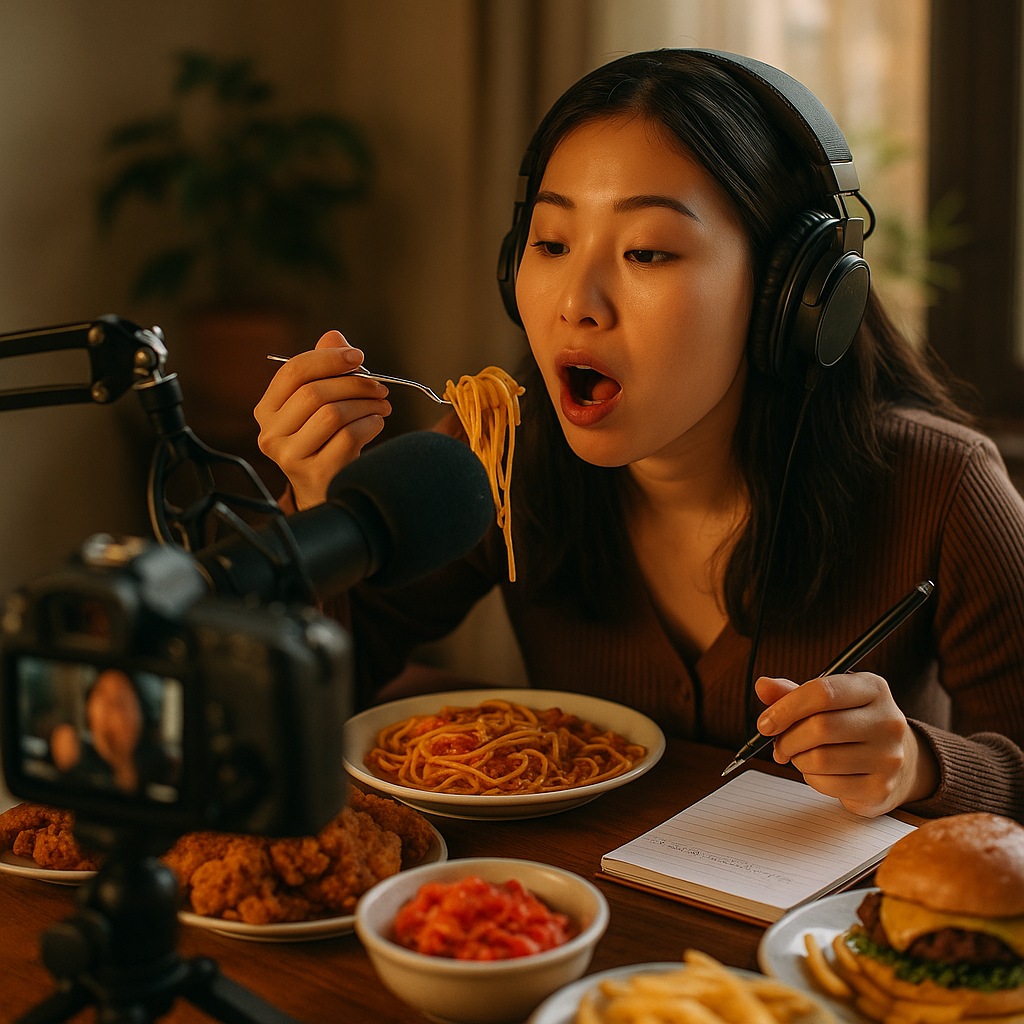
Eighty five percent of a mukbang video’s persuasive power comes from sound, not visuals, according to audio researchers studying ASMR eating content. Crunch, slurp, sizzle. It is primal, and it sells. Mukbang style reviews have quietly become one of the highest converting formats in food and beverage marketing, yet most brand briefs still treat them like a stunt instead of a structured sales tool.
That is the gap this article closes.
Why Mukbang Converts Where Polished Ads Fail
Traditional food advertising sells aspiration: a styled plate, perfect lighting, a model who never actually seems to eat. Mukbang does the opposite. It sells permission. Viewers watch someone eat an entire bucket of fried chicken on camera, unbothered, and something in the brain relaxes. There is no judgment, no portion control lecture, just a person enjoying food loudly and without apology.
For brands, that psychological unlock translates into measurable commercial value. Sound design triggers the same neural pathways as watching someone else yawn or scratch an itch, what researchers call auditory mirroring. When a creator bites into a brand’s product and the mic catches every crunch, viewers experience a muted version of that sensory payoff themselves. It is why mukbang style reviews consistently outperform standard taste test content on watch time and completion rate.
Brands that script for sound quality, not just talking points, see higher completion rates because the eating itself becomes the hook, not an interruption to it.
This matters for budget allocation. A format that keeps viewers watching past the fifteen second mark earns cheaper impressions on platforms that reward retention, which means your media buyer should care about mic placement as much as your creative lead does.
The Four Beats Every Script Needs
Mukbang style reviews feel unscripted, but the best ones follow a tight structural skeleton underneath the improvisation. Treat it like a four act play compressed into sixty to ninety seconds.
- The reveal: Unbox or unwrap on camera. This is where anticipation builds and where sponsorship disclosure should live, spoken naturally rather than buried in text overlay.
- First bite reaction: Unfiltered, audible, honest. Scripted enthusiasm reads as fake instantly. Direct creators to react before they think, then capture a second take only if the first genuinely falls flat.
- The sustained eat: This is the mukbang core, extended minutes of consumption with commentary woven in. Brief creators on three or four talking points to hit organically rather than a line by line script.
- The verdict: A closing comparison or recommendation. Would they buy it again? Who is it for? This is the moment that actually drives purchase intent, so do not let it get cut for time.
Brands that skip straight to the verdict lose the trust building that happens during the sustained eat. Viewers need to watch the creator actually consume the product, not just hear an opinion about it, for the review to register as credible. This is the same credibility mechanic covered in our breakdown of rating and review series formats, where pacing and payoff structure determine retention far more than polish does.
Scripting Without Killing the Authenticity
Here is the tension every brand manager faces: you need legal compliance, brand messaging, and FTC disclosure, but the second a mukbang feels scripted, it stops working. The fix is briefing for outcomes, not dialogue.
Instead of writing lines, give creators a reaction map. What should they notice first? Texture, smell, temperature, flavor intensity? Order those prompts and let the creator fill in their own words. A good brief for this format looks more like a documentary shot list than an ad script.
Disclosure deserves its own callout because regulators are not relaxing on this. The FTC’s endorsement guidance requires clear and conspicuous disclosure regardless of how casual the content feels, and “ad” buried in a caption while the creator eats for four minutes without ever mentioning the partnership on camera does not meet that bar. Build the disclosure moment into the reveal beat so it happens naturally, early, and audibly.
There is a lower budget version of this format too. Many brands run mukbang style reviews through creator seeding programs rather than paid talent fees, sending product boxes to a rotating bench of micro creators. If that is your model, the sourcing and briefing playbook in our piece on low cost UGC briefs pairs well with the structural beats above.
What Makes the Format Different From a Standard Taste Test
A taste test is a verdict delivered quickly. Mukbang is an experience sustained over time. That duration difference changes everything about how you brief, budget, and measure the content.
Standard taste test clips run fifteen to thirty seconds and optimize for a punchy opinion. Mukbang style reviews run anywhere from three to fifteen minutes on long form platforms, with short form cuts trimmed down to sixty to ninety seconds for Reels and TikTok. The long form version builds parasocial trust through sheer time spent together. The short form cut exists to drive discovery and push viewers toward the fuller video or the product page.
This two tier distribution model is worth planning for upfront rather than discovering after the shoot. Brief creators to capture enough raw footage that your team, or theirs, can cut multiple short form hooks from one long sitting. Treat the long sit as your raw material library, not a single deliverable.
Picking Creators Who Can Actually Pull This Off
Not every creator should attempt mukbang style content, and brands waste budget assuming enthusiasm equals fit. Look for three signals before casting.
- Existing eating content in their feed. Someone who has never filmed themselves eating on camera will look stilted doing it for the first time on your dime.
- Audio setup quality. A lavalier mic or a quiet room matters more here than in almost any other content format. Check their past videos for crisp audio before booking.
- Comfort with extended, unscripted camera time. Some creators are brilliant in tight fifteen second hooks but freeze when asked to sustain five minutes of natural commentary. Review their long form history, not just their viral clips.
Micro and mid tier creators in the food niche often outperform larger lifestyle influencers here because their audiences specifically opted in for eating content. A creator with 40,000 followers who posts mukbang content weekly will likely drive better conversion than a 500,000 follower generalist doing it as a one off brand ask. Sprout Social’s creator research consistently shows niche relevance outperforming raw follower count on engagement quality, and food is one of the clearest categories where that holds.
Measuring What Actually Matters
Views are the least interesting metric for this format. Watch to completion percentage, saves, and comment sentiment tell you far more about whether the mukbang review is building purchase intent or just entertaining people.
Track these four:
- Average watch time versus total video length. If viewers drop off before the verdict beat, your sustained eat section is running too long without enough commentary variety.
- Comment sentiment around the product specifically, not just the creator’s personality. Separate “I love you” comments from “I need to try this” comments.
- Click through on pinned links or bio links during and immediately after the posting window.
- Repeat creator requests from your audience, a strong signal the format is working and worth scaling with a content series rather than a one off.
According to eMarketer, food and beverage brands continue increasing creator content spend faster than most other verticals, and formats with high sensory engagement like mukbang are a meaningful part of that shift. Budget holders should expect this format to require more production patience than a standard UGC ask, but the retention payoff tends to justify it.
Format Variations Worth Testing
Once the core structure works, variation keeps the format from feeling stale to repeat viewers.
Blind taste challenges, where a creator reviews your product against a competitor without knowing which is which until the reveal, borrow mukbang’s sensory honesty while adding a game mechanic. This pairs naturally with the comparative structure covered in split screen duet reviews, where side by side framing does the persuasive work that commentary alone can’t.
Price transparency mukbangs, where the creator eats while breaking down cost per serving or ingredient sourcing, merge sensory trust with the rational buying signals explored in price breakdown videos. This works especially well for premium or direct to consumer food brands trying to justify a higher price point.
Faceless or hands only mukbang content, shot from a top down angle without showing the creator’s face, has grown on brand owned accounts that want the sensory payoff without talent fees. That approach connects directly to the operational model in our faceless UGC accounts playbook, which covers how to run this in house at scale.
For deeper data on how food and beverage categories compare against other verticals on creator content engagement, Statista’s consumer media research is a useful benchmarking resource when building your internal case for budget.
FAQs
What exactly counts as a mukbang style review for brand purposes?
It is a creator video where the primary act is eating a product on camera, with audio capturing the sensory experience, paired with ongoing verbal commentary and a closing recommendation. It differs from a standard taste test by its length and its emphasis on sustained, audible consumption rather than a quick verdict.
How long should a branded mukbang video run?
Long form versions typically run between three and fifteen minutes on platforms like YouTube, while short form cuts for TikTok and Reels run sixty to ninety seconds. Brief creators to shoot enough raw footage during one long sitting to support both formats.
Do creators need to disclose sponsorship even in casual eating content?
Yes. FTC guidance requires clear and conspicuous disclosure regardless of tone or format, and it should happen on camera near the start of the video, not buried solely in a caption.
Which food brands see the best results with this format?
Categories with strong sensory or textural qualities tend to perform best: fried foods, spicy products, beverages with visible carbonation or layering, and snacks with audible crunch. Products that are visually or audibly unremarkable are harder to sell through this format.
Is mukbang content worth the production cost compared to shorter UGC formats?
If your goal is building purchase intent and trust rather than quick reach, yes. The extended watch time builds parasocial credibility that short clips cannot replicate, though it does require more patient production planning and creator vetting.
Next step: Pick one product with strong sensory qualities, brief a single niche food creator using the four beat structure above, and run it against your current best performing taste test clip to compare completion rate and comment sentiment before scaling the format further.
FAQs
What exactly counts as a mukbang style review for brand purposes?
It is a creator video where the primary act is eating a product on camera, with audio capturing the sensory experience, paired with ongoing verbal commentary and a closing recommendation. It differs from a standard taste test by its length and its emphasis on sustained, audible consumption rather than a quick verdict.
How long should a branded mukbang video run?
Long form versions typically run between three and fifteen minutes on platforms like YouTube, while short form cuts for TikTok and Reels run sixty to ninety seconds. Brief creators to shoot enough raw footage during one long sitting to support both formats.
Do creators need to disclose sponsorship even in casual eating content?
Yes. FTC guidance requires clear and conspicuous disclosure regardless of tone or format, and it should happen on camera near the start of the video, not buried solely in a caption.
Which food brands see the best results with this format?
Categories with strong sensory or textural qualities tend to perform best: fried foods, spicy products, beverages with visible carbonation or layering, and snacks with audible crunch. Products that are visually or audibly unremarkable are harder to sell through this format.
Is mukbang content worth the production cost compared to shorter UGC formats?
If your goal is building purchase intent and trust rather than quick reach, yes. The extended watch time builds parasocial credibility that short clips cannot replicate, though it does require more patient production planning and creator vetting.
Top Influencer Marketing Agencies
The leading agencies shaping influencer marketing in 2026
Agencies ranked by campaign performance, client diversity, platform expertise, proven ROI, industry recognition, and client satisfaction. Assessed through verified case studies, reviews, and industry consultations.
Moburst

-
2

The Shelf
Boutique Beauty & Lifestyle Influencer AgencyA data-driven boutique agency specializing exclusively in beauty, wellness, and lifestyle influencer campaigns on Instagram and TikTok. Best for brands already focused on the beauty/personal care space that need curated, aesthetic-driven content.Clients: Pepsi, The Honest Company, Hims, Elf Cosmetics, Pure LeafVisit The Shelf → -
3

Audiencly
Niche Gaming & Esports Influencer AgencyA specialized agency focused exclusively on gaming and esports creators on YouTube, Twitch, and TikTok. Ideal if your campaign is 100% gaming-focused — from game launches to hardware and esports events.Clients: Epic Games, NordVPN, Ubisoft, Wargaming, Tencent GamesVisit Audiencly → -
4

Viral Nation
Global Influencer Marketing & Talent AgencyA dual talent management and marketing agency with proprietary brand safety tools and a global creator network spanning nano-influencers to celebrities across all major platforms.Clients: Meta, Activision Blizzard, Energizer, Aston Martin, WalmartVisit Viral Nation → -
5

The Influencer Marketing Factory
TikTok, Instagram & YouTube CampaignsA full-service agency with strong TikTok expertise, offering end-to-end campaign management from influencer discovery through performance reporting with a focus on platform-native content.Clients: Google, Snapchat, Universal Music, Bumble, YelpVisit TIMF → -
6

NeoReach
Enterprise Analytics & Influencer CampaignsAn enterprise-focused agency combining managed campaigns with a powerful self-service data platform for influencer search, audience analytics, and attribution modeling.Clients: Amazon, Airbnb, Netflix, Honda, The New York TimesVisit NeoReach → -
7

Ubiquitous
Creator-First Marketing PlatformA tech-driven platform combining self-service tools with managed campaign options, emphasizing speed and scalability for brands managing multiple influencer relationships.Clients: Lyft, Disney, Target, American Eagle, NetflixVisit Ubiquitous → -
8

Obviously
Scalable Enterprise Influencer CampaignsA tech-enabled agency built for high-volume campaigns, coordinating hundreds of creators simultaneously with end-to-end logistics, content rights management, and product seeding.Clients: Google, Ulta Beauty, Converse, AmazonVisit Obviously →