


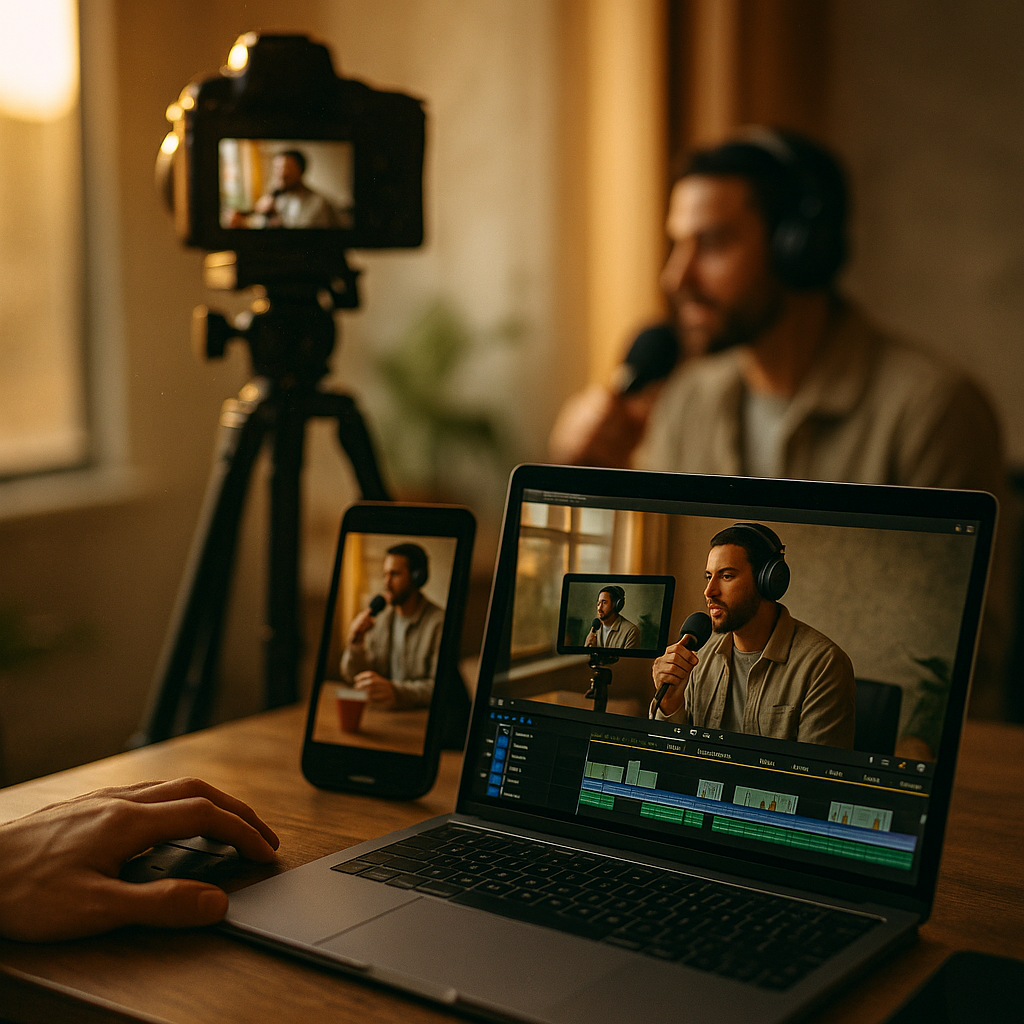
Live streams convert. Short-form clips distribute. What happens when a single creator workflow does both at once? That question is why hybrid live plus short form content has become the format marketers are quietly testing across Q1 budgets, and early data suggests the split-screen approach might outperform either format running alone.
Brands spent years treating live commerce and short-form video as separate line items with separate teams, separate creators, and separate success metrics. That separation is starting to look expensive. The hybrid model collapses the two into one production cycle: a creator goes live, sells in real time, and the stream gets sliced into a dozen short clips within hours. One shoot, two distribution engines.
Why the Hybrid Format Is Getting Budget Attention Now
Live commerce has already crossed the threshold from novelty to necessity. Influencers Time has tracked live commerce nearing default status across multiple verticals, and separate reporting shows live commerce adoption hitting 52 percent among surveyed brands. That’s not a test anymore. That’s infrastructure.
Short-form, meanwhile, remains the reach engine nobody wants to give up. But there’s a catch: creator ad fatigue is setting in faster than brands expected. Influencers Time reported creator ad fatigue hitting around day 36, which means a single piece of short-form creative has a shrinking shelf life. Brands need volume, and volume is expensive if you’re commissioning standalone shoots for every asset.
The hybrid format solves both problems in one move. A live session generates the raw footage, the creator’s commentary becomes caption fodder, and the real-time audience reaction (comments, question spikes, purchase timing) tells editors exactly which moments to clip for short-form. You’re not guessing what will perform. You already watched it happen live.
Treating live and short-form as one production pipeline instead of two separate budgets is the single biggest efficiency unlock creator teams have found this cycle.
What the Format Actually Looks Like in Practice
Strip away the jargon and the workflow is simple. A creator runs a live session, typically 20 to 60 minutes, often tied to a product drop or restock. A producer or the creator’s own editor (increasingly AI-assisted) monitors the stream for spikes: comment surges, “where can I buy this” moments, visible reactions. Those timestamps become the cut list.
Within 24 to 48 hours, 5 to 15 short clips get published across TikTok, Instagram Reels, and YouTube Shorts. Each clip carries a small piece of the live context, a reaction, a demo, an objection handled in real time, that reads as authentic because it genuinely was unscripted.
This isn’t repurposing in the old sense of cropping a webinar into social snippets. The live session is designed from the start knowing it will be chopped up. Creators are briefed to hit certain talking points multiple times, in different words, so editors have options. Some agencies are now writing live run sheets with built in “clip bait” moments, structured the same way a podcast producer plans quotable soundbites.
Where Brands Are Already Testing It
- Beauty and skincare brands pairing live tutorials with Reels showing before and after moments extracted from the stream.
- DTC apparel brands using live try-on sessions as the source for size and fit short-form content, a category that drives high save rates.
- CPG and supplement brands running live Q&A sessions, then clipping the sharpest objection-handling answers into standalone trust-building Shorts.
- B2B brands experimenting with live product demos feeding short-form explainer clips, an extension of the pipeline approach covered in B2B creator content strategies.
The ROI Case: Fewer Shoots, More Assets
Here’s the number that matters to finance teams. A single live session that gets clipped into ten short-form assets can cost less per asset than commissioning ten separate pieces of standalone content. The marginal cost of editing is far lower than the marginal cost of production. Lighting, wardrobe, location, and creator time get amortized across a full content library instead of a single post.
This matters even more as brands scale creator rosters. Influencers Time has covered how larger creator rosters reduce CPM and risk, and hybrid formats compound that math. If each creator on a 50-plus roster can produce a live-to-short pipeline instead of a single static post, the effective output per creator multiplies without a proportional budget increase.
There’s also a measurement upside. Live sessions generate first-party signal, comment sentiment, watch time, real-time conversion, that short-form alone doesn’t provide. Brands that have struggled with the disconnect between reach and sales get a cleaner read when the live portion shows direct purchase intent and the short-form portion shows which messaging actually traveled. You get a funnel in one shoot: the live stream proves what sells, the clips prove what spreads.
Where It Breaks: Production, Rights, and Platform Fit
Nothing this efficient comes without friction. Three issues keep surfacing in brand debriefs.
First, production complexity. Running a live session that’s also engineered for clipping requires a different kind of creator brief than a standard live sale. Not every creator is good at both selling live and generating quotable, clip-ready moments. Casting becomes more selective, and that can offset some of the cost savings if brands end up paying a premium for creators who can do both well.
Second, usage rights get messy fast. A standard UGC contract rarely anticipates that a single live session will be sliced into a dozen downstream assets across multiple platforms. Brands need to renegotiate rights language before the hybrid model, not after, or they risk disputes over how many derivative clips a single live fee actually covers. This is the same contractual discipline Influencers Time flagged when covering how UGC creators are going pro and must be treated as vendors. Hybrid live-to-short work is vendor work, with vendor-grade contracts to match.
Third, platform fit isn’t uniform. TikTok Shop and Instagram Live both support real-time selling, but their clip-export tools and algorithmic treatment of repurposed live content differ. A clip that performs well pulled from a TikTok LIVE might get throttled on Instagram if it looks too similar to native Reels content, and vice versa. Brands running hybrid programs across TikTok’s ad platform and Meta’s business tools need separate editing passes per platform, not a single export dumped everywhere.
The AI Editing Question
AI-assisted clipping tools are the reason this format is scalable at all. Manually scrubbing a 45-minute live stream for ten quotable moments used to take an editor hours. Automated highlight detection, tools that flag comment spikes, laughter, or sentiment shifts, cuts that time dramatically.
But brands should be cautious about over-trusting the automation. Influencers Time’s reporting on AI adoption hitting 88 percent with efficiency gains still unproven applies directly here. Plenty of teams have bought AI clipping tools and still need a human editor to catch brand safety issues, off-message tangents, or moments that look great in isolation but misrepresent the product when clipped out of context. The tool accelerates the first cut. It doesn’t replace judgment on the final one.
How to Pilot This Without Blowing Up Your Workflow
Start small and instrument everything. A reasonable pilot looks like three to five creators, one live session each per month, with a defined clip quota (aim for eight to twelve shorts per session) and clear rights language signed before the first shoot.
Track cost per asset against your current standalone short-form production cost. Track engagement on clips against your baseline short-form benchmarks. And track live-session conversion separately so you can see whether the real-time sales lift holds up once the creator knows the stream is also a content shoot (self-consciousness can kill live authenticity, so watch for that).
Agencies report that the strongest early results come from categories with high consideration cycles, beauty, skincare, home goods, where a buyer genuinely benefits from watching a live demo before deciding, and then gets re-targeted later with a short clip reminder. Lower consideration impulse categories see less lift because the short-form clip alone was often sufficient. Match the format to the purchase psychology, not just the production efficiency.
Benchmarking resources from Sprout Social and eMarketer are worth checking for category-specific short-form performance data before committing a full quarter’s budget to the hybrid model.
FAQs
Frequently Asked Questions
What is hybrid live plus short form content?
It’s a creator production model where a single live streaming session is filmed with the intent of also generating multiple short-form clips, so one shoot produces both a real-time selling event and a library of standalone short videos for platforms like TikTok and Instagram Reels.
Why are brands testing this format now?
Live commerce adoption is rising sharply, short-form content fatigue is setting in faster than expected, and brands need a way to produce high volumes of short-form assets without commissioning a separate shoot for each one. The hybrid format addresses both pressures with one production cycle.
Does hybrid content perform better than standalone live or short-form?
Early brand testing suggests it performs better on cost per asset and signal quality, since the live portion reveals which moments actually resonated before they’re clipped. Standalone performance per platform still varies, so brands should benchmark against their existing short-form and live metrics separately.
What are the biggest risks with this format?
Usage rights are the most common issue, since standard creator contracts rarely anticipate a live session being sliced into a dozen derivative clips. Production complexity and platform-specific editing requirements are the other main friction points.
How should brands structure creator contracts for hybrid content?
Contracts should specify the number of derivative clips permitted, the platforms where they can be published, usage duration, and whether additional compensation applies beyond a certain clip count. Treat the arrangement as vendor-grade content licensing, not a standard UGC agreement.
Which categories see the strongest results with hybrid formats?
Higher consideration categories like beauty, skincare, and home goods tend to benefit most, since buyers often want to see a live demo before purchasing and respond well to short-form follow-up reminders. Lower consideration impulse categories see smaller incremental lift.
Next step: run a three-creator pilot this quarter, lock usage rights before the first shoot, and compare cost per clipped asset against your current standalone short-form spend before scaling the format across your full roster.
Frequently Asked Questions
What is hybrid live plus short form content?
It’s a creator production model where a single live streaming session is filmed with the intent of also generating multiple short-form clips, so one shoot produces both a real-time selling event and a library of standalone short videos for platforms like TikTok and Instagram Reels.
Why are brands testing this format now?
Live commerce adoption is rising sharply, short-form content fatigue is setting in faster than expected, and brands need a way to produce high volumes of short-form assets without commissioning a separate shoot for each one. The hybrid format addresses both pressures with one production cycle.
Does hybrid content perform better than standalone live or short-form?
Early brand testing suggests it performs better on cost per asset and signal quality, since the live portion reveals which moments actually resonated before they’re clipped. Standalone performance per platform still varies, so brands should benchmark against their existing short-form and live metrics separately.
What are the biggest risks with this format?
Usage rights are the most common issue, since standard creator contracts rarely anticipate a live session being sliced into a dozen derivative clips. Production complexity and platform-specific editing requirements are the other main friction points.
How should brands structure creator contracts for hybrid content?
Contracts should specify the number of derivative clips permitted, the platforms where they can be published, usage duration, and whether additional compensation applies beyond a certain clip count. Treat the arrangement as vendor-grade content licensing, not a standard UGC agreement.
Which categories see the strongest results with hybrid formats?
Higher consideration categories like beauty, skincare, and home goods tend to benefit most, since buyers often want to see a live demo before purchasing and respond well to short-form follow-up reminders. Lower consideration impulse categories see smaller incremental lift.
Top Influencer Marketing Agencies
The leading agencies shaping influencer marketing in 2026
Agencies ranked by campaign performance, client diversity, platform expertise, proven ROI, industry recognition, and client satisfaction. Assessed through verified case studies, reviews, and industry consultations.
Moburst

-
2

The Shelf
Boutique Beauty & Lifestyle Influencer AgencyA data-driven boutique agency specializing exclusively in beauty, wellness, and lifestyle influencer campaigns on Instagram and TikTok. Best for brands already focused on the beauty/personal care space that need curated, aesthetic-driven content.Clients: Pepsi, The Honest Company, Hims, Elf Cosmetics, Pure LeafVisit The Shelf → -
3

Audiencly
Niche Gaming & Esports Influencer AgencyA specialized agency focused exclusively on gaming and esports creators on YouTube, Twitch, and TikTok. Ideal if your campaign is 100% gaming-focused — from game launches to hardware and esports events.Clients: Epic Games, NordVPN, Ubisoft, Wargaming, Tencent GamesVisit Audiencly → -
4

Viral Nation
Global Influencer Marketing & Talent AgencyA dual talent management and marketing agency with proprietary brand safety tools and a global creator network spanning nano-influencers to celebrities across all major platforms.Clients: Meta, Activision Blizzard, Energizer, Aston Martin, WalmartVisit Viral Nation → -
5

The Influencer Marketing Factory
TikTok, Instagram & YouTube CampaignsA full-service agency with strong TikTok expertise, offering end-to-end campaign management from influencer discovery through performance reporting with a focus on platform-native content.Clients: Google, Snapchat, Universal Music, Bumble, YelpVisit TIMF → -
6

NeoReach
Enterprise Analytics & Influencer CampaignsAn enterprise-focused agency combining managed campaigns with a powerful self-service data platform for influencer search, audience analytics, and attribution modeling.Clients: Amazon, Airbnb, Netflix, Honda, The New York TimesVisit NeoReach → -
7

Ubiquitous
Creator-First Marketing PlatformA tech-driven platform combining self-service tools with managed campaign options, emphasizing speed and scalability for brands managing multiple influencer relationships.Clients: Lyft, Disney, Target, American Eagle, NetflixVisit Ubiquitous → -
8

Obviously
Scalable Enterprise Influencer CampaignsA tech-enabled agency built for high-volume campaigns, coordinating hundreds of creators simultaneously with end-to-end logistics, content rights management, and product seeding.Clients: Google, Ulta Beauty, Converse, AmazonVisit Obviously →