


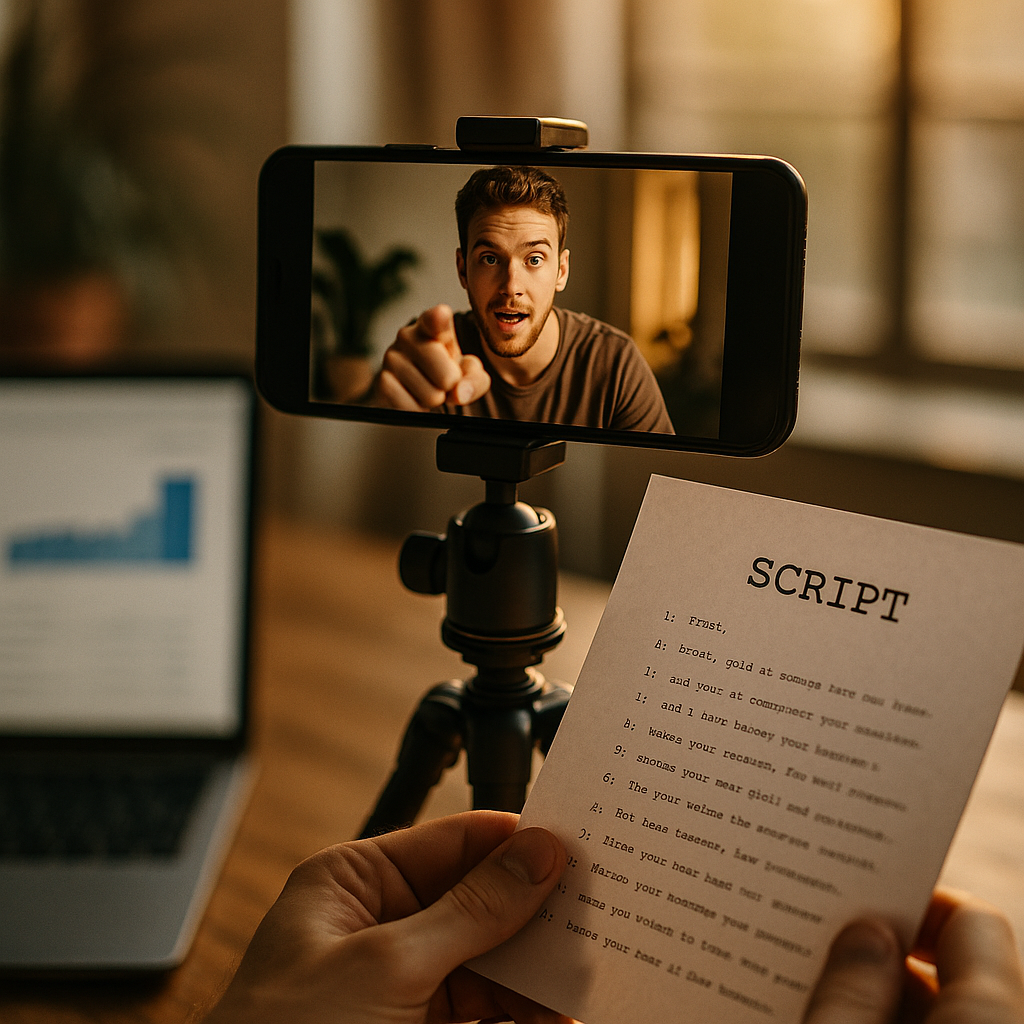
Ads that open with a product shot now lose the scroll in under a second. Meta’s own creative benchmarking has repeatedly shown that user-generated, first-person content outperforms polished brand creative on hook rate and cost per result. The format driving that gap right now is the POV style creator ad: handheld, first-person, shot like a text from a friend instead of a commercial. But POV only works when it’s scripted with intent. Point a phone at a product and hope is not a framework. It’s a gamble.
This piece breaks down the scripting frameworks that make POV creator ads outperform traditional hook-driven formats, and why the structure underneath the “casual” footage matters more than the footage itself.
Why Traditional Hooks Are Losing Ground
The old direct response playbook trained an entire generation of media buyers: open with a bold claim, a shocking stat, a before/after flash, then pivot to product. It worked for years. It still works, sometimes. But audiences on TikTok, Reels, and YouTube Shorts have developed an immune response to it. They can smell an ad hook from the thumbnail frame.
POV format flips the opening move. Instead of announcing “here’s why this product is amazing,” it drops the viewer into a moment: a car ride, a bathroom mirror, a first use, an unboxing in real time. The viewer isn’t being sold to. They’re watching something happen, and the sales message rides along inside the experience instead of leading it.
The shift isn’t cosmetic. A hook-first ad asks for attention. A POV ad borrows attention that’s already there, because the format mimics content the viewer chose to watch in the first place.
That distinction is why brands running POV creative are seeing lower cost per click and higher thumb-stop rates compared to studio-style ads, according to creative performance reports from eMarketer. The format isn’t magic. It’s a different trust mechanism, and the script has to be built around that mechanism, not bolted onto it after the fact.
The Hook Still Matters, It Just Moves
Don’t mistake “no hook” for “no structure.” POV ads still need a reason to keep watching in the first two seconds. The difference is where the hook lives. In traditional ads, the hook is a line of copy or a graphic. In POV ads, the hook is a visual situation: an unexpected location, a strong emotional beat, a question posed mid-action. For more on how this plays out specifically in product launch content, our breakdown of POV format scripts covers the launch-specific version of this problem in depth.
If you’ve already tested hook-first scripts and seen CTR plateau, it’s worth comparing results against a POV script template built specifically to lift paid CTR rather than organic engagement. The two goals require slightly different pacing, and conflating them is a common reason POV tests underperform in media buying.
The Four Frameworks That Actually Convert
There isn’t one “POV script.” There are at least four distinct structures, and brands that treat them interchangeably waste budget testing the wrong variable. Here’s what’s actually working across brand and agency programs right now.
1. The In-Motion Reveal
Camera starts rolling before the “interesting” thing happens. The creator is driving, walking into a store, or already mid-task. The product enters the frame as a natural interruption, not an introduction. This framework works because it mimics how people actually discover products: by accident, mid-life, not during a dedicated “shopping moment.”
Scripting note: write the first five seconds as a scene direction, not a line of dialogue. “Walking into the gym, bag still on shoulder, phone propped against locker” tells the creator more than any scripted sentence would.
2. The Problem Confession
The creator admits something slightly embarrassing or relatable before introducing the solution. This is the closest POV gets to a traditional hook, but the delivery is confessional rather than declarative. “I didn’t think I needed this until my dermatologist said something that actually scared me” lands differently than “This changed my skin in 7 days.”
This framework performs especially well in beauty, wellness, and personal finance verticals, where trust is the actual product being sold alongside the physical one.
3. The Real-Time Reaction
Unscripted-feeling reaction, often filmed as if the creator forgot the camera was running. This overlaps heavily with reaction-style formats more broadly. If your team is already testing picture-in-picture reaction ads, the scripting logic is nearly identical: plant doubt early, resolve it on camera, let the resolution feel involuntary rather than performed.
4. The Second-Person Narration
The creator speaks directly to an implied “you,” describing a shared situation rather than their own. “You know that moment when your skin just feels tight after a flight?” This framework works because it removes the creator as the subject and makes the viewer the subject, which increases the sense that the ad is speaking to them specifically rather than performing for an audience.
What Makes a POV Script Different From a Normal UGC Brief
A lot of brands hand creators a bullet list of talking points and call it a POV script. That’s a mistake. POV scripting requires three layers that traditional briefs skip:
- Camera position direction, not just dialogue, because the angle sells the authenticity as much as the words do.
- Timing beats tied to visual action, so the creator knows when to speak relative to what’s happening on screen, not just what to say.
- Imperfection cues, deliberate instructions to leave in a stumble, a pause, or a redo, because overly smooth delivery breaks the format’s core illusion.
Brief writers coming from a traditional ad background tend to over-script dialogue and under-script physicality. Flip that ratio. The words matter less than when and how they’re delivered on camera.
Where Brands Get the Approval Process Wrong
Legal and compliance teams often push back on POV ads because they look unscripted, which makes some reviewers nervous about claims and disclosure. The fix isn’t to strip out the authenticity, it’s to formalize the script so it clears review while still reading as casual on screen. This is the same tension covered in our piece on creator handle ads that clear brand review, and the solution translates directly: lock the claims language in writing, leave the delivery style flexible.
FTC disclosure requirements don’t bend for format. A POV ad still needs clear, unambiguous disclosure of the material connection between creator and brand, per FTC endorsement guidelines. Teams running international campaigns should also check regional guidance, since UK requirements under the ICO differ slightly on placement and wording of sponsorship disclosures.
A script that protects legal exposure and a script that feels authentic are not in conflict. They’re both achievable in the same document, if you separate the “must say” language from the “how to say it” direction.
Measuring Performance Without Fooling Yourself
CTR alone doesn’t tell you whether a POV script is working. Watch time and hold rate matter more, because POV ads that get clicked but abandoned fast usually signal a mismatch between the opening scene and the eventual pitch. Track three metrics specifically:
- Three-second hold rate (confirms the opening scene choice is working)
- Completion rate past the midpoint (confirms the pivot to product doesn’t break the spell)
- Cost per click relative to your traditional hook baseline, run as a direct A/B, not a sequential test
Platforms like TikTok Ads Manager and Meta Business Suite both support this kind of creative-level breakdown now, which means there’s no excuse for judging POV performance on spend and impressions alone.
If you’re building a broader testing calendar, it’s worth pairing POV scripts against other emerging formats rather than only against your old hook-first control. Our look at expectation versus reality scripts is a useful second variable, since it shares the same “earned attention” logic as POV but uses comedy instead of intimacy as the trust mechanism.
A Quick Gut Check Before You Brief Your Next Batch
Ask whether the script would still make sense if the brand name were muted out. If the first ten seconds only work because of the product mention, it’s still a traditional ad wearing a POV costume. Real POV scripts hold up as content on their own, with the product as a natural part of the scene rather than the reason the scene exists.
Start your next test by rewriting one existing hook-first script into a Problem Confession or In-Motion Reveal structure, run it against the original as a direct A/B, and let hold rate (not just CTR) decide the winner.
FAQs
What makes POV style creator ads different from standard UGC ads?
POV ads are shot and scripted from a first-person perspective, with camera position, timing, and delivery designed to mimic organic content rather than announce itself as an advertisement. Standard UGC ads can still look and feel like a pitch; POV ads are built to feel like a moment the viewer is dropped into.
Do POV ads actually outperform traditional hook-first ads?
In most creative testing reported by platforms and agencies, POV format ads show higher three-second hold rates and lower cost per click compared to studio-style or hook-first ads, particularly in beauty, wellness, and lifestyle categories. Results vary by vertical, so direct A/B testing against your existing control is still necessary.
How long should a POV creator ad script be?
Most high-performing POV scripts run 15 to 30 seconds, with the first five seconds dedicated entirely to establishing the scene rather than the sell. Longer formats can work for storytelling-heavy categories, but anything over 45 seconds needs a strong mid-point pivot to hold attention.
Does a POV ad still need to disclose the brand partnership?
Yes. Disclosure requirements apply regardless of format or how “unscripted” the content appears. Brands should lock disclosure language into the script as a non-negotiable element while leaving delivery style flexible for the creator.
Can POV scripting work for B2B or non-consumer products?
Yes, though the frameworks shift. Second-person narration and problem confession structures tend to translate well to B2B because they focus on a shared professional pain point rather than a physical product reveal.
FAQs
What makes POV style creator ads different from standard UGC ads?
POV ads are shot and scripted from a first-person perspective, with camera position, timing, and delivery designed to mimic organic content rather than announce itself as an advertisement. Standard UGC ads can still look and feel like a pitch; POV ads are built to feel like a moment the viewer is dropped into.
Do POV ads actually outperform traditional hook-first ads?
In most creative testing reported by platforms and agencies, POV format ads show higher three-second hold rates and lower cost per click compared to studio-style or hook-first ads, particularly in beauty, wellness, and lifestyle categories. Results vary by vertical, so direct A/B testing against your existing control is still necessary.
How long should a POV creator ad script be?
Most high-performing POV scripts run 15 to 30 seconds, with the first five seconds dedicated entirely to establishing the scene rather than the sell. Longer formats can work for storytelling-heavy categories, but anything over 45 seconds needs a strong mid-point pivot to hold attention.
Does a POV ad still need to disclose the brand partnership?
Yes. Disclosure requirements apply regardless of format or how “unscripted” the content appears. Brands should lock disclosure language into the script as a non-negotiable element while leaving delivery style flexible for the creator.
Can POV scripting work for B2B or non-consumer products?
Yes, though the frameworks shift. Second-person narration and problem confession structures tend to translate well to B2B because they focus on a shared professional pain point rather than a physical product reveal.
Top Influencer Marketing Agencies
The leading agencies shaping influencer marketing in 2026
Agencies ranked by campaign performance, client diversity, platform expertise, proven ROI, industry recognition, and client satisfaction. Assessed through verified case studies, reviews, and industry consultations.
Moburst

-
2

The Shelf
Boutique Beauty & Lifestyle Influencer AgencyA data-driven boutique agency specializing exclusively in beauty, wellness, and lifestyle influencer campaigns on Instagram and TikTok. Best for brands already focused on the beauty/personal care space that need curated, aesthetic-driven content.Clients: Pepsi, The Honest Company, Hims, Elf Cosmetics, Pure LeafVisit The Shelf → -
3

Audiencly
Niche Gaming & Esports Influencer AgencyA specialized agency focused exclusively on gaming and esports creators on YouTube, Twitch, and TikTok. Ideal if your campaign is 100% gaming-focused — from game launches to hardware and esports events.Clients: Epic Games, NordVPN, Ubisoft, Wargaming, Tencent GamesVisit Audiencly → -
4

Viral Nation
Global Influencer Marketing & Talent AgencyA dual talent management and marketing agency with proprietary brand safety tools and a global creator network spanning nano-influencers to celebrities across all major platforms.Clients: Meta, Activision Blizzard, Energizer, Aston Martin, WalmartVisit Viral Nation → -
5

The Influencer Marketing Factory
TikTok, Instagram & YouTube CampaignsA full-service agency with strong TikTok expertise, offering end-to-end campaign management from influencer discovery through performance reporting with a focus on platform-native content.Clients: Google, Snapchat, Universal Music, Bumble, YelpVisit TIMF → -
6

NeoReach
Enterprise Analytics & Influencer CampaignsAn enterprise-focused agency combining managed campaigns with a powerful self-service data platform for influencer search, audience analytics, and attribution modeling.Clients: Amazon, Airbnb, Netflix, Honda, The New York TimesVisit NeoReach → -
7

Ubiquitous
Creator-First Marketing PlatformA tech-driven platform combining self-service tools with managed campaign options, emphasizing speed and scalability for brands managing multiple influencer relationships.Clients: Lyft, Disney, Target, American Eagle, NetflixVisit Ubiquitous → -
8

Obviously
Scalable Enterprise Influencer CampaignsA tech-enabled agency built for high-volume campaigns, coordinating hundreds of creators simultaneously with end-to-end logistics, content rights management, and product seeding.Clients: Google, Ulta Beauty, Converse, AmazonVisit Obviously →