


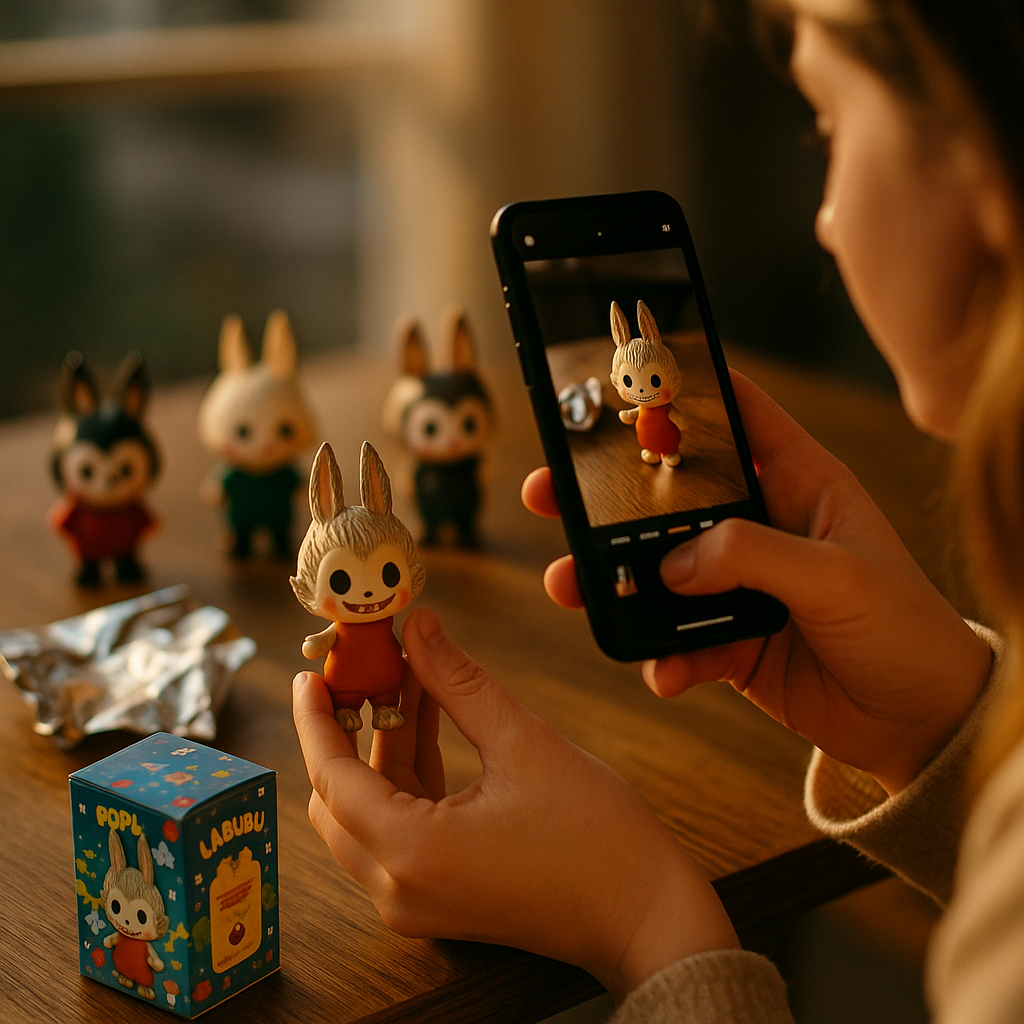
One toy line generated more organic unboxing content last year than most Fortune 500 launches manage in a decade. Pop Mart’s Labubu blind box drops didn’t just sell out shelves, they built a creator economy feedback loop that marketers are still trying to reverse-engineer. The question every brand strategist should be asking isn’t “why is a vinyl toy going viral,” it’s “what mechanics made this repeatable, and can we borrow them?”
Why Blind Boxes Are Engineered for Unboxing Content
Blind boxes work because they solve a content problem before a creator ever hits record. Every box contains an unknown figure from a themed series, including rare “secret” variants with odds often below 1 in 72. That structural uncertainty is free dramatic tension. A creator doesn’t need a script, a hook, or a call to action baked into the copy. The reveal itself is the content.
Compare that to a typical product seeding campaign, where a brand hands a creator a finished item and hopes the review feels authentic. Pop Mart flipped the model: the product is incomplete until the camera is rolling. That’s a fundamentally different creative brief, and it’s one most CPG and beauty brands have never tested.
The core insight brands keep missing: Pop Mart didn’t pay for unboxing videos, it designed a product that made unboxing videos inevitable.
Scarcity Did the Media Buying
Limited drop windows, regional exclusives, and collaboration series (with artists, fashion labels, and other IP) created a constant stream of “new drop” moments. Each one reset the content cycle. Marketers obsessed with always-on creator programs, like the approach detailed in always-on casting strategies, should note that scarcity and always-on aren’t opposites. Pop Mart ran a cadence of frequent, time-boxed releases that functioned like an always-on calendar built entirely around FOMO.
The Numbers Behind the Phenomenon
Pop Mart’s revenue has scaled dramatically on the back of IP lines like Labubu, with international markets (Southeast Asia, the US, and Europe) now outpacing domestic China sales growth. Secondary market resale prices for rare figures have reportedly climbed into the hundreds of dollars on platforms like StockX and eBay, a dynamic that mirrors sneaker drop culture more than traditional toy retail. According to eMarketer consumer behavior research, unboxing and reveal content consistently ranks among the highest-engagement video formats across short-form platforms, which explains why Pop Mart’s organic reach outpaced its paid media spend by a wide margin.
That’s the part that should make procurement teams sit up. A brand didn’t need a seven-figure influencer budget to generate billions of organic views. It needed a product mechanic that creators wanted to film regardless of compensation.
From Collector Culture to Creator Economy Playbook
Collector communities have always driven word of mouth, think trading cards, sneakers, or limited-run streetwear. What’s different here is the platform-native format. TikTok and Instagram Reels reward short, visually surprising clips, and a blind box reveal fits that format almost perfectly: a wrapped box, a tear, a reaction shot, a close-up of the figure. No editing talent required, which lowered the barrier for nano and micro creators to participate at scale.
That accessibility is what turned a niche collectible into a mainstream phenomenon. Celebrities carrying Labubu charms on handbags accelerated awareness, but the volume came from thousands of smaller creators posting authentic reactions, not a handful of paid celebrity placements. It’s a dynamic similar to what drove Scrub Daddy’s affiliate-driven TikTok Shop growth, where an open, low-friction creator model outperformed a tightly controlled celebrity strategy.
The Platform Mechanics Mattered as Much as the Product
TikTok Shop integration gave viewers a direct path from “that reveal looked fun” to “add to cart” in a single swipe. Brands evaluating commerce-enabled platforms should look at how Crocs built a multi-million dollar TikTok Shop channel using a comparable blend of creator volume and frictionless checkout. Pop Mart’s drops benefited from the same infrastructure: impulse-driven content meeting impulse-friendly commerce.
What Brands Outside Toys Can Actually Steal From This
Not every category can sell literal mystery boxes, but the underlying principles travel well beyond collectibles.
- Build in a reveal moment. Even a non-blind product can have packaging, sampling, or bundling mechanics that create a natural “what’s inside” beat for creators.
- Lower the creative lift. The easier it is to film a compelling clip without a script, the more creators (especially nano and micro tiers) will participate organically.
- Use scarcity as a content calendar, not just a sales lever. Limited drops give creators a reason to post now rather than whenever.
- Let the secondary market talk. Resale value signals cultural relevance faster than any brand-published claim could.
This is the same logic brands use when they recruit high-volume nano creator networks for authenticity at scale, an approach documented in e.l.f. Beauty’s nano creator vetting process. Pop Mart achieved a similar effect without formal vetting at all, simply because the product gave creators a reason to show up.
Risk, Scalping, and the Brand Safety Side Nobody Talks About
Viral scarcity has a dark side, and marketers need to plan for it rather than be surprised by it. Bot-driven resale, counterfeit figures flooding marketplaces, and scalper bots buying out drops within seconds have all shadowed Labubu’s rise. For brands considering a similar scarcity play, that’s a compliance and reputation risk, not just a logistics headache.
Scarcity marketing without inventory controls and anti-bot measures doesn’t just frustrate customers, it hands your brand equity to resellers and counterfeiters.
Any brand modeling a drop strategy needs a plan for verified purchase limits, regional allocation, and clear disclosure guidance for creators who receive free product. The FTC’s endorsement guidelines still apply even when the “payment” is a rare collectible rather than cash, and brands that skip disclosure compliance expose themselves to the same enforcement risk as any paid partnership. Teams building auditable influencer programs, similar to the governance model behind GameSquare’s auditable ROI framework, should treat gifted-product drops with the same documentation rigor as paid campaigns.
Measuring ROI When Nobody Got Paid
Here’s the uncomfortable truth for performance marketers: a huge share of Labubu’s content volume was never commissioned. That makes traditional affiliate or CPA tracking nearly useless for capturing the full picture. Brands trying to quantify organic lift from a drop strategy need to lean on share-of-voice tracking, branded hashtag volume, and resale price trends as proxy metrics, since platforms like Sprout Social and Statista both offer benchmarking data for organic engagement trends that can contextualize a spike against category norms.
It’s worth comparing this to how CPG brands structure tiered creator investment against sales data, as outlined in Huda Beauty’s creator tier to sales model. Pop Mart essentially ran the organic-only version of that same funnel: high volume, low direct spend, and sales data (sell-through speed, resale premiums) standing in for traditional attribution.
FAQs
What made Labubu blind boxes go viral on social media?
The combination of randomized reveals, rare secret variants, and short-form video formats created a natural content hook. Creators didn’t need scripts or incentives, the uncertainty of what was inside the box was inherently filmable and shareable.
Did Pop Mart pay influencers to create unboxing content?
Much of the content was organic rather than paid. Celebrity visibility accelerated awareness, but the bulk of unboxing volume came from nano and micro creators posting unprompted reactions, similar to open affiliate or UGC-driven models used by other consumer brands.
How can brands outside the toy industry apply the blind box content strategy?
Brands can build a “reveal moment” into packaging, bundling, or sampling, lower the creative barrier so any creator can film a compelling clip without scripting, and use limited drops to create recurring content cycles rather than one-off launches.
What are the risks of scarcity-driven drop marketing?
Scarcity invites bot-driven scalping, counterfeit products, and resale market exploitation. Brands need inventory controls, purchase limits, and clear influencer disclosure policies to avoid reputational and regulatory risk.
How should marketers measure ROI from organic, unpaid creator content?
Traditional CPA or affiliate tracking won’t capture unpaid organic volume. Marketers should track branded hashtag growth, share of voice, sell-through speed, and secondary market pricing as proxy indicators of real demand and cultural traction.
FAQs
What made Labubu blind boxes go viral on social media? The combination of randomized reveals, rare secret variants, and short-form video formats created a natural content hook. Creators didn’t need scripts or incentives, the uncertainty of what was inside the box was inherently filmable and shareable.
Did Pop Mart pay influencers to create unboxing content? Much of the content was organic rather than paid. Celebrity visibility accelerated awareness, but the bulk of unboxing volume came from nano and micro creators posting unprompted reactions, similar to open affiliate or UGC-driven models used by other consumer brands.
How can brands outside the toy industry apply the blind box content strategy? Brands can build a reveal moment into packaging, bundling, or sampling, lower the creative barrier so any creator can film a compelling clip without scripting, and use limited drops to create recurring content cycles rather than one-off launches.
What are the risks of scarcity-driven drop marketing? Scarcity invites bot-driven scalping, counterfeit products, and resale market exploitation. Brands need inventory controls, purchase limits, and clear influencer disclosure policies to avoid reputational and regulatory risk.
How should marketers measure ROI from organic, unpaid creator content? Traditional CPA or affiliate tracking won’t capture unpaid organic volume. Marketers should track branded hashtag growth, share of voice, sell-through speed, and secondary market pricing as proxy indicators of real demand and cultural traction.
The takeaway for brand teams isn’t “launch a blind box.” It’s “find the mechanic that makes the content film itself, then build scarcity and compliance guardrails around it before creators do.” Audit your next launch for a built-in reveal moment, and you’ll spend less on media and more on inventory to meet demand.
Top Influencer Marketing Agencies
The leading agencies shaping influencer marketing in 2026
Agencies ranked by campaign performance, client diversity, platform expertise, proven ROI, industry recognition, and client satisfaction. Assessed through verified case studies, reviews, and industry consultations.
Moburst

-
2

The Shelf
Boutique Beauty & Lifestyle Influencer AgencyA data-driven boutique agency specializing exclusively in beauty, wellness, and lifestyle influencer campaigns on Instagram and TikTok. Best for brands already focused on the beauty/personal care space that need curated, aesthetic-driven content.Clients: Pepsi, The Honest Company, Hims, Elf Cosmetics, Pure LeafVisit The Shelf → -
3

Audiencly
Niche Gaming & Esports Influencer AgencyA specialized agency focused exclusively on gaming and esports creators on YouTube, Twitch, and TikTok. Ideal if your campaign is 100% gaming-focused — from game launches to hardware and esports events.Clients: Epic Games, NordVPN, Ubisoft, Wargaming, Tencent GamesVisit Audiencly → -
4

Viral Nation
Global Influencer Marketing & Talent AgencyA dual talent management and marketing agency with proprietary brand safety tools and a global creator network spanning nano-influencers to celebrities across all major platforms.Clients: Meta, Activision Blizzard, Energizer, Aston Martin, WalmartVisit Viral Nation → -
5

The Influencer Marketing Factory
TikTok, Instagram & YouTube CampaignsA full-service agency with strong TikTok expertise, offering end-to-end campaign management from influencer discovery through performance reporting with a focus on platform-native content.Clients: Google, Snapchat, Universal Music, Bumble, YelpVisit TIMF → -
6

NeoReach
Enterprise Analytics & Influencer CampaignsAn enterprise-focused agency combining managed campaigns with a powerful self-service data platform for influencer search, audience analytics, and attribution modeling.Clients: Amazon, Airbnb, Netflix, Honda, The New York TimesVisit NeoReach → -
7

Ubiquitous
Creator-First Marketing PlatformA tech-driven platform combining self-service tools with managed campaign options, emphasizing speed and scalability for brands managing multiple influencer relationships.Clients: Lyft, Disney, Target, American Eagle, NetflixVisit Ubiquitous → -
8

Obviously
Scalable Enterprise Influencer CampaignsA tech-enabled agency built for high-volume campaigns, coordinating hundreds of creators simultaneously with end-to-end logistics, content rights management, and product seeding.Clients: Google, Ulta Beauty, Converse, AmazonVisit Obviously →