


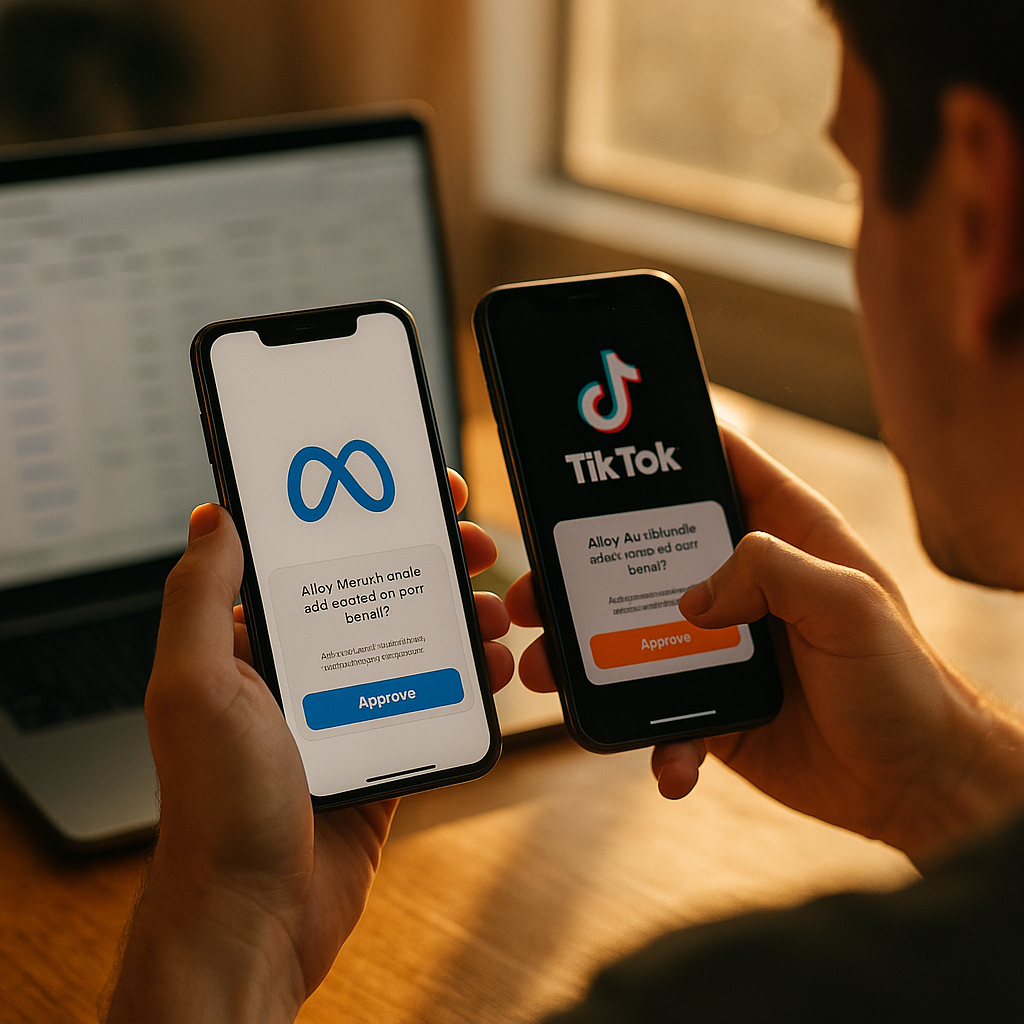
Here’s an uncomfortable number for anyone running influencer programs at scale: brands lose an average of three to five business days per campaign just waiting on creator ad code approvals. Multiply that across a quarter with forty active partnerships and you’ve burned a month of flight time on paperwork. Creator handle ad management tools exist to close that gap, but Meta and TikTok have built fundamentally different systems for letting brands run paid media through a creator’s handle. Picking the wrong workflow costs you speed, spend efficiency, and sometimes the partnership itself.
Why “Running Ads Through a Creator’s Handle” Even Matters
Whitelisting, branded content ads, Spark Ads: the terminology varies, but the mechanic is the same. A brand pays to boost a piece of content that lives on the creator’s profile, using the creator’s handle, engagement history, and social proof as the delivery vehicle. The ad shows up with the creator’s name attached, not the brand’s page. That matters because audiences trust creator accounts more than brand accounts, and performance data backs it up repeatedly in platform case studies.
The operational catch is permissions. You can’t just boost someone else’s post. Both Meta and TikTok require the creator to grant explicit ad partnership access, and the tooling for managing that access, at scale, across dozens or hundreds of creators, is where the real differences show up.
Meta’s Partnership Ads Hub: Centralized, But Slow to Scale
Meta consolidated its creator ad permissions into the Partnership Ads Hub, replacing the old Brand Collabs Manager workflow. A creator generates a partnership code or accepts a direct invite, links their Instagram or Facebook account, and the brand gets permission to run that content as an ad through Ads Manager. It’s clean in concept. In practice, agencies managing fifty or more creator relationships per quarter report that code generation, expiration windows, and re-authorization requests (especially after account changes or agency handoffs) create a steady trickle of micro-delays.
The upside is depth. Once access is granted, Meta’s targeting, budget controls, and A/B testing infrastructure inside Ads Manager are mature. You can run the same creator asset against five audience segments, pull performance by placement, and feed results straight into attribution tooling. If your team already lives in Meta Ads Manager, Partnership Ads feels like a natural extension rather than a bolted-on feature.
The platform with the best targeting infrastructure isn’t automatically the fastest one to launch on. Permission friction, not ad tech, is usually the real bottleneck in creator handle campaigns.
TikTok’s Spark Ads and TikTok One: Faster Handshake, Thinner Controls
TikTok built its creator ad permission flow around Spark Ads, authorized through a simple code the creator generates in-app and hands to the brand. No account linking required on the brand side, which is a meaningful speed advantage. Codes typically stay valid for a defined window, long enough for most campaign flights, and renewal is a one-click action for the creator.
TikTok One, the platform’s expanded creator marketplace and campaign management layer, adds discovery, briefing, and payment on top of that authorization flow, positioning itself as a more complete pipeline than Meta currently offers natively. The tradeoff: TikTok’s ad customization inside Spark Ads is narrower than Meta’s. You’re largely boosting the creator’s original content as-is, with fewer creative variant options and less granular audience layering compared to Ads Manager’s toolkit.
For brands running high-volume, fast-turnaround campaigns (think seasonal drops or trend-reactive content), that speed advantage often outweighs the lost customization. For brands running always-on, heavily segmented programs, Meta’s deeper controls tend to win out.
Where the Real Cost Shows Up: Operational Overhead, Not Platform Fees
Neither Meta nor TikTok charges extra to use their native handle-based ad tools, which makes the comparison look like a wash on paper. It isn’t. The real cost lives in your team’s hours: chasing code renewals, reconciling which creators granted access on which platform, and manually tracking expiration dates in a spreadsheet because neither platform gives you a unified dashboard across both.
- Meta Partnership Ads: stronger targeting and reporting, slower permission cycle, better suited to sustained always-on programs.
- TikTok Spark Ads / TikTok One: faster authorization, thinner customization, better suited to high-velocity, trend-driven flights.
- Cross-platform reconciliation: the real gap. Neither platform tells you what’s happening on the other, so multi-platform brands end up building their own tracking layer or buying a third-party one.
This is exactly the gap that third-party blended creator dashboards try to close, pulling Meta and TikTok permission status, spend, and performance into one view instead of two logins and a spreadsheet. If you’re running creator ad programs across both platforms at any real volume, that consolidation is no longer a nice-to-have. It’s table stakes for anyone trying to prove program-level ROI rather than platform-siloed wins.
Attribution Gets Messier Once Ads Run Through Handles
Boosted creator content complicates attribution in ways plain brand ads don’t. The content lives on the creator’s handle, engagement accrues there, and depending on the platform, conversion tracking can get fragmented between the organic post and the paid push. Teams relying on last-click models often undercount creator-driven ad performance entirely. Pairing handle-based campaigns with proper attribution analytics rather than platform-reported metrics alone gives a far more honest read on what’s actually working. According to eMarketer, influencer-driven ad spend continues climbing year over year, which means the attribution stakes on these campaigns are only getting bigger.
Creative Fatigue Hits Differently When It’s a Creator’s Face on the Ad
There’s a wrinkle specific to handle-based advertising: creative fatigue compounds faster. When a brand runs its own ad creative, swapping variants is a production decision. When you’re boosting a creator’s handle, you’re often limited to the content they’ve already posted, and audiences who follow that creator organically start recognizing the “ad version” quickly, which drags down CPMs over time. Brands running sustained Partnership Ads or Spark Ads flights should be watching fatigue signals closely, the same way they would for any paid creative. Tools built for creative fatigue detection catch the CPA lag before it shows up as a wasted quarter of spend, and that discipline matters even more when your creative pool is limited to what a creator chooses to post.
Compliance Still Lives With the Brand, Not the Platform
One thing both platforms get right: disclosure labeling is baked into the ad unit. Meta’s Partnership Ads auto-tag “Paid partnership with,” and TikTok’s Spark Ads carry similar labeling. That’s good news for FTC compliance, since the Federal Trade Commission continues to scrutinize undisclosed paid creator content closely. But labeling alone doesn’t absolve brands of responsibility. Contracts still need to spell out usage rights, flight duration, and renewal terms explicitly, because platform permission codes expire regardless of what your media plan says. Legal and compliance teams should treat handle-based ad access the same way they treat any licensed content: with an audit trail, not a verbal agreement in a DM thread. Synthetic and AI-assisted creator content adds another layer here too, and brands experimenting with hybrid content should review how synthetic creator content liability actually gets assigned before running it through paid handles.
Payment and Rights Terms Don’t Automatically Sync With Ad Access
Granting ad permission and getting paid are two separate workflows on both platforms, and brands frequently conflate them. A creator can authorize a Spark Ads code without any payment terms being locked in through the platform itself; that’s still a contract negotiated off-platform in most cases. Programs that have modernized payout timing alongside ad permissions, similar to the approach outlined in coverage of rights and payout models, tend to see fewer disputes over renewal and usage windows down the line. Build payment triggers into the same workflow as code renewal, not a separate process managed by a different team.
So Which One Should You Actually Standardize On?
Most mature programs don’t pick one. They run Meta Partnership Ads for evergreen, performance-tested creator content where deeper targeting pays off, and TikTok Spark Ads for trend-reactive, short-flight campaigns where speed to launch matters more than audience segmentation depth. The mistake is treating either platform’s native tooling as sufficient for cross-platform reporting. It isn’t, and pretending otherwise is how budgets get misattributed at the quarterly review. Check current guidance directly from Meta Business and TikTok Ads before rolling out new permission workflows, since both platforms update authorization requirements more often than most brand teams track internally.
Next step: audit your current creator ad permissions on both platforms this week. If you can’t tell, without opening three tabs and a spreadsheet, which creators have active ad codes expiring in the next thirty days, your program has an operational gap that will eventually cost you a launch delay or a compliance headache.
Frequently Asked Questions
What’s the main difference between Meta Partnership Ads and TikTok Spark Ads?
Meta Partnership Ads require account-level linking through the Partnership Ads Hub and offer deeper targeting and reporting inside Ads Manager. TikTok Spark Ads use a simpler code-based authorization with faster setup but fewer creative customization options.
Do creators get paid automatically when a brand boosts their content?
No. Ad permission and payment are separate workflows on both platforms. Payment terms still need to be negotiated and managed through a contract or a third-party payout tool, independent of the ad authorization code.
How long do creator ad permission codes last?
Duration varies by platform and account settings, but both Meta and TikTok codes expire and require renewal. Brands running always-on programs need a tracking system to catch expirations before a campaign goes dark mid-flight.
Is boosted creator content automatically FTC compliant?
Platform labeling like “Paid partnership with” helps, but it doesn’t fully offload compliance responsibility from the brand. Contracts should still document usage rights and disclosure terms explicitly.
Can I manage Meta and TikTok creator ad permissions in one dashboard?
Neither platform offers native cross-platform permission tracking. Brands running programs on both typically rely on blended dashboards or internal tracking systems to consolidate status, expiration, and performance data.
Top Influencer Marketing Agencies
The leading agencies shaping influencer marketing in 2026
Agencies ranked by campaign performance, client diversity, platform expertise, proven ROI, industry recognition, and client satisfaction. Assessed through verified case studies, reviews, and industry consultations.
Moburst

-
2

The Shelf
Boutique Beauty & Lifestyle Influencer AgencyA data-driven boutique agency specializing exclusively in beauty, wellness, and lifestyle influencer campaigns on Instagram and TikTok. Best for brands already focused on the beauty/personal care space that need curated, aesthetic-driven content.Clients: Pepsi, The Honest Company, Hims, Elf Cosmetics, Pure LeafVisit The Shelf → -
3

Audiencly
Niche Gaming & Esports Influencer AgencyA specialized agency focused exclusively on gaming and esports creators on YouTube, Twitch, and TikTok. Ideal if your campaign is 100% gaming-focused — from game launches to hardware and esports events.Clients: Epic Games, NordVPN, Ubisoft, Wargaming, Tencent GamesVisit Audiencly → -
4

Viral Nation
Global Influencer Marketing & Talent AgencyA dual talent management and marketing agency with proprietary brand safety tools and a global creator network spanning nano-influencers to celebrities across all major platforms.Clients: Meta, Activision Blizzard, Energizer, Aston Martin, WalmartVisit Viral Nation → -
5

The Influencer Marketing Factory
TikTok, Instagram & YouTube CampaignsA full-service agency with strong TikTok expertise, offering end-to-end campaign management from influencer discovery through performance reporting with a focus on platform-native content.Clients: Google, Snapchat, Universal Music, Bumble, YelpVisit TIMF → -
6

NeoReach
Enterprise Analytics & Influencer CampaignsAn enterprise-focused agency combining managed campaigns with a powerful self-service data platform for influencer search, audience analytics, and attribution modeling.Clients: Amazon, Airbnb, Netflix, Honda, The New York TimesVisit NeoReach → -
7

Ubiquitous
Creator-First Marketing PlatformA tech-driven platform combining self-service tools with managed campaign options, emphasizing speed and scalability for brands managing multiple influencer relationships.Clients: Lyft, Disney, Target, American Eagle, NetflixVisit Ubiquitous → -
8

Obviously
Scalable Enterprise Influencer CampaignsA tech-enabled agency built for high-volume campaigns, coordinating hundreds of creators simultaneously with end-to-end logistics, content rights management, and product seeding.Clients: Google, Ulta Beauty, Converse, AmazonVisit Obviously →