


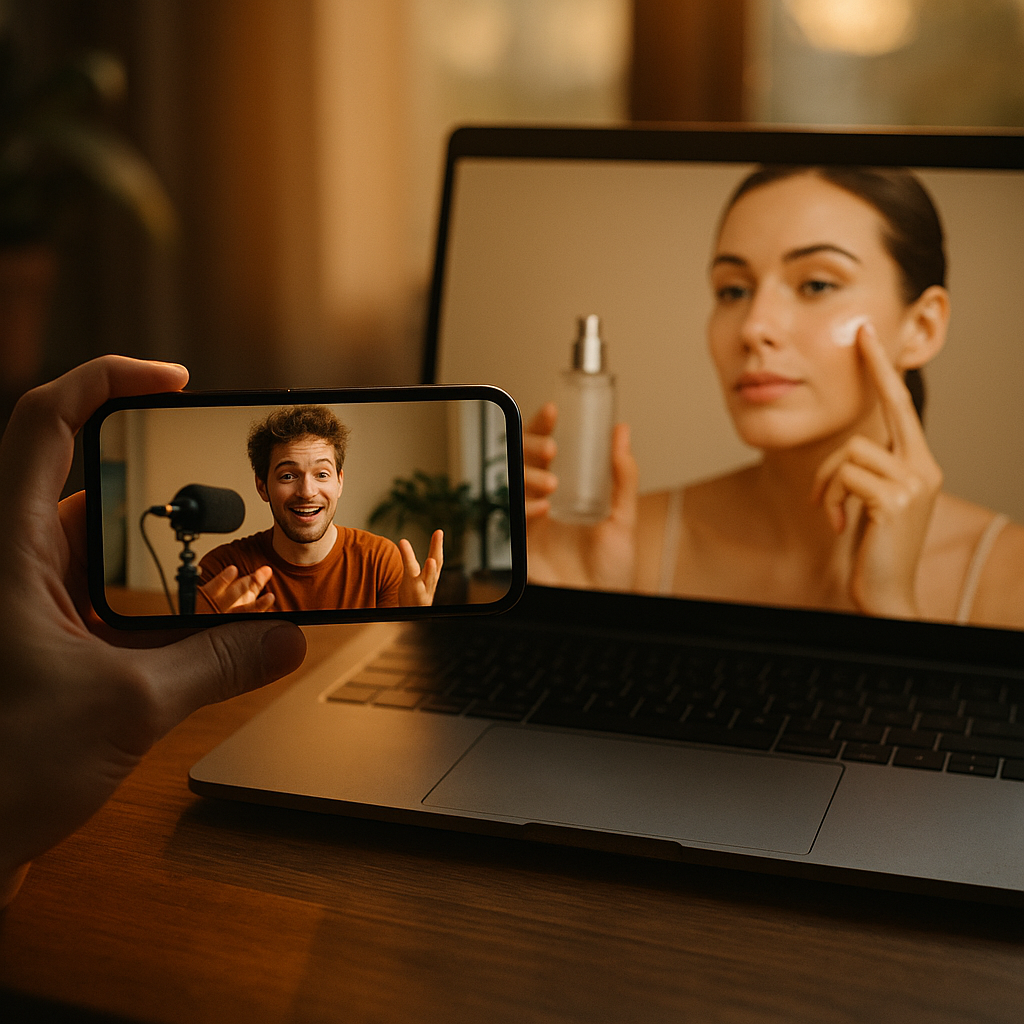
Here’s an uncomfortable stat for anyone still greenlighting glossy brand films: viewers trust a shaky, unscripted creator clip more than a six-figure production. New research from DoubleVerify confirms what performance marketers have suspected for a while. Short form video, especially when fronted by a human influencer rather than a brand mascot or studio actor, is now the dominant force steering consumers from discovery to checkout. The implications for budget allocation, platform strategy, and measurement are significant, and most legacy media plans haven’t caught up.
The Data Behind the Shift
DoubleVerify’s latest attention and outcomes research tracked consumer behavior across short form placements on TikTok, Instagram Reels, and YouTube Shorts, comparing creator-led content against traditional branded video. The pattern was consistent across categories: beauty, CPG, fintech, travel. Clips under 60 seconds featuring a recognizable human face generated measurably higher purchase intent signals than brand-produced equivalents of the same length and spend.
That’s not a minor edge. It’s a structural signal that attention economics have shifted away from production value and toward perceived authenticity. Marketers chasing cinematic polish are, in many cases, paying a premium for lower conversion.
DoubleVerify’s findings suggest that a mid-budget creator video can outperform a high-budget brand ad on purchase intent simply because a real person is talking to the camera.
Why Human Influencers Outperform Polished Brand Content
Think about your own scroll habits for a second. Do you stop for the slick 15-second product montage, or the one where someone just… talks? Most people pause for the latter. Faces read as credible. Imperfection reads as honest. A slightly shaky phone camera signals “this isn’t an ad,” even when it very much is.
This isn’t new psychology, it’s just newly quantified. Platforms have long rewarded native-feeling content with better distribution, and now DoubleVerify’s verification data backs it up with hard outcome metrics rather than engagement vanity numbers. The creators winning the most attention aren’t necessarily the ones with the biggest followings either. Mid-tier and micro creators, who read as more relatable, are closing the trust gap faster than mega influencers with celebrity-level distance from their audience. That dynamic lines up with what we’ve covered in the micro influencer trust premium shift, where smaller audiences convert at rates that make follower count look like a vanity metric rather than a buying signal.
Trust, Transparency, and the Verification Gap
Here’s the catch brands can’t ignore: authenticity only works as a conversion lever if it’s verifiable. DoubleVerify, Integral Ad Science, and similar verification players exist precisely because “it feels authentic” isn’t a media buying strategy, it’s a liability if a creator turns out to be running bot engagement or misrepresenting reach. Brands are now demanding the same fraud, viewability, and brand suitability checks on creator content that they’ve long applied to programmatic display.
That scrutiny matters more as short form spend scales. According to eMarketer’s ongoing tracking of social video ad spend, short form formats continue to absorb a growing share of total digital video budgets, and Sprout Social’s consumer research backs the same conclusion: audiences increasingly rank creator content above brand-owned channels for trustworthiness.
What Does This Mean for Media Budgets?
If human-led short form consistently beats brand-produced video on purchase intent, the math on where dollars go starts to change fast. We’re already seeing this play out. A quarter of marketing budgets now flow to creators, and that figure is unlikely to plateau given what DoubleVerify’s data implies about conversion efficiency per dollar spent.
A few practical shifts brands should expect to make this year:
- Reallocating a portion of studio production budgets toward creator retainers rather than one-off bookings, mirroring the move toward retainer rosters over one off deals
- Pushing creative briefs that prioritize native, phone-shot formats over polished brand aesthetics, even for paid placements
- Insisting on verification layers for creator-sourced media buys, not just organic partnerships
- Tightening attribution models that currently undercount influencer-driven conversions, a gap explored in depth in our piece on how attribution models miss influencer driven sales
None of this means brand films disappear. Awareness and emotional storytelling still have a place. But the conversion-focused slice of the funnel, the part CFOs actually scrutinize at renewal time, is tilting decisively toward creator-fronted short form.
Platforms Are Racing to Capture the Shift
TikTok, Meta, and YouTube aren’t blind to this. Each platform has quietly restructured its ad products to make creator-hosted formats easier to buy at scale, blurring the line between organic creator content and paid media. TikTok’s Spark Ads, Meta’s Partnership Ads, and YouTube’s BrandConnect integrations all exist to let brands pay to boost content that still looks and feels like it came from a creator’s own feed, not a brand account.
That product direction lines up neatly with what DoubleVerify’s data shows: when ads look like creator content rather than brand content, they perform better. It’s also why creator hosted ads are beating brand handle placements on both CTR and CPA across multiple categories. Brands that insist on running everything through their own handle are, in effect, paying a trust tax.
The Risk Side Nobody Talks About Enough
More creator-fronted short form means more exposure to disclosure and compliance risk, full stop. The FTC’s endorsement guidelines apply just as firmly to a 20-second TikTok as they do to a 30-second TV spot, and regulators in the UK and EU are applying similar scrutiny through bodies like the ICO. As spend shifts toward human-fronted content, legal and compliance teams need a seat at the media planning table earlier, not after a campaign is already live.
This is also where brand safety conversations are evolving. It’s less about keyword blocklists next to sensitive content now, and more about contractual clarity on disclosure, usage rights, and claims substantiation. That’s the thesis behind our coverage of how brand safety has shifted from scripts to contracts, and it applies directly here: verification tools like DoubleVerify’s can flag fraud and viewability issues, but they can’t substitute for a properly worded creator contract.
Measurement Still Lags the Behavior Shift
One frustrating reality: most brands still measure short form influencer content with the same last-click or impression-based models built for banner ads a decade ago. DoubleVerify’s research adds to a growing body of evidence, alongside work from HubSpot and Statista, showing that influencer-driven purchase paths are rarely linear. A viewer might watch a creator clip, search the product days later, then buy in-store. None of that shows up cleanly in a pixel-based attribution model.
Brands trying to close that gap are increasingly leaning on promo codes and unique tracking links rather than relying on platform-reported conversions alone, a trend we’ve documented in promo codes becoming the default tracking method. It’s not a perfect fix, but it’s a more honest one than pretending a single ad view caused a sale three weeks later.
So What Should Brands Actually Do Next?
Start by auditing your current short form mix. How much of your video spend goes toward brand-produced content versus creator-fronted short form? If it’s lopsided toward the former, DoubleVerify’s data gives you a legitimate, numbers-backed reason to rebalance. Pair that reallocation with verification standards for creator media buys and tighter disclosure language in contracts, and you’ve addressed both the performance upside and the compliance downside in one move.
The brands that win the next cycle won’t be the ones with the biggest production budgets. They’ll be the ones who figured out, early, that a trusted face and a phone camera can outperform a soundstage.
Frequently Asked Questions
What did DoubleVerify’s research find about short form video and influencers?
DoubleVerify found that short form video content featuring human influencers consistently generated higher purchase intent signals than polished, brand-produced video of similar length and spend, across categories including beauty, CPG, and fintech.
Why does human-fronted content outperform brand-produced video?
Viewers perceive creator-led content as more authentic and native to the platform, which builds trust faster than a studio-produced ad. That trust translates into stronger engagement and higher conversion signals, even when production value is lower.
Does this mean brands should stop investing in traditional brand video?
Not entirely. Brand-produced video still plays a role in awareness and emotional storytelling. The shift is primarily in the conversion-focused portion of the funnel, where creator-fronted short form is proving more efficient per dollar spent.
How should brands adjust measurement for short form influencer content?
Last-click and impression-based models tend to undercount influencer-driven sales because purchase paths are rarely linear. Brands are increasingly using promo codes, unique tracking links, and extended attribution windows to capture delayed conversions.
What compliance risks come with scaling creator-fronted short form?
As spend shifts toward human influencers, disclosure requirements under FTC and equivalent regulators become more critical. Brands need clear contractual language on endorsement disclosure, usage rights, and claims substantiation to avoid regulatory exposure.
Top Influencer Marketing Agencies
The leading agencies shaping influencer marketing in 2026
Agencies ranked by campaign performance, client diversity, platform expertise, proven ROI, industry recognition, and client satisfaction. Assessed through verified case studies, reviews, and industry consultations.
Moburst

-
2

The Shelf
Boutique Beauty & Lifestyle Influencer AgencyA data-driven boutique agency specializing exclusively in beauty, wellness, and lifestyle influencer campaigns on Instagram and TikTok. Best for brands already focused on the beauty/personal care space that need curated, aesthetic-driven content.Clients: Pepsi, The Honest Company, Hims, Elf Cosmetics, Pure LeafVisit The Shelf → -
3

Audiencly
Niche Gaming & Esports Influencer AgencyA specialized agency focused exclusively on gaming and esports creators on YouTube, Twitch, and TikTok. Ideal if your campaign is 100% gaming-focused — from game launches to hardware and esports events.Clients: Epic Games, NordVPN, Ubisoft, Wargaming, Tencent GamesVisit Audiencly → -
4

Viral Nation
Global Influencer Marketing & Talent AgencyA dual talent management and marketing agency with proprietary brand safety tools and a global creator network spanning nano-influencers to celebrities across all major platforms.Clients: Meta, Activision Blizzard, Energizer, Aston Martin, WalmartVisit Viral Nation → -
5

The Influencer Marketing Factory
TikTok, Instagram & YouTube CampaignsA full-service agency with strong TikTok expertise, offering end-to-end campaign management from influencer discovery through performance reporting with a focus on platform-native content.Clients: Google, Snapchat, Universal Music, Bumble, YelpVisit TIMF → -
6

NeoReach
Enterprise Analytics & Influencer CampaignsAn enterprise-focused agency combining managed campaigns with a powerful self-service data platform for influencer search, audience analytics, and attribution modeling.Clients: Amazon, Airbnb, Netflix, Honda, The New York TimesVisit NeoReach → -
7

Ubiquitous
Creator-First Marketing PlatformA tech-driven platform combining self-service tools with managed campaign options, emphasizing speed and scalability for brands managing multiple influencer relationships.Clients: Lyft, Disney, Target, American Eagle, NetflixVisit Ubiquitous → -
8

Obviously
Scalable Enterprise Influencer CampaignsA tech-enabled agency built for high-volume campaigns, coordinating hundreds of creators simultaneously with end-to-end logistics, content rights management, and product seeding.Clients: Google, Ulta Beauty, Converse, AmazonVisit Obviously →