


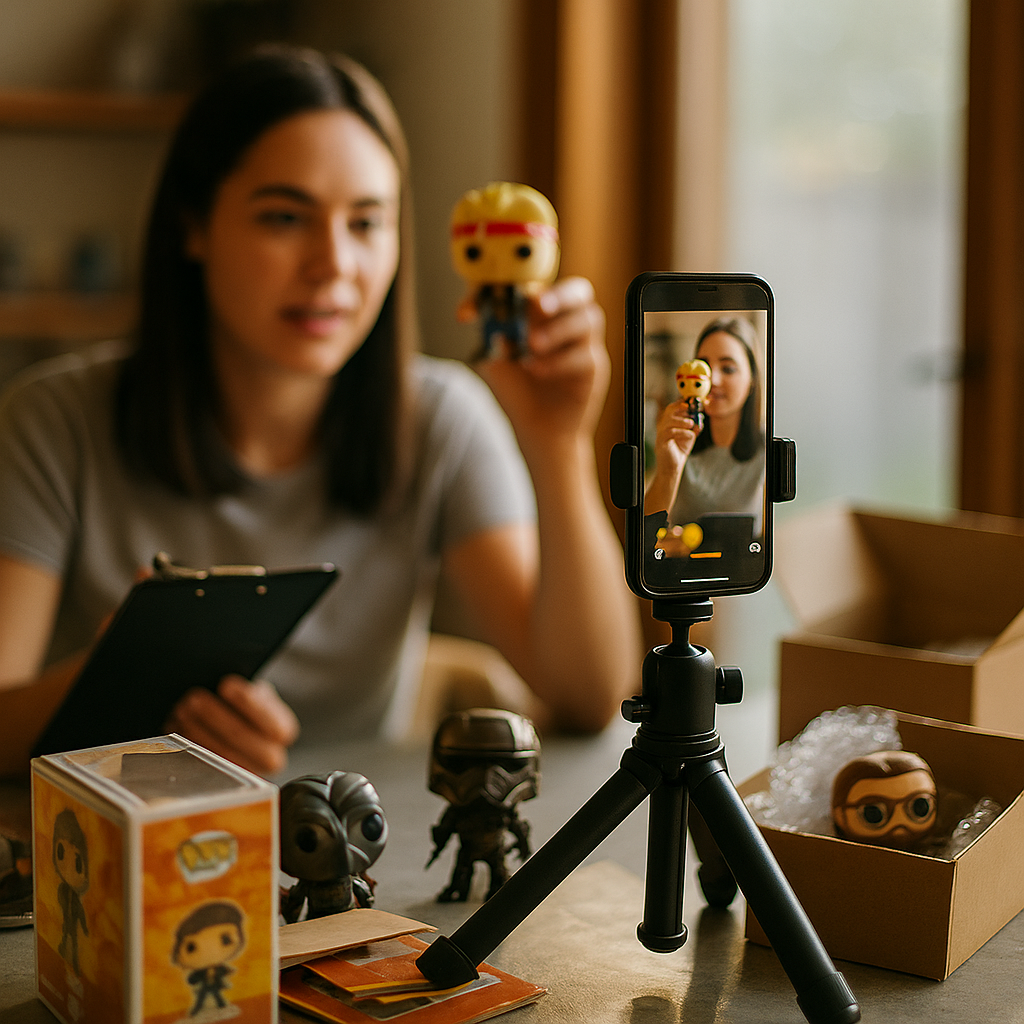
Whatnot sellers routinely move more product in a single hour long stream than many DTC brands sell on their own site in a week. That’s not a fluke. It’s the entire thesis behind whatnot livestream shopping: a trusted host, live video, and one tap checkout beat a static product page almost every time. If your brand still treats live commerce as a side experiment, the sellers already building seven figure businesses on the app would disagree.
What Whatnot Actually Is, and Why Brands Are Suddenly Paying Attention
Whatnot started as a marketplace for trading cards and collectibles, built around live auctions where sellers narrated each pull on camera. That format, part QVC, part eBay, part Twitch, turned out to be sticky. The platform has since expanded hard into fashion, beauty, sneakers, electronics, and general merchandise, and brands that ignored it as “a card app” are now scrambling to understand it.
The appeal for brands is straightforward. Live hosts build parasocial trust over months of streaming, and that trust converts into purchase intent faster than a cold ad ever could. According to industry tracking from eMarketer, livestream commerce in the US is still a fraction of its scale in China, but it’s growing at a rate that outpaces most other social commerce formats, and Whatnot has positioned itself as the clearest US-native winner in that race.
The Math Behind a Creator Hosted Sales Event
Here’s the part finance teams actually want to see. A well run Whatnot show typically runs 60 to 120 minutes, features a rotating set of products at discounted “drop” prices, and relies on urgency mechanics (limited quantity, live bidding, flash countdowns) to drive conversion. Conversion rates on live shopping formats consistently beat standard ecommerce benchmarks because the audience has already opted in to watch, not just scroll past.
Brands running their first Whatnot events report conversion rates several times higher than their average site traffic, largely because the audience is pre-qualified: they showed up specifically to buy, not to browse.
That said, the unit economics only work if you plan inventory and pricing like a live event, not a regular sale. You’re not listing a product once. You’re performing it, repeatedly, for an audience that expects a deal in exchange for their attention. Budget for margin compression on the items you feature live, and make it back on volume and repeat purchase from the relationships your host builds.
Finding and Vetting the Right Host
This is where most brands get it wrong. They treat host selection like influencer casting for a single sponsored post, when it’s closer to hiring a retail store manager who happens to have an audience. A good Whatnot host needs three things: an engaged community that already trusts their taste, genuine comfort performing live and unscripted, and a track record of actually closing sales, not just racking up views.
- Pull sell-through data from the host’s past shows, not just follower counts.
- Watch at least two full streams before committing, paying attention to how they handle objections and slow stretches.
- Check category fit. A host who built their audience around sneaker reselling may not convert for a skincare brand, even with the same follower size.
- Ask about return and chargeback rates from previous brand partnerships. High GMV with high returns isn’t a win.
This vetting discipline mirrors what smart teams already do when evaluating affiliate programs for risk. If you’ve read our guide to affiliate program safety vetting, the same logic applies here: audience size without conversion history is a vanity metric.
How Do You Structure a Brand Hosted Sales Event on Whatnot?
Brands generally choose between two models: partnering with an established host on their existing channel, or launching a branded Whatnot storefront and recruiting hosts to run shows under the brand’s name. The first option is faster and lower risk. The second gives you more control over merchandising and long term audience ownership, but it takes months to build a following from zero.
For most brands testing the waters, the hybrid approach works best. Run a handful of guest appearances on established hosts’ channels to validate product-market fit on live video, then invest in a branded channel once you know which products and price points actually move.
- Lock a product mix with clear price anchors (what’s the “deal” price versus the normal retail price).
- Brief the host on talking points, but let them keep their natural delivery. Scripts kill the authenticity that makes live shopping work.
- Set a clear CTA cadence: when to mention the drop, when to open bidding, when to push urgency.
- Staff real time fulfillment. Orders close in seconds during a live auction; your warehouse needs to keep pace.
This planning cadence is similar to what works for other emerging commerce formats we’ve covered, including Triller’s livestream commerce pilot model and the rapid scaling patterns seen in TikTok Shop’s European expansion. Live commerce platforms reward brands that treat each event as a repeatable operational process, not a one off stunt.
Compliance Isn’t Optional in a Live Auction Format
Live, unscripted selling creates disclosure risk that pre-recorded content doesn’t. A host mid-auction, hyping up a product in real time, can easily drift into claims your legal team never approved. Before you launch a single show, get explicit agreement on what the host can and can’t say about efficacy, pricing comparisons, or exclusivity.
The FTC’s endorsement guidance applies fully to live commerce. Material connections between brand and host need clear, conspicuous disclosure, and “I’ll mention it at the start of the stream” isn’t sufficient if someone tunes in halfway through. Build disclosure into the platform’s native tools and repeat it verbally at intervals, not just once.
The compliance stakes here are comparable to what we’ve outlined for other bounty-driven creator formats, like the risk controls discussed in our clipper network compliance guide. Any format that pays based on performance needs a documented disclosure policy before launch, not after a complaint.
Measuring What Matters: ROI Beyond GMV
GMV is the headline number every host will quote you, and it’s the easiest to game with deep discounts. Smarter brands track a fuller picture: contribution margin per show, new customer acquisition cost versus paid social, repeat purchase rate from Whatnot buyers, and audience retention across multiple events with the same host.
Build a basic ROI model before your first event, the same way you’d approach any new paid channel. Our finance approval framework for partnership ROI is a useful starting template, since finance teams will ask the same questions of a Whatnot pilot that they ask of any creator spend: what’s the payback period, and how does this compare to existing acquisition channels?
Tools like Sprout Social and standard UTM tracking can help attribute post-stream traffic and repeat visits, even though Whatnot’s closed checkout limits some cross-platform attribution. Don’t skip this step just because the platform makes it easy to see a GMV total on the dashboard. That number alone won’t survive a budget review next quarter.
Where This Fits Alongside Your Other Creator Channels
Whatnot shouldn’t replace your broader creator strategy, it should sit alongside it. Brands running ambassador programs already understand the value of long term creator relationships over one off posts, a principle covered well in our community retention playbook. The same logic applies to live shopping hosts: the first show is a test, but the real value compounds when a host becomes a recurring sales channel for your brand, show after show, building audience trust you can’t buy with a single campaign.
Start with one low-risk product line, one vetted host, and a single show before you commit real budget to a branded channel. Track contribution margin, not just GMV, and let that first event’s numbers (not the hype) decide whether whatnot livestream shopping earns a permanent line in your media plan.
FAQs
What is Whatnot livestream shopping?
Whatnot livestream shopping is a live video sales format where hosts sell products in real time through auctions or timed drops, and viewers purchase directly within the stream using in-app checkout.
How much does it cost for a brand to run a show on Whatnot?
Costs vary by host and category, typically structured as a revenue share, flat hosting fee, or a hybrid of the two. Margin compression on featured products should also be factored into your true cost per event.
Do brands need their own Whatnot channel to sell on the platform?
No. Many brands start by partnering with established hosts on their existing channels before investing in a dedicated branded storefront, which requires more time and resources to build an audience.
What disclosure rules apply to live shopping hosts?
FTC endorsement guidance requires clear, conspicuous disclosure of material connections between a brand and host, repeated throughout a live stream rather than mentioned only once at the start.
How do you measure ROI on a Whatnot event beyond total sales?
Track contribution margin, customer acquisition cost relative to other channels, repeat purchase rate among Whatnot buyers, and audience retention across multiple shows with the same host.
Top Influencer Marketing Agencies
The leading agencies shaping influencer marketing in 2026
Agencies ranked by campaign performance, client diversity, platform expertise, proven ROI, industry recognition, and client satisfaction. Assessed through verified case studies, reviews, and industry consultations.
Moburst

-
2

The Shelf
Boutique Beauty & Lifestyle Influencer AgencyA data-driven boutique agency specializing exclusively in beauty, wellness, and lifestyle influencer campaigns on Instagram and TikTok. Best for brands already focused on the beauty/personal care space that need curated, aesthetic-driven content.Clients: Pepsi, The Honest Company, Hims, Elf Cosmetics, Pure LeafVisit The Shelf → -
3

Audiencly
Niche Gaming & Esports Influencer AgencyA specialized agency focused exclusively on gaming and esports creators on YouTube, Twitch, and TikTok. Ideal if your campaign is 100% gaming-focused — from game launches to hardware and esports events.Clients: Epic Games, NordVPN, Ubisoft, Wargaming, Tencent GamesVisit Audiencly → -
4

Viral Nation
Global Influencer Marketing & Talent AgencyA dual talent management and marketing agency with proprietary brand safety tools and a global creator network spanning nano-influencers to celebrities across all major platforms.Clients: Meta, Activision Blizzard, Energizer, Aston Martin, WalmartVisit Viral Nation → -
5

The Influencer Marketing Factory
TikTok, Instagram & YouTube CampaignsA full-service agency with strong TikTok expertise, offering end-to-end campaign management from influencer discovery through performance reporting with a focus on platform-native content.Clients: Google, Snapchat, Universal Music, Bumble, YelpVisit TIMF → -
6

NeoReach
Enterprise Analytics & Influencer CampaignsAn enterprise-focused agency combining managed campaigns with a powerful self-service data platform for influencer search, audience analytics, and attribution modeling.Clients: Amazon, Airbnb, Netflix, Honda, The New York TimesVisit NeoReach → -
7

Ubiquitous
Creator-First Marketing PlatformA tech-driven platform combining self-service tools with managed campaign options, emphasizing speed and scalability for brands managing multiple influencer relationships.Clients: Lyft, Disney, Target, American Eagle, NetflixVisit Ubiquitous → -
8

Obviously
Scalable Enterprise Influencer CampaignsA tech-enabled agency built for high-volume campaigns, coordinating hundreds of creators simultaneously with end-to-end logistics, content rights management, and product seeding.Clients: Google, Ulta Beauty, Converse, AmazonVisit Obviously →