


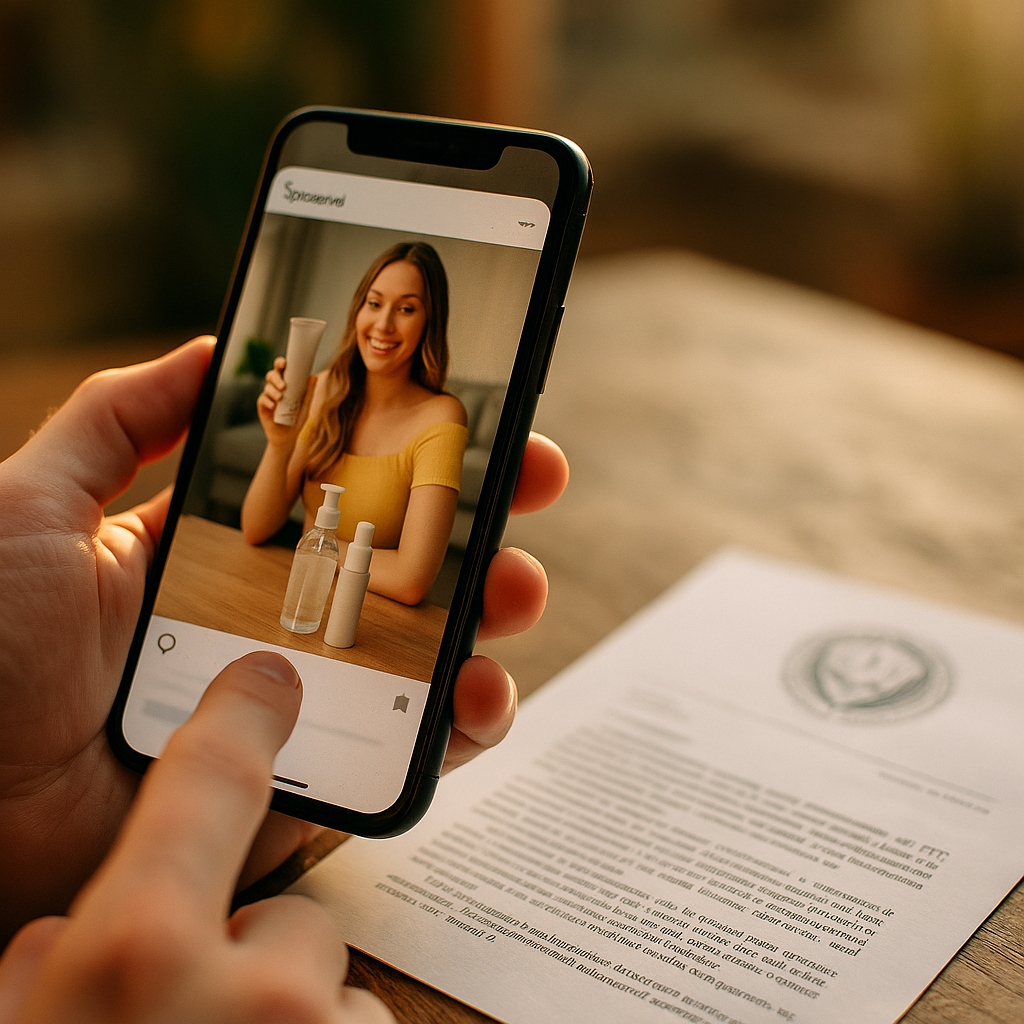
The FTC closed more than 700 influencer disclosure cases through its enforcement sweeps in recent years, and a growing share now involve brands that boosted creator content into paid media without checking whether the disclosure survived the jump. Boosting a post sounds harmless. Turn organic reach into paid reach, extend the life of good creative, stretch the budget. But the material connection disclosure that satisfied regulators in the organic feed often disappears, gets buried, or becomes functionally invisible the moment that same post becomes a paid ad unit. That gap is where brands get burned.
Why Boosting Breaks a Disclosure That Already Worked
Here’s the uncomfortable truth: a disclosure that’s compliant in an organic post isn’t automatically compliant once money touches it. The FTC’s Endorsement Guides require that a material connection be clear and conspicuous to the consumer encountering the ad, not buried three hashtags deep or cut off by a platform’s “see more” truncation. When a creator posts “#ad” in the first line of an Instagram caption, that usually reads fine organically because the full caption is visible to a user who taps in. But boost that same post as a paid placement, and depending on the ad format, the caption can get clipped, the hashtag can fall below the fold, or the post can run in a feed placement where captions barely render at all.
Add to that the platform-level disclosure tools. Instagram’s “Paid partnership with” tag and TikTok’s “Paid partnership” label work as creator-side, organic disclosures. They are not guaranteed to carry through when a brand uses whitelisting or Partnership Ads to run that content through its own ad account. If the brand is the one buying the media, the FTC increasingly treats the brand, not just the creator, as responsible for making sure the connection is disclosed where the ad actually appears.
A disclosure that worked in the organic feed is not proof of compliance once that post becomes a paid unit. The ad placement, not the original post, is what regulators evaluate.
What “Material Connection” Actually Means in a Boosted Context
Material connection disclosure isn’t a single checkbox. It’s a standard: would knowing about the relationship between the brand and the creator change how a reasonable consumer evaluates the endorsement? Free product, payment, affiliate commission, equity, family relationship, employment. All of it counts. The FTC doesn’t care whether the compensation was $200 or $20,000. It cares whether the audience could tell, instantly and without digging, that the content was sponsored.
When you boost a post as an ad, you’re not just extending reach. You’re changing the context in which that disclosure is read. A user scrolling a paid feed placement has different expectations and different attention spans than someone who followed the creator and chose to engage with their content. Courts and regulators have been clear that “clear and conspicuous” is evaluated based on the actual viewing experience, not the best-case scenario where someone reads every word.
This is the same logic driving scrutiny of other paid-media crossover points. Our breakdown of whitelisting consent clauses covers similar territory: once a brand controls the media buy, the brand inherits a chunk of the compliance burden that used to sit entirely with the creator.
The Platform Tools Don’t Fully Protect You
Meta’s Branded Content Ads tool and TikTok’s Spark Ads both let brands pull a creator’s organic post into a paid campaign while, in theory, preserving the “Paid partnership” tag. These tools genuinely help. Use them over manual screenshots or re-uploads whenever you can. But “helps” is not “solves.”
- Placement variability: the same creative can run in Stories, Reels, in-feed, and Explore, and the paid partnership label doesn’t render identically across all of them.
- Caption truncation: longer captions get cut off in certain ad formats, and if your #ad or #sponsored tag sits at the end, it may never display.
- Third-party ad networks: if the creative gets pushed into programmatic placements or syndicated feeds outside the native platform, platform-level tags can be stripped entirely.
- Cross-posting to other channels: a TikTok video repurposed into a Meta ad campaign doesn’t carry TikTok’s disclosure metadata with it. You start from zero.
Relying solely on platform tagging without a manual check is how brands end up with ad sets live for weeks before anyone notices the disclosure dropped out. If you’re already managing creator asset reuse across channels, this pairs directly with the issues we cover in creator asset repurposing rules, since boosting is really just one specific flavor of repurposing.
A Practical Pre-Boost Checklist
Before any creator post gets pushed into a paid campaign, someone on your team (legal, compliance, or a trained media buyer) should run through a short gate check. This doesn’t need to slow down your workflow if it’s built into the process rather than bolted on after the fact.
- Verify the disclosure is visible in the actual ad preview, not just the original organic post. Pull up the exact placement (feed, Stories, Reels) and confirm the tag or hashtag renders without truncation.
- Confirm disclosure placement meets the “above the fold” standard. If a user has to click “more” to see #ad, it fails. Move it to the first line of the caption before boosting, if the creator agreement allows edits.
- Check for stacked disclosures. If the platform tag didn’t carry through, does the caption still include a text-based disclosure like “Paid partnership with [Brand]” or “#ad”?
- Audit cross-platform reuse. If TikTok content is going into a Meta ad account, add disclosure language manually. Don’t assume it travels with the file.
- Document the review. Screenshot the live ad placement with the visible disclosure and timestamp it. This is your evidence if a regulator or a platform compliance team ever asks.
That documentation step matters more than most teams think. In an FTC inquiry, “we told the creator to disclose” is a weak defense if the brand controlled the final paid placement and that placement didn’t show it. The same logic applies if you’re running AI-assisted variant testing on creator ads. Our piece on AI generated ad variations walks through how automated creative testing can quietly strip disclosures across dozens of variants if nobody’s checking the output.
Who’s Actually Liable When a Boosted Ad Fails Disclosure?
Short answer: probably both of you, but the brand carries more exposure than most marketers assume. The FTC’s position, reinforced repeatedly in enforcement actions and guidance updates, is that advertisers bear responsibility for ensuring their paid advertising complies with disclosure requirements, regardless of who originally created the content. “The creator didn’t disclose properly” is not a defense that protects the brand once the brand becomes the advertiser of record on that placement.
This is especially relevant if you’re running media buying through automated or AI-assisted systems. If an algorithm is selecting which organic posts to boost based on performance signals, it has no concept of disclosure compliance unless you’ve built that check into the pipeline. We’ve covered this exact failure mode in AI media buying agents, where spend decisions happen faster than human compliance review can keep up.
If your media buying system can select and boost a post in seconds but your compliance review takes days, you have a structural gap, not a one-off mistake.
Nano and micro creator campaigns carry particular risk here because volume makes manual review harder to sustain. If you’re running dozens of nano creators simultaneously and boosting select posts based on early engagement data, you need a repeatable compliance framework rather than ad hoc checks. Our nano creator compliance checklist and our piece on AI creator matching tools both tackle how to scale disclosure diligence without slowing campaign velocity to a crawl.
Industry-Specific Pressure Points
Regulated categories amplify all of this. Financial services, pharma, and alcohol brands face layered disclosure obligations that stack FTC rules on top of sector-specific regulators. A boosted post from a finance creator, for example, might need to satisfy both FTC material connection standards and SEC or FINRA-adjacent content review, depending on what’s being discussed. Our fin influencer compliance checklist is worth a read if you’re operating in that space, since the boosting problem compounds fast when a second regulator is watching the same placement.
Broadcast-adjacent brands have a related headache. TV and radio have their own sponsorship identification rules, and when creator content crosses into broadcast-style paid placements (think connected TV or YouTube pre-roll), the disclosure standards don’t automatically translate. We break down that specific mismatch in broadcast standards vs social disclosure.
Build the Check Into Your Ad Ops Workflow, Not Your Legal Review
The brands handling this well aren’t the ones with the most lawyers. They’re the ones who built disclosure verification into the same workflow step where someone clicks “boost.” That might mean a Slack bot that flags posts missing a visible disclosure before they can enter the ad manager queue. It might mean a one-line checklist item in your media buying SOP. It might mean training junior media buyers to screenshot the live ad preview before every launch.
What it shouldn’t mean is a quarterly legal audit that catches the problem three months after the campaign already ran. By then you’ve got impressions, spend, and potentially an FTC complaint already in motion. According to the FTC’s own guidance, the agency expects advertisers to monitor compliance on an ongoing basis, not just at the point of creator onboarding. Treat disclosure verification as an ad ops function, not purely a legal one, and you’ll catch far more issues before spend goes live.
Platforms are tightening their own enforcement too. Both Meta and TikTok have expanded branded content policies in response to regulatory pressure, and eMarketer data consistently shows influencer ad spend climbing year over year, which means more boosted content, more placements, and more surface area for disclosure to quietly fail. Industry surveys from Sprout Social also show consumer trust in sponsored content is directly tied to perceived transparency, so this isn’t purely a legal exercise. It’s a trust exercise with legal teeth.
FAQs
Frequently Asked Questions
Does boosting a creator’s organic post count as a new ad for disclosure purposes?
Yes. Once a brand pays to amplify a post as paid media, the FTC treats that placement as advertising, and the material connection must be clear and conspicuous in that specific ad unit, regardless of whether the original organic post disclosed properly.
Who is liable if a boosted post loses its disclosure, the brand or the creator?
The brand carries primary liability as the advertiser once it controls the paid media buy. Creator agreements can include indemnification language, but that doesn’t shield the brand from FTC enforcement or platform penalties.
Can platform tags like “Paid partnership with” replace a written disclosure?
They can satisfy disclosure requirements if they render clearly in the specific ad placement, but they’re not guaranteed to carry through every format, especially when content is repurposed across platforms or pushed into third-party ad networks.
What’s the safest disclosure format for boosted creator ads?
Placing “#ad” or “Paid partnership with [Brand]” at the very start of the caption, combined with the platform’s native paid partnership tag, gives you redundancy in case one method fails to render in a given placement.
How often should brands audit boosted creator ads for disclosure compliance?
Ideally before every boost, not on a periodic schedule. A quick visual check of the live ad preview takes seconds and prevents weeks of non-compliant spend.
Build the disclosure check into the moment someone clicks “boost,” not into a legal review three months later. One screenshot of the live ad preview, confirming the disclosure is visible and unclipped, is cheaper than any FTC inquiry you’ll ever face.
Top Influencer Marketing Agencies
The leading agencies shaping influencer marketing in 2026
Agencies ranked by campaign performance, client diversity, platform expertise, proven ROI, industry recognition, and client satisfaction. Assessed through verified case studies, reviews, and industry consultations.
Moburst

-
2

The Shelf
Boutique Beauty & Lifestyle Influencer AgencyA data-driven boutique agency specializing exclusively in beauty, wellness, and lifestyle influencer campaigns on Instagram and TikTok. Best for brands already focused on the beauty/personal care space that need curated, aesthetic-driven content.Clients: Pepsi, The Honest Company, Hims, Elf Cosmetics, Pure LeafVisit The Shelf → -
3

Audiencly
Niche Gaming & Esports Influencer AgencyA specialized agency focused exclusively on gaming and esports creators on YouTube, Twitch, and TikTok. Ideal if your campaign is 100% gaming-focused — from game launches to hardware and esports events.Clients: Epic Games, NordVPN, Ubisoft, Wargaming, Tencent GamesVisit Audiencly → -
4

Viral Nation
Global Influencer Marketing & Talent AgencyA dual talent management and marketing agency with proprietary brand safety tools and a global creator network spanning nano-influencers to celebrities across all major platforms.Clients: Meta, Activision Blizzard, Energizer, Aston Martin, WalmartVisit Viral Nation → -
5

The Influencer Marketing Factory
TikTok, Instagram & YouTube CampaignsA full-service agency with strong TikTok expertise, offering end-to-end campaign management from influencer discovery through performance reporting with a focus on platform-native content.Clients: Google, Snapchat, Universal Music, Bumble, YelpVisit TIMF → -
6

NeoReach
Enterprise Analytics & Influencer CampaignsAn enterprise-focused agency combining managed campaigns with a powerful self-service data platform for influencer search, audience analytics, and attribution modeling.Clients: Amazon, Airbnb, Netflix, Honda, The New York TimesVisit NeoReach → -
7

Ubiquitous
Creator-First Marketing PlatformA tech-driven platform combining self-service tools with managed campaign options, emphasizing speed and scalability for brands managing multiple influencer relationships.Clients: Lyft, Disney, Target, American Eagle, NetflixVisit Ubiquitous → -
8

Obviously
Scalable Enterprise Influencer CampaignsA tech-enabled agency built for high-volume campaigns, coordinating hundreds of creators simultaneously with end-to-end logistics, content rights management, and product seeding.Clients: Google, Ulta Beauty, Converse, AmazonVisit Obviously →