


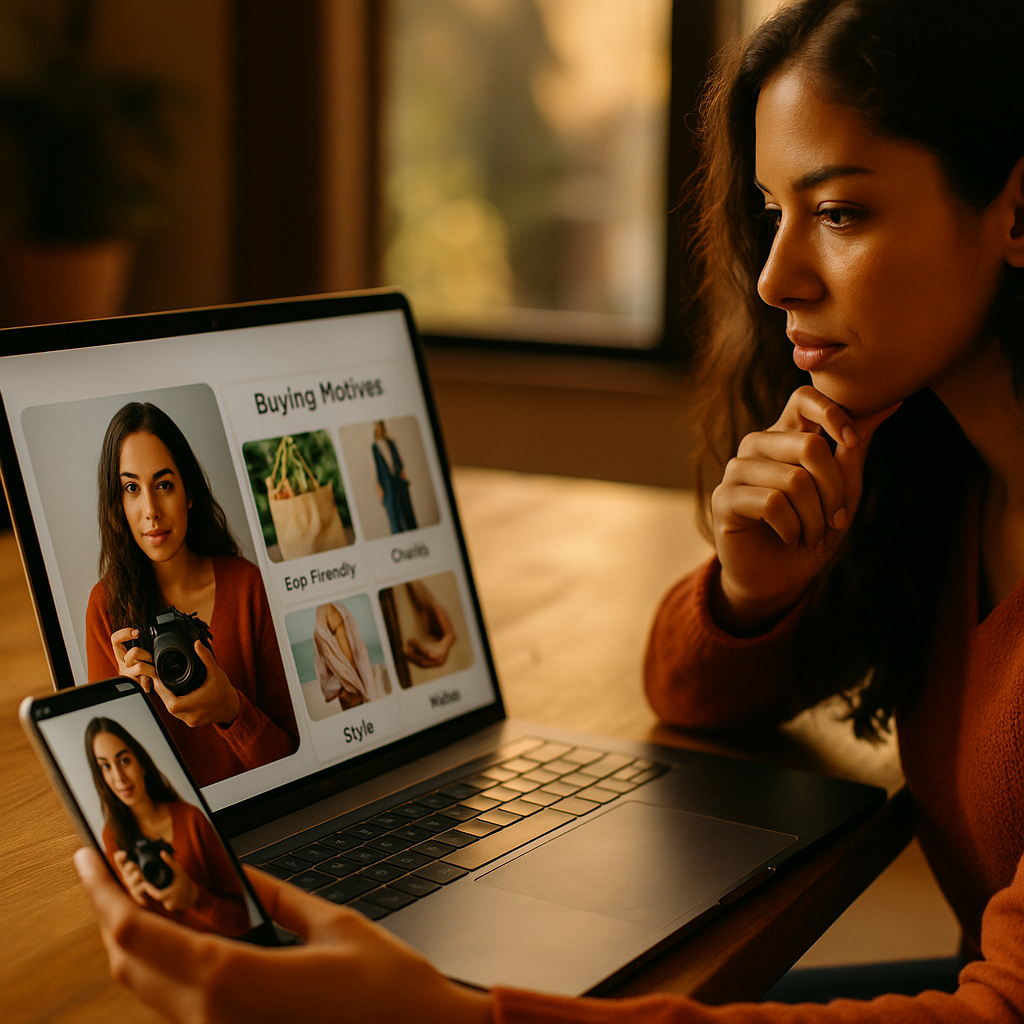
Here’s an uncomfortable number: brands routinely pay premium rates for creators whose audience “matches” their target demo, yet conversion lift from those partnerships often lands flat. The problem isn’t the creator. It’s the matching logic. Persona matching algorithms, like the one New Engen has built its influencer stack around, are quietly replacing age-and-location targeting with something closer to psychology: pairing creators to the actual buying motives driving a purchase decision.
Demographics Were Always a Proxy, Not a Signal
Marketers have leaned on demographics for decades because they were measurable, not because they were predictive. A 35 to 44 year old suburban mom is not a buying motive. She’s a bucket. Inside that bucket sit people chasing convenience, status, safety, savings, and a dozen other motivations that have nothing to do with her zip code.
Influencer platforms inherited this habit from programmatic display, where age and gender were the only dials available. But creator content is different. It’s narrative, emotional, and intent-rich. Matching it to a demographic bucket throws away most of the signal the content actually contains.
Demographic targeting tells you who someone is. Motive-based matching tells you why they’d buy. Only one of those predicts conversion.
This is the same gap that’s pushed teams toward persona driven UGC approaches on the content production side. New Engen is applying the same logic to creator selection itself.
What Persona Matching Actually Measures
New Engen’s model doesn’t start with who the creator’s followers are. It starts with why a prospect converts. The system builds motive clusters, groups like “price-anxious comparison shopper,” “status-driven early adopter,” or “risk-averse researcher,” and maps historical conversion data to the content patterns that moved each cluster.
From there, it scores creators not on audience overlap but on content-to-motive fit. A finance creator who builds trust through transparent, slow-paced walkthroughs scores high for the risk-averse cluster, even if their follower demo skews wrong on paper. A fast-cut, hype-driven creator scores high for the early-adopter cluster regardless of age skew.
- Behavioral signals: watch time patterns, comment sentiment, repeat engagement from converting segments.
- Purchase-path data: which creator formats precede add-to-cart versus which precede bounce.
- Language modeling: tone, pacing, and framing cues that correlate with specific motive clusters.
- Cross-platform consistency: whether a creator’s motive signal holds across TikTok, Instagram, and YouTube, or only on one.
It’s worth pausing here. None of this works without clean attribution data feeding the model. If your CRM and conversion data are fragmented, the algorithm is matching against noise, not motive. That’s a bigger industry problem than it sounds: one recent analysis found only 21 percent of CRM data is ready for AI attribution work of this kind.
Inside the New Engen Model: How the Pairing Actually Happens
New Engen runs this as a layered pipeline rather than a single scoring pass. First, it ingests historical campaign data to establish motive clusters specific to a brand’s category, because “status-driven” means something different in skincare than it does in SaaS. Second, it runs creator content through natural language and visual pattern analysis to tag existing videos against those clusters. Third, it scores new creator candidates against the clusters tied to the current campaign’s priority segment, not the whole customer base.
The practical effect: a brand running a retention campaign targeting price-anxious repeat buyers gets served a shortlist of creators whose content style historically correlates with that motive, regardless of their demographic profile. A brand launching to early adopters gets a completely different shortlist, even if it’s targeting the exact same age bracket.
This is a meaningfully different workflow than traditional discovery tools, which still rank heavily by follower demo overlap and engagement rate. It also explains why creator discovery AI has outpaced attribution AI on adoption inside brand teams: discovery is where the ROI argument is easiest to make concrete.
Does Motive Matching Actually Move the Needle?
Skepticism is healthy here. Plenty of “AI matching” claims in this category are marketing dressed up as math. But the directional evidence is consistent with what performance marketers have seen elsewhere: intent-based targeting consistently outperforms demographic targeting in paid media, and there’s no structural reason influencer selection should behave differently.
eMarketer has tracked a multi-year shift in brand spend toward creators selected for content performance signals rather than audience composition, and Sprout Social‘s benchmark research has repeatedly shown engagement quality, not follower count or demo match, as the stronger predictor of downstream conversion. Persona matching is effectively an attempt to systematize that finding instead of relying on a media buyer’s gut.
If engagement quality already beats demographics as a conversion predictor, the logical next step is building selection models around the motive that quality engagement reveals.
The caveat: attribution still has to hold up downstream, or none of this is verifiable. Brands running motive-matched creator programs without solid conversion tracking are flying on vibes with better branding. That’s the same failure mode flagged in coverage of ROAS calculations breaking on dirty attribution data, and it applies just as much to creator selection models as it does to reporting dashboards.
Where This Breaks: The Limits Nobody Advertises
Persona matching algorithms are only as good as the historical data they’re trained on. For new categories, new products, or genuinely novel audiences, there’s no motive history to match against, and the system defaults back to proxy signals that look a lot like demographics. Vendors rarely lead with this limitation.
There’s also a disclosure and compliance layer that doesn’t disappear just because selection got smarter. Creators matched for motive fit still need clean FTC-compliant disclosure language, and brands still carry the liability if that slips. The FTC’s endorsement guidance doesn’t care how sophisticated your matching model was if the final post fails disclosure requirements. Faster matching should never mean faster, sloppier contracting; that’s partly why tools speeding up contract parsing and whitelisting approvals have become a parallel priority alongside selection tools.
And motive clusters drift. A segment that converts on “value-driven” messaging this quarter can shift toward “status-driven” messaging next quarter if competitors change their pricing or positioning. Static matching models that aren’t retrained regularly will quietly degrade, producing shortlists that feel confident but are actually stale.
What This Means for Budget and Workflow Decisions
If you’re evaluating persona matching tools for your own stack, the questions that actually matter aren’t about the AI. They’re about the data feeding it and the measurement validating it.
- Can the vendor show you the motive clusters specific to your category, or are they using generic templates?
- How often does the model retrain against fresh conversion data?
- Does the matching score correlate with post-campaign conversion lift you can independently verify, not just engagement rate?
- What happens to scoring accuracy for net-new products with no conversion history?
Teams that have gotten the most out of this shift tend to pair motive-based creator selection with downstream clip scoring, so that content gets validated before media spend rather than after. That’s the same philosophy behind AI scoring that predicts which clips survive paid spend. Selection and performance prediction are converging into one pipeline, and brands still treating them as separate tools are leaving efficiency on the table.
For a broader view of how this fits into the current wave of agentic marketing infrastructure, it’s worth tracking what’s being vetted at industry events; see the MarTech conference preview on agentic ops tools for the adjacent toolset brands are evaluating alongside creator matching.
Frequently Asked Questions
What is persona matching in influencer marketing?
Persona matching is a creator selection method that pairs influencers to a brand’s target buying motives (such as price sensitivity, status-seeking, or risk aversion) rather than matching on audience demographics like age or location.
How is this different from standard creator discovery tools?
Standard discovery tools typically rank creators by audience demo overlap and engagement rate. Persona matching scores creators on how their content style and tone historically correlate with specific buying motives, using behavioral and conversion data rather than audience composition alone.
Does persona matching replace the need for attribution tracking?
No. Persona matching models depend on clean conversion data to identify and validate motive clusters. Without reliable attribution, the matching scores are built on incomplete or noisy signals and lose predictive value.
Can persona matching work for a brand launching a brand-new product category?
It’s harder. Without historical conversion data tied to that category, the model has limited motive history to draw from and may default to demographic-style proxies until enough campaign data accumulates.
Does motive-based creator selection change disclosure or compliance requirements?
No. Regardless of how a creator was selected, FTC endorsement disclosure rules still apply in full, and brands remain liable for noncompliant posts.
Frequently Asked Questions
What is persona matching in influencer marketing? Persona matching is a creator selection method that pairs influencers to a brand’s target buying motives (such as price sensitivity, status-seeking, or risk aversion) rather than matching on audience demographics like age or location.
How is this different from standard creator discovery tools? Standard discovery tools typically rank creators by audience demo overlap and engagement rate. Persona matching scores creators on how their content style and tone historically correlate with specific buying motives, using behavioral and conversion data rather than audience composition alone.
Does persona matching replace the need for attribution tracking? No. Persona matching models depend on clean conversion data to identify and validate motive clusters. Without reliable attribution, the matching scores are built on incomplete or noisy signals and lose predictive value.
Can persona matching work for a brand launching a brand-new product category? It’s harder. Without historical conversion data tied to that category, the model has limited motive history to draw from and may default to demographic-style proxies until enough campaign data accumulates.
Does motive-based creator selection change disclosure or compliance requirements? No. Regardless of how a creator was selected, FTC endorsement disclosure rules still apply in full, and brands remain liable for noncompliant posts.
Next step: before testing a persona matching tool, audit whether your conversion data is clean enough to validate it. Run one campaign with motive-matched creators against a demographic-matched control group, and let the conversion numbers settle the argument.
Top Influencer Marketing Agencies
The leading agencies shaping influencer marketing in 2026
Agencies ranked by campaign performance, client diversity, platform expertise, proven ROI, industry recognition, and client satisfaction. Assessed through verified case studies, reviews, and industry consultations.
Moburst

-
2

The Shelf
Boutique Beauty & Lifestyle Influencer AgencyA data-driven boutique agency specializing exclusively in beauty, wellness, and lifestyle influencer campaigns on Instagram and TikTok. Best for brands already focused on the beauty/personal care space that need curated, aesthetic-driven content.Clients: Pepsi, The Honest Company, Hims, Elf Cosmetics, Pure LeafVisit The Shelf → -
3

Audiencly
Niche Gaming & Esports Influencer AgencyA specialized agency focused exclusively on gaming and esports creators on YouTube, Twitch, and TikTok. Ideal if your campaign is 100% gaming-focused — from game launches to hardware and esports events.Clients: Epic Games, NordVPN, Ubisoft, Wargaming, Tencent GamesVisit Audiencly → -
4

Viral Nation
Global Influencer Marketing & Talent AgencyA dual talent management and marketing agency with proprietary brand safety tools and a global creator network spanning nano-influencers to celebrities across all major platforms.Clients: Meta, Activision Blizzard, Energizer, Aston Martin, WalmartVisit Viral Nation → -
5

The Influencer Marketing Factory
TikTok, Instagram & YouTube CampaignsA full-service agency with strong TikTok expertise, offering end-to-end campaign management from influencer discovery through performance reporting with a focus on platform-native content.Clients: Google, Snapchat, Universal Music, Bumble, YelpVisit TIMF → -
6

NeoReach
Enterprise Analytics & Influencer CampaignsAn enterprise-focused agency combining managed campaigns with a powerful self-service data platform for influencer search, audience analytics, and attribution modeling.Clients: Amazon, Airbnb, Netflix, Honda, The New York TimesVisit NeoReach → -
7

Ubiquitous
Creator-First Marketing PlatformA tech-driven platform combining self-service tools with managed campaign options, emphasizing speed and scalability for brands managing multiple influencer relationships.Clients: Lyft, Disney, Target, American Eagle, NetflixVisit Ubiquitous → -
8

Obviously
Scalable Enterprise Influencer CampaignsA tech-enabled agency built for high-volume campaigns, coordinating hundreds of creators simultaneously with end-to-end logistics, content rights management, and product seeding.Clients: Google, Ulta Beauty, Converse, AmazonVisit Obviously →