


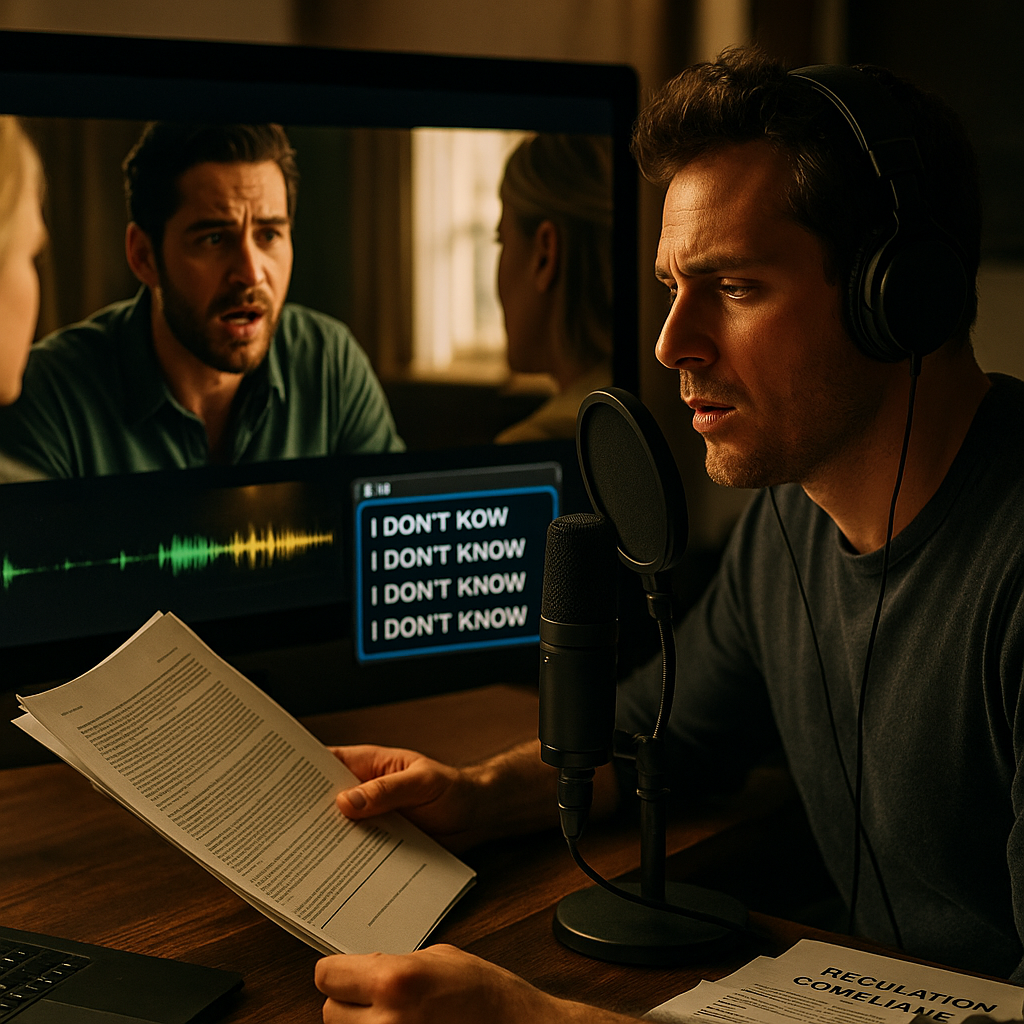
One creator video. Ten markets. Zero reshoots. That is the pitch behind every AI localization pipeline vendor demo this year, and on paper the math is irresistible: a single UGC asset, run through voice cloning and lip sync models, suddenly speaks Japanese, Portuguese, and German without a second production budget. The catch? Nobody tested what happens when the AI mistranslates a compliance disclaimer in Germany or flattens a joke into nonsense in Brazil.
Brands are moving fast on localization AI because the economics demand it. But speed without testing is how a single creator video turns into ten liability exposures instead of ten revenue markets.
Why Localization Became an AI Problem in the First Place
Global influencer campaigns used to mean hiring local creators in every market. That is still the gold standard for cultural fit, but it is slow and expensive at scale. A brand running a product launch across ten countries might need ten separate creator contracts, ten shoot schedules, ten rounds of legal review. One creator shoot now yields ten testable ad angles domestically, and marketers naturally asked: why not do the same across borders?
The answer arrived in the form of dubbing and lip sync models from companies building on tech similar to what powers HeyGen and Synthesia style avatar tools, paired with translation layers from providers like DeepL. Feed in one video, get back a dozen localized cuts with synced mouth movements and native sounding voiceovers. It genuinely works better than it did two years ago. The problem is that “works” and “works well enough to ship without review” are very different bars.
What a Real Testing Pipeline Actually Checks
Most teams evaluating these tools run a vibe check: watch the output, see if the lips roughly match, approve it. That is not testing, it is hoping. A proper QA pipeline for localized creator content needs at least five checkpoints before anything goes live.
- Linguistic accuracy: Does the translation preserve meaning, tone, and brand terminology, or did it default to literal phrasing that sounds robotic to native speakers?
- Cultural fit: Gestures, humor, and product claims that land in the US can misfire or offend elsewhere. A thumbs up is not universally positive.
- Regulatory compliance: Disclosure language, health claims, and financial promises are regulated differently by market. What passes FTC scrutiny may violate rules enforced by the UK’s Information Commissioner’s Office or local ad standards bodies.
- Technical lip sync quality: Even strong models show artifacts on close ups, fast speech, or non Latin script languages like Thai or Arabic.
- Brand voice consistency: Does the Spanish version sound like the same brand as the English original, or like a different company entirely?
Skip any one of these and you are not localizing, you are gambling with ten markets at once instead of one.
A mistranslated disclosure doesn’t just underperform, it can trigger regulatory exposure in every market it touches simultaneously, because the error was baked into the source pipeline, not a one off human mistake.
The Compliance Trap Nobody Talks About
Here is the part vendors gloss over in demos. When a human translator localizes a disclosure statement, a mistake is isolated to one market and one asset. When an AI pipeline mistranslates that same disclosure across ten automated outputs, you have ten simultaneous compliance failures, often published within hours of each other. That is not a hypothetical. It mirrors exactly the pattern covered in AI overviews strip disclosures, brands scramble to audit, where automation quietly dropped required language at scale before anyone noticed.
The FTC has been explicit that disclosure requirements apply regardless of language or market, and the agency’s endorsement guidance doesn’t care whether the mistake came from a human or a model. Legal teams reviewing one English language asset is manageable. Legal teams reviewing ten language variants, each with subtly different translated disclosure phrasing, is a different workload entirely, and most compliance teams are not staffed for it.
This connects directly to a broader pattern seen in affiliate and spokescharacter tooling, where AI spokescharacter tools expose affiliate disclosure gaps that nobody budgeted time to catch. Localization pipelines create the exact same blind spot, just multiplied by market count.
Building a Test Matrix That Catches Problems Before Launch
Teams that have gotten this right don’t test localized output once at the end. They build a test matrix early, before the first creator video even gets fed into the pipeline. The matrix typically includes:
- A native speaker review panel for every target market, not a single bilingual employee doing a quick skim.
- A compliance checklist per market, mapped to local disclosure and advertising standards, reviewed on a cadence rather than once per campaign.
- A/B comparison of AI dubbed output against a human voiceover baseline, measured on completion rate and comment sentiment.
- Escalation rules: who pulls an asset if a native reviewer flags it after it’s already live?
This sounds like overhead. It is, in the same way that 20 variant sprints replace slow A/B tests for UGC ads added structure that paid for itself once teams stopped shipping underperforming creative blind. The upfront friction is the cost of not discovering a disastrous translation after it’s already been seen by two million people in Jakarta.
Picking the Right Markets to Pilot First
Don’t localize into ten markets simultaneously on the first attempt. Pick two or three that differ meaningfully: one with a Latin script language and similar cultural context (say, Spanish for Mexico), one with a non Latin script and high regulatory scrutiny (Japanese, given strict pharmaceutical and health claim rules), and one with a dialect challenge most pipelines underestimate (Portuguese for Brazil versus Portugal). If the pipeline holds up across that spread, scaling to ten is a configuration problem. If it doesn’t, you’ve found the failure mode before it cost you a global rollout.
Where Human Review Still Earns Its Keep
Every vendor wants to sell “fully automated” localization. In practice, the teams getting the best results keep a human in the loop at two specific points: final native speaker sign off, and spot checks on a rolling sample after launch, not just before. This mirrors findings across the broader AI creative stack, where Seedance 2.5 testing shows AI video needs human review even for domestic single market content. Add language and cultural translation on top, and the case for human review only gets stronger, not weaker.
It also explains why most AI copilots still need humans to check the work as a pattern holding across the entire martech stack, not just localization specifically. Automation handles volume. Humans catch the ten percent of cases where volume breaks something expensive.
Budget accordingly. If your business case for AI localization assumes zero human review cost, rebuild the model. Firms like HubSpot and data from eMarketer consistently show localization and translation spend as one of the most underbudgeted line items in global creator campaigns, largely because teams price the AI tool and forget to price the QA layer around it.
Measuring Whether It’s Actually Working
Don’t just track whether the localized video got made. Track whether it performed. Completion rate by market, comment sentiment in the native language (not auto translated back to English, which loses nuance), and conversion rate against a human produced baseline where you have one. If AI localized assets underperform a human baseline by a wide margin in a specific market, that’s a signal to route that market back to human production, not a reason to abandon the pipeline entirely.
This data also feeds back into broader measurement work. Teams already wrestling with ROAS calculation issues domestically will find the problem compounds across markets with different tracking consent regimes and platform mixes. Layer in server side tracking considerations and the measurement stack for a ten market localization program gets complicated fast, well before you even get to the creative quality question.
The brands pulling ahead here aren’t the ones localizing fastest. They’re the ones who built a testing discipline before scaling, treating each new market as a controlled pilot rather than a copy paste job. Start with three markets, build your native review panel and compliance checklist around them, and only expand to ten once the failure modes are known, not discovered live.
Frequently Asked Questions
What is an AI localization pipeline in influencer marketing?
It’s a workflow that takes one creator video and automatically produces translated, dubbed, and lip synced versions for multiple markets using AI voice cloning, translation, and video synthesis tools, reducing the need for separate local productions.
Can AI localization fully replace local creators?
Not reliably yet. AI handles translation and dubbing at scale, but cultural nuance, humor, and regulatory phrasing still require native speaker review and, in many markets, locally produced content for authenticity.
What compliance risks come with AI localized creator content?
Mistranslated disclosures, health claims, or financial promises can violate local advertising standards simultaneously across every market the pipeline touches, since the error is baked into the automated process rather than isolated to one asset.
How many markets should a brand pilot before scaling to ten?
Two to three markets with meaningfully different languages, scripts, and regulatory environments is enough to surface most failure modes before committing to a full ten market rollout.
How much human review does AI localized video actually need?
At minimum, native speaker sign off before launch and rolling spot checks after launch. Fully automated localization without human review is where most compliance and quality failures originate.
Top Influencer Marketing Agencies
The leading agencies shaping influencer marketing in 2026
Agencies ranked by campaign performance, client diversity, platform expertise, proven ROI, industry recognition, and client satisfaction. Assessed through verified case studies, reviews, and industry consultations.
Moburst

-
2

The Shelf
Boutique Beauty & Lifestyle Influencer AgencyA data-driven boutique agency specializing exclusively in beauty, wellness, and lifestyle influencer campaigns on Instagram and TikTok. Best for brands already focused on the beauty/personal care space that need curated, aesthetic-driven content.Clients: Pepsi, The Honest Company, Hims, Elf Cosmetics, Pure LeafVisit The Shelf → -
3

Audiencly
Niche Gaming & Esports Influencer AgencyA specialized agency focused exclusively on gaming and esports creators on YouTube, Twitch, and TikTok. Ideal if your campaign is 100% gaming-focused — from game launches to hardware and esports events.Clients: Epic Games, NordVPN, Ubisoft, Wargaming, Tencent GamesVisit Audiencly → -
4

Viral Nation
Global Influencer Marketing & Talent AgencyA dual talent management and marketing agency with proprietary brand safety tools and a global creator network spanning nano-influencers to celebrities across all major platforms.Clients: Meta, Activision Blizzard, Energizer, Aston Martin, WalmartVisit Viral Nation → -
5

The Influencer Marketing Factory
TikTok, Instagram & YouTube CampaignsA full-service agency with strong TikTok expertise, offering end-to-end campaign management from influencer discovery through performance reporting with a focus on platform-native content.Clients: Google, Snapchat, Universal Music, Bumble, YelpVisit TIMF → -
6

NeoReach
Enterprise Analytics & Influencer CampaignsAn enterprise-focused agency combining managed campaigns with a powerful self-service data platform for influencer search, audience analytics, and attribution modeling.Clients: Amazon, Airbnb, Netflix, Honda, The New York TimesVisit NeoReach → -
7

Ubiquitous
Creator-First Marketing PlatformA tech-driven platform combining self-service tools with managed campaign options, emphasizing speed and scalability for brands managing multiple influencer relationships.Clients: Lyft, Disney, Target, American Eagle, NetflixVisit Ubiquitous → -
8

Obviously
Scalable Enterprise Influencer CampaignsA tech-enabled agency built for high-volume campaigns, coordinating hundreds of creators simultaneously with end-to-end logistics, content rights management, and product seeding.Clients: Google, Ulta Beauty, Converse, AmazonVisit Obviously →