


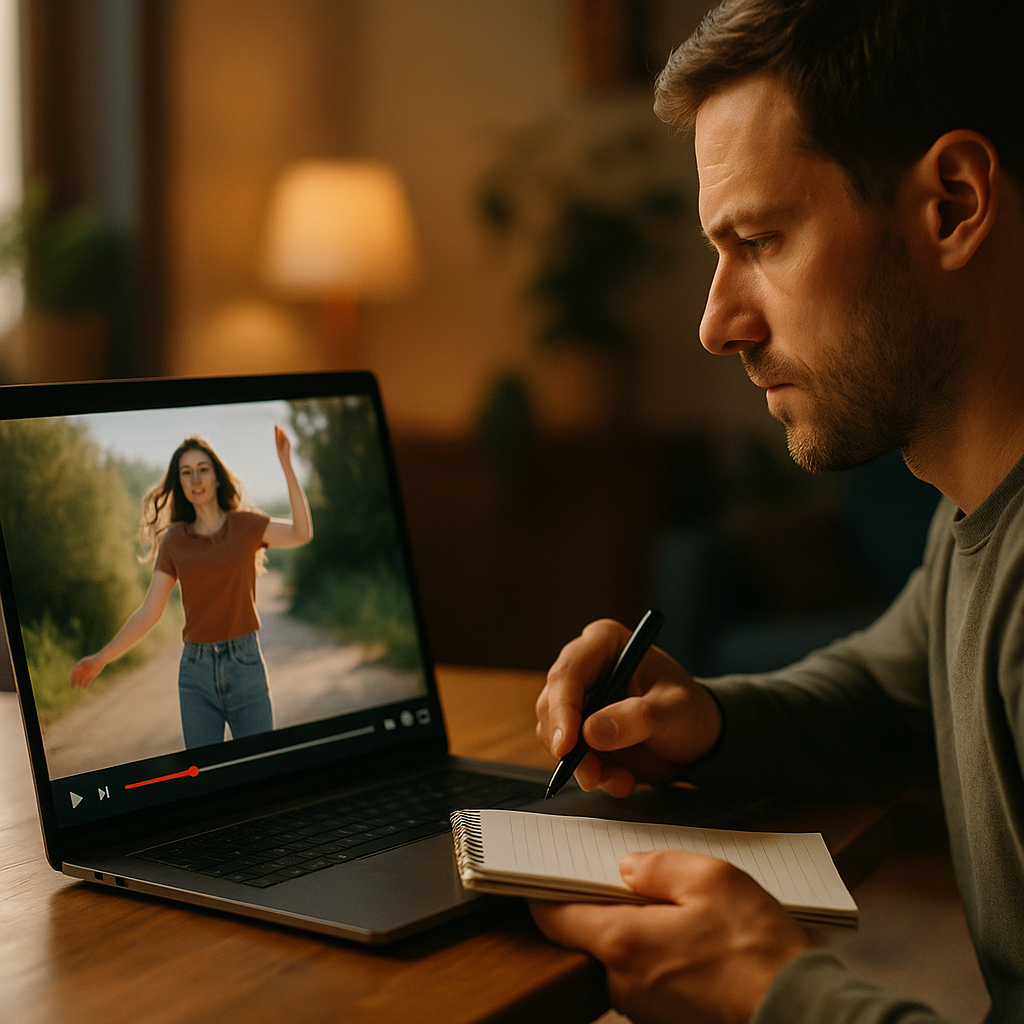
Can an AI model replace your next twelve creator shoots? That’s the question brand teams are asking after running Seedance 2.5 through 1min.AI’s creative workflow, and the early verdict on reshoot-free creative testing is messier than the hype suggests. Some variations matched live-action output. Others fell apart under paid media scrutiny. Here’s what actually happened.
What Is Seedance 2.5, and Why Does 1min.AI Matter Here?
Seedance 2.5 is the latest generative video model built for marketing-grade output: multi-shot continuity, lip sync, and reference-image consistency across scenes. It’s positioned as a step past earlier text-to-video tools that struggled with anything longer than six seconds of coherent footage.
1min.AI is the layer that makes it usable for actual brand workflows. It’s an aggregator platform that bundles access to multiple AI models (video, image, voice) into one interface with prompt templates, batch generation, and export pipelines built for ad teams rather than hobbyists. Think of it as the operations wrapper around the raw model.
Together, the pitch is simple: generate dozens of creative variations from a single brief, skip the reshoot, and get a UGC-style ad into testing within hours instead of weeks. That promise is exactly why performance marketers have started treating it as a serious line item rather than a novelty.
The Reshoot Problem: Why Brands Are Bleeding Budget on Redundant Shoots
Every performance marketer knows the drill. You shoot a creator video, run it through paid testing, and three of the five hooks flop. Normally that means scheduling another shoot, another creator fee, another week of lead time. Multiply that across ten SKUs and a quarterly content calendar, and reshoots quietly become one of the largest line items in a creative budget that nobody tracks separately.
Industry estimates on creative fatigue back this up. According to eMarketer, top-performing ad creatives lose a meaningful share of their efficiency within the first few weeks of a campaign, which forces constant refresh cycles. That refresh cadence is exactly what’s expensive to sustain with live-action shoots alone.
The real cost of reshoots isn’t the shoot itself. It’s the three weeks of lost testing velocity while a brand waits for a new angle to materialize.
That’s the gap generative video is trying to close, and it’s the same logic behind the shift toward AI-assisted creative scoring covered in one creator shoot producing multiple testable angles instead of one.
How the Test Worked
The methodology was straightforward enough to replicate internally. A single UGC-style creator video, originally shot for a skincare DTC brand, was used as the reference asset. 1min.AI generated eight additional variations through Seedance 2.5, swapping hooks, backgrounds, pacing, and on-screen text while keeping the same “creator” face and voice consistent across all versions.
The variations were then pushed into a split test across paid social, run against the original live-action control. No disclosure gymnastics, no special targeting tricks, just a straight creative test measuring hook rate, thumb-stop ratio, and cost per click against the baseline.
This is the part most teams skip when they evaluate new generation tools: they test the novelty, not the performance. Running it as an actual media test, not a demo reel, is what makes the results worth paying attention to.
The Results: Where It Held Up, and Where It Didn’t
Four of the eight AI-generated variations matched or beat the live-action control on hook rate. That’s a real number worth sitting with. It means roughly half the generated set was media-ready without a single additional shoot day.
But the other half revealed the current ceiling. Variations with fast camera pans or multiple prop interactions showed visible artifacting around hands and object edges, the kind of glitch that casual scrollers might miss but that brand safety reviewers will flag immediately. Lip sync held up in close-up shots but drifted slightly in wider frames, a known weak spot across most current video generation models, not just Seedance.
Cost per click on the winning variations ran comparable to the original, sometimes slightly better, because the hook diversity gave the algorithm more angles to optimize delivery against. That’s consistent with what’s documented in AI UGC scoring research, where predictive models increasingly flag which clips are worth paid spend before launch rather than after.
Half of the generated variations were launch-ready without a reshoot. The other half needed a human editor to catch what the model couldn’t.
The takeaway isn’t that reshoot-free testing works universally. It’s that it works selectively, and the selection criteria matter more than the headline capability.
Where This Breaks: Compliance, Disclosure, and Brand Risk
Here’s the uncomfortable part nobody puts in the product demo. If a generated creator face is synthetic, does your influencer disclosure framework still apply? The honest answer right now is: it depends on your legal team’s risk appetite, because regulatory guidance hasn’t caught up to the technology.
The FTC’s endorsement guidelines were written for human endorsers, and synthetic creator content sits in a gray zone that most brand compliance teams haven’t formally addressed yet. If your “creator” never existed, is it still an endorsement, or is it just an ad with a persona? Brands running this kind of testing at scale need a documented position before legal does, not after a complaint.
This is the same tension playing out across personalization and AI-generated content more broadly, as explored in disclosure rule testing for AI-personalized creative. The pattern is consistent: generation capability is outpacing governance capability, and brand teams are the ones left holding the risk.
There’s also the platform policy angle. Meta and TikTok have both published AI-generated content labeling requirements, and failing to tag synthetic creative correctly risks takedowns or reduced delivery, not just regulatory exposure. Check Meta Business and TikTok Ads policy pages before scaling any generated creator content into paid rotation.
Operationalizing Reshoot-Free Testing: A Practical Framework
If you’re going to pilot this internally, don’t start with your hero creative. Start with the long tail: the variations you’d normally never have budget to shoot anyway.
- Use real creator footage as the reference asset, not a fully synthetic persona, to reduce disclosure ambiguity and keep output closer to brand voice.
- Route every output through human review before paid spend, specifically checking hands, object interaction, and lip sync in wider shots.
- Score variations before launch using predictive tools rather than relying on gut feel, a practice gaining traction as detailed in agentic creative testing workflows.
- Document your synthetic content policy in writing, even if it’s one page, so compliance review isn’t improvised mid-campaign.
- Track attribution separately for AI-generated variants versus live-action control, since clean comparison data matters more here than almost anywhere else, a point reinforced in attribution data accuracy discussions.
Budget-wise, treat this as additive testing capacity, not a replacement for your creator relationships. The brands getting the most out of this right now are using generative variation to extend the shelf life of a shoot they already paid for, not to eliminate shoots entirely. That’s a meaningfully different ROI conversation, and one that’s easier to defend to finance.
For teams managing multiple creative workflows at once, this also intersects with broader agent adoption patterns. As noted in production adoption data, most marketing AI tools stall before they ever reach full deployment. Reshoot-free testing risks the same fate if it’s treated as a side experiment instead of a scored, governed workflow with clear ownership.
Next step: run one controlled split test, not a full migration. Pick a single existing creator asset, generate five to eight variations through a tool like 1min.AI, score them against your live-action baseline using hook rate and CPC, and only scale the workflow once you’ve got a documented compliance position in hand.
Frequently Asked Questions
What is reshoot-free creative testing?
Reshoot-free creative testing uses generative AI video tools to produce multiple ad variations from a single existing creator asset, letting brands test new hooks, pacing, and visuals without scheduling and paying for additional live-action shoots.
Is Seedance 2.5 actually ready for paid media use?
Partially. In early testing, roughly half of generated variations matched or beat live-action controls on key metrics like hook rate, while the other half showed visible artifacts around hands, objects, or wide-shot lip sync that required human review before launch.
Does AI-generated creator content need an FTC disclosure?
Current FTC endorsement guidelines were written for human endorsers, and synthetic or AI-generated creator content falls into an unresolved gray area. Brands should document an internal compliance position before scaling this content rather than waiting for formal regulatory guidance.
How much does 1min.AI and Seedance 2.5 reduce creative production costs?
Cost savings come primarily from eliminating reshoot days and creator fees for incremental variations, not from replacing original production. Brands using it as an extension of existing shoots report the clearest ROI, rather than those trying to replace creator relationships entirely.
What should marketers check before scaling AI video generation into paid campaigns?
Review platform labeling policies for AI-generated content, confirm hands and object interactions render cleanly, verify lip sync in wide shots, and document a disclosure policy before increasing spend behind generated creative.
Top Influencer Marketing Agencies
The leading agencies shaping influencer marketing in 2026
Agencies ranked by campaign performance, client diversity, platform expertise, proven ROI, industry recognition, and client satisfaction. Assessed through verified case studies, reviews, and industry consultations.
Moburst

-
2

The Shelf
Boutique Beauty & Lifestyle Influencer AgencyA data-driven boutique agency specializing exclusively in beauty, wellness, and lifestyle influencer campaigns on Instagram and TikTok. Best for brands already focused on the beauty/personal care space that need curated, aesthetic-driven content.Clients: Pepsi, The Honest Company, Hims, Elf Cosmetics, Pure LeafVisit The Shelf → -
3

Audiencly
Niche Gaming & Esports Influencer AgencyA specialized agency focused exclusively on gaming and esports creators on YouTube, Twitch, and TikTok. Ideal if your campaign is 100% gaming-focused — from game launches to hardware and esports events.Clients: Epic Games, NordVPN, Ubisoft, Wargaming, Tencent GamesVisit Audiencly → -
4

Viral Nation
Global Influencer Marketing & Talent AgencyA dual talent management and marketing agency with proprietary brand safety tools and a global creator network spanning nano-influencers to celebrities across all major platforms.Clients: Meta, Activision Blizzard, Energizer, Aston Martin, WalmartVisit Viral Nation → -
5

The Influencer Marketing Factory
TikTok, Instagram & YouTube CampaignsA full-service agency with strong TikTok expertise, offering end-to-end campaign management from influencer discovery through performance reporting with a focus on platform-native content.Clients: Google, Snapchat, Universal Music, Bumble, YelpVisit TIMF → -
6

NeoReach
Enterprise Analytics & Influencer CampaignsAn enterprise-focused agency combining managed campaigns with a powerful self-service data platform for influencer search, audience analytics, and attribution modeling.Clients: Amazon, Airbnb, Netflix, Honda, The New York TimesVisit NeoReach → -
7

Ubiquitous
Creator-First Marketing PlatformA tech-driven platform combining self-service tools with managed campaign options, emphasizing speed and scalability for brands managing multiple influencer relationships.Clients: Lyft, Disney, Target, American Eagle, NetflixVisit Ubiquitous → -
8

Obviously
Scalable Enterprise Influencer CampaignsA tech-enabled agency built for high-volume campaigns, coordinating hundreds of creators simultaneously with end-to-end logistics, content rights management, and product seeding.Clients: Google, Ulta Beauty, Converse, AmazonVisit Obviously →