


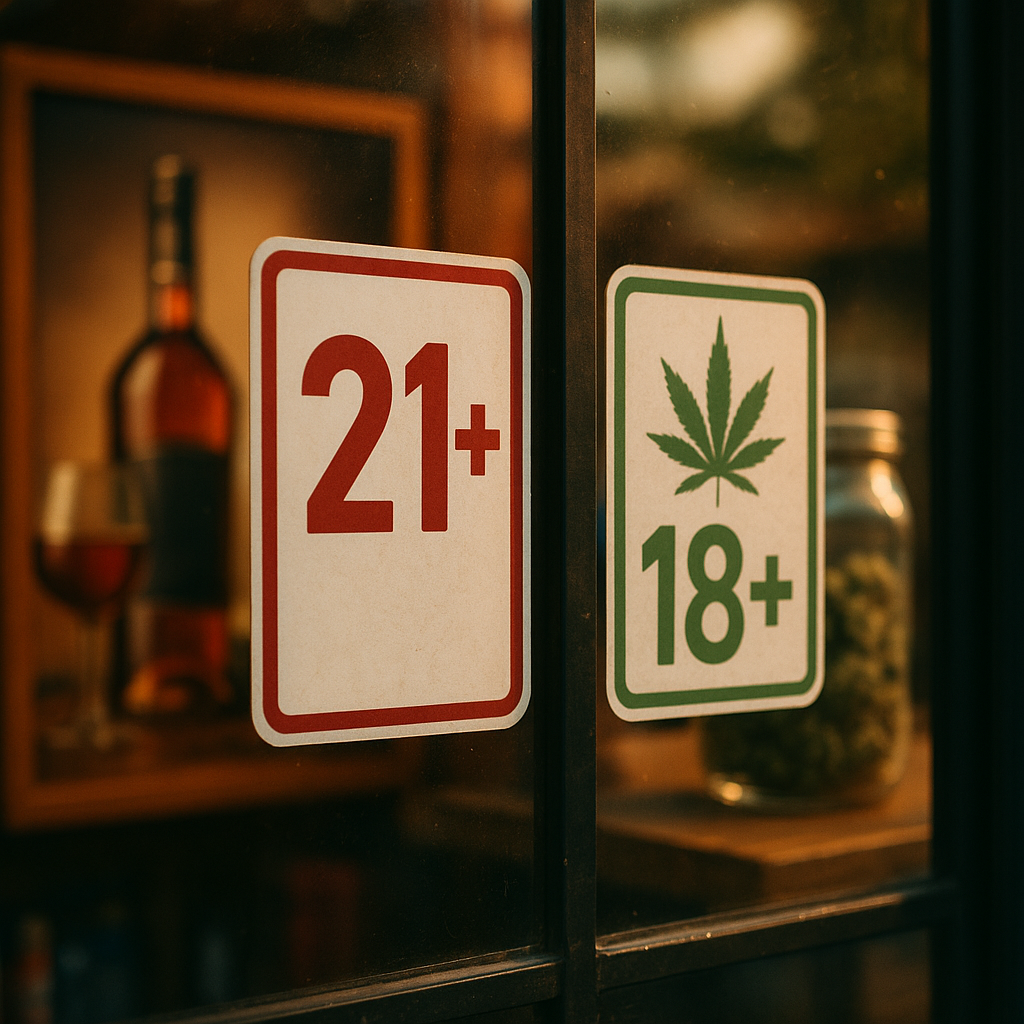
One wrong zip code and a cannabis brand’s influencer post becomes a state-level violation. One missing age gate and an alcohol campaign triggers a Trade and Tax Bureau inquiry. For brands in regulated categories, influencer marketing in 2026 isn’t a creative exercise, it’s a compliance operation with creative output attached. The rules differ by state, by platform, and by product category, and the FTC still expects clean disclosure on top of all of it.
If your legal team isn’t in the campaign brief meeting, you’re already behind.
The Patchwork Problem: Fifty States, Fifty Rulebooks
Alcohol advertising in the United States has never been federally standardized the way, say, pharmaceutical advertising is. The Alcohol and Tobacco Tax and Trade Bureau handles labeling and some marketing claims, but actual advertising oversight largely falls to individual state Alcohol Beverage Control boards. Some states require specific disclaimers. Others restrict the types of claims a brand can make about taste, health, or lifestyle benefits. A handful still have vague or outdated statutes written decades before influencer marketing existed, which means enforcement often comes down to interpretation.
Cannabis is worse. Federally, cannabis marketing exists in a gray zone that shifts depending on rescheduling developments, while at the state level, each legal market, from California to New York to Michigan, has its own advertising board with its own restrictions on imagery, health claims, and audience targeting. Some states ban cannabis advertising on any platform primarily viewed by minors, full stop, regardless of age-gating technology. Others require a specific percentage of verified adult audience before a brand can run any promotional content at all.
A campaign that’s fully compliant in Colorado can be an unlicensed advertising violation in Texas the moment a creator’s followers cross state lines, which on social media, they always do.
This is why national influencer campaigns in these categories increasingly rely on geofencing and audience segmentation rather than a single blanket creative push. For a deeper look at how state disclosure statutes are reshaping liability for brands generally, see our breakdown of state disclosure requirements and how they stack on top of federal rules.
Age Gating Isn’t Optional, It’s a License to Operate
Here’s the uncomfortable truth: most platforms do not natively age-gate organic influencer content. Instagram and TikTok have age-gating for paid ads in alcohol categories in select markets, but an organic post from a creator, tagged or not, typically reaches whoever follows that creator. That’s a problem when your legal obligation is to keep content away from audiences under 21 (alcohol) or under the state-specific cannabis purchase age, usually 21 as well.
The industry standard that’s held up in court and regulatory review is the 71.6% threshold, originally established by groups like the Distilled Spirits Council and the Beer Institute. It requires that at least 71.6% of a platform’s or audience segment’s viewers be of legal drinking age before alcohol advertising can run. Brands now apply this same logic to influencer selection: before signing a creator, pull their audience demographic data and confirm the underage share doesn’t breach that threshold. If a creator can’t produce verified audience insights (and plenty still can’t, especially micro-influencers), that’s a red flag, not a workaround.
For cannabis, several states go further and mandate actual age verification gates, meaning a click-through “I am 21 or older” interstitial before any branded content, website, or landing page is viewable. This is standard practice for cannabis dispensary websites already. What’s changing in 2026 is that regulators are starting to expect the same gating logic applied to influencer-driven traffic, including link-in-bio pages, promo code redemption pages, and affiliate landing pages tied to a creator’s post. If your campaign funnels traffic through a promo code, that’s a point of regulatory exposure too. We’ve covered how promo code tracking introduces its own consent and data obligations, which compounds quickly in regulated categories.
What Platforms Actually Allow (and It’s Less Than You Think)
TikTok prohibits cannabis advertising outright across its ad platform and restricts alcohol promotion heavily, even organically, under its branded content policies. Meta allows alcohol ads with age and location targeting restrictions but bans cannabis ads entirely in its advertising policies, regardless of state legality. YouTube follows a similar line through Google’s ad platform guidance. That means cannabis brands are essentially locked out of paid social amplification and have to rely on organic creator partnerships, which, ironically, carry less platform-level age-gating protection than paid media does. It’s a structural irony: the category most restricted from paid advertising is the one most dependent on unmonitored organic reach.
Cannabis’s Extra Layer: Federal Status Meets State Legality
Alcohol brands deal with a messy state patchwork. Cannabis brands deal with that same patchwork plus an unresolved federal classification question. Even with incremental movement on rescheduling discussions, cannabis advertising guidance at the federal level remains thin, which pushes almost all compliance burden onto state cannabis control boards and, by extension, onto brand legal teams.
Practical implication: a cannabis brand running a multi-state influencer campaign needs a market-by-market creative and distribution plan, not a single asset repurposed everywhere. Some states, like Illinois and Massachusetts, require pre-approval of cannabis advertising content before it runs. Others, like California, lean more on after-the-fact enforcement tied to specific prohibited claims (health benefits, youth appeal, proximity to schools in geotargeted ads). Brands that treat this like a standard national rollout are setting themselves up for license review headaches down the line.
This also intersects with creator contracts. If a creator posts cannabis content from a state where your brand doesn’t hold a marketing license, that’s a liability regardless of the creator’s own location or intent. Contracts need explicit geographic restrictions and content review clauses baked in before anything goes live. Our piece on multi-state advertising law covers the broader mechanics of how state-by-state legal exposure compounds for brands running national creator programs.
Building a Compliance Framework That Actually Scales
Trying to manually track fifty states’ worth of alcohol and cannabis advertising rules for every campaign is not sustainable. What works instead is a tiered framework:
- Audience verification first. Before any creator is approved, confirm their audience meets the 71.6% legal-age threshold using platform-native analytics or a third-party verification tool.
- Geofenced distribution. Use platform targeting tools to restrict paid boosting (where allowed) by state, and brief creators on which states to exclude from organic hashtags or geotags.
- Age-gated landing pages. Any link-in-bio, swipe-up, or promo code redemption page tied to the campaign should sit behind an age verification interstitial, no exceptions.
- Pre-clearance workflows for high-restriction states. Build in extra lead time for states requiring content pre-approval so campaign timelines don’t collapse under regulatory review.
- Documented audit trail. Keep records of audience data, creator contracts, content approvals, and takedown timestamps. If a state regulator or the FTC comes knocking, the paper trail is your defense.
That last point matters more than brands expect. Regulatory bodies increasingly ask for proof of process, not just proof of intent. A campaign that has documented age-verification steps and a content retention policy looks fundamentally different to an investigator than one that doesn’t. For a model of what that documentation should look like, our guide on content retention and audit trails is a useful starting point, even though it’s written for broader FTC compliance rather than category-specific rules.
Regulators don’t just ask “was this compliant?” anymore. They ask “can you prove it was compliant, and show your work?” Brands without a documentation system are answering both questions badly.
There’s also a risk layer worth budgeting for separately: creator behavior outside the campaign itself. A spokesperson who gets photographed at an underage drinking event, or a cannabis creator who gets flagged for marketing to minors on a personal account, can drag a brand into reputational and regulatory fallout even if the sponsored content itself was fully compliant. That’s part of why more regulated-category brands are exploring scandal risk coverage as a standard line item rather than an afterthought.
Giveaways and sweepstakes tied to alcohol or cannabis campaigns deserve particular caution too. Combine a controlled substance with a prize structure and you’re often one procedural misstep away from running an illegal lottery under state law. If promotions are part of your 2026 campaign mix, review the mechanics against our rundown of giveaway compliance rules before launch, not after a regulator flags it.
What the Data Says About Where This Is Heading
Industry trackers at eMarketer have noted steady growth in regulated-category ad spend shifting toward creator partnerships precisely because traditional media buys carry heavier, more standardized compliance checks, while influencer campaigns have historically had looser oversight. Regulators have noticed the same trend, which is exactly why state ad boards are tightening influencer-specific guidance rather than leaving it as an afterthought to broader advertising statutes. Reporting from Statista on legal cannabis market growth also shows advertising budgets climbing in parallel with new store openings, meaning more brands will be navigating this terrain for the first time in 2026, often without in-house compliance infrastructure built for it.
Platforms themselves are also under pressure. The FTC has signaled continued scrutiny of disclosure practices across categories, and its endorsement guidance applies to alcohol and cannabis creator content exactly as it does everywhere else, meaning a clean #ad disclosure doesn’t exempt a brand from state-level age and content restrictions. The two compliance layers run in parallel, not in place of each other.
The Bottom Line
Alcohol and cannabis brands can absolutely run effective influencer programs in 2026, but the operational overhead is real and growing. Build audience verification, geofencing, age-gated funnels, and documentation into the campaign workflow from day one, not as a legal review step tacked onto the end. The brands that treat compliance as part of the creative brief, not a blocker to it, will be the ones still running national creator campaigns when the next wave of state enforcement lands.
Frequently Asked Questions
What is the 71.6% rule for alcohol influencer campaigns?
It’s an industry-standard audience threshold requiring that at least 71.6% of viewers for an alcohol ad or sponsored post be of legal drinking age. Brands apply it when vetting creator audiences before approving a partnership.
Can cannabis brands run paid ads on social platforms?
Generally no. Major platforms including Meta, TikTok, and Google ban cannabis advertising on their paid ad networks regardless of state legality, which pushes most cannabis marketing into organic influencer content instead.
Do alcohol and cannabis brands need different compliance rules in every state?
Yes. There is no federal advertising standard covering influencer content for either category. State Alcohol Beverage Control boards and state cannabis control boards each set their own rules, and some require content pre-approval before a campaign runs.
Does FTC disclosure guidance still apply to alcohol and cannabis influencer posts?
Yes. FTC endorsement and disclosure rules apply on top of state-specific age and content restrictions. Compliance with one does not satisfy the other.
What happens if a creator’s post reaches an underage audience in a restricted state?
Consequences can include state license review for the brand, forced content takedowns, fines, and in some cases suspension of marketing privileges, depending on the state’s cannabis or alcohol control board enforcement posture.
Top Influencer Marketing Agencies
The leading agencies shaping influencer marketing in 2026
Agencies ranked by campaign performance, client diversity, platform expertise, proven ROI, industry recognition, and client satisfaction. Assessed through verified case studies, reviews, and industry consultations.
Moburst

-
2

The Shelf
Boutique Beauty & Lifestyle Influencer AgencyA data-driven boutique agency specializing exclusively in beauty, wellness, and lifestyle influencer campaigns on Instagram and TikTok. Best for brands already focused on the beauty/personal care space that need curated, aesthetic-driven content.Clients: Pepsi, The Honest Company, Hims, Elf Cosmetics, Pure LeafVisit The Shelf → -
3

Audiencly
Niche Gaming & Esports Influencer AgencyA specialized agency focused exclusively on gaming and esports creators on YouTube, Twitch, and TikTok. Ideal if your campaign is 100% gaming-focused — from game launches to hardware and esports events.Clients: Epic Games, NordVPN, Ubisoft, Wargaming, Tencent GamesVisit Audiencly → -
4

Viral Nation
Global Influencer Marketing & Talent AgencyA dual talent management and marketing agency with proprietary brand safety tools and a global creator network spanning nano-influencers to celebrities across all major platforms.Clients: Meta, Activision Blizzard, Energizer, Aston Martin, WalmartVisit Viral Nation → -
5

The Influencer Marketing Factory
TikTok, Instagram & YouTube CampaignsA full-service agency with strong TikTok expertise, offering end-to-end campaign management from influencer discovery through performance reporting with a focus on platform-native content.Clients: Google, Snapchat, Universal Music, Bumble, YelpVisit TIMF → -
6

NeoReach
Enterprise Analytics & Influencer CampaignsAn enterprise-focused agency combining managed campaigns with a powerful self-service data platform for influencer search, audience analytics, and attribution modeling.Clients: Amazon, Airbnb, Netflix, Honda, The New York TimesVisit NeoReach → -
7

Ubiquitous
Creator-First Marketing PlatformA tech-driven platform combining self-service tools with managed campaign options, emphasizing speed and scalability for brands managing multiple influencer relationships.Clients: Lyft, Disney, Target, American Eagle, NetflixVisit Ubiquitous → -
8

Obviously
Scalable Enterprise Influencer CampaignsA tech-enabled agency built for high-volume campaigns, coordinating hundreds of creators simultaneously with end-to-end logistics, content rights management, and product seeding.Clients: Google, Ulta Beauty, Converse, AmazonVisit Obviously →