


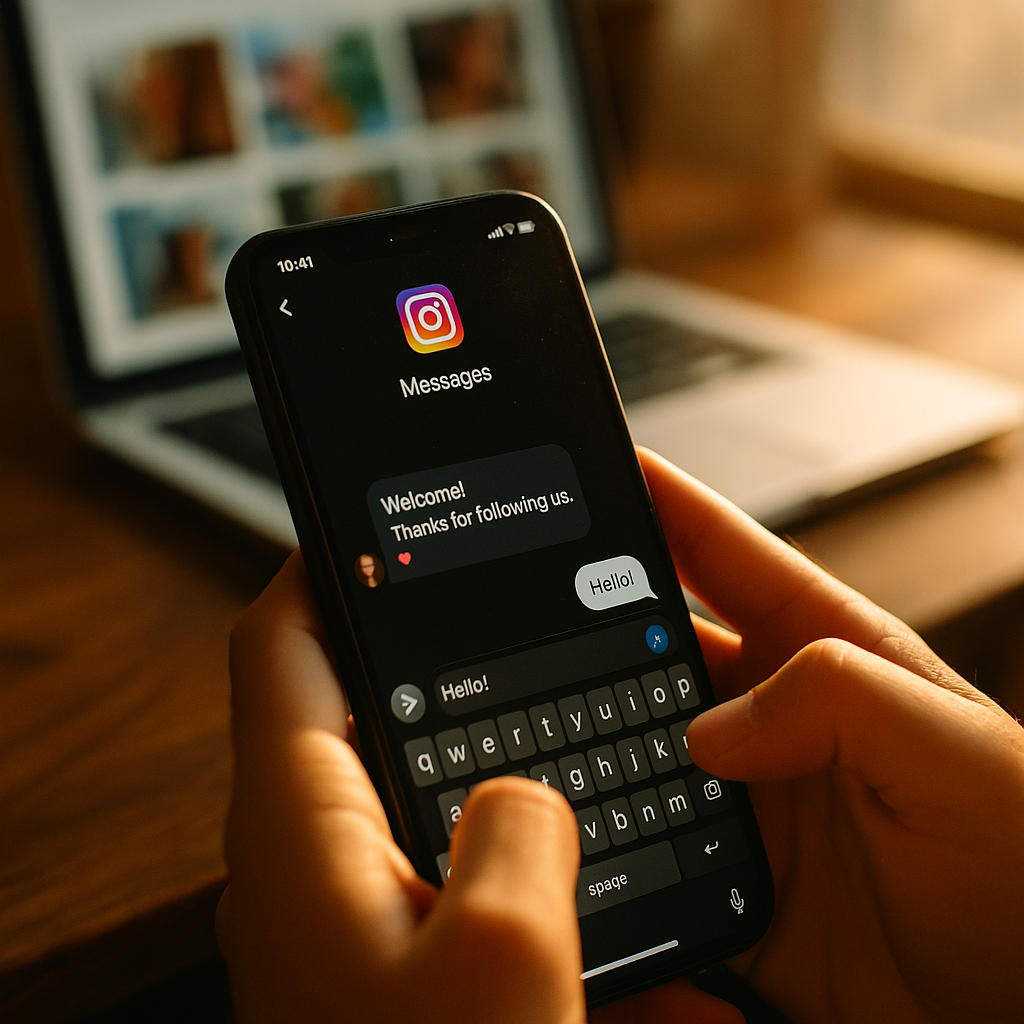
Ninety one percent of DM conversations with a brand go cold within 48 hours of the first reply, yet most sponsored post campaigns treat the comment section as the finish line. An Instagram welcome flow is the fix: a structured, 30-day DM sequence that catches the spike of interest a creator post generates and actually converts it. If your influencer program ends when the post goes live, you’re leaving the highest-intent leads of the entire campaign on the table.
Why the First DM Is Never the Last One
Here’s the uncomfortable truth about sponsored content: the post itself rarely sells anything. It triggers curiosity. Someone watches a creator unbox your product, slides into your DMs with “is this still available?” or “does this ship to Canada?”, and then… nothing. A junior community manager replies once, maybe twice, and the thread dies. Meanwhile that person had buying intent high enough to leave their feed and type a message to a brand they don’t follow.
That’s rare behavior. Most scrolling is passive. A DM is active, and active beats passive every time in attribution terms. Treating it like a one-off customer service ticket instead of the top of a nurture funnel is how brands waste the exact traffic they paid a creator fee to generate.
A single sponsored post DM is worth more than a cold outbound lead because the recipient already trusts the creator who sent them your way. Squandering that trust with a one-line reply is the costliest mistake in influencer marketing operations.
What a 30-Day Welcome Flow Actually Looks Like
Forget the idea that a “flow” means a rigid chatbot script. Instagram’s DM automation (through Meta’s official tools and approved partners) lets you build branching sequences triggered by keywords, post tags, or story replies. The best welcome flows follow a simple arc: acknowledge, qualify, educate, convert, retain.
- Day 0-1 (Acknowledge): Instant automated reply confirming receipt, referencing the specific creator and post so it doesn’t feel generic. “Thanks for reaching out after Jess’s review” beats “Thanks for your message” every time.
- Day 1-3 (Qualify): A soft question flow (size, use case, location, budget tier) that segments the lead without feeling like an interrogation.
- Day 4-10 (Educate): Follow-up content, often a second creator clip, a comparison carousel, or a founder voice note, sent only to people who engaged with the qualifying question.
- Day 11-20 (Convert): A time-boxed incentive, early access, or a direct link to a landing page built specifically for that creator’s audience.
- Day 21-30 (Retain or re-engage): For non-converters, a lighter touch, maybe a UGC roundup or a “still thinking about it?” nudge, before the lead moves to general remarketing.
Notice the pacing. Nobody wants five sales messages in five days. Spreading the sequence over a month respects the fact that a DM lead isn’t always ready to buy on day one, but they’re far more ready than a cold audience.
The Attribution Problem Nobody Talks About
Marketing leadership loves to ask “what did that influencer post actually generate?” and most teams answer with likes, comments, and reach, because that’s what’s easy to pull. DM volume and DM-to-conversion rate are harder to track, so they get ignored. That’s a reporting failure, not a performance failure.
If you’re running influencer programs at any real budget, you need a system that tags every DM conversation back to the originating post, creator, and campaign. Meta’s native business tools provide partial visibility, but most mid-to-large programs layer on a CRM or a platform like ManyChat, Sprout Social, or a dedicated influencer platform’s inbox module to get proper source tagging. Without it, you’re reporting on vanity metrics while the actual pipeline data evaporates into an unsorted inbox.
This is also where finance teams start asking harder questions. If you can show that a $4,000 creator fee generated 60 qualified DM leads and 9 conversions within 30 days, that’s a defensible ROI case. If all you can show is “engagement was up,” you’re going to lose budget to channels that report better, even if they perform worse. For a deeper look at building the finance-facing side of this argument, see our ROI model guide for creator partnerships.
Compliance Isn’t Optional Just Because It’s a DM
A lot of brands treat DMs as an informal, off-the-record channel. It isn’t. If your automated flow makes claims about pricing, availability, or product efficacy, those claims are subject to the same scrutiny as any other marketing communication. The FTC has been increasingly explicit that disclosure and accuracy obligations extend to automated and DM-based commerce flows, not just the original sponsored post.
There’s also a data privacy layer. Depending on your markets, information collected through a qualifying flow (location, purchase intent, even implied health or financial data in some verticals) may fall under GDPR or similar frameworks. If you’re operating in UK or EU markets, the ICO guidance on direct marketing consent is worth a read before your team builds an automated sequence that stores and reuses personal data without a clear opt-in. Brands running programs across regions should also check how tone and compliance expectations shift, something we cover in our EMEA creator tone guide.
Building the Flow Without a Dedicated Dev Team
You don’t need a custom build to run this well. Meta’s business messaging tools now support saved replies, quick-reply buttons, and basic automation natively, which covers maybe 60% of a solid welcome flow. For the branching logic and multi-day pacing, most mid-market brands use third-party platforms that plug into Instagram’s API through Meta Business Suite. These tools let you set trigger keywords (“price,” “link,” “size”) off the sponsored post’s comments and DMs, route them into segmented sequences, and track conversion against a UTM-tagged landing page.
A few operational notes from brands that have actually run this at scale:
- Keep the first automated message under 25 words. Long openers feel like a bot immediately, and trust drops.
- Always give a clear human opt-out (“reply HUMAN for a real person”) because Meta’s policies and general consumer expectation both require an easy escalation path.
- Sync your welcome flow calendar with your broader content calendar. If the creator posts a follow-up or story mention mid-sequence, your DM flow should reference it, not contradict it.
- Test send times. A flow built around US evening scroll habits will underperform in APAC markets where engagement windows shift. Our APAC market adaptation guide has useful benchmarks if you’re running multi-region creator campaigns.
Where This Fits Inside the Bigger Funnel
A welcome flow isn’t a replacement for retargeting, it’s a feeder into it. Leads who don’t convert within 30 days shouldn’t just vanish. They should roll into a paid remarketing audience, ideally segmented by where they dropped off in the flow (never qualified, qualified but didn’t click, clicked but didn’t buy). This is the same logic brands use when moving creator-sourced traffic between platforms, which we’ve detailed in our cross-platform retargeting guide.
It’s also worth connecting your welcome flow strategy to your broader partnership ads setup. If a sponsored post is running under a Partnership Ads arrangement with boosted distribution, you’ll get a larger, colder audience hitting your DMs, which changes your qualifying logic. A boosted post audience needs more education before conversion than an organic audience that already follows the creator closely.
Brands that map DM behavior to campaign spend consistently report conversion lift in the double digits compared to teams that treat the inbox as a support queue. The data is there. Most teams just aren’t looking at it.
According to recent eMarketer estimates on social commerce behavior, DM-initiated purchase intent is one of the fastest-growing conversion paths on Instagram, outpacing standard link-in-bio traffic. That trend alone should be reason enough to formalize what’s currently an ad hoc process at most brands.
Common Mistakes That Quietly Kill Flow Performance
A few patterns show up again and again when welcome flows underperform:
- Generic opening messages. If your first reply doesn’t reference the specific creator or post, you’ve already lost the personalization advantage that made the DM valuable in the first place.
- Overloading day one. Sending a discount code, a product catalog, and three questions in the first message overwhelms a lead who just wanted a quick answer.
- No handoff plan. Automated flows that never route high-intent leads to a real human lose deals right at the moment of highest interest.
- Ignoring the creator relationship. If your flow contradicts the tone or claims the creator made in their post, you create a trust gap that’s hard to recover from.
Fixing these isn’t expensive. It’s mostly a matter of writing better scripts and assigning someone to actually monitor flow performance weekly instead of setting it up once and forgetting it.
FAQs
Frequently Asked Questions
What is an Instagram welcome flow in the context of influencer marketing?
It’s a structured sequence of automated and human-assisted DM messages triggered when someone reaches out after seeing a sponsored post, designed to qualify and nurture that lead over a set period, typically 30 days.
Do I need special software to build one, or does Instagram support this natively?
Meta’s native business messaging tools cover basic automation like saved replies and quick-reply buttons. For branching, multi-day sequences, most brands use a third-party platform connected through Meta Business Suite for more advanced logic and reporting.
How long should a DM nurture sequence run after a sponsored post?
Thirty days is a common benchmark because it captures the full decay curve of post-driven interest without overwhelming leads who need more time to decide. Shorter sequences risk cutting off slower-moving buyers, while longer ones tend to see diminishing returns.
Is automated DM nurturing compliant with FTC and privacy regulations?
It can be, but only if claims made in the automated sequence meet the same disclosure standards as the original sponsored content, and any personal data collected follows applicable consent requirements under frameworks like GDPR.
How do I measure ROI on a DM welcome flow?
Track source-tagged conversations from the originating post through to conversion, ideally using UTM-tagged landing pages and a CRM or inbox tool that supports attribution, so you can report cost per qualified lead and cost per conversion rather than just engagement metrics.
If your influencer program still treats the DM inbox as a support queue, start with one change this week: tag every DM lead by source creator and post, then measure 30-day conversion before you negotiate your next sponsorship fee.
Top Influencer Marketing Agencies
The leading agencies shaping influencer marketing in 2026
Agencies ranked by campaign performance, client diversity, platform expertise, proven ROI, industry recognition, and client satisfaction. Assessed through verified case studies, reviews, and industry consultations.
Moburst

-
2

The Shelf
Boutique Beauty & Lifestyle Influencer AgencyA data-driven boutique agency specializing exclusively in beauty, wellness, and lifestyle influencer campaigns on Instagram and TikTok. Best for brands already focused on the beauty/personal care space that need curated, aesthetic-driven content.Clients: Pepsi, The Honest Company, Hims, Elf Cosmetics, Pure LeafVisit The Shelf → -
3

Audiencly
Niche Gaming & Esports Influencer AgencyA specialized agency focused exclusively on gaming and esports creators on YouTube, Twitch, and TikTok. Ideal if your campaign is 100% gaming-focused — from game launches to hardware and esports events.Clients: Epic Games, NordVPN, Ubisoft, Wargaming, Tencent GamesVisit Audiencly → -
4

Viral Nation
Global Influencer Marketing & Talent AgencyA dual talent management and marketing agency with proprietary brand safety tools and a global creator network spanning nano-influencers to celebrities across all major platforms.Clients: Meta, Activision Blizzard, Energizer, Aston Martin, WalmartVisit Viral Nation → -
5

The Influencer Marketing Factory
TikTok, Instagram & YouTube CampaignsA full-service agency with strong TikTok expertise, offering end-to-end campaign management from influencer discovery through performance reporting with a focus on platform-native content.Clients: Google, Snapchat, Universal Music, Bumble, YelpVisit TIMF → -
6

NeoReach
Enterprise Analytics & Influencer CampaignsAn enterprise-focused agency combining managed campaigns with a powerful self-service data platform for influencer search, audience analytics, and attribution modeling.Clients: Amazon, Airbnb, Netflix, Honda, The New York TimesVisit NeoReach → -
7

Ubiquitous
Creator-First Marketing PlatformA tech-driven platform combining self-service tools with managed campaign options, emphasizing speed and scalability for brands managing multiple influencer relationships.Clients: Lyft, Disney, Target, American Eagle, NetflixVisit Ubiquitous → -
8

Obviously
Scalable Enterprise Influencer CampaignsA tech-enabled agency built for high-volume campaigns, coordinating hundreds of creators simultaneously with end-to-end logistics, content rights management, and product seeding.Clients: Google, Ulta Beauty, Converse, AmazonVisit Obviously →