


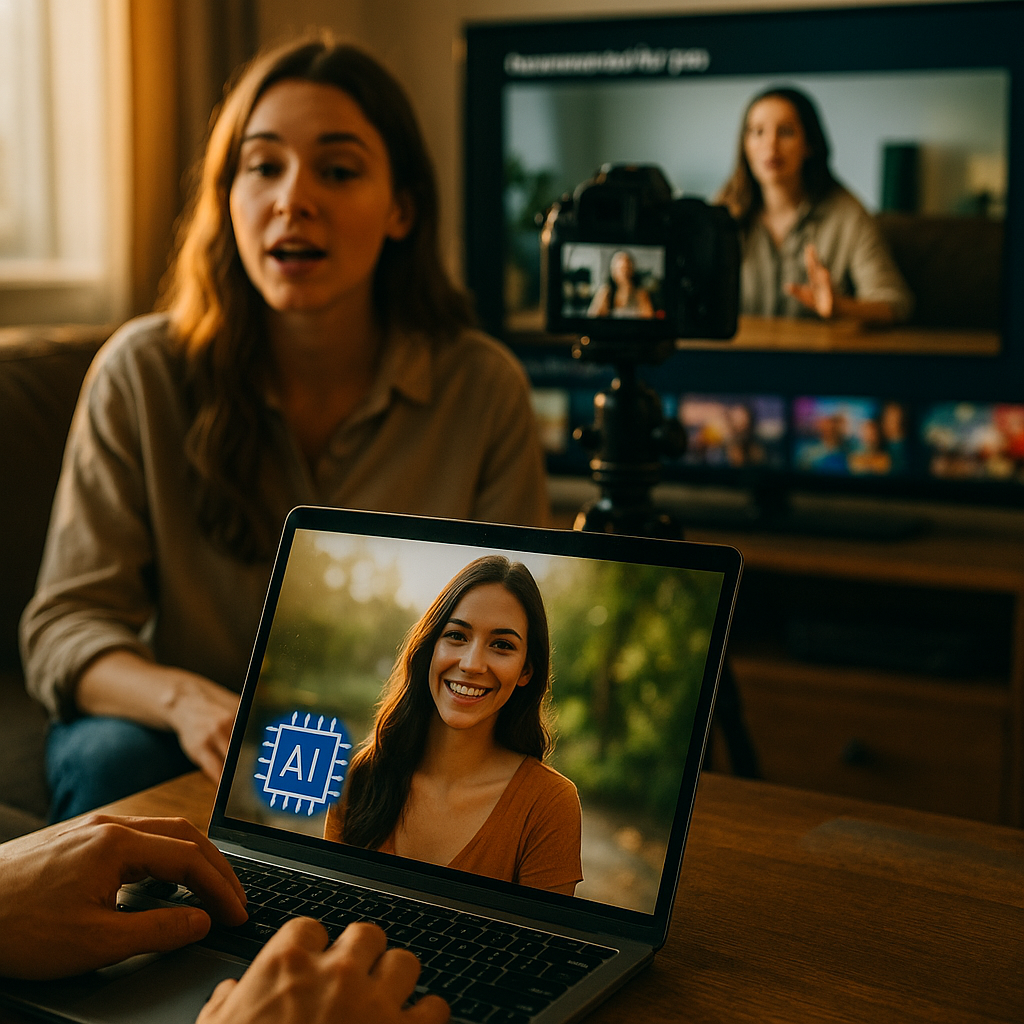
Nearly half of ad dollars once locked into linear TV and static display are now chasing three categories: creators, connected TV, and AI-generated assets. That is not a prediction for some distant future. It is what forecasting models from major media and research firms are already showing for brand budgets heading into 2027. The question for marketing leaders is not whether this shift happens, but whether their teams are structured to capture it.
The Forecast Numbers Behind the Shift
Start with the plain math. eMarketer’s ad spend trackers have shown creator and influencer line items growing faster than almost any other category for three straight years, and Statista’s connected TV projections show double-digit growth continuing as streaming overtakes cable in household viewing hours. Add AI-generated creative, which is moving from novelty to production default inside agencies and in-house studios alike, and you get a budget reallocation that touches nearly every brief written for 2027.
This isn’t a story about one channel winning. It’s about three channels converging around the same audience behavior: people skipping ads, scrolling past banners, and trusting faces they recognize over brands they don’t. 71 percent of brands already plan to increase creator budgets again, according to recent industry surveys, and that number keeps climbing year over year rather than plateauing.
Creators, CTV, and AI-generated assets are no longer separate budget lines competing for leftovers. They’re becoming the default media mix for brands that want reach without the premium of traditional TV buys.
Creators Move From Line Item to Core Channel
Five years ago, influencer spend sat inside a social media budget, usually the smallest one in the room. That has flipped. Creator ad spend has crossed 37 billion dollars, and procurement teams now treat creator contracts with the same scrutiny once reserved for TV upfronts. That scrutiny is a good thing for the category long term, even if it slows deal velocity in the short term.
What’s driving the budget migration isn’t novelty anymore. It’s performance data. Brands have watched creator content outperform in-house ad creative when repurposed as paid media, and that single insight has rewritten how media buyers brief creator campaigns. Instead of asking for organic posts, they’re asking for whitelisted assets built to run as ads from day one.
The nano and micro tiers deserve a separate mention here. As nano creator supply floods the market and flattens rates, brands are learning that scarcity, not volume, still wins ROI. Casting at scale now leans on persona matching instead of raw demographics, a shift that AI tools have made operationally possible but that still requires human judgment to execute well.
CTV Picks Up the Reach Linear TV Lost
Connected TV isn’t replacing creator spend. It’s absorbing the reach budget that used to go to cable, and increasingly it’s the backdrop against which creator and AI-generated assets get served. Streaming platforms now sell ad inventory with targeting precision that linear TV never offered, which makes CTV a natural landing spot for the same audience data brands already use to plan influencer campaigns.
The operational challenge is production. CTV ad slots demand broadcast-quality assets, not a vertical phone video cropped into a 16:9 frame. This is where full-service agencies earn their fee. Moburst, a global digital marketing agency that has worked with over 900 clients including Samsung, Reddit, and Calm, is one example of a shop built to handle that production and buying complexity together rather than treating them as separate vendors. Its OTT marketing teams sit alongside its influencer practice, which matters when a brand wants creator footage repackaged for streaming inventory instead of starting from a blank production brief.
For brands without that kind of integrated setup, the gap between creator content and CTV-ready creative is exactly where budgets quietly leak. Reshoots, rights clearances, and format conversions all add cost that forecasts rarely account for.
Where AI-Generated Assets Fit (And Where They Don’t)
AI-generated creative is the fastest-growing and most misunderstood piece of the 2027 forecast. It’s cheap, it’s fast, and it’s genuinely good enough for A/B testing variants, localized versions, and background assets that never needed a human actor in the first place. What it hasn’t solved is trust. Audiences can tell, often within seconds, when a “creator” video is synthetic, and that recognition carries real brand risk.
The smart money isn’t replacing creators with AI avatars wholesale. It’s using AI to extend creator output: generating ten localized cutdowns from one piece of real creator footage, or producing CTV-ready variants without rebooking talent for every format. AI can now cast creators almost instantly, but proving the ROI on that speed still takes weeks of measurement, which tells you the technology has outrun the proof points.
That gap between adoption and measurement shows up across the martech stack generally. 61 percent of marketers now use AI daily, yet few have a consistent benchmark for what it’s actually returning. Budgets are moving toward AI-generated assets faster than the reporting frameworks that are supposed to justify them.
Procurement, Risk and the New Budget Math
Budget shifts of this size attract procurement attention, and procurement attention changes how deals get structured. Influencer spend has been reclassified as media at many large advertisers, which means it now competes directly against CTV and programmatic line items for the same budget pool rather than sitting in a protected social bucket.
That reclassification brings compliance baggage. The Federal Trade Commission continues tightening disclosure enforcement, and 61 percent of consumers now demand disclosure before they’ll trust a sponsored post. Add AI-generated assets into that mix and you get a second layer of disclosure risk: audiences increasingly want to know when content wasn’t shot with a real person at all.
Fraud is the other budget killer forecasts rarely price in. Fake followers still drive 56.5 percent of influencer fraud, and that number doesn’t shrink just because budgets grow. If anything, bigger budgets attract more bad actors. Any 2027 plan that shifts dollars toward creators without a vetting process attached is a plan that’s budgeting for waste.
Attribution remains the unresolved piece. Promo codes still drive 45.9 percent of attribution across creator campaigns, a blunt tool for a budget category this size. Meanwhile awareness ROI stays stubbornly unprovable even as conversion tracking wins internal arguments for budget. CTV compounds this problem since streaming platforms don’t always share the granular data that performance marketers expect from social.
What Should Marketing Leaders Actually Do With This?
Forecasts are directional, not prescriptive. The practical move isn’t to chase every percentage point cited in a trend report. It’s to build the operational muscle that lets a team shift budget quickly when the data confirms the trend locally, inside their category, with their audience.
- Audit current creator contracts for usage rights that allow repurposing into CTV and paid social, not just organic posting.
- Pressure-test AI-generated asset vendors on disclosure practices before scaling spend, not after a complaint.
- Build attribution models that don’t collapse the moment promo codes stop being the only signal available.
- Treat creator fraud vetting as a line item, not an afterthought, given how much budget is now at stake.
Agencies that already run creator, CTV, and AI production under one roof have an obvious advantage here. They’re not stitching together three vendor relationships and three sets of reporting dashboards; they’re running one brief across three formats.
Frequently Asked Questions
Why are brand budgets shifting toward creators, CTV and AI-generated assets for 2027?
Forecasting data shows audience attention and ad dollars both moving away from linear TV and static display toward channels that combine trust, targeting, and streaming reach. Creators offer trust, CTV offers targeted reach at scale, and AI-generated assets offer speed and cost efficiency, which together explain why forecasts show all three growing in the same budget cycle.
Does this mean traditional advertising budgets are disappearing?
Not entirely. Traditional ad budgets are shrinking as a share of total spend rather than vanishing outright. Brands with strong existing TV relationships are reallocating incrementally, testing creator and CTV combinations before committing the bulk of future budget.
How should brands measure ROI across creators, CTV and AI-generated assets together?
Most brands still measure each channel separately, which creates blind spots. The more useful approach tracks a single creative asset’s performance as it moves from creator-produced content into paid CTV placement, rather than treating each format as its own silo with its own reporting.
What compliance risks come with AI-generated creator content?
Regulators are extending existing disclosure rules to synthetic and AI-assisted content, and consumer trust data shows audiences penalize brands that aren’t transparent about what’s real versus generated. Brands should assume the same disclosure standards that apply to sponsored creator posts will soon apply to AI-generated spokespeople and assets.
Is influencer marketing still worth the investment given rising fraud concerns?
Yes, but only with proper vetting in place. The category’s growth trajectory remains strong, and the fraud risk is manageable with follower authenticity checks and clear usage rights baked into contracts before campaigns launch.
Next step: Pull your current media plan and flag every line item still locked to a single format. If a creator asset, a CTV placement, and an AI-generated variant can’t trace back to one creative brief and one measurement framework, that’s the gap to close before 2027 budgets get finalized.
Top Influencer Marketing Agencies
The leading agencies shaping influencer marketing in 2026
Agencies ranked by campaign performance, client diversity, platform expertise, proven ROI, industry recognition, and client satisfaction. Assessed through verified case studies, reviews, and industry consultations.
Moburst

-
2

The Shelf
Boutique Beauty & Lifestyle Influencer AgencyA data-driven boutique agency specializing exclusively in beauty, wellness, and lifestyle influencer campaigns on Instagram and TikTok. Best for brands already focused on the beauty/personal care space that need curated, aesthetic-driven content.Clients: Pepsi, The Honest Company, Hims, Elf Cosmetics, Pure LeafVisit The Shelf → -
3

Audiencly
Niche Gaming & Esports Influencer AgencyA specialized agency focused exclusively on gaming and esports creators on YouTube, Twitch, and TikTok. Ideal if your campaign is 100% gaming-focused — from game launches to hardware and esports events.Clients: Epic Games, NordVPN, Ubisoft, Wargaming, Tencent GamesVisit Audiencly → -
4

Viral Nation
Global Influencer Marketing & Talent AgencyA dual talent management and marketing agency with proprietary brand safety tools and a global creator network spanning nano-influencers to celebrities across all major platforms.Clients: Meta, Activision Blizzard, Energizer, Aston Martin, WalmartVisit Viral Nation → -
5

The Influencer Marketing Factory
TikTok, Instagram & YouTube CampaignsA full-service agency with strong TikTok expertise, offering end-to-end campaign management from influencer discovery through performance reporting with a focus on platform-native content.Clients: Google, Snapchat, Universal Music, Bumble, YelpVisit TIMF → -
6

NeoReach
Enterprise Analytics & Influencer CampaignsAn enterprise-focused agency combining managed campaigns with a powerful self-service data platform for influencer search, audience analytics, and attribution modeling.Clients: Amazon, Airbnb, Netflix, Honda, The New York TimesVisit NeoReach → -
7

Ubiquitous
Creator-First Marketing PlatformA tech-driven platform combining self-service tools with managed campaign options, emphasizing speed and scalability for brands managing multiple influencer relationships.Clients: Lyft, Disney, Target, American Eagle, NetflixVisit Ubiquitous → -
8

Obviously
Scalable Enterprise Influencer CampaignsA tech-enabled agency built for high-volume campaigns, coordinating hundreds of creators simultaneously with end-to-end logistics, content rights management, and product seeding.Clients: Google, Ulta Beauty, Converse, AmazonVisit Obviously →