


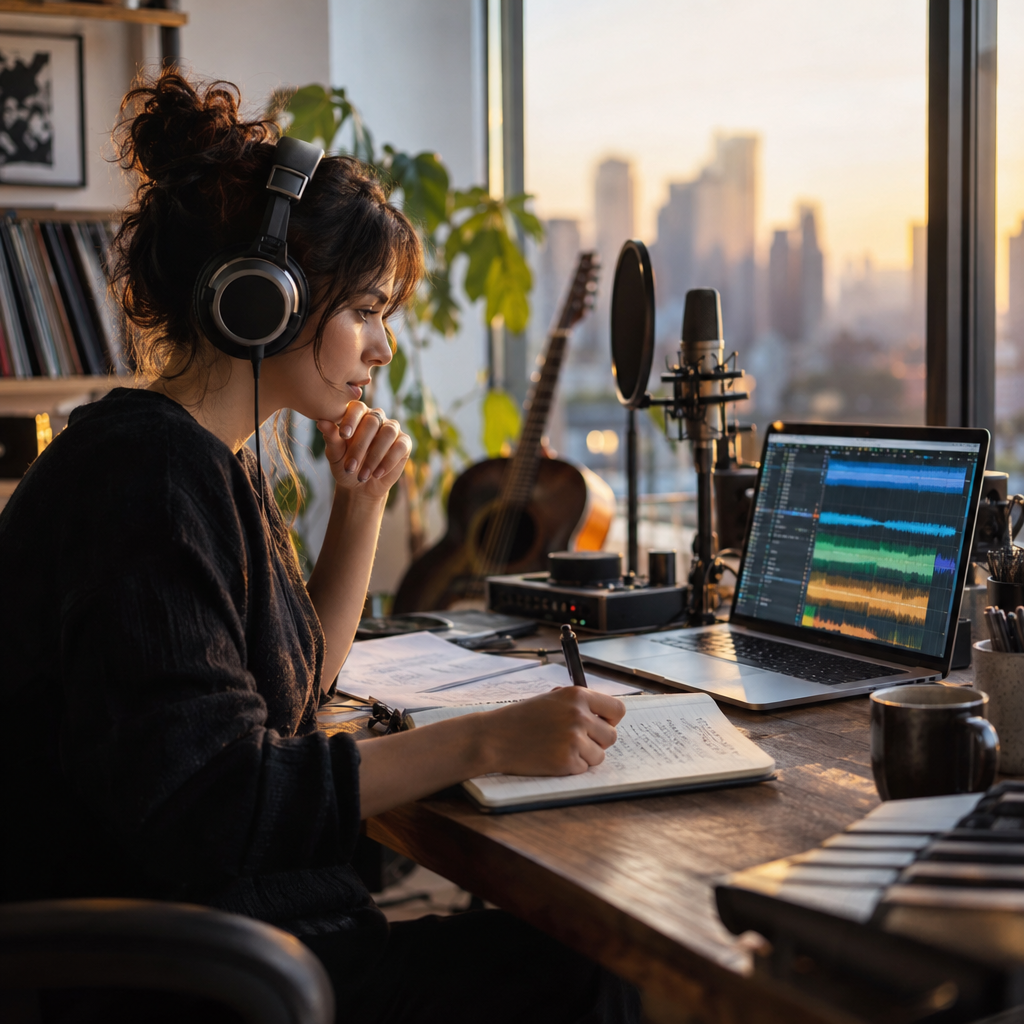
Sound-jacking trend audio is the fastest way to borrow attention, and the fastest way to hand your legal team a headache. Brands that hop on a viral sound within 48 hours often look culturally fluent. Brands that hop on in week three look like a parent at a school dance. Worse, the wrong track on a business account can trigger a copyright claim. Here is how to time it, license it and script it.
What sound-jacking actually means for brands
Sound-jacking is attaching your content to an audio clip that is already climbing on TikTok, Instagram Reels or YouTube Shorts. The sound might be a song snippet, a meme voiceover or a creator’s off-the-cuff line. The audio does the distribution work, because viewers who tap the sound page can find your post.
Why does it matter commercially? Sound carries weight on TikTok. TikTok’s own business blog cites a Kantar study finding that TikTok was the only platform where ads with audio drove significant lifts in both purchase intent and brand favorability. Audio is a conversion lever, not decoration.
But here is the catch. The sounds that trend are rarely the sounds your brand is allowed to use.
The licensing wall nobody puts in the brief
Personal accounts and business accounts do not get the same music rights. A creator posting for fun can use almost any trending track. A brand account posting the same thing is making commercial use, and commercial use needs a license.
TikTok built a workaround. Its Commercial Music Library is, per TikTok, over 600,000 tracks pre-cleared for branded content and ads. It is searchable by region, mood, genre and duration inside Creative Center. Useful, but a library of cleared tracks is not a library of trending tracks.
Instagram has the same gap. Meta’s own library of cleared tracks for business accounts covers only part of what trends on the platform, so the same planning step applies on Reels. Legal exposure also extends to content you did not make. Legal exposure also reaches content you did not make, because a brand that reshares a creator’s post for commercial gain can inherit the music risk.
A platform offering you a sound is not the same as a license to use it commercially. If the post benefits your brand, assume the brand carries the risk, even when a creator picked the track.
A quick risk sort before you touch any sound
- Green: tracks in TikTok’s Commercial Music Library or Meta’s Sound Collection, and original audio your team or a creator owns outright.
- Yellow: trending original audio from a creator (a voiceover, a joke, a bit). Get written permission if you plan to run it as an ad or amplify it.
- Red: commercial songs from major labels on a business account, and any paid amplification of a track you have not cleared.
Timing: the window is shorter than your approval chain
Most sound trends have a visible arc. A few creators use the sound, then it spreads, then it saturates. Your best entry is the early climb, when usage is growing but the sound is not yet wallpaper.
That window is often a few days. A standard brand approval process (brief, draft, legal, revision, sign-off) takes longer. So the fix is operational, not creative.
- Pre-approve a sound lane. Legal signs off on the green and yellow categories above, once, so the team does not litigate every track.
- Name one decision-maker. One person can say yes within hours. Committees kill trends.
- Keep a template bank. Three or four reusable formats (a product reveal, a before-and-after, a reaction) that any sound can be dropped into.
- Set a freshness rule. If a sound has been peaking for more than a couple of weeks, skip it unless your angle is genuinely new.
Where do you find sounds early? TikTok’s Creative Center and each platform’s trending audio tab are the baseline. Your creators are better. Ask the people on your roster what they are hearing in their feeds, because they see the climb before any dashboard does.
Creative: make the sound do work
The weakest sound-jack is a logo slapped on a trend. The strongest ones use the sound’s built-in structure (a beat drop, a punchline, a pause) as the reveal for something true about your product.
Try this test. Mute the video. Does the concept still make sense? If so, you have a durable idea with audio as a bonus. Our piece on sound-off viewing covers why this matters, since a large share of people watch without audio at least some of the time.
Then think about the sound’s native meaning. A track that went viral for a breakup meme will carry that baggage. Check the top 20 videos using it before you commit. Brands get burned when they miss a joke’s context, or worse, when the sound is tied to a sensitive news event.
Let creators carry it
Brand accounts are rarely the best vehicle for a trend. Creators already have the audience’s trust and the fluency. Brief them with a goal and guardrails, not a script, and let them choose how the sound fits. For food and grocery brands, the mechanics are similar to those in our guide on recipe remix videos, where a trending clip becomes a product moment.
Production values matter less than speed here. A raw, phone-shot look often suits a trend better than a polished one, which is the argument in our look at the lo-fi phone aesthetic. And if one shoot needs to feed several channels, remember that audio availability differs by platform. The workflow in one creator shoot helps you plan for swapping sounds natively at export instead of baking one track into the file.
Shoot the video with clean, music-free audio. Add the trending sound inside each platform at upload, so you can swap or drop it when rights or trends change.
Disclosure and contracts: the boring part that protects you
Sound-jacking does not change disclosure rules. If a creator is paid or gifted product, the connection needs to be clear. The FTC’s guidance says a connection that a meaningful share of consumers would not expect, and that affects how they judge the endorsement, should be disclosed clearly and conspicuously. A fast-moving trend video is no exception. Do not let a fun sound bury the disclosure.
Add these to your creator contract template:
- A clause stating which music sources are permitted (commercial libraries and original audio only, unless cleared in writing).
- Creator warranties that audio is licensed for branded use, with indemnity if it is not.
- Usage rights spelling out whether you can repost, whitelist or run the video as a paid ad.
- A takedown process, including who removes a post and how fast when a claim lands.
Paid amplification deserves special care. A track that is fine in an organic creator post may not carry the rights you need once you put spend behind it. Check with counsel before you boost anything with a non-library sound.
How to measure whether it worked
Views are the easy metric and the least useful. Compare sound-jacked posts against your baseline on these measures:
- Completion rate and shares, which show whether the idea held attention beyond the sound’s pull.
- Profile visits and follows, a signal that the content earned interest in the brand itself.
- Click-through and conversion, if the post carries a link, shop tag or code.
- Time to publish, an internal metric. If you consistently miss the window, the process is the problem.
Be honest about attribution. A trend post can spike reach and still do nothing for sales. Run a small test batch each month, keep the ones that pay back, and stop the ones that only flatter the dashboard.
FAQs
Can a brand account use any trending sound on TikTok?
No. Business accounts are generally limited to cleared music, such as TikTok’s Commercial Music Library, or audio the brand has licensed or owns. Trending commercial songs often fall outside that pool, so check availability before you plan the creative.
Is it safe to use trending music on an Instagram business account?
Only if it comes from a cleared source, such as Meta’s Sound Collection, or you hold a license. Seeing a track in the app does not give you commercial rights, and brands have faced claims over unlicensed music, including in reshared creator content.
How fast do I need to move on a viral sound?
Usually within days of a sound’s early climb. Build pre-approved formats and a single decision-maker so you can publish quickly. If a sound is already saturated, skip it unless you have a fresh angle.
Who is liable if a creator uses an unlicensed sound in a sponsored post?
Potentially both. Brands that benefit commercially from a post, or that repost it, can share the risk. Protect yourself with contract warranties, indemnity clauses and a clear takedown process.
Do I still need to disclose the partnership in a sound-jacking video?
Yes. Paid or gifted relationships must be disclosed clearly and conspicuously under FTC guidance, no matter how fast or casual the video is. Make sure the disclosure is visible and not drowned out by the trend.
What should I do if a sound I used gets flagged?
Remove or replace the audio quickly, document what happened, and notify legal. Then check where that track came from, and tighten your approved-source list so it does not recur.
This week, build a one-page sound policy with green, yellow and red lists, then name the person who can approve a trend post in under four hours.
Top Influencer Marketing Agencies
The leading agencies shaping influencer marketing in 2026
Agencies ranked by campaign performance, client diversity, platform expertise, proven ROI, industry recognition, and client satisfaction. Assessed through verified case studies, reviews, and industry consultations.
Moburst

-
2

The Shelf
Boutique Beauty & Lifestyle Influencer AgencyA data-driven boutique agency specializing exclusively in beauty, wellness, and lifestyle influencer campaigns on Instagram and TikTok. Best for brands already focused on the beauty/personal care space that need curated, aesthetic-driven content.Clients: Pepsi, The Honest Company, Hims, Elf Cosmetics, Pure LeafVisit The Shelf → -
3

Audiencly
Niche Gaming & Esports Influencer AgencyA specialized agency focused exclusively on gaming and esports creators on YouTube, Twitch, and TikTok. Ideal if your campaign is 100% gaming-focused — from game launches to hardware and esports events.Clients: Epic Games, NordVPN, Ubisoft, Wargaming, Tencent GamesVisit Audiencly → -
4

Viral Nation
Global Influencer Marketing & Talent AgencyA dual talent management and marketing agency with proprietary brand safety tools and a global creator network spanning nano-influencers to celebrities across all major platforms.Clients: Meta, Activision Blizzard, Energizer, Aston Martin, WalmartVisit Viral Nation → -
5

The Influencer Marketing Factory
TikTok, Instagram & YouTube CampaignsA full-service agency with strong TikTok expertise, offering end-to-end campaign management from influencer discovery through performance reporting with a focus on platform-native content.Clients: Google, Snapchat, Universal Music, Bumble, YelpVisit TIMF → -
6

NeoReach
Enterprise Analytics & Influencer CampaignsAn enterprise-focused agency combining managed campaigns with a powerful self-service data platform for influencer search, audience analytics, and attribution modeling.Clients: Amazon, Airbnb, Netflix, Honda, The New York TimesVisit NeoReach → -
7

Ubiquitous
Creator-First Marketing PlatformA tech-driven platform combining self-service tools with managed campaign options, emphasizing speed and scalability for brands managing multiple influencer relationships.Clients: Lyft, Disney, Target, American Eagle, NetflixVisit Ubiquitous → -
8

Obviously
Scalable Enterprise Influencer CampaignsA tech-enabled agency built for high-volume campaigns, coordinating hundreds of creators simultaneously with end-to-end logistics, content rights management, and product seeding.Clients: Google, Ulta Beauty, Converse, AmazonVisit Obviously →