


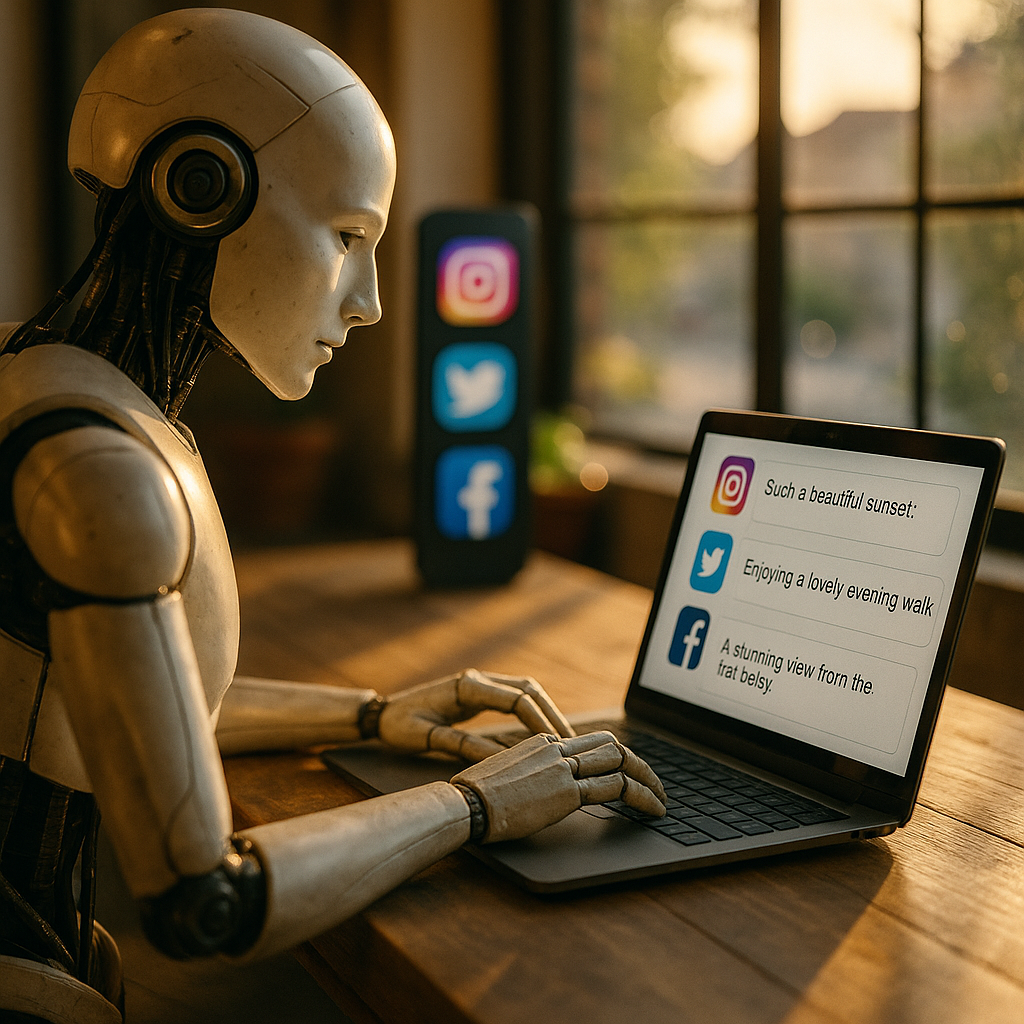
A single caption, copy-pasted across TikTok, Instagram, and YouTube Shorts, can tank engagement on two of the three platforms before a single view converts. That’s not a hunch, it’s a pattern platform algorithms have baked into their distribution logic. Using AI agents to auto-generate platform-native captions for cross-posted creator content is quickly becoming the fix marketing teams didn’t know they needed, and the ones still hand-editing captions in a spreadsheet are bleeding hours they can’t get back.
Why One Caption Fits No Platform
Cross-posting has always been an efficiency play. Shoot once, distribute everywhere, stretch the creator budget further. The problem is that “everywhere” now means platforms with wildly different caption grammars. TikTok rewards short, punchy hooks with trending audio cues baked into the text. Instagram Reels favor slightly longer captions with line breaks and a soft CTA. YouTube Shorts descriptions behave more like SEO fields, keyword-dense and searchable. LinkedIn video, increasingly part of creator distribution mixes, wants a professional register entirely.
Run the same 40-word caption across all four and you’re optimized for none of them. Platform recommendation systems read caption structure as a signal, not just decoration. Hashtag density, emoji use, sentence length, even punctuation patterns feed into how content gets categorized and surfaced. A caption written for TikTok’s algorithm can actively suppress reach on Instagram, and vice versa.
Treating captions as an afterthought is the same mistake brands made with responsive display ads a decade ago: one asset, forced into five formats, underperforming in all of them.
What an AI Captioning Agent Actually Does
This isn’t autocomplete. A properly built captioning agent ingests the raw video or creator brief, pulls transcript and visual context (often via multimodal models), and then generates platform-specific variants that match each destination’s caption conventions, character limits, and hashtag norms. Some agents go further, referencing a brand’s historical top-performing captions to match tone before publishing.
- Transcript extraction: The agent pulls spoken dialogue and on-screen text to understand what the content actually says, not just what the brief claims.
- Platform mapping: Rules engines translate one core message into TikTok, Reels, Shorts, and LinkedIn formats, adjusting length, emoji density, and CTA placement.
- Compliance overlay: Disclosure language (#ad, #sponsored, paid partnership tags) gets inserted automatically based on jurisdiction and platform requirement, not left to the creator’s memory.
- Brand voice check: A secondary pass compares generated copy against approved brand vocabulary and flags deviations before publishing.
Teams already using content models trained on top creator assets have a head start here, since the same underlying data that identifies what converts can also inform how captions should read per channel.
The Efficiency Argument Is the Easy Part
Let’s do the math most ops leads are already doing quietly. A creator team running 200 cross-posted assets a month, at even 8 minutes of manual caption customization per platform per post, is burning over 100 hours monthly just on caption variants. That’s before revision cycles. Agencies managing multiple brand accounts feel this multiplied.
Agent-generated captions collapse that timeline to review-and-approve, not write-from-scratch. According to Sprout Social’s platform research, posts with platform-tailored copy consistently outperform generic cross-posts on engagement rate, which means the time savings aren’t coming at the cost of performance. They’re often improving it.
But efficiency alone undersells the point. The real value is consistency at scale. Manual caption writing degrades under volume, tired copywriters take shortcuts, brand voice drifts. An agent doesn’t get tired at post number 180.
Where This Gets Risky: Compliance and Voice Drift
Automation without guardrails is how brands end up with an AI-generated caption that reads perfectly on TikTok but forgets the FTC disclosure requirement entirely. The FTC’s endorsement guidelines don’t care that a machine wrote the copy, liability still sits with the brand and the creator. This is precisely why disclosure logic needs to be a hard-coded step in the agent’s workflow, not an optional add-on.
Platform-specific labeling adds another layer. TikTok’s AI labeling rules now require disclosure of AI-involvement in content creation under certain conditions, and getting that wrong isn’t just a compliance headache, it can trigger the kind of reach suppression covered in recent reporting on disclosure-related reach penalties. Brands deploying captioning agents need those platform rules built into the generation logic, region by region, not bolted on after a post underperforms.
Voice drift is subtler but just as damaging. An agent trained on generic marketing copy will default to generic marketing tone unless it’s grounded in your actual brand assets. This is the same problem addressed in auditing generative ad variations for brand consistency: without a feedback loop and human review checkpoints, automated copy generation drifts further from brand standards with every iteration, and nobody notices until a customer points it out publicly.
An agent that generates 500 platform-native captions a month is only an asset if someone is auditing a sample of them weekly. Set-and-forget is how brand voice quietly disappears.
Building the Workflow: What Actually Needs to Happen
Standing up a captioning agent isn’t a one-off tool purchase, it’s a workflow redesign. Here’s the sequence that tends to work in practice:
- Audit existing top-performing captions per platform to establish the baseline voice and structure the agent should learn from.
- Define non-negotiable compliance rules (disclosure tags, regional FTC/ASA/ICO requirements) as hard constraints, not suggestions.
- Set platform-specific parameters, character counts, hashtag limits, emoji tolerance, CTA style, so the agent isn’t guessing at conventions.
- Build a human-in-the-loop review step for the first several weeks, sampling output before full automation.
- Track performance by variant, not just aggregate engagement, so you can see which platform-specific caption styles are actually moving the needle.
Teams evaluating vendors in this space should treat it the same way they’d treat any agentic AI purchase. The buyer’s scorecard for AI media orchestration agents is a useful reference point, since caption generation increasingly sits inside broader orchestration platforms rather than standing alone as a point solution. Ask vendors specifically how their agent handles rollback if a generated caption violates platform policy after publishing, a risk explored in depth around tool-call chaining risk in marketing agents.
Measuring Whether It’s Actually Working
The obvious metric is engagement rate per platform, but that’s a lagging indicator. Better signals to track from week one:
- Time-to-publish from asset delivery to live post, across each platform variant.
- Compliance flag rate, how often the agent’s own disclosure check catches something a human missed.
- Voice consistency score, measured against a brand style guide, ideally with a human auditor spot-checking a percentage weekly.
- Reach variance between platform-native captions and any generic fallback copy, to prove the ROI case internally.
Data from eMarketer’s creator economy coverage continues to show that platform-specific content strategies outperform one-size-fits-all distribution, and captioning is one of the cheapest levers available to close that gap without reshooting content. For teams also wrestling with attribution across these variants, it’s worth pairing this workflow with the practices outlined in attribution reporting that accounts for AI-influenced referrals, since caption performance and downstream conversion tracking are increasingly linked in agentic pipelines.
Next Step
Don’t wait for a full agentic overhaul: pilot AI-generated captions on your two highest-volume platforms for 30 days, keep a human reviewer in the loop, and measure engagement lift against your current manual process before scaling further.
Frequently Asked Questions
What is a platform-native caption in influencer marketing?
A platform-native caption is copy written specifically to match a platform’s conventions, TikTok’s short punchy hooks, Instagram’s line-break style, YouTube’s keyword-dense descriptions, rather than a single generic caption reused across every channel.
Can AI agents handle FTC disclosure requirements automatically?
Yes, when properly configured. The agent’s workflow needs disclosure language (like #ad or paid partnership tags) hard-coded as a required step per platform and region, not left as an optional field a creator might skip.
Does using AI-generated captions hurt engagement compared to human-written copy?
Not when the agent is trained on brand-specific top-performing content and reviewed regularly. Generic, ungrounded AI copy can underperform, but platform-tailored AI captions frequently outperform generic manual cross-posts.
How much time can brands realistically save with caption automation?
Teams managing high content volume often cut caption production time by more than half, since the agent generates first-draft variants for each platform instantly, leaving only review and light editing for human teams.
What’s the biggest risk with automated caption generation?
Voice drift and compliance gaps. Without regular audits and hard-coded disclosure rules, agents can gradually produce copy that no longer sounds like the brand or that misses regional labeling requirements.
Top Influencer Marketing Agencies
The leading agencies shaping influencer marketing in 2026
Agencies ranked by campaign performance, client diversity, platform expertise, proven ROI, industry recognition, and client satisfaction. Assessed through verified case studies, reviews, and industry consultations.
Moburst

-
2

The Shelf
Boutique Beauty & Lifestyle Influencer AgencyA data-driven boutique agency specializing exclusively in beauty, wellness, and lifestyle influencer campaigns on Instagram and TikTok. Best for brands already focused on the beauty/personal care space that need curated, aesthetic-driven content.Clients: Pepsi, The Honest Company, Hims, Elf Cosmetics, Pure LeafVisit The Shelf → -
3

Audiencly
Niche Gaming & Esports Influencer AgencyA specialized agency focused exclusively on gaming and esports creators on YouTube, Twitch, and TikTok. Ideal if your campaign is 100% gaming-focused — from game launches to hardware and esports events.Clients: Epic Games, NordVPN, Ubisoft, Wargaming, Tencent GamesVisit Audiencly → -
4

Viral Nation
Global Influencer Marketing & Talent AgencyA dual talent management and marketing agency with proprietary brand safety tools and a global creator network spanning nano-influencers to celebrities across all major platforms.Clients: Meta, Activision Blizzard, Energizer, Aston Martin, WalmartVisit Viral Nation → -
5

The Influencer Marketing Factory
TikTok, Instagram & YouTube CampaignsA full-service agency with strong TikTok expertise, offering end-to-end campaign management from influencer discovery through performance reporting with a focus on platform-native content.Clients: Google, Snapchat, Universal Music, Bumble, YelpVisit TIMF → -
6

NeoReach
Enterprise Analytics & Influencer CampaignsAn enterprise-focused agency combining managed campaigns with a powerful self-service data platform for influencer search, audience analytics, and attribution modeling.Clients: Amazon, Airbnb, Netflix, Honda, The New York TimesVisit NeoReach → -
7

Ubiquitous
Creator-First Marketing PlatformA tech-driven platform combining self-service tools with managed campaign options, emphasizing speed and scalability for brands managing multiple influencer relationships.Clients: Lyft, Disney, Target, American Eagle, NetflixVisit Ubiquitous → -
8

Obviously
Scalable Enterprise Influencer CampaignsA tech-enabled agency built for high-volume campaigns, coordinating hundreds of creators simultaneously with end-to-end logistics, content rights management, and product seeding.Clients: Google, Ulta Beauty, Converse, AmazonVisit Obviously →