


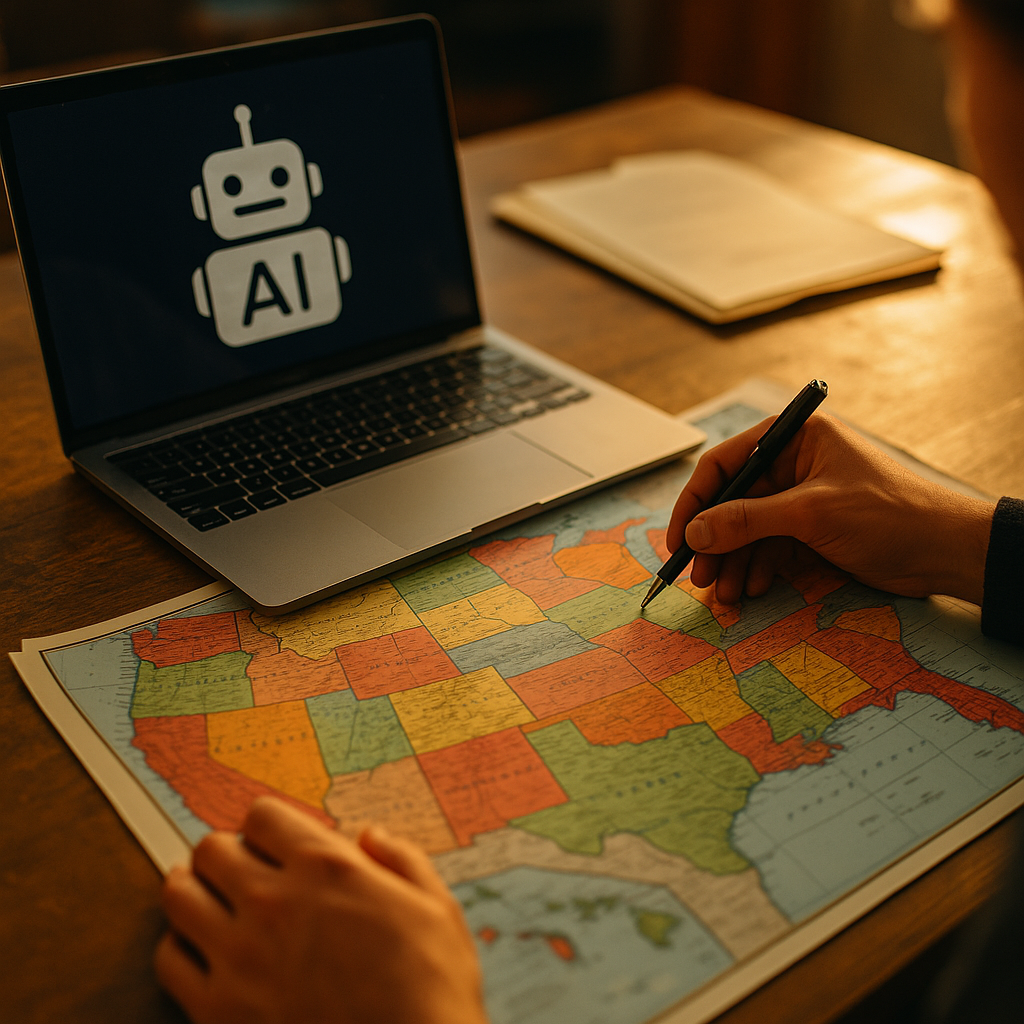
Thirty states introduced AI transparency or disclosure legislation in the past two years. Seven have already passed enforceable rules. If your influencer program still treats California as the finish line for AI content labeling laws, you’re already behind. The patchwork is real, it’s growing, and it’s about to make “we comply with FTC guidelines” sound like a legal defense from a different decade.
California Set the Bar, But It’s Not the Only State in Play
California’s AI Transparency Act (SB 942) and the earlier bot disclosure statute (SB 1001) get most of the press, and for good reason. They require covered AI providers to offer detection tools and mandate clear disclosure when content is AI generated or substantially altered. Brands running influencer campaigns that touch California audiences, which is basically every national campaign, have had to build disclosure workflows around these rules.
Here’s the part most marketing teams miss: California was first, not final. Other legislatures watched, borrowed language, and filed their own versions with different thresholds, different enforcement bodies, and different penalties. Treating California’s rulebook as a national standard is a compliance shortcut that will eventually cost you.
A disclosure that satisfies California’s AI Transparency Act may still violate Texas or Colorado statutes if the labeling format, placement, or trigger conditions don’t match.
The States Already Moving on AI Disclosure
A quick map of where things stand, based on enacted statutes rather than pending bills:
- Colorado: The Colorado AI Act (effective 2026) focuses on high-risk AI systems and algorithmic transparency. It doesn’t target influencer content directly, but its definition of “consumer-facing AI interaction” is broad enough that synthetic spokesperson campaigns could fall under scrutiny.
- Utah: The Utah AI Policy Act requires disclosure when a consumer is interacting with generative AI in a commercial context. That language reaches AI-voiced ads and synthetic influencer content distributed to Utah residents.
- Texas: The Texas Responsible AI Governance Act (TRAIGA) layers disclosure obligations on top of existing deceptive trade practices law, raising the stakes for brands using AI-generated testimonials or likeness without clear labeling.
- Illinois: Building on its biometric privacy framework (BIPA), Illinois lawmakers have pushed AI disclosure bills that would require explicit labeling anywhere a synthetic voice or likeness appears in advertising.
- New York: Multiple bills target AI-generated political and commercial content, with disclosure requirements that differ meaningfully from California’s trigger thresholds.
None of these statutes use identical language. Some trigger at the point of creation, others at the point of distribution. Some apply only to “synthetic media” above a certain realism threshold, others apply to any AI-assisted content regardless of how obviously artificial it looks. That inconsistency is exactly why a single national disclosure template doesn’t work anymore.
Why a Patchwork Beats a Federal Standard (For Now)
There’s no comprehensive federal AI content labeling law. The FTC has issued guidance on AI-generated endorsements and deceptive synthetic content under its existing authority (see the FTC’s guidance on endorsements and advertising), but guidance isn’t statute. States have filled the vacuum, and they’re not coordinating with each other.
That’s frustrating for compliance teams, but it’s not accidental. State attorneys general have moved faster than Congress on nearly every digital marketing issue in the past decade, from data privacy to influencer disclosure. We’ve tracked this same dynamic playing out in state influencer disclosure laws and state privacy law patchwork compliance work. AI content labeling is following the identical pattern: states act first, federal rules lag years behind.
The practical upshot for brand and agency teams: don’t wait for federal clarity. Build compliance around the strictest applicable state rule and work backward. It’s more expensive upfront but far cheaper than a state-by-state retrofit after a campaign already launched.
What This Means for Multi State Campaigns
Most influencer campaigns don’t respect state lines. A creator based in Florida posts content that reaches audiences in Colorado, Texas, and New York simultaneously. Under the current patchwork, that single post could need to satisfy three or four different labeling standards depending on where viewers are located.
This is where things get genuinely hard for brand teams managing synthetic or AI-assisted content: AI-generated spokesperson videos, voice clones used in ads, or AI-enhanced product demos. If a brand is using an AI avatar or synthetic voice in sponsored content, the disclosure requirements can shift dramatically depending on where the audience sits. We covered the contractual side of this in AI spokesperson disclosure requirements, and the contract drafting implications in AI spokesperson contracts.
Platforms aren’t solving this for you either. TikTok and Meta have their own AI-generated content labeling tools, but those labels are designed for platform policy compliance, not state law compliance. A platform-native “AI generated” tag might satisfy Meta’s content policy and still fall short of Illinois’s statutory disclosure language. Don’t confuse the two.
Building a Compliance Framework That Scales
Trying to build a separate disclosure workflow for every state is operationally unsustainable. Here’s a more realistic approach that several agency compliance teams we’ve spoken with are already using:
- Identify your highest risk states first. California, Colorado, Texas, Illinois, and New York cover the bulk of enacted and near-term AI disclosure law. Build your baseline template around the strictest combination of these.
- Tag content by AI involvement level. Fully synthetic, AI-enhanced, and AI-assisted content each carry different disclosure triggers under most statutes. A single tagging taxonomy applied at the content management stage saves enormous manual review time later.
- Standardize label placement and language. Use the most conservative placement and phrasing requirements across your target states as your default, rather than customizing per geography.
- Document provenance. Several pending state bills reference content provenance standards similar to the C2PA framework. If you’re not already attaching provenance metadata to AI-assisted creator content, now’s the time. We broke down the tradeoffs in C2PA watermarking on creator content.
- Audit creator contracts for AI clauses. Make sure influencer agreements explicitly address who’s responsible for disclosure compliance when AI tools are involved in content creation, editing, or voice synthesis.
The brands winning this fight aren’t the ones with the biggest legal budgets. They’re the ones who built a tagging and disclosure system before regulators forced them to.
It’s also worth remembering that AI content labeling doesn’t exist in isolation from other creator compliance obligations. Teams juggling AI actor likeness licensing and synthetic media risk, as outlined in AI health claim deepfakes coverage, will find a lot of overlap in the documentation and provenance infrastructure needed to satisfy both.
Where the Patchwork Goes Next
Expect more states to file AI disclosure bills in the next legislative cycle, not fewer. Washington, New Jersey, and Massachusetts all have active proposals that borrow heavily from California and Colorado language. Industry groups have pushed for a federal preemption standard, but given how slowly Congress has moved on data privacy (a nearly identical fight that’s been going for over a decade), don’t bet your compliance roadmap on federal action arriving soon.
Marketing data firms like eMarketer have started tracking AI disclosure sentiment among consumers, and the early signal is clear: audiences expect transparency even where law doesn’t yet require it. That’s a brand trust argument as much as a legal one. Getting ahead of disclosure requirements isn’t just risk mitigation, it’s a credibility play with increasingly AI-skeptical consumers.
Agencies managing multi-brand influencer rosters should also watch how platforms evolve their own labeling tools. Resources like Sprout Social’s platform policy tracking can help teams stay current on native AI labeling features as they roll out, though again, platform compliance and state law compliance are not interchangeable.
Frequently Asked Questions
What are AI content labeling laws?
AI content labeling laws require disclosure when content is generated or substantially altered by artificial intelligence, typically covering synthetic images, video, audio, or text used in advertising and commercial communications.
Does California’s AI Transparency Act apply nationally?
No. SB 942 applies to AI providers and covered content reaching California residents. Other states have separate, often differently worded statutes, so compliance in California doesn’t guarantee compliance elsewhere.
Which states currently have enforceable AI content disclosure rules?
California, Colorado, Utah, and Texas have enacted laws touching AI disclosure or transparency as of this writing, with Illinois and New York actively advancing additional legislation.
Is there a federal AI content labeling law?
Not yet. The FTC enforces AI-related disclosure issues under its existing deceptive advertising authority, but there’s no comprehensive federal statute specifically governing AI content labeling.
How should brands handle AI disclosure for national influencer campaigns?
Build a compliance baseline around the strictest applicable state requirements, tag content by AI involvement level, and document provenance so disclosure decisions can be defended state by state if questioned.
FAQs
See FAQ section above for visible content.
The patchwork isn’t going away, and it’s not getting simpler. Build your disclosure workflow around your strictest state now, tag AI involvement at the content level, and you’ll spend far less time retrofitting compliance after the next state law lands.
Top Influencer Marketing Agencies
The leading agencies shaping influencer marketing in 2026
Agencies ranked by campaign performance, client diversity, platform expertise, proven ROI, industry recognition, and client satisfaction. Assessed through verified case studies, reviews, and industry consultations.
Moburst

-
2

The Shelf
Boutique Beauty & Lifestyle Influencer AgencyA data-driven boutique agency specializing exclusively in beauty, wellness, and lifestyle influencer campaigns on Instagram and TikTok. Best for brands already focused on the beauty/personal care space that need curated, aesthetic-driven content.Clients: Pepsi, The Honest Company, Hims, Elf Cosmetics, Pure LeafVisit The Shelf → -
3

Audiencly
Niche Gaming & Esports Influencer AgencyA specialized agency focused exclusively on gaming and esports creators on YouTube, Twitch, and TikTok. Ideal if your campaign is 100% gaming-focused — from game launches to hardware and esports events.Clients: Epic Games, NordVPN, Ubisoft, Wargaming, Tencent GamesVisit Audiencly → -
4

Viral Nation
Global Influencer Marketing & Talent AgencyA dual talent management and marketing agency with proprietary brand safety tools and a global creator network spanning nano-influencers to celebrities across all major platforms.Clients: Meta, Activision Blizzard, Energizer, Aston Martin, WalmartVisit Viral Nation → -
5

The Influencer Marketing Factory
TikTok, Instagram & YouTube CampaignsA full-service agency with strong TikTok expertise, offering end-to-end campaign management from influencer discovery through performance reporting with a focus on platform-native content.Clients: Google, Snapchat, Universal Music, Bumble, YelpVisit TIMF → -
6

NeoReach
Enterprise Analytics & Influencer CampaignsAn enterprise-focused agency combining managed campaigns with a powerful self-service data platform for influencer search, audience analytics, and attribution modeling.Clients: Amazon, Airbnb, Netflix, Honda, The New York TimesVisit NeoReach → -
7

Ubiquitous
Creator-First Marketing PlatformA tech-driven platform combining self-service tools with managed campaign options, emphasizing speed and scalability for brands managing multiple influencer relationships.Clients: Lyft, Disney, Target, American Eagle, NetflixVisit Ubiquitous → -
8

Obviously
Scalable Enterprise Influencer CampaignsA tech-enabled agency built for high-volume campaigns, coordinating hundreds of creators simultaneously with end-to-end logistics, content rights management, and product seeding.Clients: Google, Ulta Beauty, Converse, AmazonVisit Obviously →