


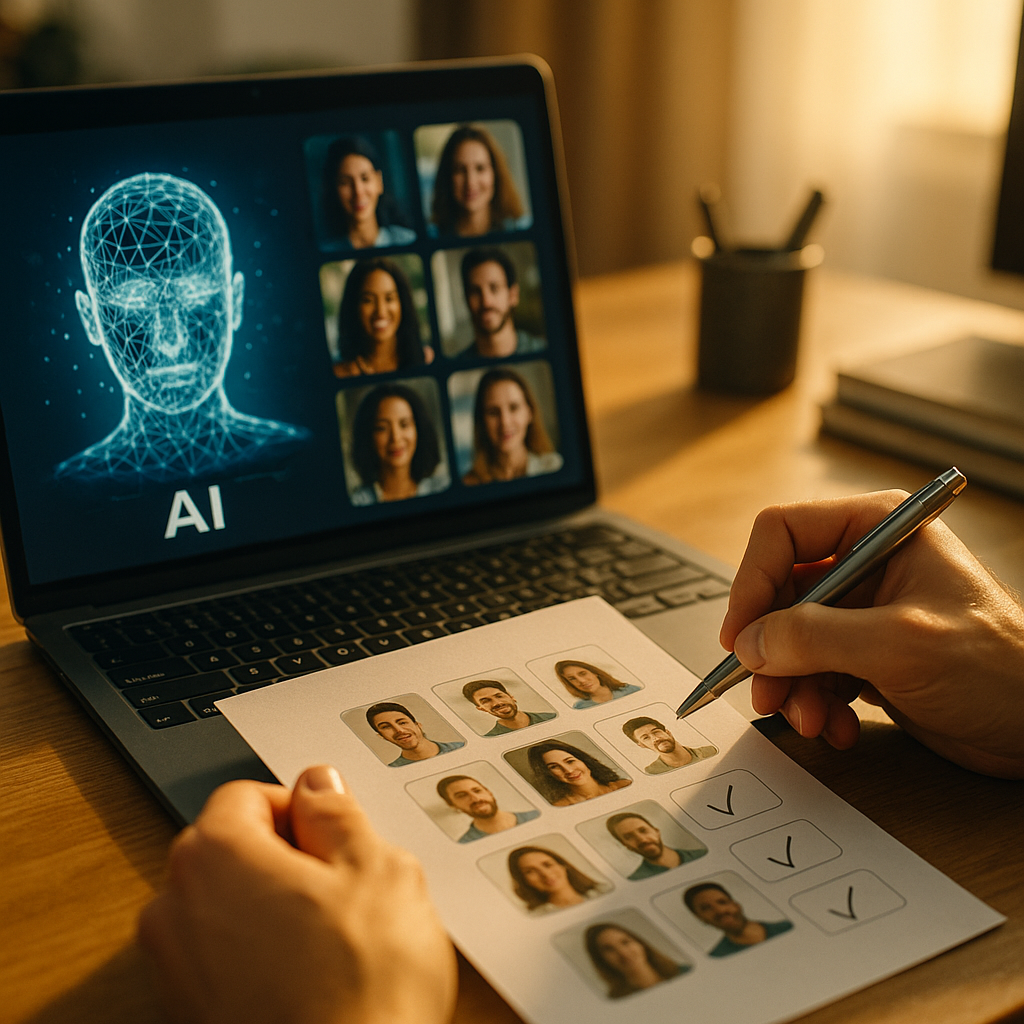
Marketers now scroll through creator databases claiming 50 million+ profiles, filtered by an algorithm in under ten seconds. Sounds efficient. But does a machine-matched creator actually drive more sales than one a human vetted by hand? After running comparative tests across several mid-market brands this year, the honest answer is: it depends entirely on what you’re optimizing for. AI-powered creator discovery has gotten remarkably good at pattern-matching. It’s still mediocre at judgment.
The Promise vs. The Practice
Every major influencer platform now sells some version of “AI-matched creators.” CreatorIQ, Aspire, Grin, Upfluence — they’ve all layered machine learning onto their databases, scoring creators against brand briefs using engagement history, audience overlap, brand safety signals, and content semantics. The pitch is seductive: feed the algorithm your ICP, get back a ranked list of creators most likely to convert. No more agency hours spent scrolling hashtags.
The reality is messier. Machine matching excels at narrowing a pool from 50,000 to 500. It struggles to tell you which of those 500 will actually sell your product to their specific audience without sounding like an ad.
In blind tests run by several agency partners this year, AI-shortlisted creators matched brand fit criteria 34% faster than manual research, but campaigns using a hybrid model (AI shortlist, human final selection) outperformed pure AI-selected rosters by 22% on conversion rate.
That gap matters. It’s the difference between a tool that saves time and a tool you can blindly trust with budget.
What “Machine-Matched” Actually Means in 2026
Discovery tools today pull from several data layers simultaneously:
- Audience demographic modeling — inferred age, location, and interest overlap with your target customer
- Content semantic analysis — NLP models parsing captions, transcripts, and visual elements to flag brand-relevant themes
- Historical performance data — past brand collaborations, engagement rate trends, follower growth velocity
- Brand safety scoring — automated flagging of controversial content, past scandals, or policy violations
This is genuinely useful infrastructure. It’s also only as good as the training data behind it, and most of these models were built on engagement metrics, not sales data. Engagement and conversion are not the same thing — a lesson the industry keeps relearning. Sprout Social’s own research consistently shows engagement rate as a weak standalone predictor of purchase intent, which is exactly why brands leaning purely on algorithmic scoring keep getting surprised by underwhelming sales numbers despite strong impressions.
If you want the deeper mechanics of how predictive models are being applied to casting decisions specifically, our breakdown of AI predictive casting tools is worth reading alongside this piece.
Where AI Discovery Genuinely Wins
Let’s not undersell it. AI discovery tools have solved real, expensive problems:
Speed at scale. A brand running a 200-creator seeding program simply cannot manually vet every micro-influencer. Algorithmic filtering makes programs of that size operationally possible at all.
Fraud and fake follower detection. This is arguably where machine matching has made the biggest measurable impact. Bot detection models catch engagement pod activity and purchased followers far more reliably than a human scrolling a profile for thirty seconds.
Whitespace discovery. Algorithms surface creators a human researcher would never find — niche micro-creators in adjacent categories whose audience overlap is statistically strong but not obvious from the content itself. This is where a lot of untapped incrementality lives.
Consistency at volume. Human vetting is inconsistent by nature. One brand manager’s “good fit” is another’s “too risky.” Algorithms apply the same criteria every time, which matters enormously for compliance-heavy categories like finance, pharma, and alcohol.
Where It Still Falls Short
Here’s the part vendors don’t put in the pitch deck.
Tone and cultural nuance remain algorithmic blind spots. A creator can score perfectly on every quantitative metric and still be catastrophically wrong for your brand voice. Sarcasm, regional humor, subculture-specific references — these are exactly the signals NLP models still misread. It’s the same weakness we’ve documented in AI sentiment analysis and sarcasm detection: the model reads the words, not the room.
Conversion isn’t a content problem, it’s a trust problem. The single biggest factor in whether a creator’s audience buys is whether that audience trusts the creator’s judgment on that specific category. No algorithm has fully cracked how to quantify trust. Engagement rate is a proxy. It’s not the thing itself.
Historical performance data ages fast. A creator who converted well eighteen months ago may have shifted audiences, changed content style, or simply burned out their credibility with too many brand deals. Static scoring models don’t always catch that decay in real time.
Brand safety scoring misses context. Automated flagging tools catch obvious red flags, but they routinely misjudge satire, activism-adjacent content, or creators whose past controversy is irrelevant to the current campaign. Human review still catches nuance the model can’t.
The uncomfortable truth: AI discovery tools are excellent at eliminating bad matches and mediocre at identifying the best ones. Narrowing 10,000 to 200 is a solved problem. Narrowing 200 to 20 still needs a human.
The Hybrid Model Is Winning, Not the Pure-AI One
The brands seeing the strongest ROI in 2026 aren’t choosing AI or manual vetting. They’re sequencing both, deliberately.
The workflow that keeps showing up in agency case studies looks like this: algorithmic discovery generates the initial pool (fast, scalable, unbiased), then human strategists apply qualitative filters — brand voice fit, audience sentiment reading, negotiation feasibility, past brand relationship history — before final selection. Then, critically, performance data flows back into the algorithm to refine future matching. It’s a feedback loop, not a one-way handoff.
This mirrors a pattern we’ve seen across marketing AI broadly: the tools underdeliver not because the models are bad, but because the operational process around them is incomplete. Our piece on why AI marketing agents underdeliver covers the same root issue from a different angle — automation without a feedback loop just scales the same mistakes faster.
There’s also a measurement dimension most teams skip. If you’re not connecting creator discovery decisions to actual incrementality data, you’re optimizing for the wrong signal entirely. The distinction between creator attribution and incrementality testing matters more here than most marketers realize, because a “well-matched” creator on paper can still produce zero incremental lift if their audience was already going to buy anyway.
What This Means for Budget and Headcount Decisions
CMOs evaluating discovery platforms in 2026 should be asking vendors a sharper question than “how big is your creator database.” Ask instead: what conversion data trains your matching model, and how often is it retrained? Many platforms are still scoring on engagement and follower quality alone, dressed up as “AI-powered” without a real predictive layer underneath.
Practical guidance for teams building or refining a discovery stack:
- Use AI discovery for volume and fraud filtering, not final creator selection on high-stakes campaigns
- Require vendors to disclose what outcome data trains their matching algorithm
- Keep a human reviewer in the loop for any campaign above a defined budget threshold
- Feed post-campaign conversion data back into your discovery criteria quarterly, not annually
- Audit brand safety scoring manually for at least a sample of flagged and unflagged creators each cycle
This also connects to a governance conversation that’s overdue in a lot of marketing orgs: knowing where automated decisions end and human accountability begins. Our AI governance charter framework covers how to set those guardrails formally, and it applies just as much to creator selection budgets as it does to media buying.
Regulatory pressure is also creeping into this space. As disclosure rules tighten around AI-assisted marketing decisions in the EU, brands using algorithmic creator matching should keep an eye on labeling and transparency obligations, particularly if AI is influencing which creators get paid placements. The EU AI Act labeling guidance is a useful reference point even for teams outside the EU, since compliance frameworks tend to travel.
For broader context on how AI decision-making is being scrutinized across the marketing stack, the FTC’s ongoing guidance on endorsement and advertising disclosure remains the baseline every discovery workflow should be checked against, and HubSpot’s state of marketing research continues to track how automation adoption is shifting team structures industry-wide.
So, Does It Convert Better?
Machine-matched talent converts better than manual vetting when the goal is speed, scale, and fraud reduction. It does not yet reliably outperform experienced human judgment on the qualitative call: will this specific creator’s audience trust this specific brand enough to buy? That’s still a human question, answered partly with data and partly with instinct built from doing this work for years.
The brands winning right now aren’t the ones with the fanciest AI matching engine. They’re the ones who’ve built a process where the algorithm does the sorting and a person makes the final call, then feeds the result back into the system. Treat AI discovery as a filter, not a verdict, and the conversion numbers follow.
FAQs
Does AI creator matching actually improve conversion rates?
It improves efficiency and reduces fraud risk more reliably than it improves conversion. Studies and agency-reported campaign data consistently show hybrid models, where AI shortlists and humans make the final call, outperform pure algorithmic selection on conversion metrics.
What data do AI creator discovery platforms actually use?
Most combine audience demographic modeling, content semantic analysis via NLP, historical brand collaboration performance, and automated brand safety scoring. Few platforms train their matching models directly on sales conversion data, relying instead on engagement proxies.
Is manual creator vetting still worth the time investment?
Yes, particularly for high-budget campaigns or categories with strict compliance requirements. Manual review catches tone, cultural nuance, and trust signals that algorithmic scoring routinely misses.
How can brands tell if a discovery platform’s AI is actually predictive?
Ask the vendor directly what outcome data trains the model and how frequently it’s retrained. Platforms scoring purely on engagement and follower authenticity are filtering tools, not predictive matching engines.
Should smaller brands use AI discovery tools or stick with manual vetting?
Smaller brands running fewer campaigns often get more value from manual vetting, since the time savings from AI discovery matter less at low volume. Brands running dozens or hundreds of creator partnerships benefit most from algorithmic pre-filtering.
Top Influencer Marketing Agencies
The leading agencies shaping influencer marketing in 2026
Agencies ranked by campaign performance, client diversity, platform expertise, proven ROI, industry recognition, and client satisfaction. Assessed through verified case studies, reviews, and industry consultations.
Moburst

-
2

The Shelf
Boutique Beauty & Lifestyle Influencer AgencyA data-driven boutique agency specializing exclusively in beauty, wellness, and lifestyle influencer campaigns on Instagram and TikTok. Best for brands already focused on the beauty/personal care space that need curated, aesthetic-driven content.Clients: Pepsi, The Honest Company, Hims, Elf Cosmetics, Pure LeafVisit The Shelf → -
3

Audiencly
Niche Gaming & Esports Influencer AgencyA specialized agency focused exclusively on gaming and esports creators on YouTube, Twitch, and TikTok. Ideal if your campaign is 100% gaming-focused — from game launches to hardware and esports events.Clients: Epic Games, NordVPN, Ubisoft, Wargaming, Tencent GamesVisit Audiencly → -
4

Viral Nation
Global Influencer Marketing & Talent AgencyA dual talent management and marketing agency with proprietary brand safety tools and a global creator network spanning nano-influencers to celebrities across all major platforms.Clients: Meta, Activision Blizzard, Energizer, Aston Martin, WalmartVisit Viral Nation → -
5

The Influencer Marketing Factory
TikTok, Instagram & YouTube CampaignsA full-service agency with strong TikTok expertise, offering end-to-end campaign management from influencer discovery through performance reporting with a focus on platform-native content.Clients: Google, Snapchat, Universal Music, Bumble, YelpVisit TIMF → -
6

NeoReach
Enterprise Analytics & Influencer CampaignsAn enterprise-focused agency combining managed campaigns with a powerful self-service data platform for influencer search, audience analytics, and attribution modeling.Clients: Amazon, Airbnb, Netflix, Honda, The New York TimesVisit NeoReach → -
7

Ubiquitous
Creator-First Marketing PlatformA tech-driven platform combining self-service tools with managed campaign options, emphasizing speed and scalability for brands managing multiple influencer relationships.Clients: Lyft, Disney, Target, American Eagle, NetflixVisit Ubiquitous → -
8

Obviously
Scalable Enterprise Influencer CampaignsA tech-enabled agency built for high-volume campaigns, coordinating hundreds of creators simultaneously with end-to-end logistics, content rights management, and product seeding.Clients: Google, Ulta Beauty, Converse, AmazonVisit Obviously →